REVIEW · NATIONAL PARKS
Hawaii Volcanoes National Park Experience from Oahu
Book on Viator →Operated by Aloha Sunshine Tours · Bookable on Viator
Lava, turtles, and coffee in one long day. I love that this trip includes round-trip airfare to Kona and the day runs on an air-conditioned private-vehicle plan with real local storytelling. My one caution: it’s a full 8 to 10 hours, and the weather can swing fast—especially when you’re higher up near Mauna Kea.
You’ll hit several Big Island icons in one shot: Kona coffee at Greenwell Farms, a nature walk on Mauna Loa’s slopes, Punaluʻu’s famous sweet bread and black sand beach with green sea turtles, then Hawaii Volcanoes National Park for the glow at Halemaʻumaʻu Crater plus stops like the Kīlauea Iki viewpoint and Thurston Lava Tube.
Key things I found especially promising
- Flights + Volcanoes National Park admission included so you’re not piecing the day together yourself
- Small-group cap (up to 22) with a guide who explains the why, not just the what
- Kona coffee, black sand beach, and volcano geology in a single day that fits Oahu schedules
- Thurston Lava Tube + steam vents for that real, close-to-earth feeling
- Manuka Nature Trail as a quieter pause before the big volcanic hits
- Mauna Kea Access Road drive where temps and conditions can change quickly
In This Review
- Price and Logistics: What $589.99 Covers (and What It Doesn’t)
- Getting From Oahu to the Right Place at the Right Time
- Kona Coffee at Greenwell Farms: History You Can Smell
- Manuka State Wayside Park: A 2-Mile Stretch for Nature Lovers
- Punaluʻu Bake Shop and Lunch: Where Your Nose Chooses the Order
- Punaluʻu Black Sand Beach: Sea Turtles First, Swimming Never
- Hawaii Volcanoes National Park: The Stops That Make This Tour Worth It
- Halemaʻumaʻu Crater: The Lava Glow Moment
- Kīlauea Iki Rainforest Lookout: Wet Jungle Contrast
- Thurston Lava Tube: The Coolest Walk That’s Still Hot Inside
- Active Steam Vents: Heat Coming Up From Below
- Mauna Kea Access Road and Kohala Coast: Changing Climates on Purpose
- Hilo: A Smart Way to Add Culture and History to a Nature Day
- How Pacing Works: A Full Day With Lots of Motion
- What to Pack for Cold, Walking, and Volcanic Safety
- Guide Style: Why Henry and Mel Matter
- Should You Book This One-Day Big Island Tour From Oahu?
- FAQ
- What time does the tour start?
- Where do I meet the group if I fly into Kona International Airport?
- Are round-trip flights from Oahu included?
- Is transportation to Honolulu Airport included?
- Is Hawaii Volcanoes National Park entry included?
- How much time do you spend at the national park?
- Are meals included?
- Will I have cell service in the park?
- What happens if weather causes a cancellation?
Price and Logistics: What $589.99 Covers (and What It Doesn’t)
At $589.99 per person, you’re not just paying for a car and a driver. You’re paying for the hard-to-schedule part: round-trip airfare from Honolulu to Kona plus a day built around getting you to multiple zones on the Big Island without stress.
Here’s what makes that price feel more reasonable. The day includes an air-conditioned vehicle, the local guide narration, and Hawaii Volcanoes National Park admission. In other words, big chunks of the “real costs” are already handled, which matters when you’re traveling from Oahu and you want this done in one day.
What you should budget for separately is meals. Meals are on your own expense, and you’ll have a lunch stop at Punaluʻu Bake Shop where you can buy options. Also, transportation to Honolulu International Airport is not included, so you’ll want to plan how you’ll get there in time.
Getting From Oahu to the Right Place at the Right Time
This is designed as a true inter-island day trip. You start from Honolulu, fly to Kona International Airport, and then the Big Island route kicks in from there.
Your meeting point at Kona is specific: meet at the lot behind Alaska Baggage claim B-2 if you fly into Kona. The start time is 8:00 am, so expect a quick start and a long day.
One more practical thing: cell service can be spotty or nonexistent in many parts of Hawaii Volcanoes National Park. If you rely on maps on your phone, download what you need ahead of time.
You can also read our reviews of more tours and experiences in Honolulu.


Kona Coffee at Greenwell Farms: History You Can Smell
Greenwell Farms is one of the most recognizable Kona coffee stops, and it’s not a generic “here’s some beans” moment. The farm is tied to Kona coffee’s rise in Hawaii, traced back to Henry Nicholas Greenwell, who established the operation in 1850.
You’ll be on the Mauna Loa slopes in the Kona district, where the combination of sunny mornings, cloudier afternoons, consistent rainfall, and volcanic soil creates the conditions coffee likes. That translates into a stop that feels more rooted than rushed.
The time here is about 30 minutes, so it’s a taste of the story, not a full deep course. If you’re a coffee person, I’d still treat this as an education stop. If you’re not into coffee, you’ll likely enjoy it more as a cultural and agricultural break before the volcanic intensity later.
Manuka State Wayside Park: A 2-Mile Stretch for Nature Lovers
Not every Big Island day trip includes a quiet walk, and Manuka State Wayside Park is that breather. It’s a 13-acre spot along the Hawaii Belt Road (Highway 11) on Mauna Loa’s slopes.
What I like about this stop is the mix of ecosystems. The area includes both wet and dry forest types, which helps you see that Hawaii’s “one climate” idea is a myth. You’ll walk the Manuka Nature Trail, about 2 miles, with interpretive signs and volcanic features.
This is also where native Hawaiian plants and wildlife show up. The park area is known for endemic birds like the Hawaiian hawk and honeycreeper, so keep an eye out if you like bird-watching.
The only drawback is simple: with just a short stop, you won’t turn this into a long hike. If you want “big exercise,” plan to supplement with your own time later on the island.
Punaluʻu Bake Shop and Lunch: Where Your Nose Chooses the Order
Punaluʻu Bake Shop is famous for Hawaiian sweet bread, and it earns the attention. It’s known as the southernmost bakery in the U.S., and it’s been serving since 1991.
You’ll have about 30 minutes here, so think of it as two things at once: lunch options plus a chance to stock up on local treats. The flavor lineup commonly includes taro, guava, and mango, and there’s also a gift shop and a garden area.
This stop also functions as your buffer before the volcano portion. If you’re sensitive to cold, this is a good time to grab something warm or sit for a moment.
Practical tip: meals aren’t included, so check prices before you order if you’re watching your budget. And if you want to keep momentum, consider bringing a few snacks for later, because the bakery is a popular place and lines can mess with your timing.
Punaluʻu Black Sand Beach: Sea Turtles First, Swimming Never
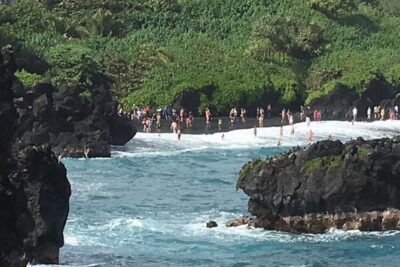
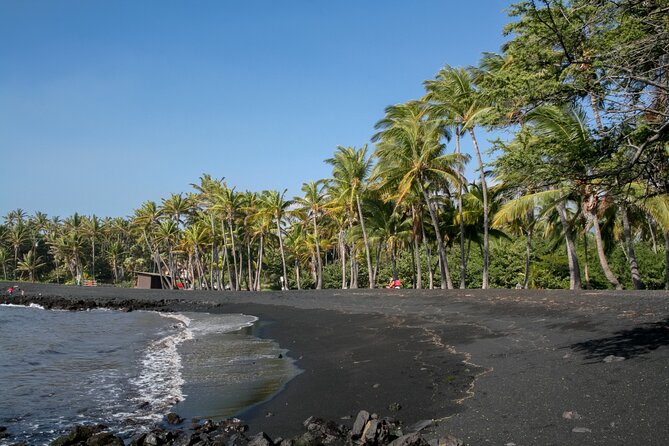
Punaluʻu Black Sand Beach is the part that feels like Hawaii turned up the dial. The black sand comes from volcanic basalt, and the beach is framed by coconut palms.
You’ll likely spend about 30 minutes here, which is enough to enjoy the views and scan the shoreline for the main attraction: green sea turtles that often bask near the shore.
The key caution is water conditions. The ocean can be rough here, so this is a look-and-breath stop, not a swim stop. Stay aware of where you can walk safely and keep distance from turtles. It’s one of those places where respecting the space makes the experience better for everyone.





Hawaii Volcanoes National Park: The Stops That Make This Tour Worth It
This is the heart of the day. You get about 2 hours in Hawaii Volcanoes National Park, and the route hits several different ways to understand Kīlauea and the geology around it.
You’ll start at the visitor center, where you’ll get context on the park’s geology and history. Then the focus shifts outdoors.
Halemaʻumaʻu Crater: The Lava Glow Moment
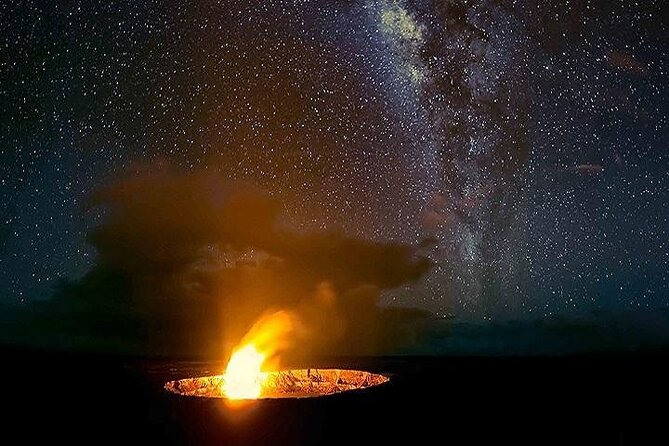
Halemaʻumaʻu Crater is the signature. If conditions allow, you’ll see dramatic activity described as the glow of molten lava. Even when you’re not staring at raw lava, the setting helps you understand how active this place really is.
Because this is an active volcanic area, pay attention to safety guidance. Volcanic gases can be harmful, especially for people with respiratory issues. If that’s you, talk with your doctor before travel and follow any on-site instructions closely.
Kīlauea Iki Rainforest Lookout: Wet Jungle Contrast
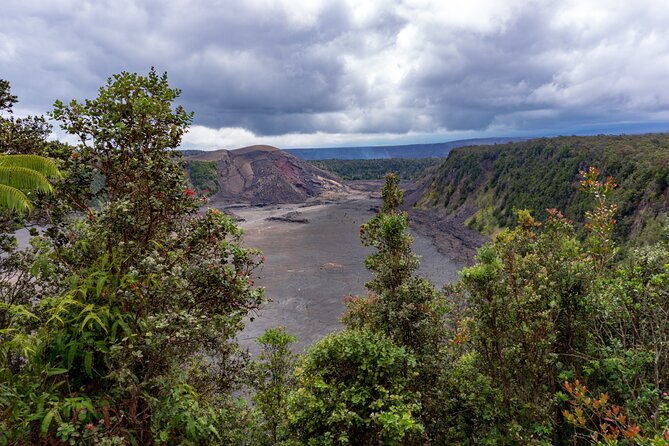
Next comes a contrast stop at the Kīlauea Iki Rainforest Lookout. It’s a very different feel—lush rainforest surrounding a crater, with a trail that connects you to what remains from a past eruption.
It’s a reminder that volcanic life can mean recovery and growth, not just destruction.
Thurston Lava Tube: The Coolest Walk That’s Still Hot Inside
Thurston Lava Tube is where you get the literal inside-the-volcano feeling. A lava tube forms when flowing lava creates a tunnel shape. Walking through gives you a sense of scale that’s hard to get from viewpoints alone.
If you’re not used to uneven ground, wear shoes with grip. The experience is short, but the terrain is real.
Active Steam Vents: Heat Coming Up From Below
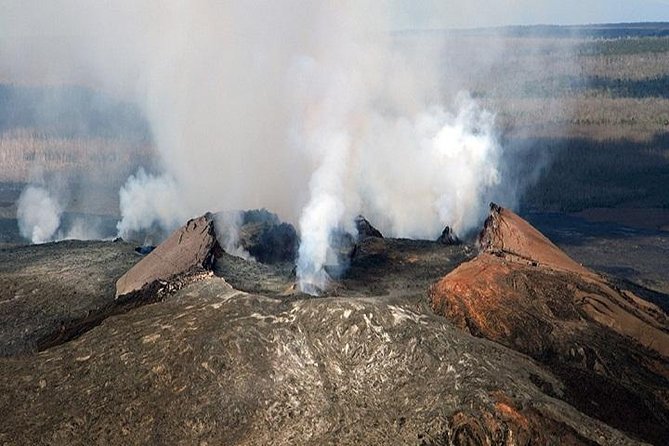
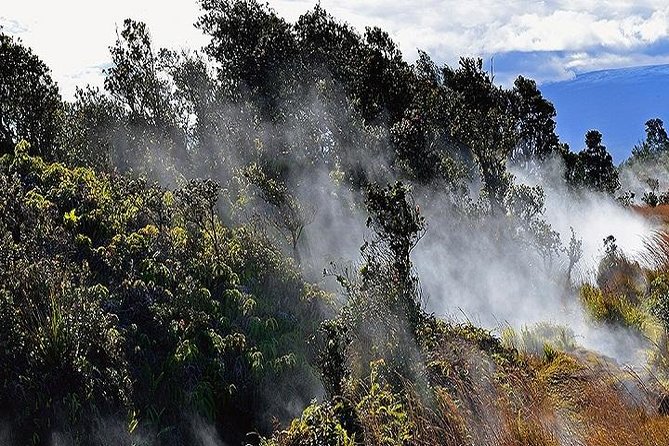
Finally, you’ll visit active steam vents. This is where the earth feels close. You’ll notice warmth rising from geothermal activity, and it helps connect the science to a physical sensation.
This is also a place to take your time. If the air feels harsh, step back and follow guide instructions. Don’t power through just to prove you can.
Mauna Kea Access Road and Kohala Coast: Changing Climates on Purpose
After volcano country, the day often keeps moving toward higher elevations and scenic drives. The Mauna Kea Access Road is steep and winding, starting from Saddle Road (Route 200). As you climb, you’ll move through different climates, and it gets thinner and colder as you go higher.
The takeaway is simple: dress for cold even if you started in warm sunshine. Bring layers and a rain jacket. Weather can change quickly, and the higher elevations can feel like a different planet.
On the Kohala Coast side, the atmosphere is usually drier than other parts of the island. You get scenic views and beaches near luxury resorts, which makes this a good segment for photos and a slower pace.
You may not get the full “telescope on the summit” experience in a short day, but the drive itself is part of the value because it shows how Hawaii’s climate changes with elevation.
Hilo: A Smart Way to Add Culture and History to a Nature Day
Hilo helps balance the day. After the volcanic focus, you get a taste of Hawaiian history and local life.
You may see stops tied to the Lyman Museum, the Hilo Historic District with preserved early 20th-century buildings, and the Pacific Tsunami Museum, which covers the impact of tsunamis on the region. You can also visit Liliuokalani Gardens, a calm place that honors Queen Liliuokalani.
If you want something more everyday and current, the Hilo Farmers Market is a lively hub with produce and local goods. Even if you don’t shop, it’s a good way to see how people live now, not just how they lived long ago.
Cash can help here too, since roadside stands and local shops may be cash-only.
How Pacing Works: A Full Day With Lots of Motion
This is billed as a private tour, but it’s still a day with multiple stops and a lot of driving. With an 8 to 10 hour window, you’ll spend meaningful time in the vehicle between the highlights.
That pacing works best if you want efficiency. It also works if you like learning from the guide while you’re on the move rather than carving your own path.
The main trade-off is that some stops are short by design—often around 30 minutes. That means you won’t linger for hours at a single viewpoint. If you’re the type who wants long hikes or lots of free time, you may feel a little rushed.
On the other hand, if you’re visiting from Oahu and you only have a narrow window, this structure can feel like a win.
What to Pack for Cold, Walking, and Volcanic Safety
This day trip gives you variety, so your packing list needs to cover variety.
Bring water, a hat, sunscreen, and snacks. Wear sturdy, closed-toe shoes. Flip-flops aren’t recommended because volcanic terrain can be uneven and sometimes sharp.
Plan for rain and cold. Even if you start the day in warmth, higher elevation segments near Mauna Kea and the park area can get chilly and wet. A rain jacket and layers are your best friend.
Respect sacred sites in the park by not disturbing or removing anything. Follow Leave No Trace rules so the island stays beautiful for the next person.
If you have respiratory issues, this matters: volcanic gases in the park can exacerbate conditions like asthma. This isn’t a reason to panic, but it is a reason to be careful and follow on-site guidance.
Guide Style: Why Henry and Mel Matter
A big part of the “value” is your guide. In real use, guides like Henry and Mel are described as strong at connecting science to everyday Hawaii life.
You can expect lots of storytelling and explanation, especially at Hawaii Volcanoes National Park. That’s great if you want to understand what you’re seeing instead of just checking boxes.
One balanced note: different guide styles exist. Some folks prefer a more structured, safety-first approach, and others want more relaxed pacing. If you’re traveling with kids or you need frequent pauses, communicate that early so your guide can adapt.
For the best experience, I suggest asking questions when you’re curious. The route has plenty of “why” moments, and a good guide will turn them into learning moments.
Should You Book This One-Day Big Island Tour From Oahu?
I’d book this if you fit any of these:
- You have limited time on the Big Island and want a guided sampler of Kīlauea-area highlights
- You like seeing multiple Big Island regions in one day, from Kona coffee to Punaluʻu turtles to Hilo history
- You value included flight logistics, park admission, and a guide to explain what’s happening
I might skip it if:
- You hate long days with lots of vehicle time and short stops
- You need lots of free time at one place (this trip is built for coverage)
- You have significant respiratory concerns and aren’t comfortable with potential volcanic gases
- You’re expecting meals and snacks to be handled fully without planning—budget extra for food and carry a snack just in case
If you’re a first-timer from Oahu who wants the Big Island without the stress of planning, this is a strong candidate. The combination of flights, admission, and guided volcanic stops makes the day feel efficient, even when it runs long.
FAQ
What time does the tour start?
The tour start time is listed as 8:00 am.
Where do I meet the group if I fly into Kona International Airport?
If you fly into Kona International Airport, you meet at the lot behind Alaska Baggage claim B-2.
Are round-trip flights from Oahu included?
Yes. Round-trip airfare from Honolulu International Airport to Kona International Airport is included.
Is transportation to Honolulu Airport included?
No. Transportation to the Honolulu Airport is not included.
Is Hawaii Volcanoes National Park entry included?
Yes. Admission to Hawaii Volcanoes National Park is included.
How much time do you spend at the national park?
You get about 2 hours at Hawaii Volcanoes National Park.
Are meals included?
Meals are at your own expense. There is a lunch stop at Punaluʻu Bake Shop where you can buy food.
Will I have cell service in the park?
No, cell phone service is limited or nonexistent in many parts of the park.
What happens if weather causes a cancellation?
If it’s canceled due to poor weather, you’ll be offered a different date or a full refund.