REVIEW · DIAMOND HEAD TOURS
Honolulu: Diamond Head Segway Tour
Book on GetYourGuide →Operated by Sidewalk Surfing Tours · Bookable on GetYourGuide
Two hours, big views, easy learning. Diamond Head on a Segway feels surprisingly doable, and the Pacific outlooks are the kind you linger on. A live guide keeps things moving while explaining what you are seeing as you roll past Waikiki-area landmarks and memorials.
I like that the tour starts with Segway training and it is handled patiently, even for first-timers; one guest specifically thanked instructor Timo for clear Japanese and English guidance. The one catch: you must be able to climb and descend stairs without assistance, and the tour is not suitable for wheelchair users or mobility impairments.
This is a small group capped at 7 people, so you are not stuck in a loud bottleneck while you grab photos along the route.
In This Review
- Key points to know before you go
- Where you meet and how the Segway learning actually feels
- Waikiki Aquarium to Kapiolani Park: a scenic warm-up
- War Memorial and Coconut Avenue: history you can see at street level
- Leahi Beach Park, Diamond Head lighthouse, and the Emilia Earhart lookout
- Red Wings Memorial Park and Fort Ruger pathways: the quieter, deeper angle
- Price and value: what you’re really paying for at $155 per person
- What to bring, what to wear, and how weather changes things
- Who this tour is for (and who should pick a different plan)
- Should you book the Honolulu Diamond Head Segway Tour?
- FAQ
- How long is the Honolulu Diamond Head Segway tour?
- Where is the meeting point?
- What does the tour include?
- Is Segway training provided for first-timers?
- What languages are the guides?
- What kind of group size should I expect?
- What should I bring?
- Is the tour offered in all weather?
- Is smoking allowed during the tour?
- Is the tour accessible for wheelchair users?
Key points to know before you go

- Small-group pace (up to 7) means more attention from your guide and easier photo stops.
- Training first helps first-timers get comfortable before you glide around Diamond Head.
- Bilingual guiding (English and Japanese) makes the history stops feel clear, not rushed.
- A tight 2-hour route hits many viewpoints around Diamond Head and Waikiki without a full-day plan.
- Memorials plus park time gives the tour more meaning than a simple scenic ride.
Where you meet and how the Segway learning actually feels
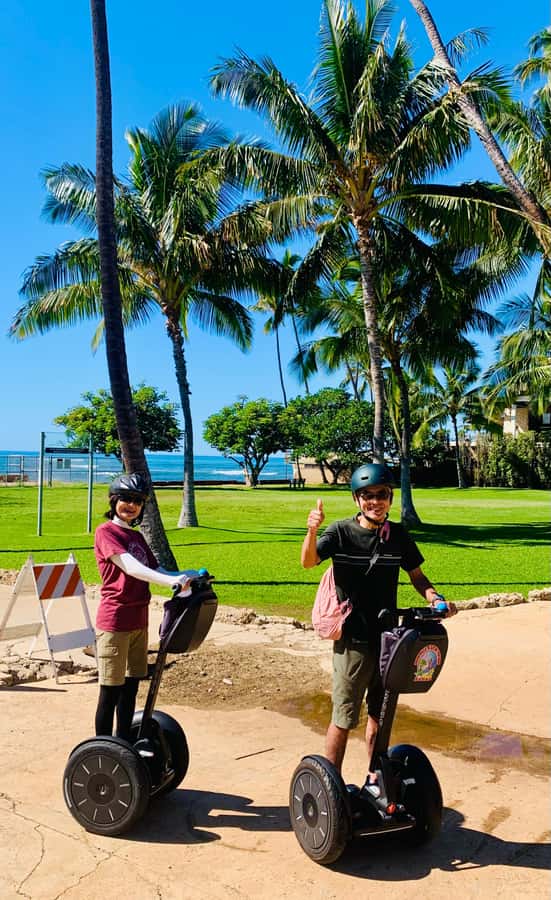
You start outside the main entrance to the Honolulu Zoo, on the sidewalk next to the zoo parking lot. It is a simple, easy-to-find meetup point, and it keeps the tour close to the neighborhoods you will be riding through.
Before you roll anywhere scenic, there is a brief Segway training session plus a helmet. This matters more than you might think. If you have never ridden one, a controlled practice period lets you get your balance and steering habits in a low-stress setting, so the actual sightseeing parts feel fun instead of tense.
You will also want to treat the training like it is part of the experience, not paperwork. Pay attention to how your instructor explains turning and stopping, and do the practice slowly the first time. After that, the pace feels smoother, and the views become the point.
You can also read our reviews of more tours and experiences in Honolulu.


Waikiki Aquarium to Kapiolani Park: a scenic warm-up
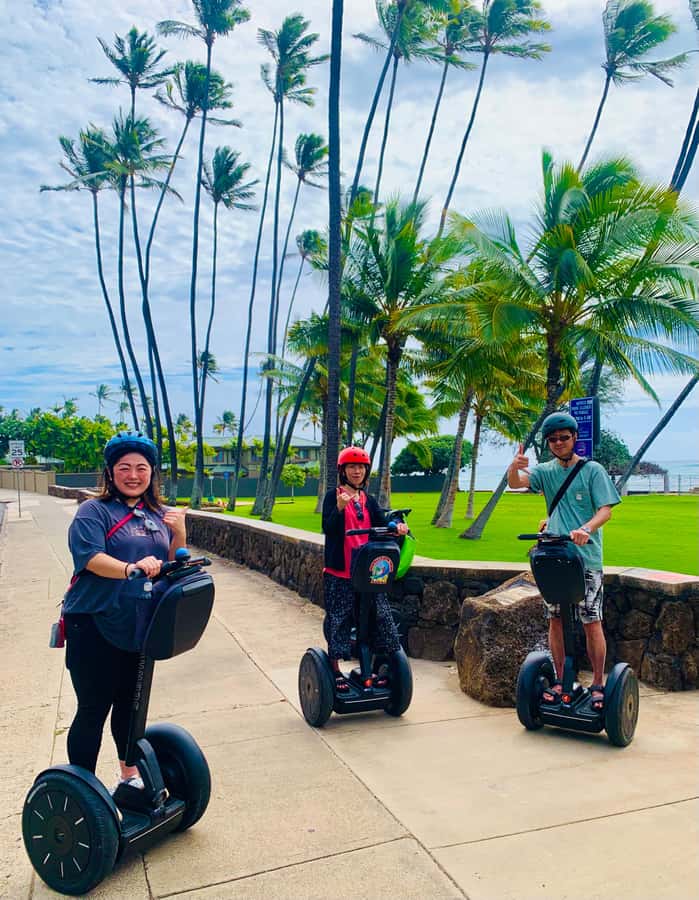
Once you set off, the route starts by passing the Waikiki Aquarium and then moving into Kapiolani Park. This is a smart flow for a Segway tour because it gets you out in open areas quickly, before the route leans into more dramatic viewpoints.
Kapiolani Park is your early reward: more space for comfortable riding, plus the chance to look out toward the coast as you move. If you are the type who wants your first couple minutes to already feel like Hawaii, this section helps you get there fast.
You are also picking up context along the way. The guide is there to help you understand what you are seeing, not just point at it. On this kind of route, that storytelling makes the ride feel like a guided walk with wheels.
War Memorial and Coconut Avenue: history you can see at street level
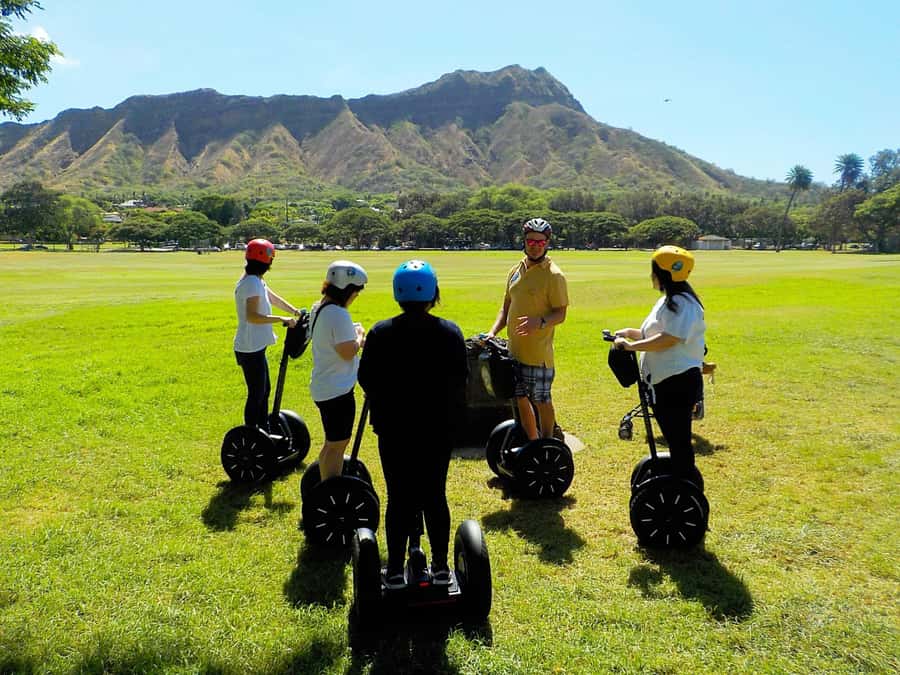
After the park section, you will pass the War Memorial and the historic homes on Coconut Avenue. This is one of the tour’s strengths: the ride is not only about scenery. You also get a grounded sense of where the community and coastline meet.
The War Memorial is the kind of stop where a guide’s explanation changes the experience. Without context it can look like just another landmark. With your guide’s history, you start to connect the memorial to the wider story of the area.
Coconut Avenue’s historic homes add variety, too. Instead of only staring at ocean views, you get a sense of how Honolulu’s residential character sits near major public spaces. It is a more human rhythm to the tour than the usual “viewpoint, photo, next viewpoint” routine.
If you like learning in small bites while you move, this part is a good example of why the tour works in just two hours.
Leahi Beach Park, Diamond Head lighthouse, and the Emilia Earhart lookout
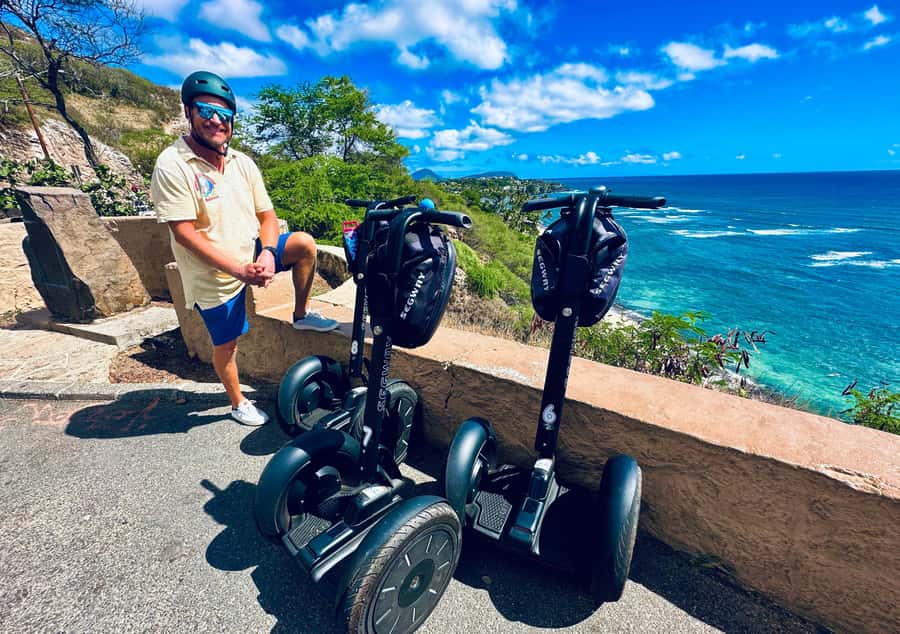
As the route continues, you will head toward Leahi Beach Park, the Diamond Head lighthouse, and the Emilia Earhart Lookout Point. This is where the Diamond Head experience turns visual: open sightlines, coastline angles, and the feeling of being right next to the action.
Leahi Beach Park is a natural photo moment because it is right in that Diamond Head orbit. Even without stopping for long, you get angles that are hard to recreate if you are only doing a standard walking route.
The Diamond Head lighthouse is another key stop. It gives the tour a “you are here” feeling, like the geography has a landmark heartbeat. And then the Emilia Earhart Lookout Point adds a different dimension—named, specific, and built for taking in the view.
One practical consideration: the tour requires participants who can climb and descend stairs without assistance. So if you know you usually struggle with steps or balance near curbs, plan carefully. The route includes viewpoints and stops where stairs can come into play, and the company is clear about this requirement.
Red Wings Memorial Park and Fort Ruger pathways: the quieter, deeper angle
Later in the tour, you will visit Red Wings Memorial Park and then ride through the Fort Ruger pathways. This part feels like a change in tone. You get more than postcards; you get a reminder that this area holds stories beyond the ocean view.
Red Wings Memorial Park gives you a specific memorial stop, again paired with guide context. For many people, this is the moment when the tour stops feeling like a scenic shortcut and starts feeling meaningful. The ride becomes a guided way to understand why these places are remembered.
Fort Ruger pathways add a “route variety” element. Pathways and small segments between viewpoints keep the ride interesting, and they help you keep moving without constantly changing into walking-only mode. It is still a sightseeing tour, but with a rhythm that breaks up the time.
Along the whole route, there are many scenic points for photos. That is especially helpful here because the final stretch has multiple angles rather than one single view that you either like or miss.





Price and value: what you’re really paying for at $155 per person
At $155 per person for a 2-hour tour, you are not just paying for transportation. You are paying for three things: a live guide, Segway training, and the time-efficient ability to cover a cluster of sights around Diamond Head and Waikiki.
If you compare it to piecing together multiple stops on your own, the value gets clearer. You do not have to manage a multi-location route while also learning the area’s layout. Instead, the guide routes you through a tight loop that hits Diamond Head-adjacent parks and viewpoints, historic homes, memorials, and lookout points.
The small group size (limited to 7 participants) also affects value. In a larger group, photo stops can turn into a scramble. In a small group, your guide can keep an eye on comfort and pacing, especially with first-time riders.
And because the guide explains history along the way, the experience has a built-in payoff. You end up with more than a camera roll—you get context you can remember later.
Based on the high rating and repeated praise for the clarity of instruction, this price tends to feel fair when you want a guided “highlights pack” without committing to a full half day of walking.
What to bring, what to wear, and how weather changes things
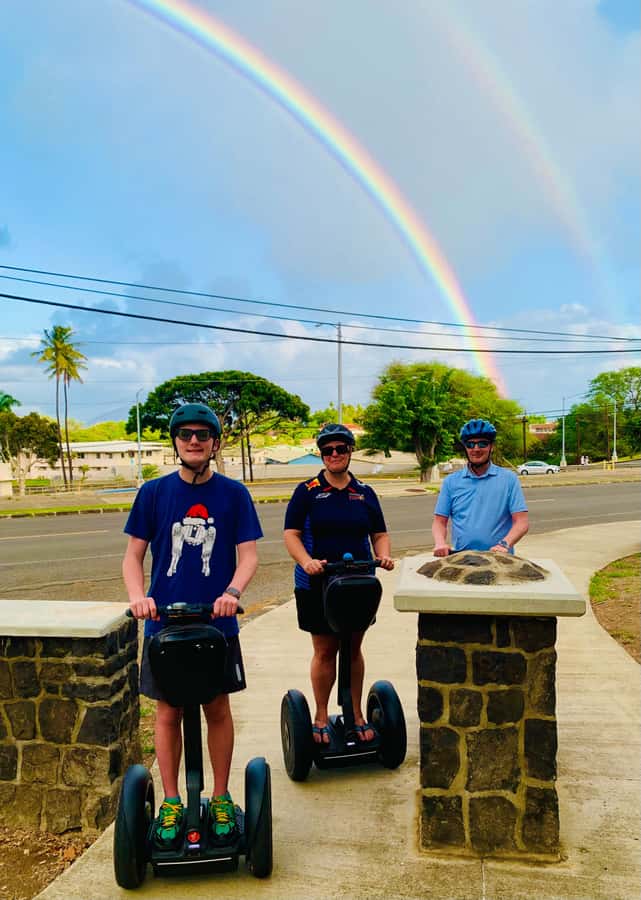
This tour operates in all weather conditions, so dressing appropriately is part of the deal. In Hawaii, weather can shift fast, and on a moving ride you still want to feel comfortable enough to stay focused on controlling the Segway and enjoying the sights.
Bring comfortable shoes, a camera, sunscreen, and water. Comfortable shoes matter because the tour requires the ability to climb and descend stairs without assistance. Even if you are mostly riding, your feet still do their share of work.
Sunscreen is not optional for this kind of route. You are out in open-air views, and you want to protect yourself before the afternoon sun has you thinking about shade instead of Diamond Head.
Smoking is not allowed. It is a small rule, but it helps keep the experience more pleasant—especially when you are riding close enough to hear the guide.
If you want a smooth experience, plan for a helmet-friendly day: not bulky headgear, nothing slippery on your hands, and clothing that does not get in the way when you mount or stop.
Who this tour is for (and who should pick a different plan)
This Segway tour is a great fit if you want:
- Big ocean and Diamond Head views in about two hours
- A guided mix of parks, memorials, and lookout points
- Bilingual explanation, including Japanese when needed
- A small-group pace that keeps you from feeling rushed
It is also a strong option if you are new to Segways. The training is built in before you start riding, and clear instruction is a recurring theme in guest feedback, including praise directed at Timo.
You should skip this tour if you have mobility limitations that make stairs difficult, or if you use a wheelchair. The tour specifically requires participants who can climb and descend stairs without assistance, and it is not suitable for wheelchair users.
If you are on the fence, think about your comfort with steps more than anything else. The Segway is only half the equation; the tour includes stops and movement where stairs can be part of the sightseeing.
Should you book the Honolulu Diamond Head Segway Tour?
I think you should book if your goal is a guided, time-efficient Diamond Head experience that also includes history and memorial stops. The route packs in Waikiki-area landmarks like Kapiolani Park and the Waikiki Aquarium approach, then builds toward the Diamond Head lighthouse and Emilia Earhart Lookout Point, finishing with Red Wings Memorial Park and Fort Ruger pathways. It is a lot of variety for 2 hours.
Book it if you value instruction and want to feel confident on the Segway before the scenic parts start. The training component is not an afterthought here, and the small-group size helps the experience feel personal.
Skip it if stairs are a problem for you, or if you want a fully seated, no-walking type of sightseeing day. The tour is clear that it is not set up for mobility impairments or wheelchair users.
If you match the fitness basics and you want a fun way to connect views with context, this is an easy yes for most visitors.
FAQ
How long is the Honolulu Diamond Head Segway tour?
The tour duration is 2 hours.
Where is the meeting point?
You meet outside the main entrance to the Honolulu Zoo, on the sidewalk next to the zoo parking lot.
What does the tour include?
It includes a live tour guide, a helmet, and Segway training.
Is Segway training provided for first-timers?
Yes. There is training provided before the tour starts.
What languages are the guides?
The live tour guide is available in English and Japanese.
What kind of group size should I expect?
It is a small group limited to 7 participants.
What should I bring?
Bring comfortable shoes, a camera, sunscreen, and water.
Is the tour offered in all weather?
Yes, it operates in all weather conditions, so dress appropriately.
Is smoking allowed during the tour?
No, smoking is not allowed.
Is the tour accessible for wheelchair users?
No. It is not suitable for wheelchair users or people with mobility impairments, and participants must be able to climb and descend stairs without assistance.