REVIEW · NATIONAL PARKS
Hawaii Volcanoes National Park Experience Departing from Oahu
Book on Viator →Operated by Hawaii Island Experiences, LLC · Bookable on Viator
This is one of the best ways to reach Hawaii Volcanoes National Park from Oahu in a single day, with an inter-island flight built into the plan. You get a full set of stops across Kona and the south side of the island, then a long, meaningful run through Kīlauea’s volcanic features.
I especially like that the tour pairs transport with guided storytelling, so you’re not just looking at scenery—you’re learning what you’re seeing. You’ll also enjoy the way the day keeps moving, with a focus on both nature and local places that feel real, not staged.
One note: it’s a long day with lots of driving time, and conditions can shift fast—volcanic gases and weather changes are real considerations if you have health concerns.
In This Review
- Key points to know before you go
- Price and logistics: what your $589.99 is really buying
- Meeting Kona and getting started at 8:00 am
- The Big Island stops before Volcanoes National Park
- Greenwell Farms: Kona coffee on Mauna Loa slopes
- Manuka State Wayside Park: a short walk through wet and dry forest
- Punaluʻu Bake Shop: lunch that doubles as a cultural pause
- Punaluʻu Black Sand Beach: turtles, basalt, and rough water
- Hawaii Volcanoes National Park: the heart of the day
- Halemaʻumaʻu Crater, Kīlauea Iki, and what heat does to the senses
- Thurston Lava Tube: walking through a cooled lava path
- Steam vents: where the ground makes the mood
- Mauna Kea Access Road and the shift in air and weather
- Kohala Coast: scenic breaks with a drier feel
- Hilo: history, museums, gardens, and a local market vibe
- How the guide shapes the experience (Mel, Henry, Brandon, and Jim)
- What to pack so the day feels easier
- Time in the van: the main trade-off
- Should you book this Volcanoes National Park day trip from Oahu?
- FAQ
- How long is the tour?
- What does the price include?
- Where do I meet for the tour?
- Is pickup available?
- Are meals included?
- What should I bring for weather and comfort?
- Is the park safe for people with respiratory issues?
- What is the cancellation policy?
- What if the tour is canceled due to weather?
Key points to know before you go
- Oahu flight + Kona ground transport: the hardest part (getting to the Big Island) is handled for you
- A full day around Kīlauea: you’re in and out of multiple volcano stops, not just one quick viewpoint
- Coffee, forests, and culture stops: Greenwell Farms, Manuka State Wayside Park, and Punaluʻu keep the day from feeling one-note
- Black sand beach with sea turtle potential: you’ll visit Punaluʻu Black Sand Beach for the scenery and wildlife watching
- Small-group energy: the trip caps at 22 people, and guides work hard to keep the group together
Price and logistics: what your $589.99 is really buying
At $589.99 per person, this tour isn’t cheap, but it does bundle several big costs together. You’re paying for roundtrip airfare between Honolulu and Kona, plus air-conditioned vehicle transport on the Big Island, plus Hawaii Volcanoes National Park admission, and a guide who narrates throughout the day.
That “everything folded in” approach is the value. If you try to DIY this from Oahu, you’d still be juggling flights, timing, and a rental car (or multiple rides). Here, the plan is built so you arrive, get guided around, and return, all while keeping the day structured around volcano time.
Two practical cautions. First, you’ll be buying your own meals. Second, you’ll want to treat the day like a marathon: expect lots of road time, plus quick stops that require you to be ready to walk and step back into the van fast.
You can also read our reviews of more tours and experiences in Honolulu.

Meeting Kona and getting started at 8:00 am
Your day begins at Kona International Airport, with the meeting location listed as the lot behind Alaska Baggage claim B-2. The start time is 8:00 am, and you’ll be set up with a mobile ticket.
If you’re offered pickup, that helps, but you should still plan around the fact that airports run on their own clock. Bring your patience for security lines and general airport hustle, especially on a day that’s already timing-sensitive.
Also, be aware that cell service can be limited once you’re deep into park areas. Download anything you need ahead of time—maps, directions, and offline reading—so you don’t rely on a signal you might not get.
The Big Island stops before Volcanoes National Park
This tour is smart about how it builds the day. Instead of jumping straight to the volcano, you get a sequence of places that explain the Big Island’s ecology and human connection to the land.
Greenwell Farms: Kona coffee on Mauna Loa slopes
You’ll start with Greenwell Farms, a historic Kona coffee producer founded in 1850 by Henry Nicholas Greenwell. This matters because you’re not just getting caffeine facts—you’re learning how the region’s climate and volcanic soil shape the flavor of Kona coffee.
The farm sits in the Kona district on the slopes of Mauna Loa. The tour highlights why that location works: sunny mornings, cloud-covered afternoons, consistent rainfall, and rich volcanic ground. Even if coffee isn’t your thing, it’s a grounded way to start the day before you head into active geology.
A small heads-up: the stop is about 30 minutes, so think of it as a taste-and-context stop rather than a long browsing session.
Manuka State Wayside Park: a short walk through wet and dry forest
Next is Manuka State Wayside Park, a peaceful 13-acre patch along Hawaii Belt Road (Highway 11). What I like about this stop is the contrast: you get wet and dry forest ecosystems close together, which helps you understand how elevation and exposure can change what grows.
You’ll also have the chance to walk the 2-mile Manuka Nature Trail through native forests with interpretive signs and volcanic features. The tour frames it as more than a stroll: it’s an ecology stop, with local plant and wildlife references, including endemic birds like the Hawaiian hawk and honeycreeper.
The drawback is time. It’s a quick window, so wear shoes you can walk in confidently. If it’s wet (which can happen), you’ll appreciate sturdy traction.




Punaluʻu Bake Shop: lunch that doubles as a cultural pause
At Punaluʻu Bake Shop in Naʻālehu, you’ll find traditional Hawaiian sweet bread in flavors like taro, guava, and mango. The stop is about 30 minutes, and it’s also where you’ll typically grab lunch options.
What’s practical here is choice and speed. You can pick up items like sourdough sandwiches, Kalbi beef, and Hawaiian plate lunches, plus baked goods and local treats. One thing I’d plan for: if there’s a line, you may need to decide quickly between grabbing lunch and sampling extra pastries.
This is one of those stops that feels like a “real place” break—gardens, bakery smells, and a chance to recharge before the drive gets more dramatic.
Punaluʻu Black Sand Beach: turtles, basalt, and rough water
Then you head to Punaluʻu Black Sand Beach, famous for its black sand formed from volcanic basalt. It’s a gorgeous contrast scene: black sand with coconut palms, plus the chance to see Hawaiian green sea turtles basking along the shore.
Just don’t plan on swimming here. The water can be rough, and the goal is observation, not a beach day.
This is also a good moment to remind yourself of the tour’s larger theme: the Big Island’s geology isn’t an abstract concept—it’s the reason the sand is black and the coast looks the way it does.
Hawaii Volcanoes National Park: the heart of the day
This is the main event, and the structure works. You’re not just driving past the park; you’re spending real time at multiple points, starting at the visitor center to get context for the geology and history before you go out.
Halemaʻumaʻu Crater, Kīlauea Iki, and what heat does to the senses
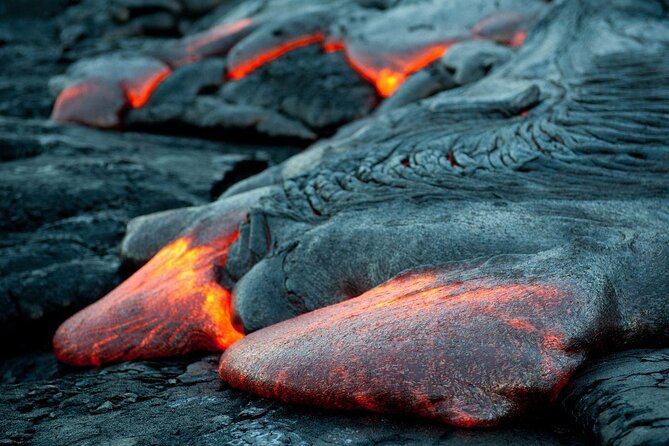
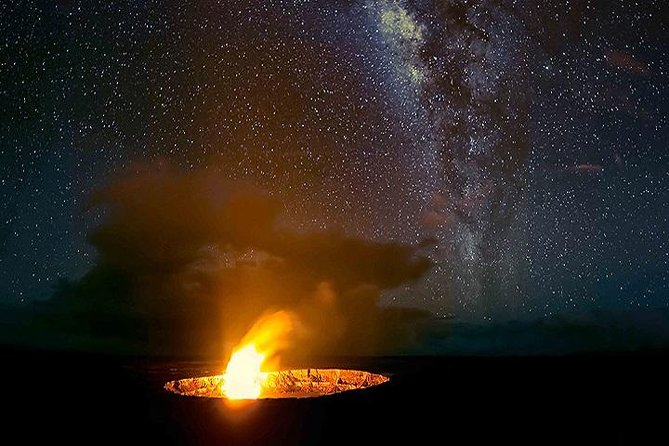
At Halemaʻumaʻu Crater, the tour focuses on the intense volcanic activity you can witness there, including molten lava glow when conditions allow. Even without constant eruptions, you’re meant to understand why this area is treated as living geology.
Then comes the Kīlauea Iki Rainforest Lookout. This is your contrast stop: a lush rainforest surrounding a massive crater area. You see how quickly the island’s story shifts—from destructive heat to vegetation and steady growth in the same broad volcanic system.
Thurston Lava Tube: walking through a cooled lava path
Next up is Thurston Lava Tube, where you walk through a natural tunnel formed by flowing lava. This is one of the experiences that feels physical in a good way. You’re not only looking at volcano landforms—you’re moving through them.
If you’re the type who likes to connect cause and effect, this stop helps. The tube is basically a reminder that lava once filled spaces like this, and now those passages are part of the park’s walking route.
Steam vents: where the ground makes the mood
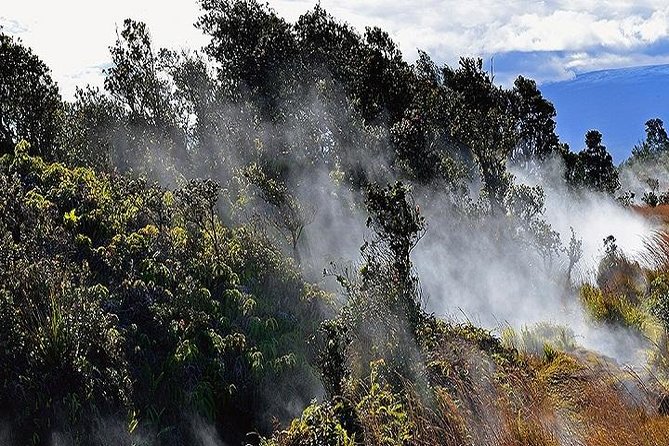
The day also includes stops at active steam vents, where you can feel heat rising from the earth. For many people, this is the moment the park stops being a sightseeing stop and starts feeling like an active system.
The park’s own safety notes are key: volcanic gases can be harmful, especially for people with respiratory issues. If you have asthma or similar conditions, take that seriously. Bring any needed medication and follow the safety guidance your guide provides on the day.
Mauna Kea Access Road and the shift in air and weather
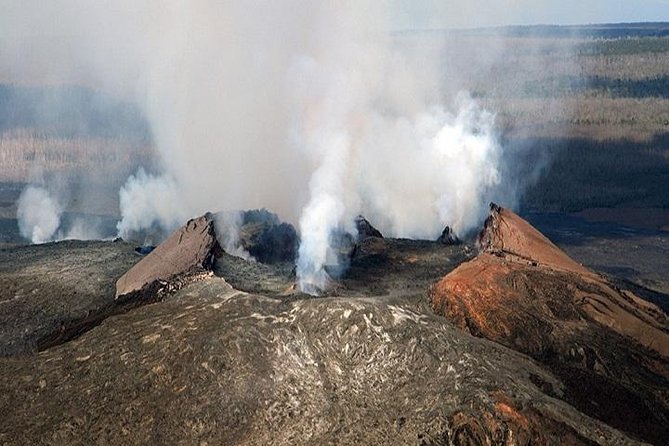
After the park, the itinerary includes Mauna Kea Access Road. This is a steep, winding route to the summit area, and the tour explains what changes as you climb: different climates, thinner air, and colder temperatures.
This part is less about one single view and more about feeling the altitude shift. The tour also sets you up with the practical warning you should heed: bring layers and expect it to get cool and possibly wet.
If you’re traveling with someone sensitive to altitude or temperature changes, this is where you’ll want to be most prepared with warm clothing and slow, steady pacing.
Kohala Coast: scenic breaks with a drier feel
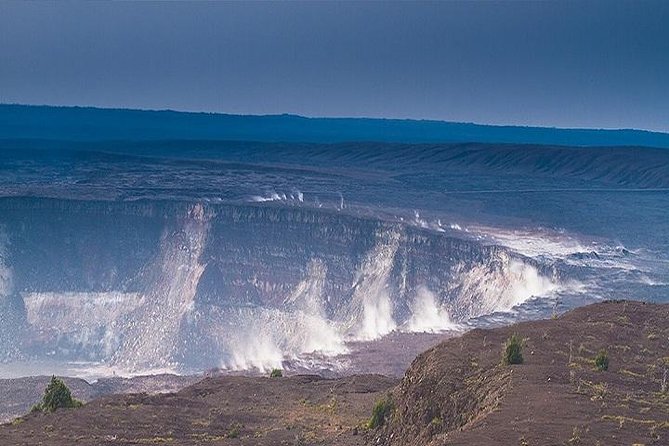
The route also includes the Kohala Coast, known for beaches, scenic views, and nearby access to the Mauna Kea area. It’s described as having a drier climate compared to other parts of the island, which can be helpful if you’re trying to break up the wetter weather you might encounter near volcano zones.
Even if you don’t spend a long time here, this stop helps balance the day. You get a change in scenery without losing the Big Island theme.
Hilo: history, museums, gardens, and a local market vibe
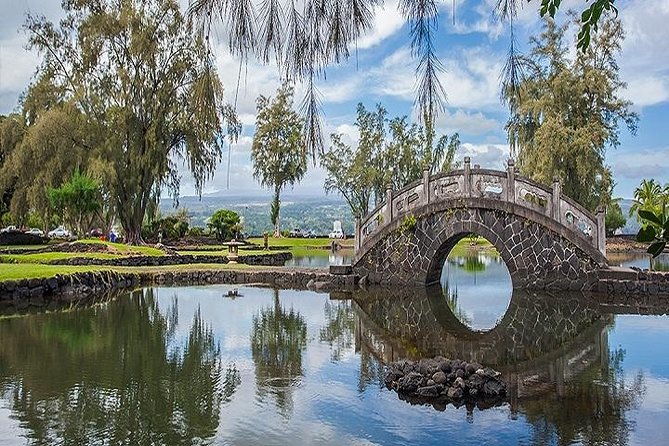
The day also touches Hilo, where you’ll find cultural and educational stops such as the Lyman Museum, the Hilo Historic District, and the Pacific Tsunami Museum. There’s also Liliuokalani Gardens, which is a quiet, respectful pause honoring Queen Liliuokalani.
If you time it right, you can also experience the Hilo Farmers Market, a lively place to see what locals buy and cook with. This is the kind of stop that makes the island feel like more than a geology lesson.
If you’re short on energy late in the day, pick one or two places to linger at and don’t try to sprint through everything. The tour is long; pacing yourself will make your photos and memories better.
How the guide shapes the experience (Mel, Henry, Brandon, and Jim)
The biggest recurring praise is the guide experience. Different names show up—Mel, Henry, Brandon, and Jim—and the common thread is clear: hosts keep things engaging with stories about nature, culture, and geology while maintaining a schedule that keeps everyone together.
I like that guides don’t treat the day as a checklist. When the van rolls between stops, you get context so the next viewpoint makes sense. That’s especially important at Volcanoes National Park, where it’s easy to stand in awe and still not fully understand what you’re looking at.
A small practical note from real-world experience: do a quick roll call yourself at the start. Some groups don’t learn names until late. If you care about that, grab names early and it’ll make the day feel more like a shared adventure.
What to pack so the day feels easier
This tour asks you to walk on uneven, potentially sharp volcanic terrain. It’s not a flip-flops day. Wear closed-toe shoes and bring sturdy footwear you trust.
Also pack for fast-changing conditions. The tour specifically warns about weather variability and recommends layers and a rain jacket. Even if the morning looks fine, higher elevations and open areas can cool down fast.
Beyond that, bring:
- water and snacks (limited services mean you should be proactive)
- sunscreen and a hat
- cash for roadside stands and local shops, since some places may be cash-only
If you’re prone to stomach issues on long drives, have a plan for that too—your body will thank you later.
Time in the van: the main trade-off
Several people mention that you spend a lot of time driving. The Big Island is big, and the stops are spread out. One way to make this work for you is to treat van time like part of the trip: bring a light snack, use that time to review your next stop, and settle in for a longer day than a typical local tour.
If you tend to get carsick, think ahead. The schedule can feel tight, and once you’re in transit, there’s not much you can do besides ride it out.
Should you book this Volcanoes National Park day trip from Oahu?
I’d tell you to book this if you fit one of these profiles:
- You only have one day to see the Big Island and want it structured.
- You want the volcano experience with multiple stops and a guide explaining what you’re seeing.
- You don’t want to manage flights, rentals, and timing on your own.
- You like small-group tours and appreciate getting questions answered along the way.
I’d think twice if:
- You dislike long driving days or you’re sensitive to motion.
- You have respiratory concerns and you’re not comfortable with the park’s possible volcanic gases. In that case, take medical guidance seriously and follow on-site safety rules.
FAQ
How long is the tour?
The tour runs about 12 hours (approx.).
What does the price include?
Your price includes roundtrip airfare from Honolulu to Kona International Airport, air-conditioned vehicle transport, Hawaii Volcanoes National Park admission, and narration from a local guide. A mobile ticket is also provided.
Where do I meet for the tour?
You meet at Kona International Airport, at the lot behind Alaska Baggage claim B-2.
Is pickup available?
Pickup is listed as offered.
Are meals included?
Meals are at your own expense. The tour includes a stop at Punaluʻu Bake Shop where you can buy lunch options.
What should I bring for weather and comfort?
Bring layers (including a rain jacket), sturdy closed-toe shoes, water, snacks, sunscreen, and a hat. The weather can change quickly, especially at higher elevations.
Is the park safe for people with respiratory issues?
The tour notes that volcanic gases can be harmful, especially for people with respiratory issues. If you have asthma or similar concerns, take that seriously and follow the safety guidelines.
What is the cancellation policy?
You can cancel for a full refund up to 24 hours in advance of the experience start time. If you cancel less than 24 hours before, the amount isn’t refunded.
What if the tour is canceled due to weather?
The experience requires good weather. If it’s canceled due to poor weather, you’ll be offered a different date or a full refund.