REVIEW · HALEIWA
Oahu: Shark Cage Diving Experience
Book on GetYourGuide →Operated by Hawaii Shark Encounters · Bookable on GetYourGuide
I love the floating cage setup and the snorkel-only simplicity, so you’re watching sharks without scuba gear. The one catch: the boat ride can feel rough if you’re prone to seasickness. This is a rare kind of Oahu experience where the ocean feels close, and the sharks feel curious, not scary.
You meet the crew at the harbor, head a few miles offshore, then slide into a calm rhythm of looking through plexiglass windows as sharks glide by. The guide talks through shark biology and behavior, and you’ll also learn why sharks matter in Hawaiian culture and mythology.
When you’re done, you’re close to Haleiwa town, so you can turn a short ocean outing into a full North Shore day. This is also tied to shark conservation, with an option to participate in shark research activities.
In This Review
- Key things you’ll remember from this Oahu shark cage encounter
- Why the floating cage makes sharks feel safe and real
- Harbor check-in, the North Shore drive, and the 3-mile offshore jump
- What you do in the water: snorkel only, plexiglass viewing, and close curiosity
- The shark education talk: biology, behavior, and Hawaiian mythology
- Conservation and shark research: what your participation actually supports
- Price, duration, and weather reality on Oahu’s North Shore
- Haleiwa after the tour: keep the North Shore momentum going
- Should you book this Oahu shark cage encounter?
- FAQ
- How long is the shark cage experience?
- Where do I meet for the tour?
- Do I need scuba experience?
- What should I bring?
- What is included in the price?
- What’s not included?
- What if the weather is bad?
Key things you’ll remember from this Oahu shark cage encounter
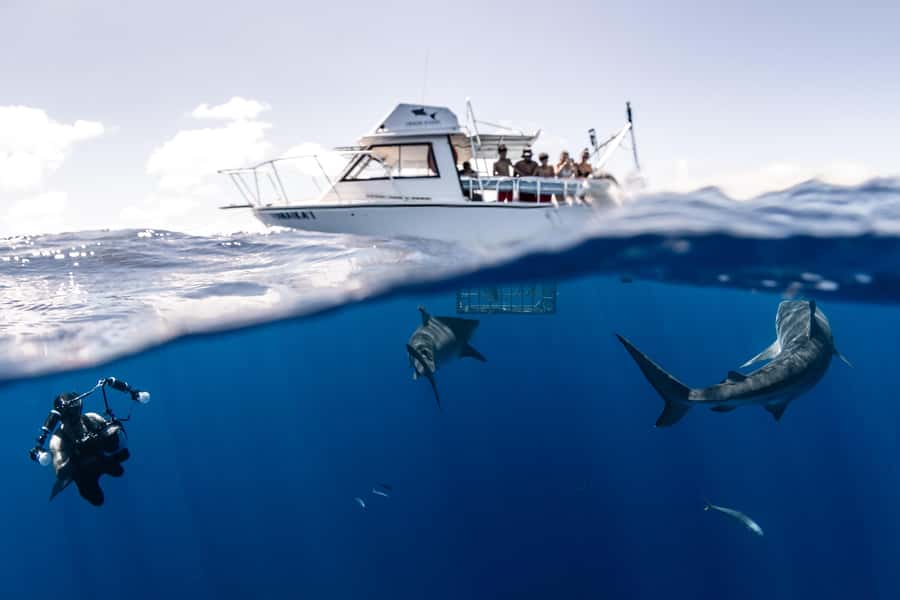
- A snorkel-and-mask, no scuba approach that keeps things simple in the water
- Large plexiglass windows that help you see sharks clearly while staying safe in the cage
- An expert guide talk covering shark biology, behavior, and local cultural meaning
- A 3-mile offshore boat ride that gets you into real open-water conditions
- A chance to participate in shark research, plus a conservation contribution
- Haleiwa town nearby for easy plans after your 2-hour outing
Why the floating cage makes sharks feel safe and real
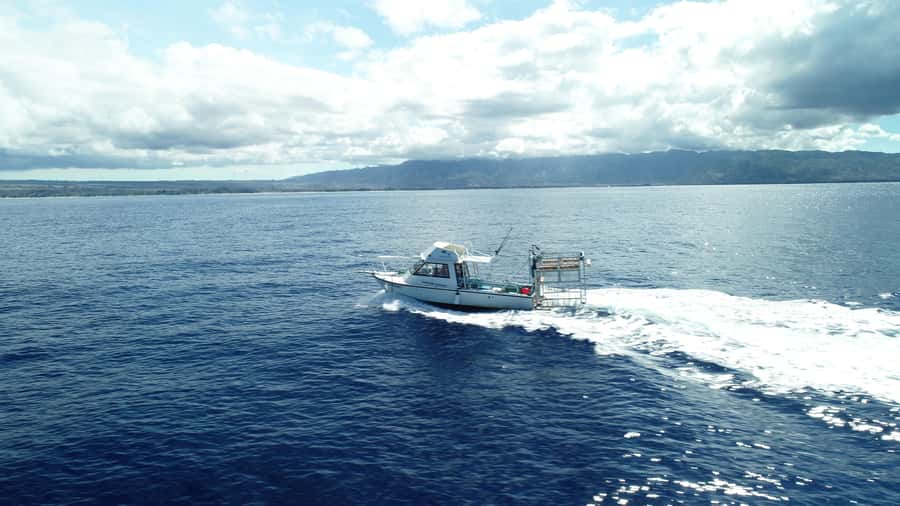
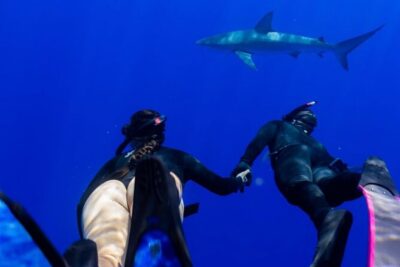
The big appeal here is the viewing setup. You’re not trying to swim with sharks or chase adrenaline. Instead, you hang out on the surface with a mask and snorkel, looking through plexiglass windows while sharks pass naturally around you. That safety factor matters, but what surprised me in the feedback is how “close-up” it still feels. Sharks tend to come near out of curiosity, which turns the whole thing into an eye-to-eye encounter.
This format also changes the emotional tone of the trip. Without scuba, you don’t have that pressure of staying underwater or doing complicated gear management. You can focus on the ocean, the animals, and the guide’s explanations. And because the cage is floating, the viewing is steady enough that you can actually take in what’s happening instead of constantly adjusting your position.
The other reason this works well for many people is value. At $97 per person for a 2-hour experience, you’re paying for a full on-the-water package: a boat trip, safety briefing, shark education, snorkel equipment, and a conservation component. That’s not just “you look at animals” value. It’s “you learn something and connect it to conservation” value.
One consideration: the sea state can be a factor. One review noted the waves can be hard if you’re sensitive to motion. So if your body hates boats, take that seriously and plan for it. (More on timing and weather later.)
You can also read our reviews of more tours and experiences in Haleiwa.

Harbor check-in, the North Shore drive, and the 3-mile offshore jump
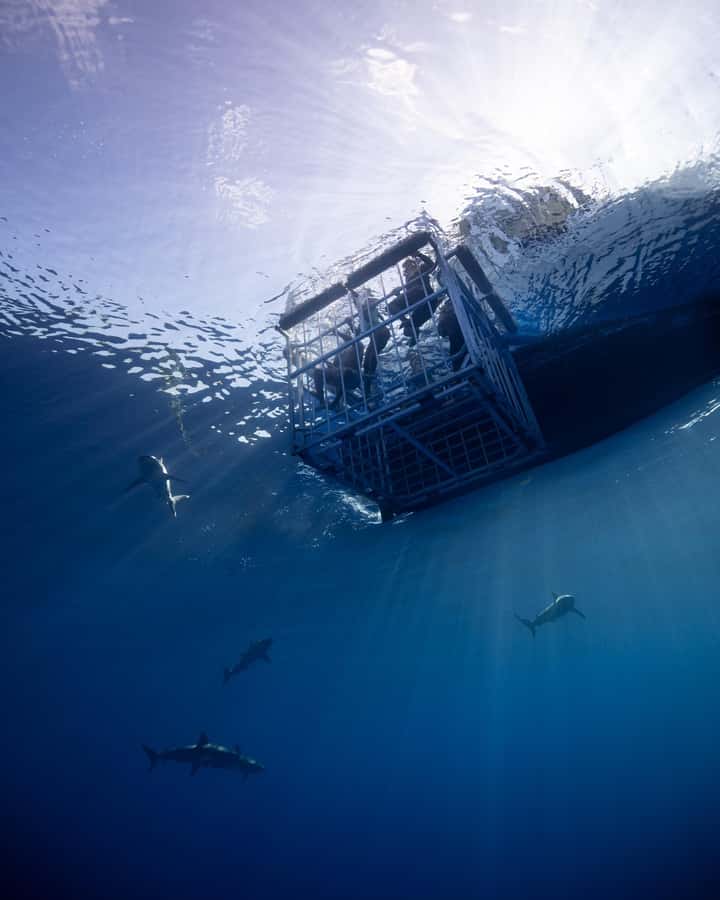
Your day starts at the harbor, where you check in and meet the local crew. Check-in is 30 minutes before the tour start time, so don’t show up at the last minute and hope for the best. With an experience like this, being early gives you time to get fitted for snorkel gear and get your bearings before boarding.
Once you’re on the boat, you head about 3 miles offshore into open ocean. That number matters because it tells you what kind of experience you’re getting: you’re not just staying in a near-shore cove with limited wildlife. You’re going out to where sharks and clearer viewing conditions can be more likely. Open ocean also means you should expect swells, especially on days when the North Shore has motion.
A helpful mental model: think of the boat time as part of the experience, not dead time. It’s where you shift from “tour mode” to “ocean mode.” The crew’s local knowledge helps set expectations, and the safety briefing keeps you comfortable with what happens once the cage is in the water.
Also, your base for land time is nearby. The harbor is close to shops and attractions in Haleiwa town. That means you’re not stuck planning a separate commute for food or shopping later. After your 2 hours at sea, you can keep the day moving in a place that’s built for visitors.
What you do in the water: snorkel only, plexiglass viewing, and close curiosity
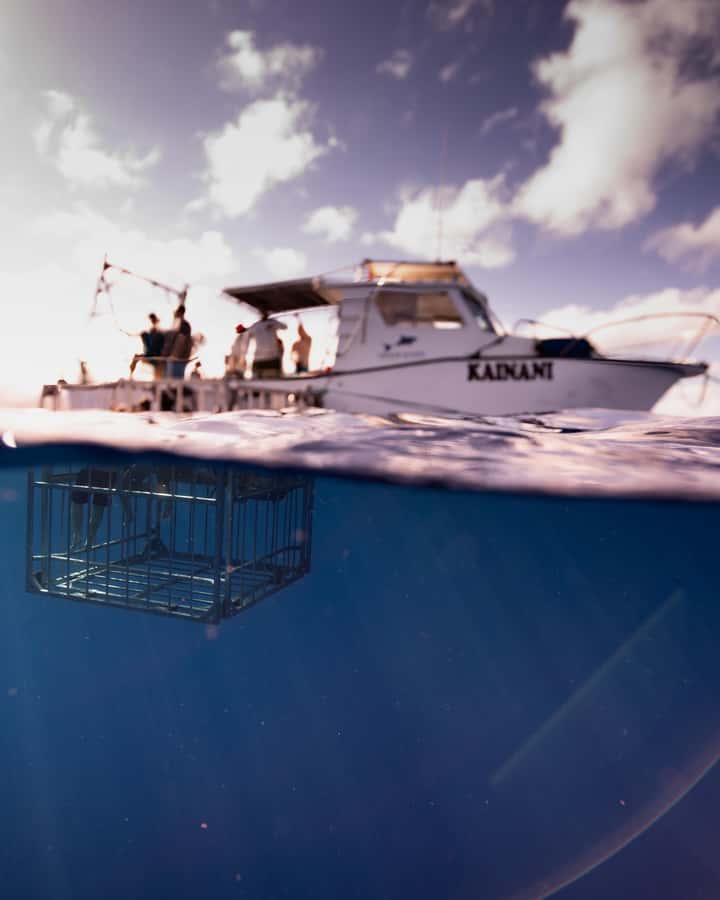
Here’s the core sequence once you’re out there: the cage is set in the water, and you view sharks from inside the safety of the enclosure. The windows are a key part. They’re large enough for real observation, not just quick glances. When sharks come close, you can have that surreal sensation of being face-to-face with something that usually feels far away.
You stay on the surface using a mask and snorkel. No scuba experience is required, which makes the experience more accessible than most “see wildlife underwater” activities. Practically, that means your main job is to stay relaxed, keep your mask fitting comfortably, and breathe steadily while you look.
It also affects the way you remember the trip. Instead of feeling like a timed underwater challenge, you’ll probably remember specific behaviors you notice from above: how sharks glide, how they track the cage, and how curiosity can bring them near the window. Your guide is there during this time with explanations, so what you see turns into understanding, not just a quick wow moment.
Because you’re in the ocean, you’ll want to be ready for practical realities:
- Bring a towel and wear swimwear you’re comfortable getting wet in.
- Use sunscreen before you go, since you’ll be outdoors and in daylight.
- Bring a camera if you like, but keep in mind flash photography isn’t allowed.
- Be prepared to feel a little motion even if you’re staying calm in the water.
One more thing: this isn’t for people who can’t comfortably be in the water. Participants must be comfortable in water, and there are clear restrictions for back problems and certain mobility needs. If you’re unsure, check your comfort level honestly before you book.
The shark education talk: biology, behavior, and Hawaiian mythology
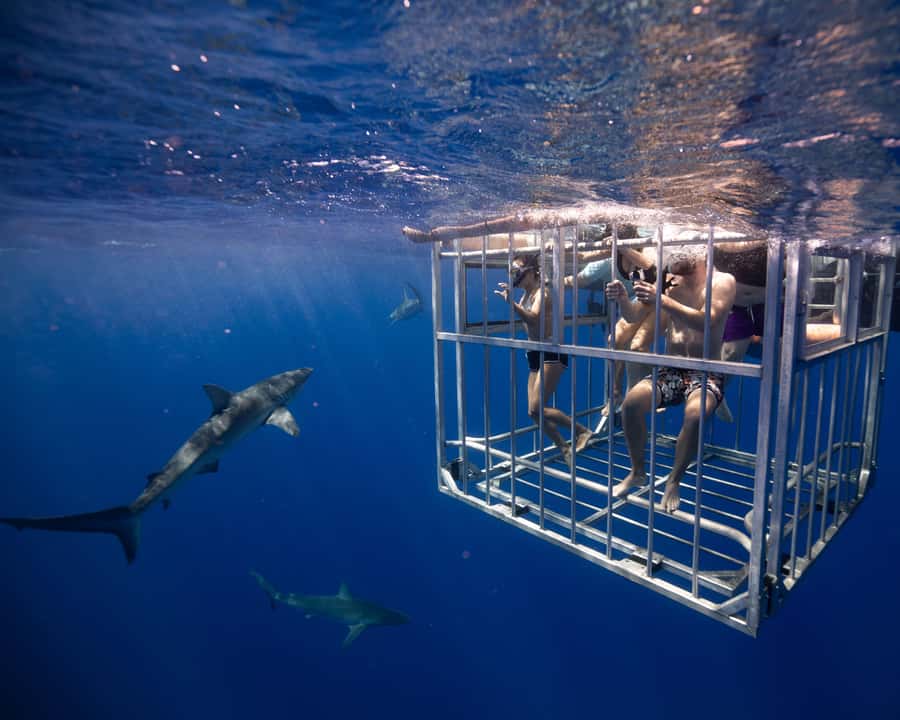
The education side is one of the strongest reasons to choose this style of experience. You don’t just get animals behind plexiglass; you get an expert guide explaining what you’re seeing. The talk covers shark biology and behavior, and it also addresses sharks’ role in Hawaiian culture and mythology.
That matters because sharks can be misunderstood. Many people carry fear based on movies or headlines. A guide-led explanation helps you replace vague ideas with real traits: how sharks behave, how they move, and what their presence means in the ocean environment. Even when you’re not a science person, this format makes it easier to connect the dots while you’re actively watching.
The cultural angle is also more than a nice add-on. Learning about Hawaiian culture and mythology gives context to why local people care about sharks. When the guide connects this to ongoing research, it stops being a “cool animal encounter” and becomes a story about stewardship.
You might also learn about ongoing shark research projects. The experience includes an opportunity to participate in shark research, which is a thoughtful twist on conservation. You’re not just donating money after the fact; you’re doing something during the outing that helps support the larger effort.
If you like experiences that leave you with a different mental picture of a species, this is a great match. The best “shark trip” isn’t the one with the most frantic action. It’s the one that changes how you see them after you’re back on land.
Conservation and shark research: what your participation actually supports
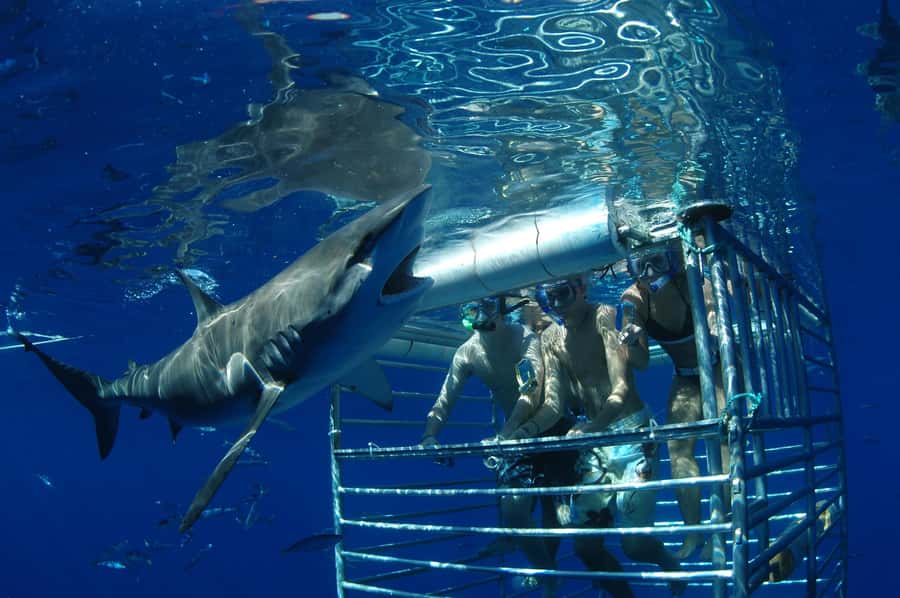
Conservation can sound like marketing language, so I pay attention to what’s concrete. Here, the experience explicitly includes a contribution to shark conservation and an opportunity to participate in shark research. That combination is what makes the whole thing feel more purposeful.
Why that matters for value: the $97 price isn’t only paying for boat fuel and a cage. You’re also supporting research efforts and getting educational context for why those efforts exist. Even if you don’t become a marine scientist overnight, you leave with a clearer picture of the work behind the scenes.
It also helps you feel less like a spectator. When you have a chance to participate in research activities (even in a simple way), you’re part of a broader conservation chain. That shifts the experience from entertainment to engagement, which is exactly the kind of tourism I like: fun, but with a reason.
Your guide and local crew help connect these dots. They’re the ones turning shark observations into conservation messaging that doesn’t feel vague. The goal is that you become an ambassador for the cause, meaning you’ll have something real to say when friends ask what you did on Oahu.
One practical note: the experience includes safety rules around marine life. For example, touching marine life isn’t allowed. That protects both you and the animals and keeps the interaction natural.

Price, duration, and weather reality on Oahu’s North Shore
Let’s talk money plainly. At $97 per person for about 2 hours, you’re paying for a short but full package: harbor check-in, boat transport to open ocean (about 3 miles), snorkel gear, safety briefing, education talk, cage time, and conservation support. For a hands-on wildlife experience on an island where operations are weather-dependent, that’s a reasonable value.
The duration is also smart. You get a real event at sea, but you’re not locked into an all-day commitment. That’s key on Oahu, where you’ll probably want time for beaches, food, and other stops—especially on the North Shore.
Now for the reality check: weather can affect the experience. It’s subject to weather conditions and may be rescheduled. Also, people who are prone to seasickness are not ideal candidates. One review specifically warned that wave motion can be hard, but the experience is worth it if you can handle the water movement.
So how should you decide?
- If you’re generally fine on boats, you’ll likely enjoy this.
- If you get motion sickness easily, consider whether you can manage that risk.
- If conditions look rough, be ready for the possibility of rescheduling.
Finally, remember that food and drinks aren’t included. Plan a light meal before you go or plan to eat after, especially since Haleiwa town is close and convenient.
Haleiwa after the tour: keep the North Shore momentum going
One of the nicest practical perks is what happens after. The harbor is near Haleiwa town, where you’ll find shops and attractions. Since your time at sea is about 2 hours, you can keep the day active without rushing.
This is a good moment to do two things:
1) Recharge with a meal or snacks nearby.
2) Walk around and browse local stores while you’re still in a beachy mood.
Think of the shark experience as your morning anchor. You start with something unforgettable in the ocean, then you transition into an easy land-based plan that doesn’t require complex logistics.
Also, having land time right after can be smart because you can dry off and reset before heading back to wherever you’re staying. Bring your towel, and you’ll be glad you did.
If you’re the type of traveler who likes a day to have a theme, this one works: ocean animals, then local North Shore life.
Should you book this Oahu shark cage encounter?
Book it if you want a safe, guided, snorkel-only shark experience on Oahu’s North Shore, and you care about the educational and conservation side, not just the thrill. The experience is built around viewing through plexiglass windows, learning shark biology and behavior, and connecting sharks to Hawaiian culture and mythology.
Skip or think twice if you’re highly prone to seasickness, have trouble being comfortable in the water, or fall into the clearly stated age or mobility limits. Also, if you’re expecting a totally calm ride, this isn’t the best fit; open ocean conditions can mean real wave motion.
If you can handle the boat and you like learning while you look, this is one of those trips that tends to change how you talk about sharks afterward. And that’s a better souvenir than a photo.
FAQ
How long is the shark cage experience?
The experience lasts about 2 hours.
Where do I meet for the tour?
The meeting point may vary depending on the option booked, so you should confirm your specific meeting details for your reservation.
Do I need scuba experience?
No. You stay on the surface using a mask and snorkel, and no scuba experience is required.
What should I bring?
Bring a hat, swimwear, a towel, a camera (flash photography isn’t allowed), sunscreen, and water.
What is included in the price?
It includes the 2-hour shark cage experience, a safety briefing and shark education talk, a local crew, snorkel equipment, an opportunity to participate in shark research, and a contribution to shark conservation.
What’s not included?
Hotel pickup and drop-off, plus food and drinks, are not included.
What if the weather is bad?
The activity is subject to weather conditions and may be rescheduled.