REVIEW · NORTH SHORE TOURS
Safe and Educational Shark Dive from Haleiwa: Sharks Guaranteed
Book on Viator →Operated by One Ocean Diving · Bookable on Viator
Sharks, but make it responsible. This Haleiwa experience mixes real marine biologist education with a safety-first water session so you can actually understand what you’re seeing, not just hope for a fin. It’s marketed as a sharks-guaranteed program, but the bigger win is the way the team explains shark behavior, physiology, and body language before you’re in the water.
Two things I really like: you get a structured pre-swim talk built around current research, and you’re given snorkeling/safety gear plus close support in the water. One drawback to keep in mind: your time in the water is controlled (often rope-assisted and guided), so it’s not the kind of open, wander-where-you-want freedom some people expect.
In This Review
- Key highlights to know before you go
- Sharks guaranteed, safety guaranteed vibes
- Getting from Haleiwa Commercial Loading Dock to open water (about 2 hours)
- What the education is really doing for you
- Your first swim: rope-assisted, guided, and intentionally controlled
- Which sharks you’ll see, and how you’ll know what you’re looking at
- Safety that doesn’t feel like a lecture
- Motion sickness tip: you’re on a boat first
- Gear, snorkeling time, and the photo package question
- How the group size affects your experience
- Price and value: is $165.71 worth it?
- Weather and seasons: the real schedule boss
- Who should book this Haleiwa shark swim?
- Should you book it?
- FAQ
- How long is the shark experience?
- Where does the tour start and end?
- Is this a private tour?
- What language is the tour offered in?
- What equipment is provided?
- Do I need good weather for this to run?
- Are there refunds if plans change?
- What if I cancel less than 24 hours before?
- Is a mobile ticket provided?
- Will there be photos or videos?
Key highlights to know before you go
- Research-based coaching first: you learn behavior/body language before you see sharks up close
- Marine biologist + safety diver team: a briefing that’s meant to reduce nervousness and mistakes
- Species ID support: you’ll learn how to spot differences among shark types and other pelagic wildlife
- Haleiwa dock setup: a practical start at 66-101 Haleiwa Rd with an end back at the same place
- Optional photo package: you may get filmed/captured while you swim, and many people say it’s worth adding
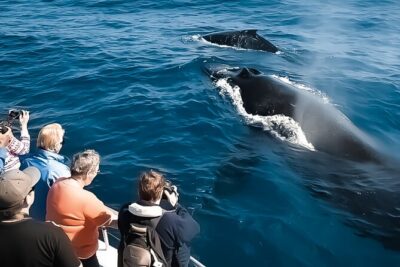
- Sharks-and-more chances: beyond sharks, you might see whales (including babies), turtles, and plenty of fish depending on conditions
Sharks guaranteed, safety guaranteed vibes
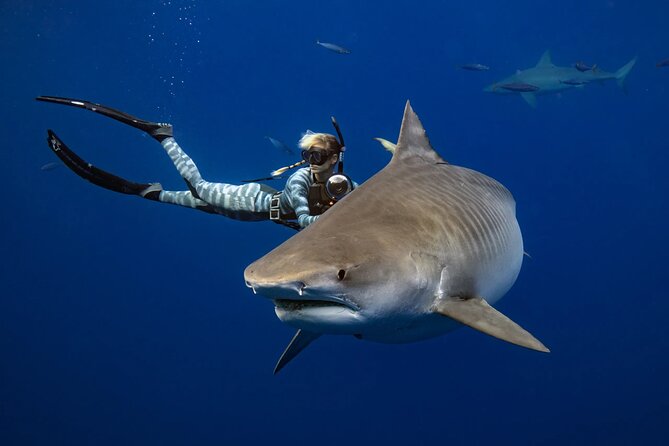
The name says sharks are guaranteed, and the whole program is built to keep that “meet them respectfully” promise. The key detail here is how they do it. Instead of treating the ocean like a thrill ride, you’re coached on what sharks do and why they do it, then you swim in a way that reduces stress for both you and the animals.
The tone matters. Multiple guides are described as funny, patient, and calm, especially for first-timers who are scared. Names you’ll hear again and again in real guest feedback include Gina (often called out as a rock star in the water), plus Faith, Mariah, Kevin, Zac, Brandon, Ben, and Drew—plus photographers like Bret who help capture the moment.
And yes, you’ll still feel that wow factor when a shark is close. But the goal is that you feel in control, not panicked.
You can also read our reviews of more tours and experiences in Oahu.
Getting from Haleiwa Commercial Loading Dock to open water (about 2 hours)
Plan for roughly a two-hour total experience. You start at the Haleiwa Commercial Loading Dock, 66-101 Haleiwa Rd, and you finish back at the same meeting point. That simple out-and-back layout is a plus: after you’re done, you’re not stuck figuring out how to get home or where to regroup.
Most people don’t book this last minute. The average booking window is about 18 days ahead, which tells me it’s popular and timing-dependent (especially around weather). If you’re picking dates, I’d treat this as a “better book early than scramble” activity.
During the day, you’ll have two major blocks:
- On the ride out: the education portion happens before you get in the water.
- In the water + snorkeling time: you get equipment and a structured swim session, usually with support and guidance.
What the education is really doing for you
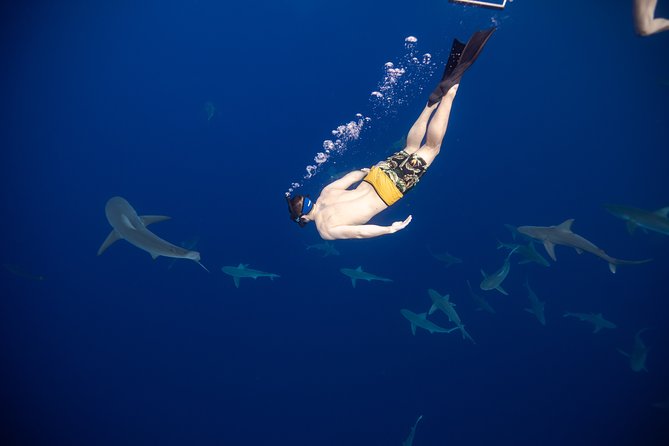
This isn’t a lecture for the sake of a lecture. The pre-swim talk is designed to change how you act underwater, because your behavior affects the animal’s behavior.
Here’s what the team covers before you enter the water:
- what species of sharks (and pelagic fish and whales) you might see
- how to tell differences between species
- how gender can affect behavior
- specific shark behavior/body language to look for
- how the sharks’ biology and physiology affect what they do
- how your behavior can change what the sharks do
- how weather and seasons affect what you encounter
- the cultural significance of MANO (sharks) in Hawaiian and Polynesian culture
- and how you can support the ID program for the Hawaii Shark Count
That last one is important because it turns the experience into something more than a photo. You’re learning how scientists track individual animals, and what it means to help with that conservation work.
Your first swim: rope-assisted, guided, and intentionally controlled
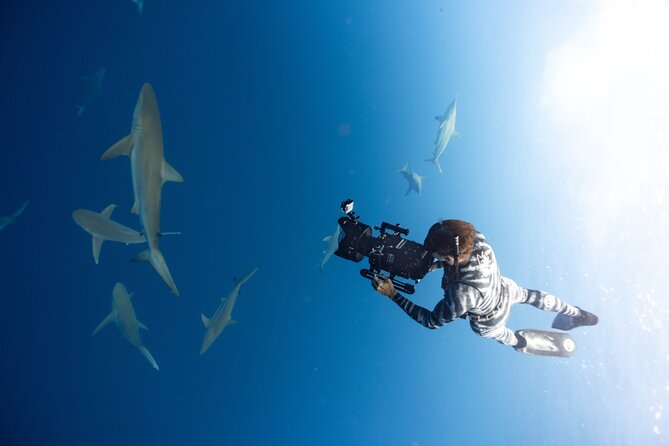
Let’s talk honestly about the “how.” Many people expect the ocean portion to feel like freedom. This program is more “controlled encounter.”
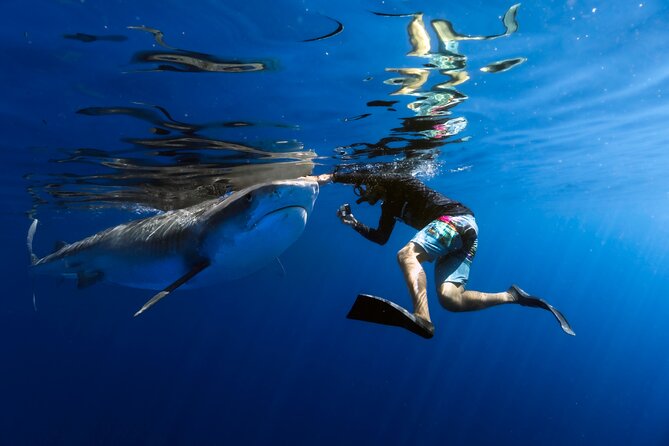
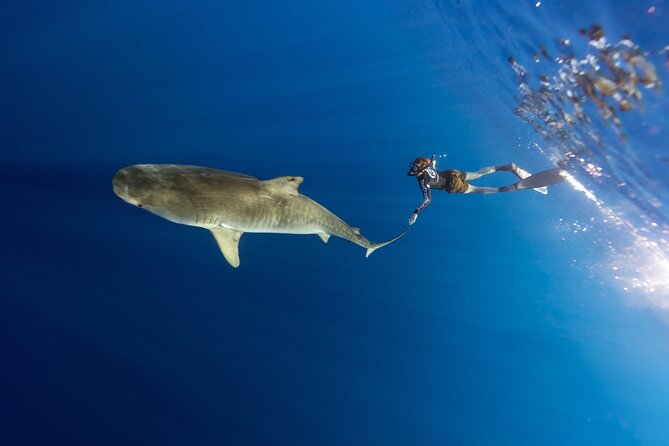
You’ll be wearing snorkeling and safety equipment, and you swim with the assistance of the team while they film and/or photograph you (GoPro-style mentions show up in guest feedback). In practice, that often means you’re close to the boat and guided for safety.
Some guests describe holding a secure rope connected to the boat while you look down and observe sharks nearby. That’s not a downside if you’re anxious—it’s a safety tool. But if you want to roam far, you might feel a bit fenced in.
So here’s how I’d frame it for you:
- If you’re nervous, the structure helps.
- If you hate being told exactly where to stand, you’ll want a more independent style of water activity.
Which sharks you’ll see, and how you’ll know what you’re looking at
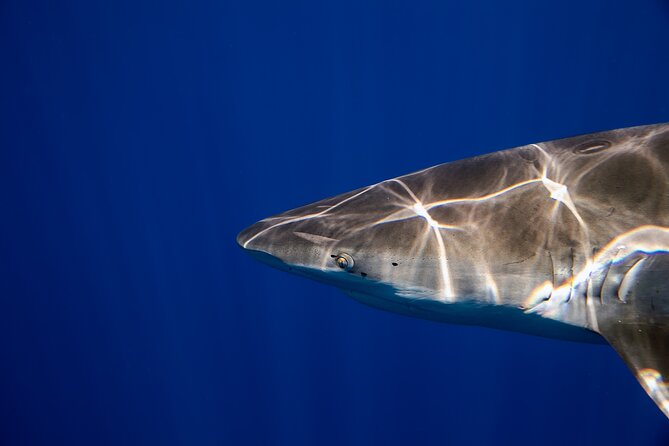
This is one of the smartest parts of the experience: they don’t just say sharks are around. They teach you what to look for.
You’ll learn:
- which pelagic fish, whales, and shark species to watch for
- how to distinguish species in the moment
- what body language to look for so you understand whether sharks are curious, cruising, or doing normal behavior
- and how weather/season changes your odds
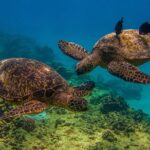
In the best-case scenarios, guests have reported seeing tiger sharks, plus other marine life like whales (including a new baby whale), turtles, and lots of fish. Dolphins aren’t guaranteed—one family noted no dolphins on a cloudy/rainy day—but they still got a strong mix of wildlife.
Also, one guest mentioned that the guides share stats about how rarely sharks attack humans. That kind of context matters. It helps replace movie-brain fear with real-world information.


Safety that doesn’t feel like a lecture
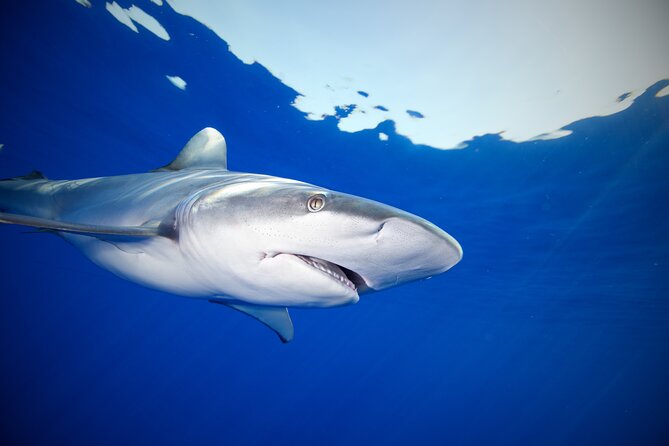
The safety approach is praised again and again, and I get why. The team’s job isn’t just to be “there.” It’s to coach you so you don’t do the common panic mistakes.
You’ll likely get help with things like:
- how to keep calm and move correctly
- what to do if you feel fear rising
- and how to interact safely (including what to avoid)
Guests repeatedly say they never felt in danger. One person who was scared to death highlighted that the crew helped them feel better in the water, and another described the experience as peaceful rather than scary, with the sharks behaving normally.
But remember: “safe” here doesn’t mean “hands-off.” It means you’re briefed, equipped, and guided.
Motion sickness tip: you’re on a boat first
If you’re prone to seasickness, take that seriously. One review specifically calls out reading and taking Dramamine. Even if you’re not usually bad, the ocean can still make you feel off on a short trip.
If you’re the type who gets queasy on curvy roads, do yourself a favor:
- bring what you need
- take it early as directed on the label
- and plan for a calmer, seated ride when you can
This isn’t just comfort. Feeling nauseous can push your anxiety higher once you’re in the water.
Gear, snorkeling time, and the photo package question
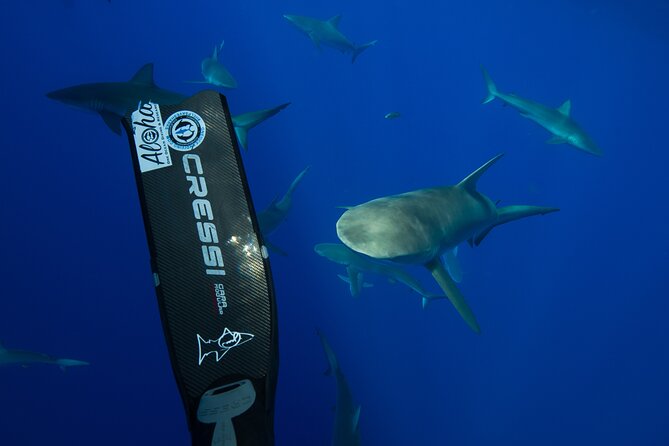
You’ll have snorkeling and safety equipment provided. That removes a big hassle for visitors who don’t want to rent gear or guess whether they have the right fit.
A lot of guests also mention a generous amount of time in the water. One family noted about an hour in the water with multiple chances to snorkel, while other feedback talks about several water sessions. Exact timing can vary with conditions, but the program is clearly built to give you real time, not a quick in-and-out.
Now, the photo/video add-on: guests mention a picture package and several say it’s worth it. That makes sense because swimming with sharks is the kind of moment you’ll wish you could replay, and being filmed/photo-documented is part of the experience design.
Just note: one guest flagged that the photo package can be pricey. So if you hate surprise costs, decide in advance whether you’re buying it.
How the group size affects your experience
This is a private tour/activity, meaning only your group participates. That’s a huge value factor if you’re traveling as a couple, family, or small group that wants to avoid the chaos of a big mixed crowd.
Still, one guest comparison pointed out that a larger number of people can make shark-watching feel crowded. The good news is this is private, so you’re less likely to feel that pinch. But you should still show up ready to follow instructions and share space calmly during the rope-assisted swim.
Price and value: is $165.71 worth it?
At $165.71 per person, this isn’t cheap. But shark encounters are expensive because safety systems, staff, equipment, and wildlife-friendly practices all cost money.
Here’s why I think it can be good value:
- you’re paying for expert marine biology coaching, not just an animal encounter
- you get a structured, safety-supported water session
- you get equipment included
- the program adds conservation relevance through the Hawaii Shark Count ID program
- plus you may get filming/photo moments included in how the experience runs (and can be purchased as a package)
If you only care about seeing a fin for 20 seconds, you may find cheaper options. But if you want to understand sharks and feel safe while you’re doing it, the education + coaching is where the money goes.
In other words: this is closer to a guided conservation lesson with a spectacular payoff.
Weather and seasons: the real schedule boss
This experience requires good weather. That’s not unusual for Oahu ocean activities, but it matters here because visibility and water conditions affect how they run the swim safely.
On cloudy/rainy days, guests still reported strong results—one family saw whales (including a baby), turtles, and fish even when dolphins weren’t present. So bad weather doesn’t automatically mean a washout. But if the conditions are too rough, the day’s plan can shift, and the provider notes that you’ll be offered another date or a refund if it’s canceled due to poor weather.
In plain terms: pick a date when you have flexibility, and don’t schedule a “must be somewhere else no matter what” event right after.
Who should book this Haleiwa shark swim?
Book this if:
- you want education along with the thrill
- you’re nervous and want a calm, safety-led setup
- you care about marine conservation and learning how sharks are tracked
- you’re okay following guidance in the water (rope-assisted, structured swim)
You might want a different style if:
- you strongly dislike structured rules once you’re in the ocean
- you’re expecting totally independent wandering instead of coached positioning
- you’re very sensitive to any bluntness from staff (most guests describe patience, but at least one guest felt communication could be better)
Should you book it?
If your priority is a safe, respectful, research-backed shark encounter with real coaching, I’d say yes. The combination of pre-swim behavior education, guided in-water support, and conservation context (MANO and the Hawaii Shark Count ID program) makes this feel more meaningful than a one-off thrill.
Just go in with the right mindset: this is a taught experience, not a free-for-all. If you follow instructions and let the team help you stay calm, you’ll likely come away feeling like you learned something—and not just that you got lucky.
FAQ
How long is the shark experience?
It runs for about 2 hours (approx.).
Where does the tour start and end?
You meet at Haleiwa Commercial Loading Dock at 66-101 Haleiwa Rd, Haleiwa, HI 96712, and the activity ends back at the same meeting point.
Is this a private tour?
Yes. It’s listed as a private tour/activity, meaning only your group participates.
What language is the tour offered in?
It’s offered in English.
What equipment is provided?
Snorkeling and safety equipment are made available.
Do I need good weather for this to run?
Yes. The experience requires good weather, and if it’s canceled due to poor weather you’ll be offered a different date or a full refund.
Are there refunds if plans change?
Free cancellation is available. You can cancel up to 24 hours in advance for a full refund. Within 24 hours, the amount paid isn’t refunded.
What if I cancel less than 24 hours before?
If you cancel less than 24 hours before the experience’s start time, the amount you paid will not be refunded.
Is a mobile ticket provided?
Yes. A mobile ticket is included.
Will there be photos or videos?
You may be filmed or photographed during the experience, and an optional picture package is mentioned in guest feedback.