REVIEW · OAHU
Small-Group Deep Dive in Oahu with Shipwreck and Reef
Book on Viator →Operated by Hawaiian Diving Adventures · Bookable on Viator
Shipwrecks start this morning right. I like that you get a professional guide with you the whole time, keeping things focused and safe, and I also love the chance to see dolphins and sea turtles alongside the underwater sights. This is a small-group charter built for people who already know their way around scuba gear and want real site variety off Oahu.
One big consideration: this outing is meant for more experienced scuba participants only, with requirements tied to advanced certification or a set number of logged underwater sessions.
In This Review
- Key Points Before You Go
- What You’re Really Buying for $209 on Oahu
- Meeting Point and the Morning Kickoff (7:45am, No Hotel Pickup)
- Stop One: The Usual 100-Foot Shipwreck Descent
- Stop Two: Reef Time at 40–60 Feet (Site Choices Change the Day)
- Wildlife Chances: How to Actually Work Those Dolphins, Whales, Turtles
- Guide Support and the Value of “Experienced-Only” Planning
- Gear Rentals, Health Checks, and Flying Timing Rules
- Reliability: Great Ratings, Plus One Real-World Caution
- Should You Book This Oahu Shipwreck-and-Reef Charter?
- FAQ
- What certification do I need?
- How big is the group?
- What are the typical depths for the two underwater stops?
- Is hotel pickup included?
- Can I rent equipment or do I need my own gear?
- Is it okay to scuba if I just flew to Oahu?
Key Points Before You Go
- Shipwreck first, reef second: the day usually starts with a plunge to about 100 feet, then moves to a reef around 40–60 feet.
- More wildlife when the wreck is farther out: the operator notes the offshore distance often brings pelagic fish, turtles, and sharks into view.
- Wildlife odds on paper: the experience lists opportunities to see dolphins, whales, sea turtles, and plenty of fish.
- Small group limit: capped at 16 people, which usually helps the guide manage timing and buoyancy.
- Equipment choice: you can rent scuba gear or bring your own.
- Guide-led selection: the charter is geared for experienced participants, so the guide can steer you toward more adventurous areas when the group is ready.
What You’re Really Buying for $209 on Oahu
At $209 per person for roughly 3 hours 30 minutes, you’re not just paying for boat time. You’re paying for a day structured around two distinct underwater habitats: one wreck site and one reef site. That format matters because it changes what you’ll likely see. Shipwreck habitat tends to pull in different fish behavior than reef habitat, and the operator specifically plans the first stop to be farther offshore to improve the chances for pelagic fish, turtles, and sharks.
Your price also includes the less-glam parts that still matter: the reef tax (Environmental Management Charge), fuel surcharge, plus snacks and beverages during the outing. You’re also getting a professional guide for the whole experience, and there’s an explicit expectation that this is a guided charter, not a casual swim with minimal oversight.
This also explains why the requirements are strict. When a trip is geared toward advanced capability, they can plan better profiles and more interesting sites, instead of throttling the day down to the slowest comfort level.
You can also read our reviews of more tours and experiences in Oahu.

Meeting Point and the Morning Kickoff (7:45am, No Hotel Pickup)
The outing starts at 7:45am and runs back to the same meeting area. There’s no hotel pickup or drop-off, so plan to get yourself there on time. The meeting point is listed as 74VV+4X Honolulu (near 74VV+4F Honolulu), and it’s described as near public transportation. That’s good news if you’re staying somewhere walkable or reachable by bus and don’t want to wrestle with a taxi at dawn.
Also pay attention to the timing rule that can affect whether your day works at all: the experience asks you to complete a health questionnaire prior to scuba participation, and it notes that scuba within 18 hours of flying is not recommended. So if your schedule includes a tight arrival day, you’ll want to think twice before booking.
Finally, you’ll use a mobile ticket. That sounds minor, but in practice it means you should have your phone charged and easy to access early in the morning.
Stop One: The Usual 100-Foot Shipwreck Descent
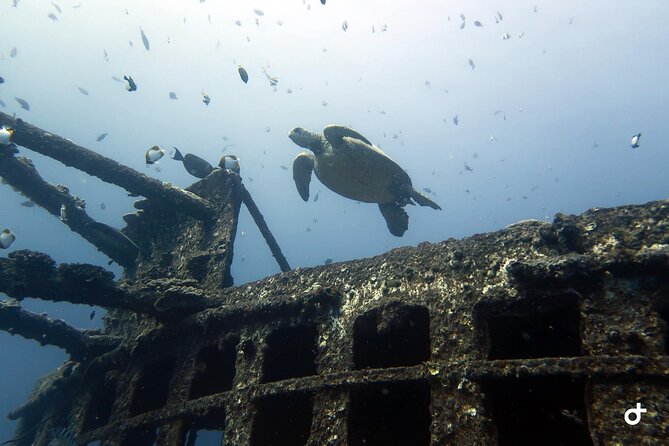
The day’s first underwater stop is usually a descent to about 100 feet to a shipwreck. That’s a serious depth target, and it’s exactly why this charter screens for advanced capability. At this depth range, good buoyancy control and calm breathing matter a lot—not because the ocean is trying to grade you, but because depth adds complexity fast.
What I like in the operator’s approach is the specific reasoning for where they aim the wrecks: they note the wrecks are significantly further from shore, which often means more pelagic fish, plus better odds for turtles and sharks. Offshore wrecks can feel more like a highway than a backyard: bigger water movement and different fish behavior can show up, depending on currents and the season.
The wreck-and-pelagic combination is also a nice change from what people expect. Lots of visitors only think in terms of coral and colorful reef fish. Here, the wreck is doing the heavy lifting for bigger, more roaming wildlife.
Practical takeaway: if you’re the type who loves structure—wreck details, fish patterns, and the feeling of being in a different “layer” of the ocean—this first stop is the heart of the itinerary.
Stop Two: Reef Time at 40–60 Feet (Site Choices Change the Day)
After the wreck stop, the second underwater session is typically a reef around 40–60 feet, depending on where the guide wants to go. That flexibility is a plus for experienced participants, because it means the guide can choose conditions that match what you want to see and what the day is giving you (visibility, current, and how the group is doing).
Reef habitat at this depth is often where you get variety: schooling fish, calmer moments, and the kind of reef interactions that feel more “park-like” than “highway-like.” The charter doesn’t promise one exact scene, but it does promise a reef phase—so your day includes both an engineered environment (the wreck) and a living one (the reef).
One subtle advantage: doing the shallower reef after a deeper first stop can feel easier for your brain even if the depth is still meaningful. Your breathing cadence, awareness, and attention tend to shift. If you’re the kind of scuba participant who likes a structured progression—deep interest first, then a more relaxed explore second—this format is well matched.
Wildlife Chances: How to Actually Work Those Dolphins, Whales, Turtles
The experience lists opportunities to see dolphins, whales, sea turtles, and a range of fish. That’s the classic “big wildlife” wish list, and no one can control what shows up in the ocean. But you can control how ready you are when it does.
Here’s the best practical way to think about it: the guide’s site selection is your leverage. Offshore wrecks can increase odds for pelagics, and reef conditions can bring turtles and more fish into view. So your job is to be easy to guide. That means stable buoyancy, slow movements, and not chasing every moment like you’re in a video game.
Also, because this is an experienced-participant charter, people are usually more capable of staying calm at depth. That matters when something bigger appears. If you’re tense or flailing, you’ll either scare wildlife or make it harder for the group to stay together.
I’d also plan mentally for partial wins. You might see dolphins or whales from the surface depending on conditions, and you may see turtles and fish underwater. Let your expectations be flexible, and the day tends to feel rewarding even when nature doesn’t deliver the full checklist.


Guide Support and the Value of “Experienced-Only” Planning
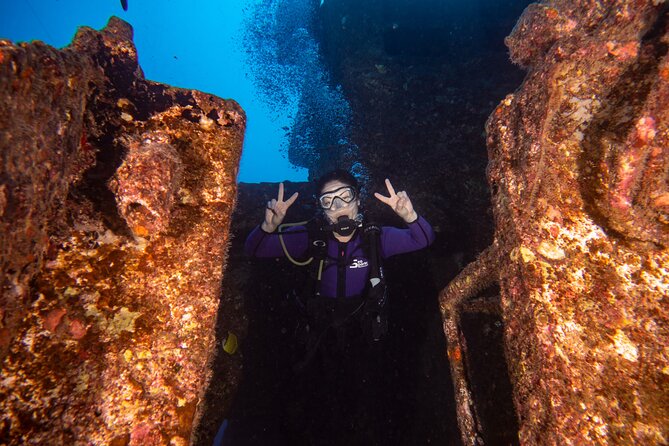
Every trip includes a professional guide (an instructor or lead guide accompanies the experience). For me, that’s a major quality marker because it turns the day into a real underwater plan instead of a generic outing.
The charter is explicitly geared toward experienced participants only, requiring advanced certification or a minimum number of logged underwater sessions. When a company sets that bar, it’s usually because they want to do more than the safe-and-typical route. And the operator says that with an experienced enough group, they can guide you to more adventurous areas of the underwater world.
That’s not just marketing language. It directly affects your options. A guide can only choose ambitious sites when the group can handle them. When the group is strong, you spend more time seeing things and less time correcting issues.
One more benefit of the small group size (max 16 people): the guide can manage spacing, briefing clarity, and pacing more easily than on large charters.
Gear Rentals, Health Checks, and Flying Timing Rules
You have options: you can rent scuba equipment or bring your own. Since the data doesn’t spell out what specific items are included in rentals, I’d treat this as a question to confirm when you book. If you bring your own, make sure it’s in good shape and comfortable for long stretches—especially if you’re traveling and might be using it in a saltwater environment you don’t normally dive in.
Before you go, you’ll complete a health questionnaire. Some pre-existing medical conditions (like asthma or heart conditions) may prevent you from scuba participation, and the operator advises you to consult your doctor. That’s not something to treat lightly. Scuba is one of those activities where your baseline health affects everything, from stress levels to how your breathing behaves underwater.
Also note the flying warning: scuba within 18 hours of flying is not recommended. If you’re arriving in Oahu the night before and planning an early morning underwater outing, you might be pushing your luck.
Fitness-wise, it asks for a moderate physical fitness level. In plain terms: you should be comfortable with the demands of a morning outing and underwater activity that requires capable control, not just sightseeing.
Service animals are allowed, and the minimum age is 14 years.
Reliability: Great Ratings, Plus One Real-World Caution
The overall rating is strong: 4.9 with 33 reviews, and 97% recommending it. That’s the kind of track record that usually means you’ll get a well-run charter, especially because this is an experienced-participant operation where safety and competence are non-negotiable.
Still, one negative report in the mix is a warning flag about responsiveness. In that case, the trip was reportedly cancelled the day before because the booking situation left them with only one client. The reviewer described difficulty reaching the company by phone and text, and they noted the booking was not rescheduled as expected. They also said refund coordination ended up needing to be worked out with the booking platform.
You can’t prevent the ocean from throwing curveballs (weather can cancel trips too), but you can protect yourself from avoidable chaos. I’d do two things: keep your communication channels open the day before, and make sure you can reach the operator quickly if plans change. If your schedule is tight—especially if you’re trying to protect decompression safety with flight timing—build in a buffer.
Should You Book This Oahu Shipwreck-and-Reef Charter?
Book it if:
- You’re an advanced scuba participant (advanced certification or a set number of logged underwater sessions).
- You want both a shipwreck and a reef day, not just one habitat.
- You care about wildlife chances like turtles and larger pelagic fish, and you like the idea of offshore sites.
Skip it or think hard if:
- You’re a newer scuba participant. The charter’s structure depends on experience.
- Your schedule leaves no room for change. The outing is weather-dependent and can be subject to last-minute adjustments.
- You’re planning to fly soon. The operator explicitly says scuba within 18 hours of flying isn’t recommended.
If you fit the target—capable, comfortable at depth, and excited by shipwreck structure plus reef variety—this is a strong-value morning outing built to show you more than a single standard swim.
FAQ
What certification do I need?
You must be a certified scuba participant with an advanced certification or have 25 logged underwater sessions.
How big is the group?
The group has a maximum of 16 people.
What are the typical depths for the two underwater stops?
The first stop is usually around a 100-foot descent to a shipwreck, and the second stop is typically a reef around 40–60 feet.
Is hotel pickup included?
No. Hotel pickup and drop-off are not included.
Can I rent equipment or do I need my own gear?
You can rent scuba equipment or bring your own.
Is it okay to scuba if I just flew to Oahu?
The operator says scuba within 18 hours of flying is not recommended. You will also be required to complete a health questionnaire before participating.