REVIEW · SURFING LESSONS
Surfing Waikiki with local Firefighters
Book on Viator →Bookable on Viator
Firefighter surfers teach you to stand fast. This private Waikiki lesson mixes real local know-how with Diamond Head views and patient, hands-on coaching. I love the on-land practice that builds confidence before you paddle out, and I love that the surfboard is included, so you’re not scrambling for rentals. One thing to plan for: it depends on good weather and surf conditions, so keep a little flexibility in your day.
For $90 per person, you’re getting a true beginner-friendly intro in about 1 hour 15 minutes, plus pickup by Grey Tacoma with surfboards on top. It’s offered in English, and you’ll return to the meeting point when it’s done.
In This Review
- Key things that make this lesson work in real life
- Why a Waikiki surf lesson taught by local firefighters feels different
- Getting there: Duke Paoa Kahanamoku Statue and the grey Tacoma pickup
- On the sand first: land drills that make the water feel possible
- Into the water: warm Waikiki waves and real-time coaching
- Safety, etiquette, and why the instruction style matters
- What you’ll actually do in 1 hour 15 minutes
- The included board and pickup: the value math is pretty clean
- The Diamond Head factor: views that keep motivation high
- Who this is best for (and who might want another option)
- Should you book Surfing Waikiki with local firefighters?
- FAQ
- How long is the surfing lesson in Waikiki?
- Is the surfboard included?
- What are the pickup details?
- Is this a private lesson?
- What level of experience is needed?
- What happens if weather is poor?
Key things that make this lesson work in real life
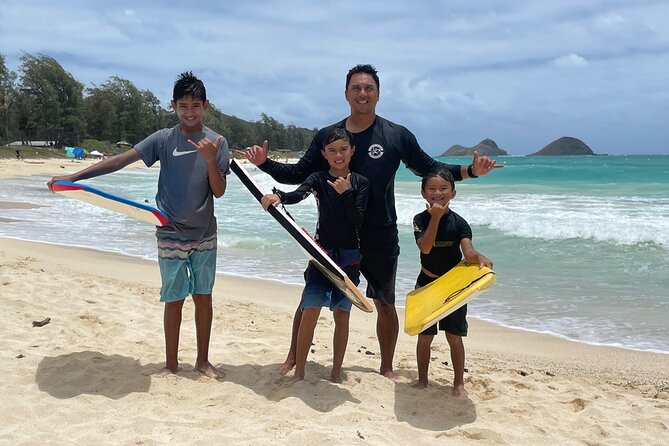
- Firefighter-led coaching with serious safety focus you feel from step one
- On-land drills first, so pop-ups and balance don’t come as a total surprise
- Beginner timing in Waikiki, where the waves are usually more manageable to learn on
- Clear, calm instruction from instructors like Jake and Casey (and Elsy is also listed as an instructor name)
- Diamond Head views while you’re floating and catching your first rides
- Private group experience, so you’re not competing for attention on a crowded beach
Why a Waikiki surf lesson taught by local firefighters feels different
Waikiki is famous for a reason: it’s right there, it’s beautiful, and it’s the kind of place where beginners can actually learn. But what makes this lesson memorable isn’t just the location. It’s the instructor vibe—local firefighters who surf when they’re off duty bring a steady, practical way of teaching that feels made for first-timers.
I like how the lesson starts with fundamentals instead of rushing straight to chaos in the water. You practice on land so your body learns what the pop-up is supposed to feel like, and you’re not trying to figure it out while the ocean is doing its thing. And once you’re in, you get real-time guidance so you can adjust mid-attempt instead of hoping you guessed right.
The other big win is perspective. Waikiki’s shoreline and Diamond Head show up early and often, so even between standing attempts, you’re still getting a visual payoff. That matters, because learning to surf can be a mix of excitement and quick frustration. A good teacher turns those moments into progress.
You can also read our reviews of more tours and experiences in Oahu.

Getting there: Duke Paoa Kahanamoku Statue and the grey Tacoma pickup
You meet near the Duke Paoa Kahanamoku Statue on Kalākaua Ave in Honolulu. If you’re using public transit, this area is convenient, and you’re not stuck figuring out a remote pickup point.
Pickup is described as a Grey Tacoma with surfboards on top. That detail sounds minor, but it helps a lot when you’re standing on the sidewalk watching for the right vehicle. The activity runs daily from 8:00 AM to 4:00 PM, so you have a decent window to fit it into your Oahu plans.
One logistics note to keep in mind: the experience ends back at the meeting point. Still, return transportation may not be provided in every case due to continuous bookings. In practice, that means you should be ready to make your way back if you don’t get picked up again for the ride.
On the sand first: land drills that make the water feel possible
The lesson flow is designed to lower the stress level right away. You start on the soft sands of Waikiki Beach, where the instructor walks you through key basics: paddling, balancing on the board, and the pop-up motion to stand. Instead of treating this like a show-and-go, you’re guided step by step.
I really appreciate this approach because surfing isn’t one skill—it’s a bundle of tiny motions that have to line up at the same time. If you try to learn pop-ups only once you’re already in surf, it’s easy to feel like the board is moving your legs, not the other way around. Practicing on land helps you get the body pattern before you add waves and water timing.
You also get safety tips and etiquette for sharing the waves. That part isn’t just classroom talk. It helps you avoid the common beginner mistakes that make the ocean feel harder than it needs to.
Into the water: warm Waikiki waves and real-time coaching
Once you’re comfortable with the board basics, you wade into the warm, clear waters of Waikiki. This is where the lesson earns its beginner label. Waikiki’s rolling waves are typically the kind of surf that gives novices a chance to catch something manageable without getting thrown into the deep end.
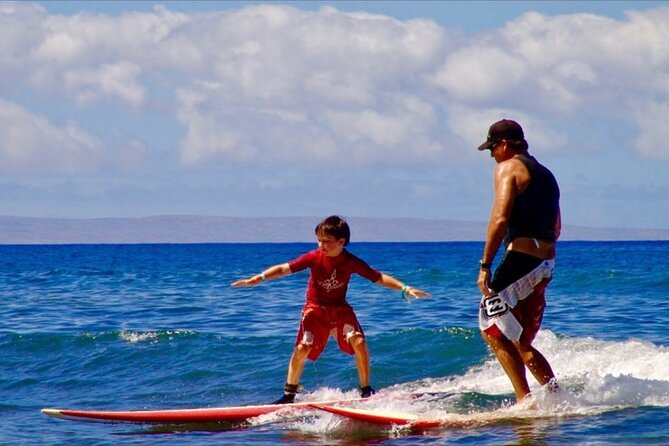
In the water, the instructor’s job is less about dramatic speeches and more about corrections you can actually use. You get coaching as you try, and you learn how to aim for the right wave, how to time your paddling, and how to position your body so you don’t fight the board.
There’s also down time between attempts—floating on the board while you reset. That sounds simple, but it’s a big deal for first-timers. You’re not constantly burning energy. You get brief breaks to watch what the waves are doing and to take in the views of Diamond Head and the shoreline.
Most people end the lesson with at least one solid standing attempt. Some go further and ride more than a single wave, especially if the timing clicks quickly. Either way, you’ll leave with a clearer sense of what to work on next—because surfing improves fast when you know what to focus on.
Safety, etiquette, and why the instruction style matters
Surfing can look carefree from the beach. In the water, it’s more like traffic: currents, wave timing, and other people sharing the same space. That’s why safety and etiquette instruction is part of the lesson, not an add-on.
One of the strongest signals I see here is the serious safety training that comes through in how people describe the experience. Families specifically noted advanced first aid or life support training, and that kind of background shows up in the overall calmness of the coaching. When you feel safe, you learn faster.
Etiquette also matters for confidence. If you understand where to wait, when to paddle, and how to avoid getting in other surfers’ way, you spend less time panicking and more time trying. That is the real secret to a good beginner lesson: a nervous student with bad information does worse than a student who’s relaxed and oriented.



What you’ll actually do in 1 hour 15 minutes
This isn’t a half-day surf camp. It’s a compact session that focuses on the essentials. The time is long enough to teach, practice on land, and get into the water for multiple attempts, but short enough that you won’t feel trapped in one activity all day.
Here’s how the structure usually pays off:
- Start with basics so your first wave isn’t your first lesson on earth
- Practice the pop-up so you can respond to waves more naturally
- Get into the water for real attempts, not just standing nearby
- Float, reset, and try again with instructor feedback
- Finish feeling accomplished and ready to progress
Some people even come away feeling like they were surfing quickly—one solo rider described catching waves within about 20 minutes. That’s not something I’d promise for everyone, but it shows the coaching is built to accelerate early success when the conditions and learner’s timing cooperate.
The included board and pickup: the value math is pretty clean
Price is $90 per person for about 1 hour 15 minutes. What makes it feel like decent value is that you’re not just buying instruction—you’re buying the whole setup that typically creates extra friction.
You get:
- A surfboard included
- Private transportation (with pickup offered)
You’re also given a mobile ticket, and the lesson is in English. That combination matters. If you’ve ever tried to set up rentals, find parking, and coordinate timing during a vacation day, you know how quickly energy disappears.
Also, there’s something practical about going early in your trip. One family plan highlighted a smart strategy: do it early so you can rent boards later and practice what you learned. If you only surf once, you’ll still have a great memory. If you surf early, you’ll probably get more than one good day out of the learning.
The Diamond Head factor: views that keep motivation high
Surfing is a sport where your brain can switch from focused to annoyed in seconds. The Diamond Head view helps in a simple way: it keeps the experience feeling special even when you’re not instantly standing.
It also makes the waiting feel less like waiting. When you’re floating or taking quick breaks, you’re not staring at nothing. You’re watching the shoreline and the headland, and the ocean feels like a place you’re part of—not a wall you’re trying to defeat.
In other words: even if you don’t master everything by the end, you still get a full Waikiki experience.
Who this is best for (and who might want another option)
This lesson is built for beginners, and most people can participate as long as weather and conditions cooperate. It’s a good fit if you want:
- A confidence-building first surf lesson
- A private group setting where you get attention
- A safety-focused instructor style
- A low-hassle way to learn without separate gear rental
It’s also notable for families. People described a 7th grader having a great time and a child with autism receiving one-on-one help in the water. That suggests the teaching style can be adapted to different needs, at least for the situations that have been reported.
If you’re already an advanced surfer looking for big-wave progression or advanced maneuvers, this may feel too beginner-focused. But if your goal is to stand up, catch your first waves, and leave Waikiki with real ocean skills you can build on, this is a strong match.
Should you book Surfing Waikiki with local firefighters?
If you’re visiting Oahu and you want a beginner surf lesson that feels organized, calm, and genuinely supportive, I’d book it. The combination of on-land practice, coaching in the water, and an included board keeps the day simple. Add the firefighter instructor energy and safety-first feel, and you get something more reliable than a generic “try surfing” experience.
I’d also choose it if you’re traveling with kids or if you want a more private setup where you don’t have to fight for feedback. The session length makes it easy to fit into a beach day, and the Diamond Head views make it feel like more than just a workout.
One final decision tip: book early in your trip if you can. You’ll understand what to practice when you rent a board afterward, and you’ll feel the progress right away instead of saving the learning for the last day.
FAQ
How long is the surfing lesson in Waikiki?
The lesson runs for about 1 hour 15 minutes.
Is the surfboard included?
Yes. Surfboards are included, so you do not need to rent one separately.
What are the pickup details?
Meet at the Duke Paoa Kahanamoku Statue on Kalākaua Ave in Honolulu. Pickup is described as a Grey Tacoma with surfboards on top. The activity ends back at the meeting point, though return transportation may not be provided in every case.
Is this a private lesson?
Yes. It’s listed as a private tour/activity, so only your group participates.
What level of experience is needed?
Most people can participate, and the lesson is designed to teach beginners through on-land practice first and then instruction in the water.
What happens if weather is poor?
The experience requires good weather. If it’s canceled due to poor weather, you’ll be offered a different date or a full refund.