REVIEW · SUBMARINE & GLASS-BOTTOM BOAT TOURS
Waikiki: Atlantis Submarine Adventure
Book on Viator →Operated by Atlantis Adventures Hawaii · Bookable on Viator
A submarine in Waikiki sounds sci‑fi, but it’s real. You board a glass-window ship and spend about 45 minutes underwater with narration and big views of Oahu’s marine life. I love that it’s family-friendly and air-conditioned, and it turns ocean geography into something you can actually see.
Two things I especially like: the setup makes it easy to enjoy the underwater world without scuba gear, and the live English narration (plus pre-recorded audio in multiple languages) keeps the experience moving and understandable. The views focus on turtles, coral, and fish, plus the sunk structures that make this site work.
One consideration: you must be willing to climb a near-vertical ladder to board and exit, and the whole trip is only around 2 hours total with limited underwater time. Also, Waikiki isn’t known for huge natural reefs, so part of what you see is the artificial reef system.
In This Review
- 5 quick things to know before you go
- Waikiki Atlantis Submarine Adventure: what makes it worth your time
- Getting from Hilton Waikiki to the submarine: the short shuttle and the ladder test
- Underwater windows at about 100 feet: how the 45-minute experience plays out
- What you’ll see: turtles, coral, fish, and the sunken ship-and-plane set
- Artificial reefs in Waikiki: why you’re not only seeing nature
- Your guide and the multilingual audio: what you’ll hear during the ride
- Comfort, seating, and motion: what the submarine feels like
- Group size and timing: why booking ahead helps
- Price in context: $167.81 and what you get for the money
- Who should book this Atlantis submarine tour (and who might not)
- Quick FAQ: Atlantis Submarine Adventure details you should know
- FAQ
- How long is the tour, including travel time?
- How long are you actually underwater?
- Where does the tour start and end?
- Is there a height requirement for children?
- What physical ability do you need?
- What languages are offered for narration?
- Is hotel pickup included?
- What if the weather is bad?
- Can I get a full refund if I cancel?
- Should you book Atlantis Submarine Adventure in Waikiki?
5 quick things to know before you go
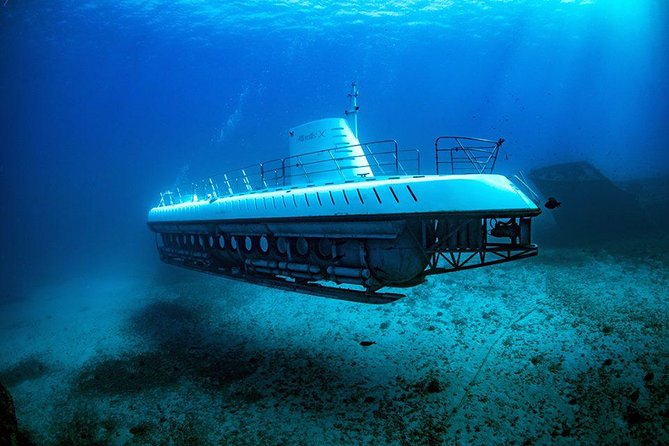
- 45 minutes underwater in a comfortable, air-conditioned cabin with panoramic windows
- English live guide (with pre-recorded audio options in Spanish, Japanese, Korean, and Chinese)
- Artificial reefs and sunk structures including ships and planes at the Oahu site
- Max 64 passengers on a large 64-passenger submarine, with Premium options offering more personal space
- Height and ladder requirements: at least 36 inches tall and able to climb near-vertical steps
Waikiki Atlantis Submarine Adventure: what makes it worth your time
This is the kind of Waikiki activity that scratches a different itch than beach time. You get a real “below the surface” experience at about 100 feet (over 100 feet is commonly referenced in the experience), and you don’t need to swim or hold your breath. The big payoff is seeing things you usually only hear about.
The best version of this tour is when you treat it like a guided underwater sightseeing route. You’re not chasing thrills; you’re watching coral gardens, fish schools, and occasional standout wildlife like sea turtles. It feels simple, but it’s still a genuine science-and-conservation story in motion.
Your expectations should match the format. You’ll spend less than an hour underwater, and sightings can vary by conditions and time of day. That’s normal for ocean life, and it’s part of the tradeoff for this easy, family-friendly approach.
You can also read our reviews of more tours and experiences in Oahu.


Getting from Hilton Waikiki to the submarine: the short shuttle and the ladder test
The experience starts at Hilton Hawaiian Village Waikiki Beach Resort (2005 Kālia Rd, Honolulu). Plan for a bit of standing around before you board, especially if your tour time is popular. The day runs on a tight loop: you go out, go down, and you come back to the same place.
After check-in, you take a short shuttle ride (about 10 minutes) to the submarine boarding area. Then you transfer to the submarine and start the descent. It’s not a long journey on land or at sea, which helps keep the whole trip from feeling slow.
Here’s the part that really matters for your comfort: you board and exit using a near-vertical ladder. The requirement is clear—participants must be capable of climbing up and down that ladder. If you’re nervous about heights, balance, or handholds, I’d test your comfort mentally before you commit. It’s brief, but it’s the most physical moment of the tour.
If you’re worried about motion, you’ll likely feel only a little. Still, one common note from riders is that the trip to the submarine can feel slightly bumpy. The submarine portion is typically where people feel most settled.
Underwater windows at about 100 feet: how the 45-minute experience plays out
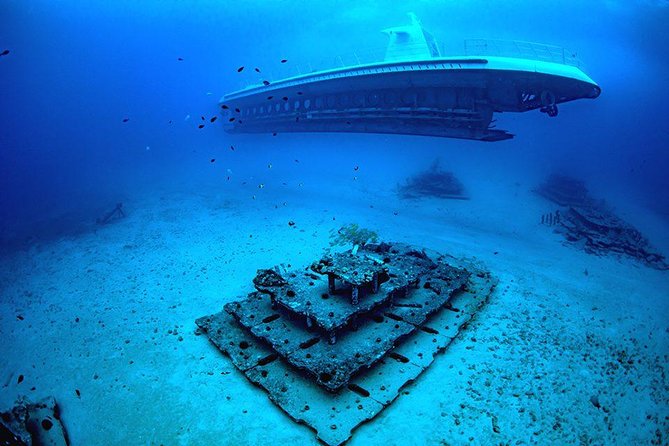
Once you’re down, the key detail is the timing. Your underwater time is around 45 minutes, and you’re there long enough to notice patterns—fish schools moving between structures, coral growth zones, and occasional wildlife passing through. The submarine itself has large viewports and a comfortable, air-conditioned interior, which helps a lot in Hawaii heat.
This isn’t like looking through a tiny porthole. The windows are panoramic, and the cabin is designed for group viewing. That means you can relax with your camera and not fight to get a seat with a view.
You’ll be listening as you look. The tour includes narration, so you’re guided through what you’re seeing rather than wondering what that patch of rock or coral is. In practice, that makes the minutes feel more useful.
What you’ll see: turtles, coral, fish, and the sunken ship-and-plane set
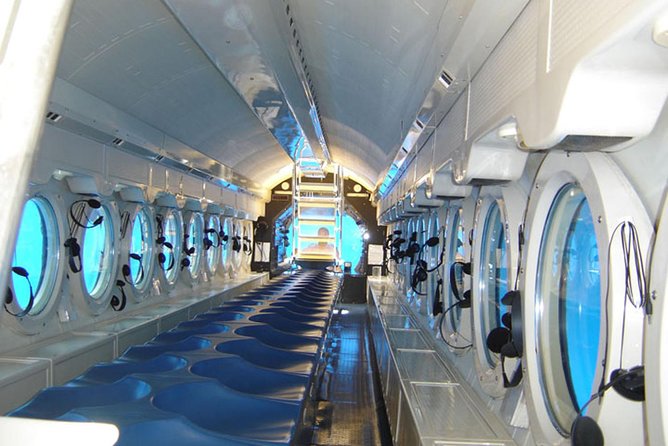
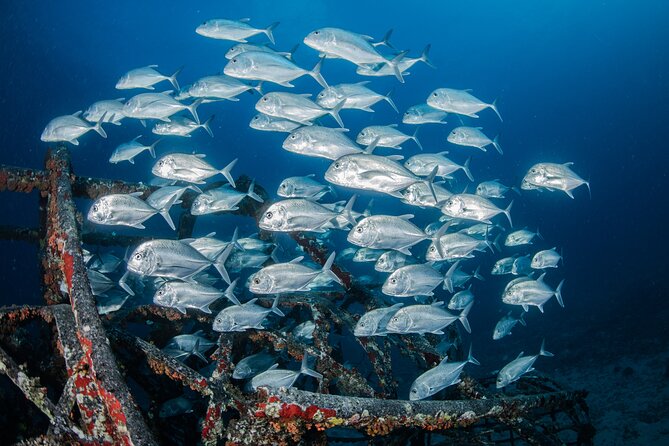
The underwater route is built around the Oahu site where marine life and coral are supported. Expect to see clusters of bright coral and schools of tropical fish through the windows. Sea turtles show up in the experience description, and riders also report seeing reef sharks and a green turtle.
You may also spot artificial structures: sunken ships and airplanes, plus other deliberately placed features. This is a big reason people love the tour, because it gives you a map you can follow. When the guide points out a wreck component, your brain finally connects the wreck to the habitat it’s created.
One pattern you’ll notice is that the underwater scene is more about “life around structures” than about one massive animal on display. If you go in expecting constant action, you could feel a little underwhelmed. If you go in curious—watching fish behavior, coral coverage, and the occasional bigger visitor—you’ll likely have a better time.
There’s another reality check worth knowing: at depth, color can look different. One explanation shared by the operator is that beyond about 50 feet, color absorption happens—so bright colors near the surface can look duller, and the whole scene may read more blue. That’s not bad luck; it’s physics, and it helps you understand why the same reef can look different from above water.
Artificial reefs in Waikiki: why you’re not only seeing nature
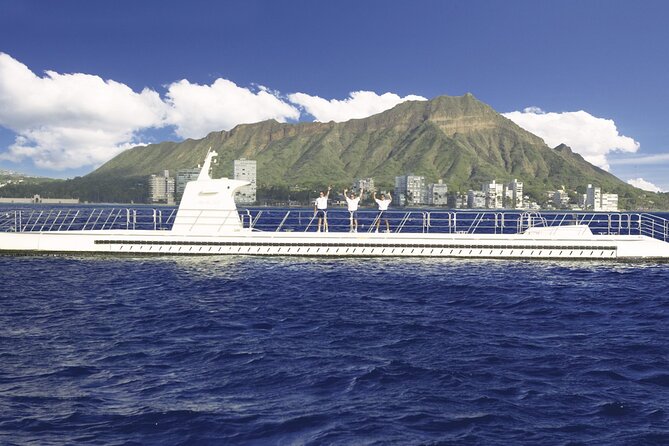
Waikiki’s reef story is complicated. The natural reef environment is described as sparse, and natural reef has been disappearing over the long term. That means the underwater scene you’re experiencing is partly supported by a man-made reef system designed to help marine life return.
This matters for your expectations. If you picture pristine, teeming natural reefs right off Waikiki, you might feel disappointed by comparison. But if you understand the goal—restoring habitat using artificial structures—the tour becomes more meaningful.
The “sunk structures” aren’t random. They’re placed as part of conservation work, and they create surface area for coral and cover for fish. Riders who felt the experience was most special tended to focus on how the wrecks and reef work together rather than on comparing it to a distant, untouched reef.
So I’d frame it like this: you’re seeing a functioning underwater project. It’s not just sightseeing; it’s habitat engineering that marine life can actually use.



Your guide and the multilingual audio: what you’ll hear during the ride
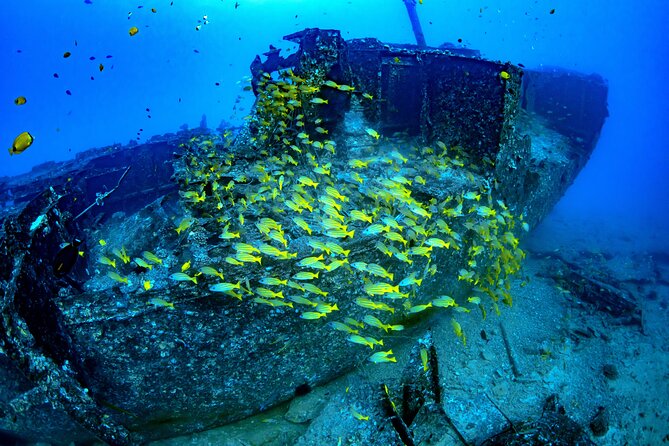
Communication is a major part of why this works. The tour offers complete live professional narration in English, and it also includes pre-recorded audio options in Spanish, Japanese, Korean, and Chinese. That means you won’t be stuck on the wrong language track if your group includes different speakers.
If you’re lucky, you’ll get a guide with a great mix of humor and explanation. One rider highlighted a guide named Chase for being funny and making the history and marine details land in a way that felt entertaining, not like a lecture. Another guide style mentioned was focused on keeping families engaged, with jokes and easy-to-follow context.
In plain terms, the narration helps you convert the underwater view into something you can remember. Without it, you’d still see fish and coral—but you’d probably spend more time wondering what you’re looking at.
Comfort, seating, and motion: what the submarine feels like
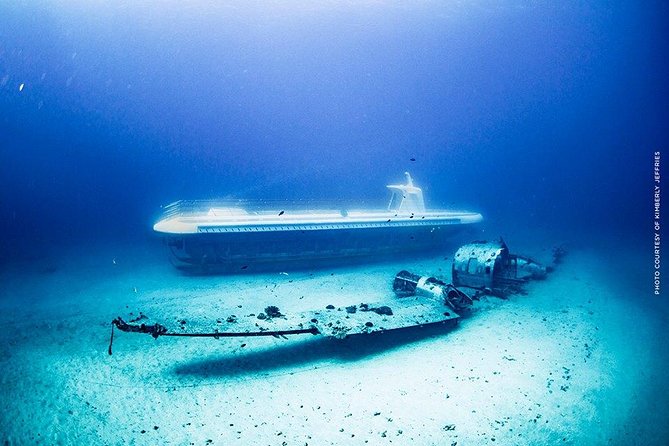
The submarine is built for comfort and visibility. It has an air-conditioned interior, comfortable seating, and large viewports designed for groups. It’s also a large 64-passenger submarine, which can sound crowded in theory, but people commonly describe it as roomy once they’re inside.
The operator information also notes an upgrade angle: the world’s largest hi-tech 64-passenger submarine offers enhanced personal space and large viewports only available to Premium Tour passengers. If you’re sensitive to crowding, that’s worth considering when you book.
As for motion, the submarine itself is the calm part of the trip for many people. The main motion note tends to show up on the route out to the submarine, where the shuttle ride can feel slightly bumpy. If you’re prone to motion sickness, you might want to be prepared for that short segment.
Group size and timing: why booking ahead helps
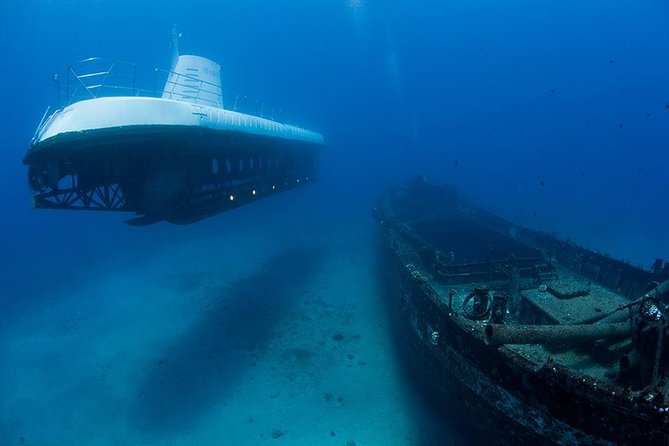
This isn’t a tiny private experience. The maximum is 64 travelers, which is the size of the submarine. That means your view can depend on where you’re seated, but the windows are wide and the cabin is designed to keep everyone included.
Also, this tour tends to be scheduled ahead of time. On average, it’s booked about 26 days in advance, so if you’re traveling in a busy window, it’s smart to lock in your preferred morning or afternoon slot sooner rather than later.
Timing matters because the ocean can change. Even with a planned route, wildlife sightings and visibility can shift. If you want the best odds for active marine life, choose the time window you’re most awake and comfortable for—then accept that the ocean isn’t a theme park.
Price in context: $167.81 and what you get for the money
At $167.81 per person (as listed), this is not a budget activity. The question is whether it feels like value for your style of travel.
Here’s what you’re paying for, in concrete terms:
- A 100-foot-plus view without scuba gear or special training
- Around 45 minutes underwater in an air-conditioned, sit-down setting
- Narration that helps you understand coral, fish, and the conservation structures
- A conservation-focused site that’s creating habitat where natural reef is limited
So if you want an easy, “see it, don’t learn it the hard way” way to experience Oahu underwater, it can be worth it. Riders who felt best about value often described it as a once-in-a-lifetime type of activity because it combines depth, comfort, and guided interpretation.
Now the fair drawback: you’re buying a short window underwater. If you compare this to longer water time experiences, it can feel pricey for the minutes below the surface. And some riders expected more wildlife variety in that specific area.
My practical advice: treat it as a premium sightseeing ticket, not as a full-day marine immersion. If you match your expectations to that, the price lands more reasonably.
Who should book this Atlantis submarine tour (and who might not)
I’d book this if you want:
- A family-friendly underwater experience without swimming or scuba
- A comfortable, sit-down way to see turtles, coral, and fish
- Guided narration that explains what you’re seeing in multiple languages
It may not be the best fit if:
- You’re expecting a natural reef in peak wildlife density right off Waikiki
- You’re extremely focused on seeing a specific animal every time
- You’re not comfortable with the near-vertical ladder requirement
This is also a great option for travelers who want a standout Oahu activity that’s different from beach snorkeling. If you’re already doing water activities, it still works because it’s a different format: windows, depth, and conservation structures instead of surface viewing.
Quick FAQ: Atlantis Submarine Adventure details you should know
FAQ
How long is the tour, including travel time?
The experience runs about 2 hours total (approximately), including a short shuttle ride and the time underwater.
How long are you actually underwater?
Your time underwater on the Oahu submarine portion is around 45 minutes.
Where does the tour start and end?
It starts at Hilton Hawaiian Village Waikiki Beach Resort at 2005 Kālia Rd, Honolulu, HI 96815, and it ends back at the same meeting point.
Is there a height requirement for children?
Yes. Children must be at least 36 inches (91 cm) tall to ride the submarine.
What physical ability do you need?
You must be capable of ascending and descending a near vertical ladder to board the submarine.
What languages are offered for narration?
English narration is available, and pre-recorded audio is available in Spanish, Japanese, Korean, and Chinese.
Is hotel pickup included?
No. Hotel pickup and drop-off are not included, and you’ll meet at the listed location.
What if the weather is bad?
This experience requires good weather. If it’s canceled due to poor weather, you’ll be offered a different date or a full refund.
Can I get a full refund if I cancel?
Yes, you can cancel for a full refund up to 24 hours in advance of the experience start time.
Should you book Atlantis Submarine Adventure in Waikiki?
If you want a safe, comfortable way to see Oahu underwater at depth, this is an easy yes. The best reason to book is the mix of big windows, narration, and conservation-focused structures—plus the fact that you don’t need scuba skills to enjoy it.
Book it especially if your group includes kids, mixed ages, or anyone who hates complicated water plans. And if you’re sensitive to ladders, motion, or heights, be honest with yourself before you sign up.
My final take: this is a premium, short-and-sweet underwater sightseeing ticket. When you treat it that way, it delivers something most people only imagine when they picture Hawaii’s ocean.