REVIEW · GUIDED
Hangar Guided Tour
Book on Viator →Operated by Pearl Harbor Aviation Museum · Bookable on Viator
Ford Island hits hard in a quiet, grounded way. This Hangar Guided Tour takes you into two still-standing WWII hangars and explains what the aircraft, crews, and attacks meant. You also get museum admission plus the short documentary East Wind, Rain.
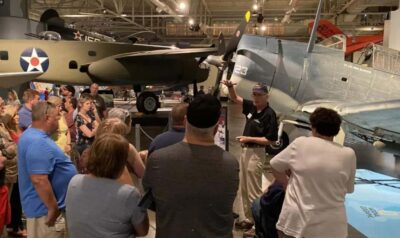
I love the way the tour uses physical space as the lesson. Standing in Hangar 79 with bullet holes still visible changes the story from dates on a page into something you can almost hear. I also like that it is practical and time-boxed: about an hour, small groups, and then you can stay longer on your own if you want.
The main drawback is simple: this is a focused hangar hour, not a full day inside the museum. If you want lots of simulator time or extra attractions, plan on paying extra or adding time before or after.
In This Review
- Key takeaways before you go
- Pearl Harbor on Ford Island: why these hangars matter
- Getting your bearings at the Pearl Harbor Aviation Museum entrance
- Hangar 37: the attack story told through aviation details
- Hangar 79 Restoration Shop: bullet holes, tools, and repairs
- The included museum time: MiG Alley and the East Wind, Rain film
- Docents who make the story stick (and why small groups help)
- Time management: making the most of about 60 minutes
- Cost and value: what $40.98 buys you
- Food, simulators, and extras you might want to plan around
- Who this tour suits best on Oahu
- Pair it with the rest of Pearl Harbor day
- Should you book the Hangar Guided Tour?
- FAQ
- How long is the Hangar Guided Tour?
- What’s included with the tour ticket?
- Are the flight simulators included?
- Is the tour offered in English, and do I need a printed ticket?
- Can kids attend?
- What is the cancellation window?
Key takeaways before you go
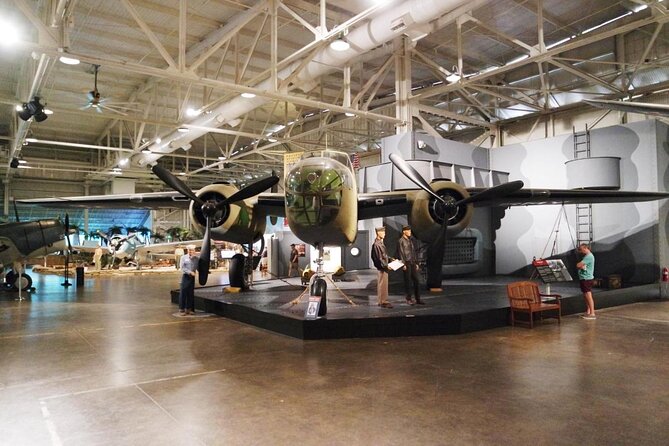
- Two WWII hangars, still there: Hangar 37 and Hangar 79 are the core of the tour.
- Bullet-scarred restoration space: Hangar 79 still bears scars from the December 7 attack.
- Docents tell the why, not just the what: the best moments are the stories woven through the aircraft.
- Museum admission is included: you can continue through exhibits like MiG Alley after the tour.
- Time is efficient: about 60 minutes with tours running multiple times daily.
Pearl Harbor on Ford Island: why these hangars matter
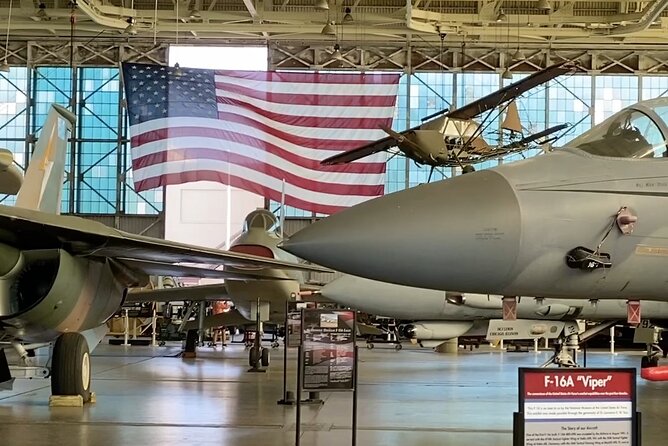
If you’re doing Pearl Harbor for the aircraft story, Ford Island is the place. The Pearl Harbor Aviation Museum sits on a former Naval Air Station and is a National Historic Landmark, so you’re not looking at history behind glass alone. You’re walking through the same kinds of structures that supported wartime aviation operations.
The tour zeroes in on what most visitors miss: the hangars that actually sheltered planes and work crews. In particular, Hangar 37 served as the entry point for visitors and was also tied to the utility squadron VJ-1 on the day of the attack. Hangar 79, often called the Restoration Shop, still shows the bullet-hole impact from December 7, 1941.
You can also read our reviews of more guided tours in Oahu


Getting your bearings at the Pearl Harbor Aviation Museum entrance
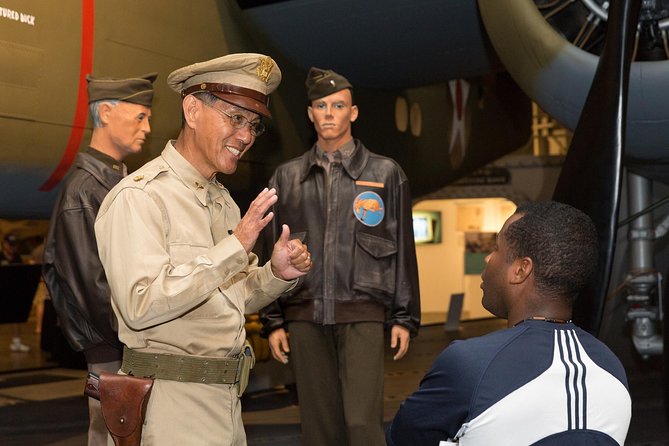
Your experience starts at Hangar 37, the main entry point visitors use for the museum. That matters because the tour gives you a framework before you start scanning aircraft and equipment. You’re not just wandering; you’re building a mental map of what you’ll see and why it’s connected to the Pacific War.
From there, you’ll move into Hangar 79 as part of the guided route. The whole idea is that the hangars act like chapters. Each stop adds context—what happened, what these spaces were for, and what survived.
Practical note: it’s a small group experience (up to 25). That size helps questions feel natural and keeps the pacing from turning into a sprint.
Hangar 37: the attack story told through aviation details
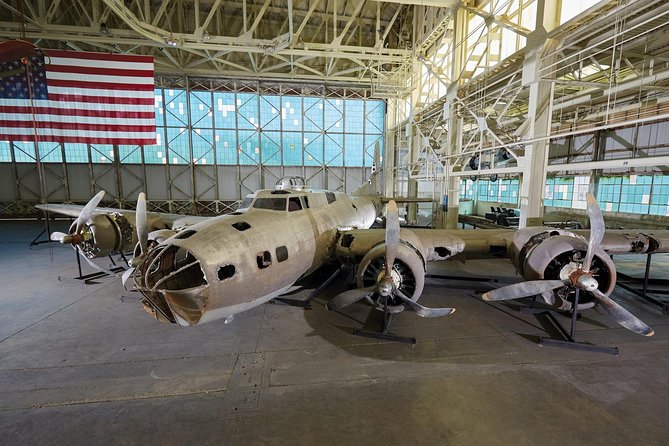
Hangar 37 is where the tour starts its narrative, including a brief overview of the attack on Pearl Harbor. What I like about this approach is that the tour doesn’t treat the hangar as a static building. It frames the space as part of an operational system: crews, aircraft roles, and the immediate response to what hit Pearl Harbor on December 7.
You’ll also see aircraft and artifacts connected to the day’s events and the broader air war. The museum highlights items like a piece of USS Arizona and shell samples used in the attack story. Even if you already know the headline facts, seeing aviation components and damaged material tied to the USS Arizona helps your brain connect the dots faster.
And if you’re an aviation person, this is the part where you’ll want to slow down. Aircraft in the hangar setting feel different than they do in open display areas. You can read the “shape of work” in how these spaces are laid out.
Hangar 79 Restoration Shop: bullet holes, tools, and repairs
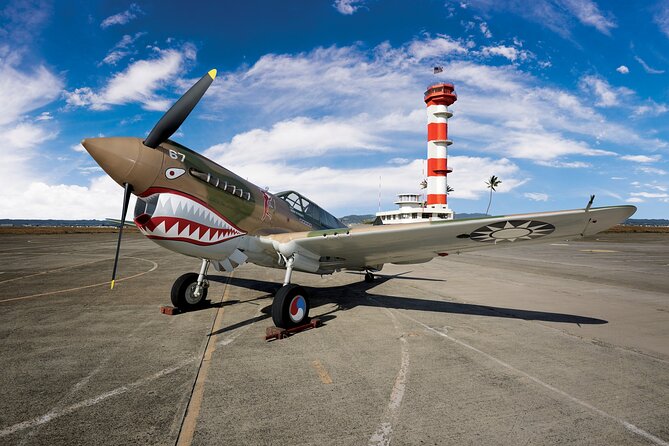
Hangar 79 is the emotional center of the Hangar Guided Tour. It’s described as a restoration hangar and a battlefield survivor, and the bullet holes from the Japanese attack remain visible. That single detail gives the stop weight—this isn’t a recreated set. It’s an original space marked by history.
During the war, Hangar 79 functioned as a maintenance and engine-repair facility. The tour also points out the kinds of aircraft work that happened there—fighters, bombers, and patrol aircraft connected to Pearl Harbor operations or movements to the front lines. The story is aviation labor, not just aviation spectacle.
A key part of this stop is the 1940s Carrier Aircraft Service Unit (CASU) rebuilt to wartime authenticity. In practice, that means you can view aircraft being restored with WWII-era tools, plus aircraft waiting for restoration. The tour experience helps you see restoration as its own kind of history—what it takes to keep aircraft from disappearing into time.
The included museum time: MiG Alley and the East Wind, Rain film
The tour ticket includes general admission to the museum, so you’re not limited to the hangars. After the guided portion, you can explore at your own pace through exhibits such as MiG Alley. There’s also a museum store, and the movie comes included.
The short documentary East Wind, Rain runs about 12 minutes and focuses directly on the December 7, 1941 attack. The timing is helpful. If you’re visiting during a busy day, a compact film can reset your understanding without eating half your afternoon.
One smart move: give yourself some flexibility after the tour. The guided hour sets context, but the museum takes on a different feel when you return to it with that context in mind.






Docents who make the story stick (and why small groups help)
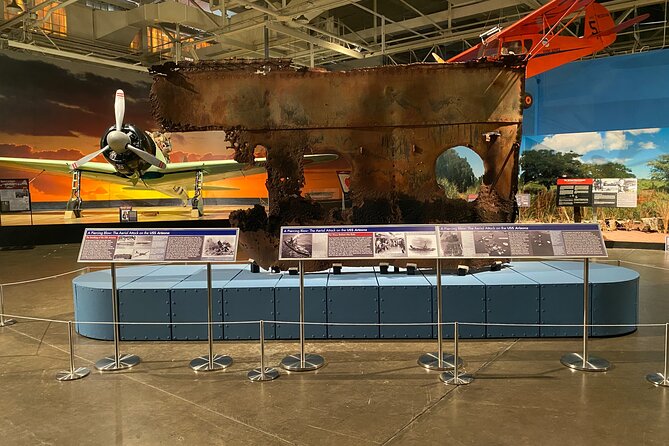
The best value of this tour is the docent-led storytelling. The tour is built around expert narratives—veteran docents who connect aircraft, events, and people with clear explanations in the hangar spaces.
In the reviews, guides are singled out by name for bringing the planes to life. Examples include Tomoko, Chris, Steve, and Laughlin Tanaka. The common theme across those positive comments is strong narrative pacing: tours that start with the attack overview, then move into specific aircraft roles and artifacts, then circle back to the human stakes.
Small groups matter here. With a maximum of 25 people, your questions are more likely to get answered without the guide feeling rushed. That’s a big deal in a museum setting where it’s easy to get stuck in a slow-moving line.
Time management: making the most of about 60 minutes
This is about an hour tour, not a half-day commitment. That’s useful on Oahu because many people are juggling multiple Pearl Harbor-area experiences.
To make it work smoothly:
- Arrive ready to walk and listen. The hangars are the focus, and the tour uses that time for a reason.
- If you want simulator time, treat it as an add-on. Combat flight sims and similar simulator attractions are not included in the base tour ticket.
If your schedule is tight, you can think of this as your “guided anchor.” Then you can decide how much extra museum time you want based on your interest level.
Cost and value: what $40.98 buys you
At $40.98 per person, you’re paying for a one-hour docent-led experience plus admission. On paper, that can sound like “just a tour,” but the included admission is part of what makes it fair value.
Here’s the practical math:
- The guided portion focuses on Hangar 37 and Hangar 79 with story-led context.
- The ticket also covers general admission, so you can keep exploring afterward without paying again for entry.
- The included film East Wind, Rain saves you time and decision-making on the spot.
Where the cost can feel less worth it is if you’re a solo visitor who likes reading everything independently. One criticism that comes up with guided tours is that signs and exhibit text can be detailed enough for some people. If you’re that kind of museum visitor, you might prefer self-guided time and only add the tour if you want the story connection.
Food, simulators, and extras you might want to plan around
Food and drinks are not included. The museum does have a restaurant inside, so you aren’t forced to leave the site for basic meals.
The simulator experience is also a fork in the road. The tour ticket does not include combat flight sims. One account notes a simulator add-on cost (reported as about $10 for 15 minutes), but pricing can change, so treat it as an extra budget item rather than something to count on.
If you’re traveling with kids, there’s a newer interactive element in the museum area that comes up in praise. For families, that can balance the emotional weight of the hangars with hands-on learning.
Who this tour suits best on Oahu
This Hangar Guided Tour is a strong fit if:
- You want the Pearl Harbor aviation story told with context, not just photos.
- You like World War II aircraft and the way machines connect to specific events.
- You prefer a tight, guided format over hours of wandering.
It may feel less ideal if:
- You only care about the USS Arizona Memorial viewpoint and want a mostly visual day with minimal museum time.
- You’re confident you’ll get what you need from exhibit labels and you don’t want a guide.
Pair it with the rest of Pearl Harbor day
Most people plan Pearl Harbor as a day with multiple stops, and Ford Island is often scheduled right after the main harbor sites. From the main Pearl Harbor area, free shuttle buses can take you over to Ford Island, where you can also see other major ships and aviation-focused sites (like the USS Missouri and USS Bowfin area, if you’re doing that part of the program).
The big advantage of doing this hangar tour when you’re already in the Pearl Harbor zone is timing. You’ll get a guided aviation perspective right alongside the larger set of memorial and ship experiences. Your understanding of what happened on December 7 becomes more three-dimensional.
Should you book the Hangar Guided Tour?
Yes, I’d book it if you want your Pearl Harbor aviation visit to feel connected instead of scattered. The hour gives you exactly two meaningful stops—Hangar 37 and Hangar 79—plus included admission and the East Wind, Rain film. For the price, it’s a way to get guided context without committing to a full-day tour.
I’d skip it if you know you’ll read labels, watch the film later, and you prefer self-paced museum time. But if you appreciate how a good guide can make aircraft and artifacts feel like a story about people, this is one of the best ways to use your limited time on Ford Island.
FAQ
How long is the Hangar Guided Tour?
It lasts about 1 hour.
What’s included with the tour ticket?
You get the docent-led Hangar Guided Tour plus general admission to the museum and exhibits, including East Wind, Rain.
Are the flight simulators included?
No. Combat flight sims are not included in the tour ticket.
Is the tour offered in English, and do I need a printed ticket?
The tour is offered in English, and you’ll use a mobile ticket.
Can kids attend?
Yes, children must be accompanied by an adult. Children under 4 can go free.
What is the cancellation window?
You can cancel for a full refund up to 24 hours before the experience starts. Within 24 hours, the amount paid isn’t refunded.