REVIEW · WAIKIKI TROLLEY & HOP-ON HOP-OFF TOURS
Waikiki Trolley Red Line Heroes & Legends Hop-on Hop-off Tour
Book on Viator →Operated by E Noa Tours · Bookable on Viator
One trolley, a whole Honolulu lesson. This hop-on hop-off Red Line ride is a smart way to connect Waikiki to downtown while hearing live commentary on monarchy, WWII, and daily-life culture. The route is packed with big landmarks, including the cemetery at Punchbowl, and it’s priced at $35, which can feel steep if you end up waiting a lot.
I like that you can get on and off at your own pace, then pair it with other plans like shopping stops in Kaka’ako, Ward Centre, or Ala Moana. Just plan for the real-world issues that show up on busy days: crowding, occasional long waits between trolleys, and audio that can be hard to catch with wind and engine noise.
In This Review
- Key things to know before you ride the Red Line
- Waikiki-to-Downtown Fast: What This Trolley Tour Really Delivers
- Price and Time Value: Is $35 a Good Deal?
- Riding the Hop-on Hop-off System: How to Plan Your Day
- Stop-by-Stop: From Waikiki Shopping Plaza to Ala Moana
- Stop 1: Waikiki Shopping Plaza
- Stop 2: Duke Paoa Kahanamoku Statue
- Stop 3: The Twin Fin Hotel
- Stop 4: Honolulu Museum of Art (HoMA)
- Stop 5: Hawaii State Capitol
- Stop 6: National Memorial Cemetery of the Pacific (Punchbowl Crater)
- Stop 7: Foster Botanical Garden
- Stop 8: Izumo Taishakyo Mission of Hawaii and Royal Kitchen
- Stop 9: Chinatown, Downtown Honolulu, and Hawaii Theatre
- Stop 10: King Kamehameha Statue
- Stop 11: Aloha Tower Marketplace and Honolulu Harbor (brief sightseeing break)
- Stop 12: SALT at Our Kaka’ako
- Stop 13: Ward Centre
- Stop 14: Ala Moana Regional Park
- The On-board Commentary: Getting the Stories Without Losing Audio
- Crowds, Waiting, and Stop-Finding: The Friction Points to Plan For
- Who This Tour Fits Best on O’ahu
- Should You Book the Waikiki Trolley Red Line?
- FAQ
- How much does the Waikiki Trolley Red Line cost?
- How long is the tour?
- What language is the narration in?
- What stops are included on the Red Line?
- When does the trolley operate?
- Do I need a paper ticket?
- Is Honolulu Museum of Art open every day?
- Can I cancel and get a refund?
- Are service animals allowed?
- Is the pickup area near public transportation?
Key things to know before you ride the Red Line
- Hop on and off so you can spend time where you actually want it
- Live narration covers key moments, from the Hawai’i monarchy to World War II
- Big sights in a short time: Punchbowl Crater, Chinatown, Honolulu Harbor, and more
- Audio can be tricky on open-air trolleys with wind and road noise
- Stops can be hard to spot at first, so arrive a bit early and confirm where you’re boarding
Waikiki-to-Downtown Fast: What This Trolley Tour Really Delivers
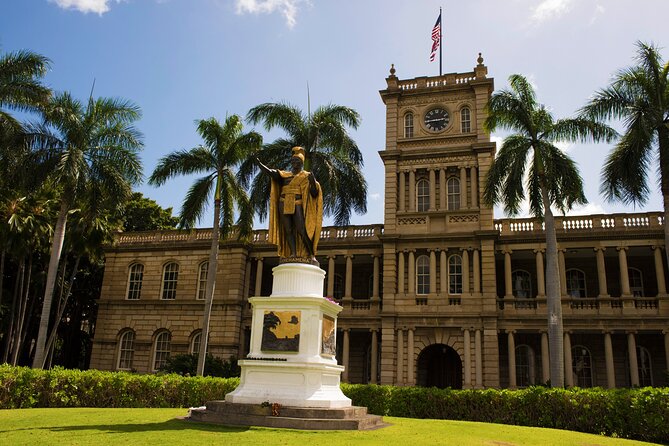
This is the kind of tour that helps you when you want to see a lot without locking yourself into a strict schedule. The Red Line links Waikiki and Honolulu’s main neighborhoods, and the hop-on hop-off setup means you decide how long to linger at each stop. If you’re time-poor or you’re still figuring out where things are, that flexibility is the whole point.
You also get storytelling while you ride. Guides on this route have been praised for making the history feel practical and connected to what you can see outside the window. Names that show up in standout experiences include Sam, Chuck, Chico, Kie, Turk, and Big Tony. That matters because this isn’t just a sightseeing bus with a canned track. It’s guided narration along the way, and it changes how you look at the places you stop.
The trade-off? Some days the experience can feel crowded, and the waiting times between trolleys can stretch. One of the most common complaints is not the route itself, but the time spent waiting when the system gets backed up.
You can also read our reviews of more tours and experiences in Oahu.


Price and Time Value: Is $35 a Good Deal?
$35 per person is not a budget price. But it can still make sense if you’re weighing convenience, time, and the benefit of on-board interpretation.
Here’s the value equation I’d use:
- If you’d otherwise spend a chunk of your day figuring out buses or coordinating multiple rides, the trolley can save friction.
- If you’re doing multiple big-ticket experiences on O’ahu, this can act like a high-efficiency overview of Honolulu so you know what to return to later.
- If you’re hoping for a calm, uncrowded ride where you always get a seat, then $35 may feel less fair when you get standing-room or long pauses.
One passenger compared alternatives directly, saying the local bus is far cheaper (they mentioned $3 with transfers). That’s the key trade: the trolley costs more, but it’s easier to use, and you get narration while you travel. If you’re comfortable navigating public transit on your own, you may decide the cost isn’t worth it. If you want a guided route with an easier rhythm, this price is easier to swallow.
Riding the Hop-on Hop-off System: How to Plan Your Day
On paper, the tour is about 1 hour 20 minutes. In real life, plan for about 2 hours if you hop off and actually use the flexibility. That’s especially true around major stops where you’ll want time to walk, take photos, and read what’s there.
Operating hours are listed as 8:00 AM to 4:00 PM, every day, during the 2024–2026 season range. That gives you a decent window for a mid-morning or afternoon city loop.
A few practical tips based on what tends to trip people up:
- Expect that some stops are easier to find than others. More than one person said signage for boarding can be confusing at first.
- Build in buffer time. When the line is busy, the wait between trolleys can turn into the main part of your experience.
- Come with a plan for what matters most. With hop-on hop-off, your day can expand fast if you lose track of time.
Also note the tour uses a mobile ticket, and confirmation is received when you book. That’s convenient, especially if you hate juggling printed vouchers.
Stop-by-Stop: From Waikiki Shopping Plaza to Ala Moana
The route is built like a sweep across key areas, so you’re not just moving up and down one strip. Below is what each stop is good for, plus a heads-up on what to watch for.
Stop 1: Waikiki Shopping Plaza
This is where you start close to Waikiki energy. It’s a natural first step if you want a quick orientation day and you’re staying near the main tourist corridor. If you’re using the tour on day one, starting here helps you connect what you already see from your hotel to what’s farther inland and downtown.


Stop 2: Duke Paoa Kahanamoku Statue
This stop is a cultural anchor. Duke Kahanamoku is tied to Hawai’i’s sports legacy and broader identity, so even if you don’t linger, it’s a strong early stop that frames the rest of the ride.
Stop 3: The Twin Fin Hotel
This is the kind of stop that works well for photos and quick looks. It also helps you transition away from “just Waikiki beachfront” into the bigger story of how Honolulu’s neighborhoods connect.
Stop 4: Honolulu Museum of Art (HoMA)
HoMA is one of the more “museum” stops on the route. It’s a great choice if you like art and history that goes beyond one or two monuments. One caution: the museum is noted as closed on Mondays and Tuesdays. If your timing lines up with those days, you may want to plan a longer stop at another site instead of counting on HoMA.
Stop 5: Hawaii State Capitol
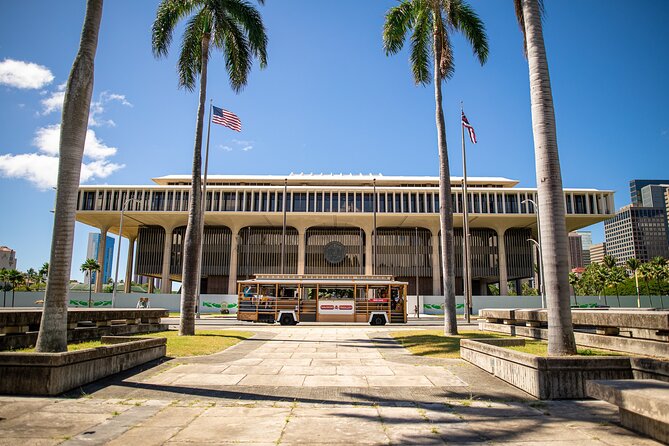
This stop is useful if you want context for how Hawai’i’s government shows up in the real city. The Capitol area can also be a good moment to breathe, stretch your legs, and reset before heading toward the more reflective sites later.
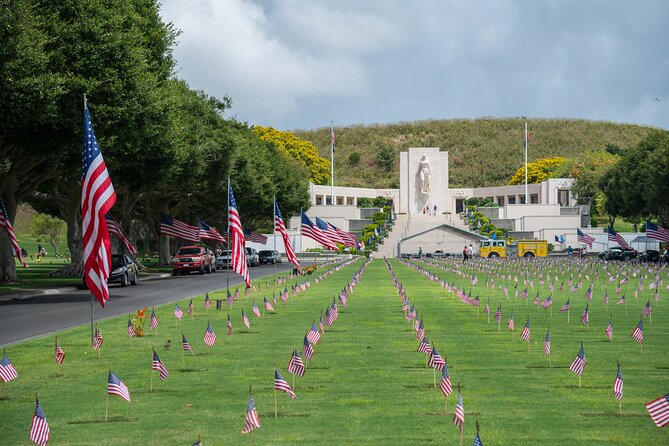
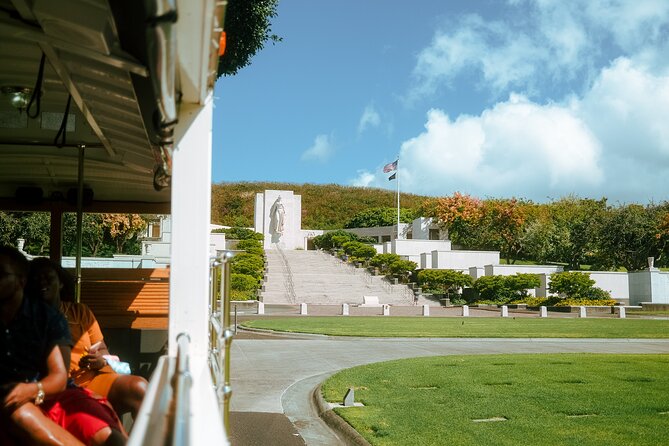
Stop 6: National Memorial Cemetery of the Pacific (Punchbowl Crater)
This is the emotional centerpiece for many people. The Punchbowl Crater setting is calming and solemn, and it’s one of those places where even a short visit feels meaningful. If you’re tight on time, you’ll still likely appreciate the stop because the surroundings do most of the work.
Tip for your pacing: go slow here. This stop is more about presence than speed.
Stop 7: Foster Botanical Garden
Foster Botanical Garden adds a nature break. If you’ve been stuck in shopping and sidewalks, this can feel like a reset. The trade-off is simple: gardens take time. If you’re the type who hops and snaps and moves on, you might want to limit your time here and save your walking energy for the bigger landmarks.
Stop 8: Izumo Taishakyo Mission of Hawaii and Royal Kitchen
This stop brings in a cultural and architectural focus. It’s a nice change of pace after the memorial and garden segments. The inclusion of Royal Kitchen suggests a place where you might want to stop for a bite if your schedule allows.
Stop 9: Chinatown, Downtown Honolulu, and Hawaii Theatre
This is where the tour shifts into street-level Honolulu. It’s a good option if you want food, shopping, and the sense of older city texture. A note to set expectations: one person described Chinatown as run down and said they could barely wait to get away, while others still enjoyed the food stop.
How to make this work for you:
- Use Chinatown as a flexible stop, not a required one.
- If it’s hot or crowded, take a short walk, grab what you want, then move on to keep the day pleasant.
Stop 10: King Kamehameha Statue
This is a strong photo-and-context stop. It ties the city’s modern layout to the legacy of Hawai’i’s rulers. Even if you’re not a deep history person, it’s an easy way to place what you’ve heard in narration against a real landmark.
Stop 11: Aloha Tower Marketplace and Honolulu Harbor (brief sightseeing break)
Aloha Tower is one of the classic Honolulu visuals, and the harbor views help you understand how the city faces the water. If you want a quick scenic reset before continuing to shopping and parks, this is a good segment.
Expect it to be a popular stop for photos and casual browsing.
Stop 12: SALT at Our Kaka’ako
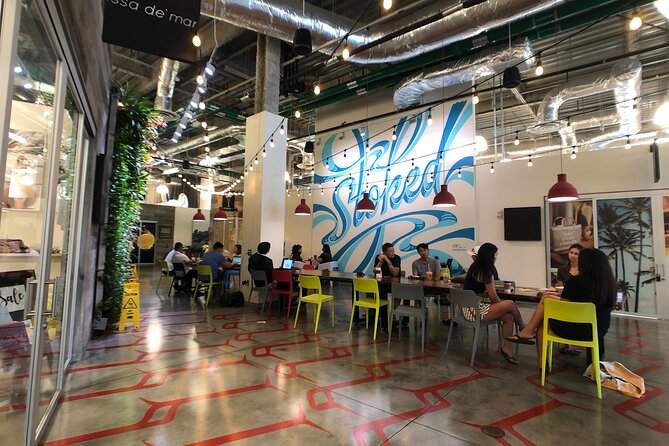
Kaka’ako brings modern energy and places to snack and browse. SALT is especially useful if you want to mix sightseeing with something more food-and-shop focused. This stop is often a good pick when you’re not in a full museum mood.
Stop 13: Ward Centre
Ward Centre is another shopping-oriented stop. I see it as a practical option for people who want a guaranteed place to find familiar comforts: shade, restrooms, and a place to walk without planning too much.
Stop 14: Ala Moana Regional Park
This is your open-space landing. If the earlier parts of the route feel dense, Ala Moana Regional Park is a chance to slow down with a longer stroll and easier breathing room. It’s also a nice “wrap the day” stop if you want a calm final view before heading back to your hotel area.
The On-board Commentary: Getting the Stories Without Losing Audio
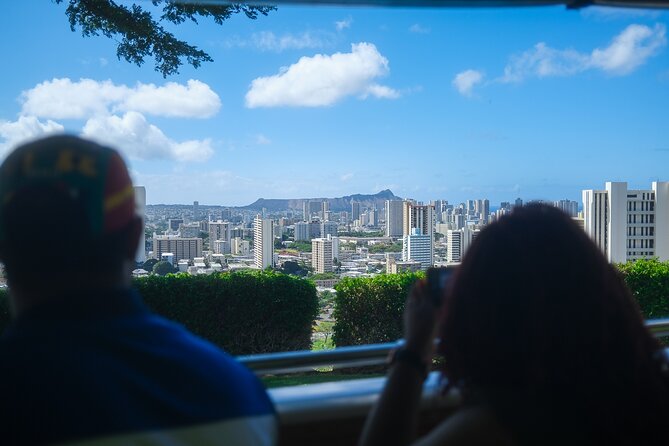
This tour’s real strength is how it connects places to what they mean: Hawai’i’s monarchy, the impact of World War II, and cultural context tied to what you’re seeing outside. Some guides also bring humor, like those playful jokes mentioned in standout experiences.
But you also need to know the weak spots:
- Wind and road noise can make it hard to hear the guide clearly on open-air vehicles.
- Engine noise can drown parts of the narration.
- If the trolley is crowded, you may be standing or shifting positions, which makes listening harder.
What I recommend:
- If hearing is important to you, try to sit where you feel the sound is easiest to catch.
- Bring a small pair of earplugs if you’re sensitive to noise. It can help you focus on the guide rather than fighting the soundscape.
And yes, you might notice names and pronunciation can vary by guide. One person wondered about the accuracy of pronunciations, but that’s not a reason to skip the tour. It just means you should treat the narration as a helpful guide, not a pronunciation exam.
Crowds, Waiting, and Stop-Finding: The Friction Points to Plan For
The most repeated problems are logistical, not scenic.
1) Long gaps between trolleys
Some riders said they waited a long time between buses at good stops. One complaint included a two-hour delay due to a parade. That’s rare, but it shows that traffic and events can disrupt the flow.
2) Crowding and no seats
A few experiences mention standing room only after overselling. If you’re traveling with someone who can’t comfortably stand for long stretches, this is a big factor in whether the tour is worth it.
3) Finding pickup points
A common frustration is missing the stop because signage wasn’t clear enough. If you’re doing this with tight connections, build in buffer time. Don’t assume every stop will feel obvious at first glance.
4) Comfort on the trolley
One person described the wooden seats as uncomfortable. Another said it was smooth and the staff were friendly. So it’s mixed: it might be fine if you’re comfortable standing or settling in, but don’t expect a luxury ride.
My practical advice: if you want this to feel fun instead of stressful, treat it like a flexible route, not a guaranteed timetable. Plan around your least flexible stop (often Punchbowl), then let the rest of the day breathe.
Who This Tour Fits Best on O’ahu
This Red Line works best for people who want an efficient city overview and don’t want to spend the day juggling routes.
It’s a strong match if:
- You’re visiting for the first time and want a day one orientation so you know what to revisit.
- You’re time-poor and want to see highlights like Punchbowl, Chinatown, and harbor views without piecing it together yourself.
- You enjoy guided stories while moving through neighborhoods, not just ticking off landmarks.
It may be a weaker match if:
- You’re sensitive to crowds or you need guaranteed seating.
- You don’t handle waiting well, especially at popular stops.
- You’ll be disappointed if your day runs slower than the listed duration.
If you’re also planning Pearl Harbor, keep expectations in check. One person said this could feel like a repeat if you’ve already done other history-heavy tours. Still, the city context can help you make sense of the larger story.
Should You Book the Waikiki Trolley Red Line?
Book it if you want an easy way to connect Waikiki and Honolulu highlights in one day, with live narration and real flexibility. The $35 price feels most justified when you use the hop-on hop-off part well—especially for the stops that reward walking time like Punchbowl and Chinatown.
Skip it or switch lines (if that’s an option you’re considering) if you hate uncertainty: possible long waits, crowded vehicles, and audio that can be hard to hear with wind and engine noise. If comfort and seating are your top priorities, you may decide the trolley risks turning into a frustrating “stand and wait” day rather than the smooth city tour you wanted.
FAQ
How much does the Waikiki Trolley Red Line cost?
It costs $35.00 per person.
How long is the tour?
The tour duration is listed as about 1 hour 20 minutes.
What language is the narration in?
The tour is offered in English.
What stops are included on the Red Line?
Stops include Waikiki Shopping Plaza, Duke Paoa Kahanamoku Statue, The Twin Fin Hotel, Honolulu Museum of Art (HoMA), Hawaii State Capitol, National Memorial Cemetery of the Pacific (Punchbowl Crater), Foster Botanical Garden, Izumo Taishakyo Mission of Hawaii, Royal Kitchen, Chinatown (with Downtown Honolulu & Hawaii Theatre), King Kamehameha Statue, Aloha Tower Marketplace (with a brief Honolulu Harbor sightseeing break), SALT at Our Kaka’ako, Ward Centre, and Ala Moana Regional Park.
When does the trolley operate?
It runs daily (Monday through Sunday) from 8:00 AM to 4:00 PM.
Do I need a paper ticket?
No. You can use a mobile ticket, and confirmation will be received at time of booking.
Is Honolulu Museum of Art open every day?
No. It is noted as closed on Mondays and Tuesdays.
Can I cancel and get a refund?
No. The experience is non-refundable and cannot be changed for any reason.
Are service animals allowed?
Yes. Service animals are allowed.
Is the pickup area near public transportation?
Yes. The meeting points are near public transportation.
If you tell me your travel dates and whether you plan to hop off at Punchbowl and Chinatown, I can help you map a simple time plan around likely crowding and your must-see stops.