REVIEW · EVENING EXPERIENCES
Oahu Night Dive: Adventure for Certified Divers
Book on GetYourGuide →Operated by Dive Oahu Inc · Bookable on GetYourGuide
Night water in Oahu is where the reef switches characters, and this trip gives you two separate windows to see it. I love that you get premium rental gear (including 2 tanks and lights), and I also like the clear structure: first at twilight, then after dark. One thing to consider: it’s for certified divers only and the schedule includes a full safety briefing before you’re in the water.
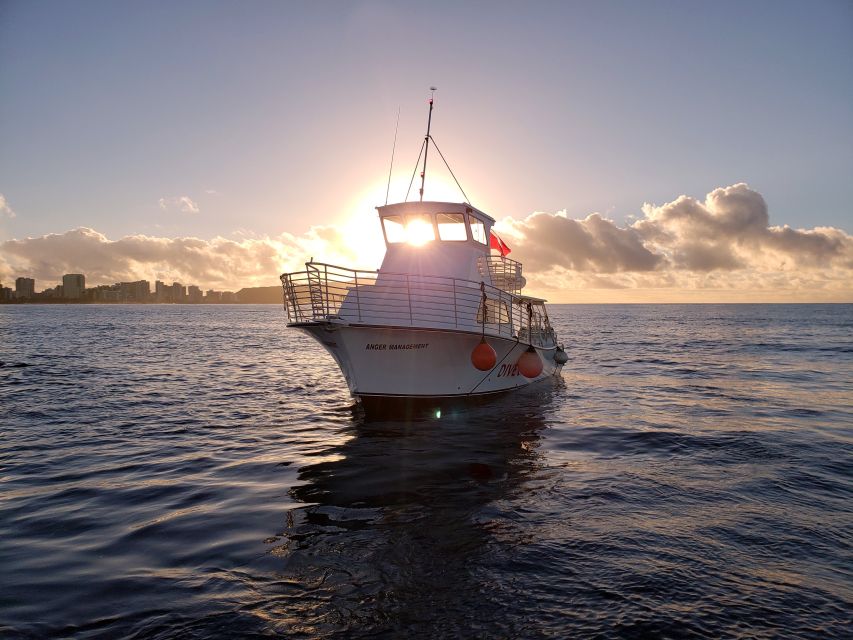
The boat setup is practical too, with a sun deck, shaded deck, and a restroom onboard—nice when you’re changing gear and waiting for that next go-in moment. You’ll be with a PADI-certified guide on both guided sessions, with time for snacks and refreshments during a relaxed surface interval.
The overall rating is 3.6 out of 5 from six reviews, and at least one verified booking rated it 5 out of 5. That mix is a reminder to read your own comfort checklist carefully, especially for night conditions and the requirement to show your certification.
In This Review
- Key highlights that make this night outing worth your time
- Oahu’s south shore at night: why this trip feels different
- The 3-hour flow: what happens before, between, and after the water
- Before you go in: meeting, check-in, and safety briefing
- First guided session (about 1 hour): twilight on a famous reef area
- Surface interval (about 30 minutes): snacks and sunset downtime
- Second guided session (about 1 hour): night behavior with included lights
- Back onboard
- What you’ll likely see after dark (and what that really means)
- The two dive locations strategy: getting more variety, not just repeating yourself
- Premium gear rental: the value of not hunting equipment last minute
- On the charter boat: comfort details that actually help at night
- Pricing and value: is $248 fair for what you get?
- Who should book this night scuba outing—and who should skip it
- Best fit
- Not suitable
- How to prepare so night conditions feel fun, not stressful
- My take: should you book this night scuba outing off Oahu?
- FAQ
- Do I need scuba certification to join this night outing?
- How long is the experience?
- What time of day are the two underwater sessions?
- Is there a break during the outing?
- What gear is included in the price?
- Are snacks and drinks included?
- Where do I meet the group?
- Is parking included?
- Can I fly after the scuba sessions?
- Who can’t join this activity?
- What’s the cancellation and payment flexibility?
Key highlights that make this night outing worth your time
- Two guided sessions in one 3-hour block: twilight first, then complete darkness later
- Gear you don’t have to chase: 2 tanks, wetsuit, weights, fins, BCD, and lights included
- A twilight-to-night animal switch: reefs in transition, plus nocturnal species showing up
- Comfort on the charter: sun and shaded decks, plus a restroom onboard
- Snacks and refreshments on the surface during the sunset break
- South shore focus on Oahu, with the promise of seeing sharks, turtles, rays, eels, and more
Oahu’s south shore at night: why this trip feels different
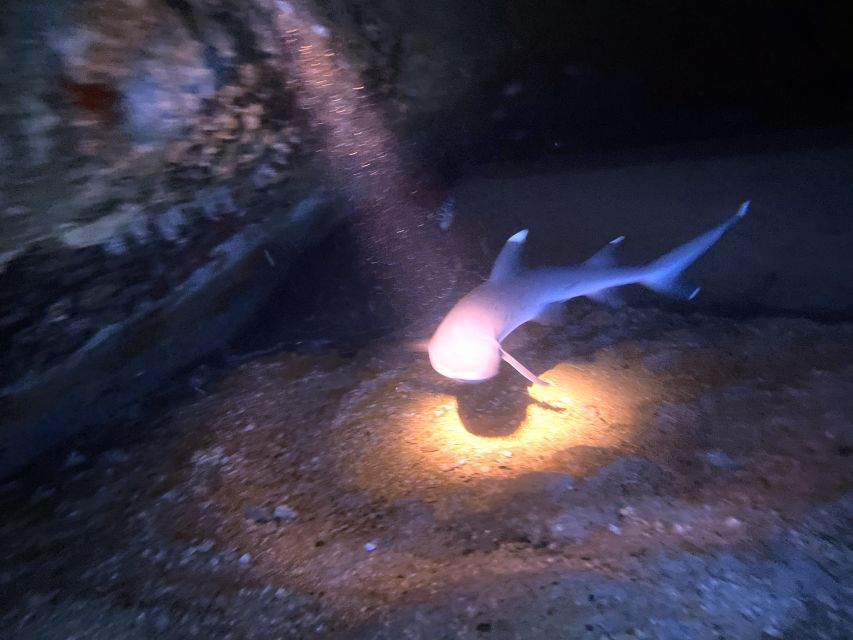
Oahu’s underwater world changes fast after sunset. In daytime you might cruise past the reef like it’s mostly scenery. At night, you start noticing movement—small pulses, slow glides, and quick flashes that you’d miss under bright light. This tour leans into that shift on purpose by running two guided sessions back-to-back in a single outing.
You’re also not just relying on luck. The plan is built around timing: the first water time happens at twilight, when some marine life is still hanging around while other animals begin to get active. Then there’s a second guided session when it’s darker, and you’re expected to see what the reef looks like when the only illumination comes from your gear’s included lights.
If you like nature that feels a little mysterious—like you’re working the night shift instead of taking a daylight stroll—this setup matches that mood. And yes, it can be plain thrilling when you realize you’re watching an ecosystem do its nighttime routines in real time.
You can also read our reviews of more evening experiences in Oahu



The 3-hour flow: what happens before, between, and after the water
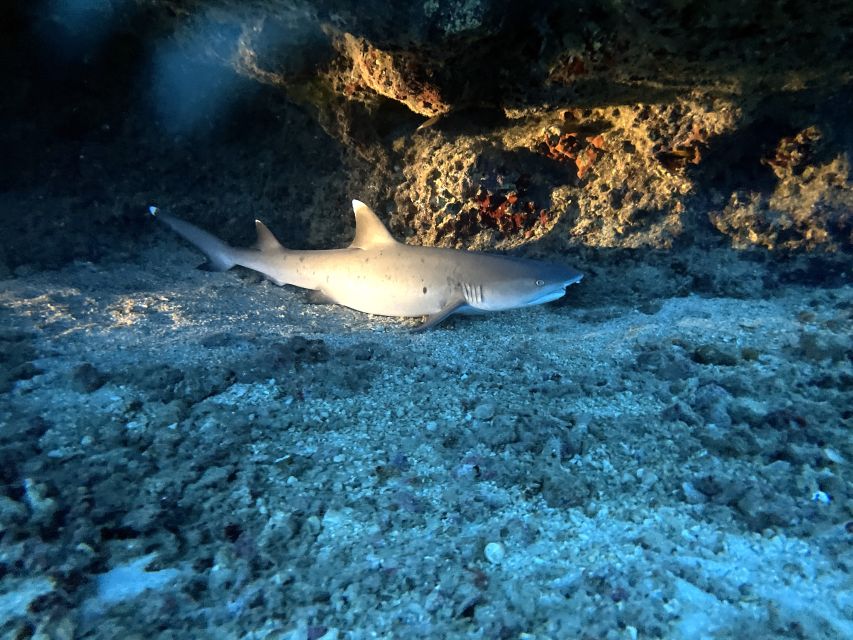
This outing is tight and efficient, with everything planned inside about 3 hours total.
Before you go in: meeting, check-in, and safety briefing
You meet at the harbor at the front row, slip 8, and you should look for the large picture of a turtle. Arrive early—at least 30 minutes before the start time—so you can get checked in, handle gear, and settle in.
Then the safety briefing runs about 25 minutes. For me, that matters because night conditions require good habits: buoyancy control, steady pace, and staying aware of what’s above and around you. Even if you’re confident, a proper briefing helps everyone move together instead of scattering in the dark.
First guided session (about 1 hour): twilight on a famous reef area
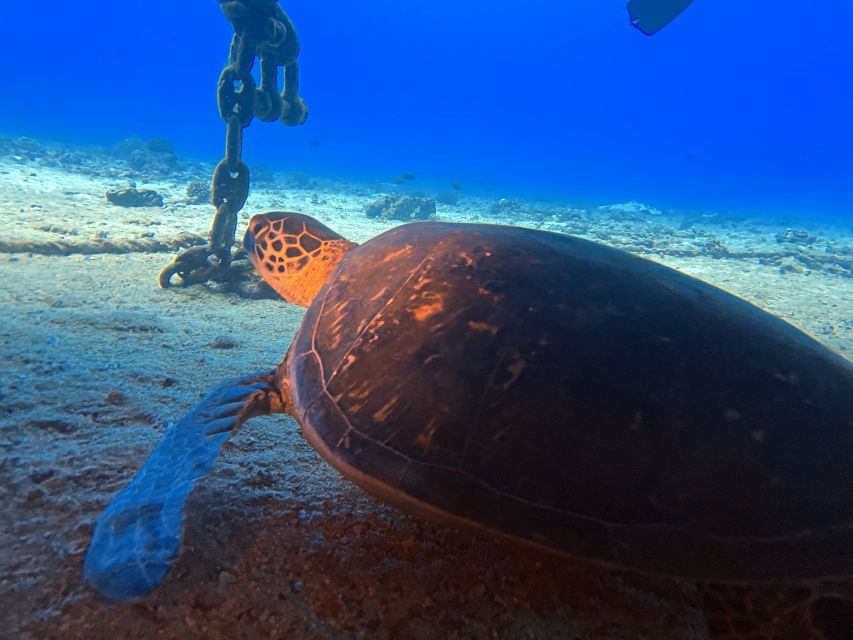
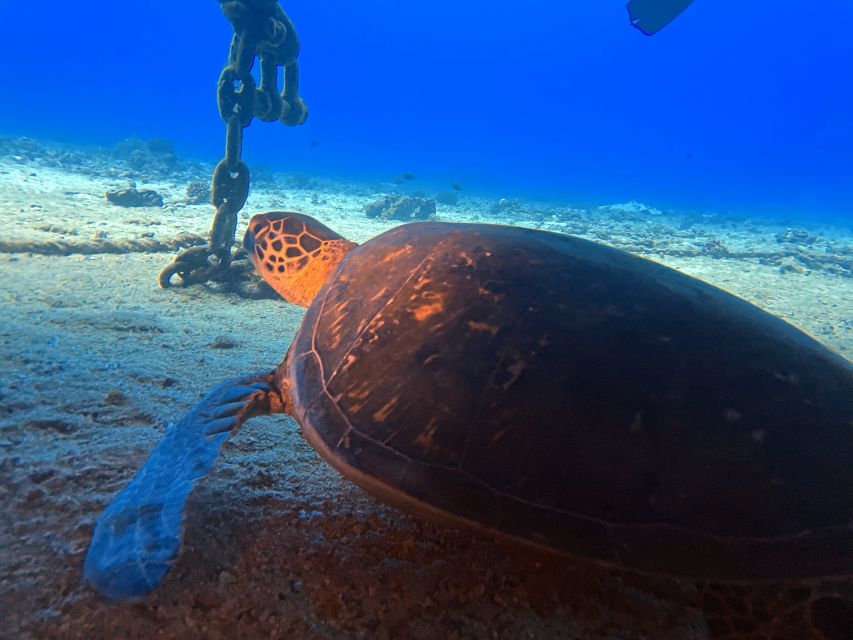
Your first guided tour is done at twilight at one of Oahu’s famous scuba locations. The goal here is the transition phase. Some species are shifting from day behavior to night behavior, and that’s when you can get a mix—animals that are still out, plus nocturnal creatures that start making their move.
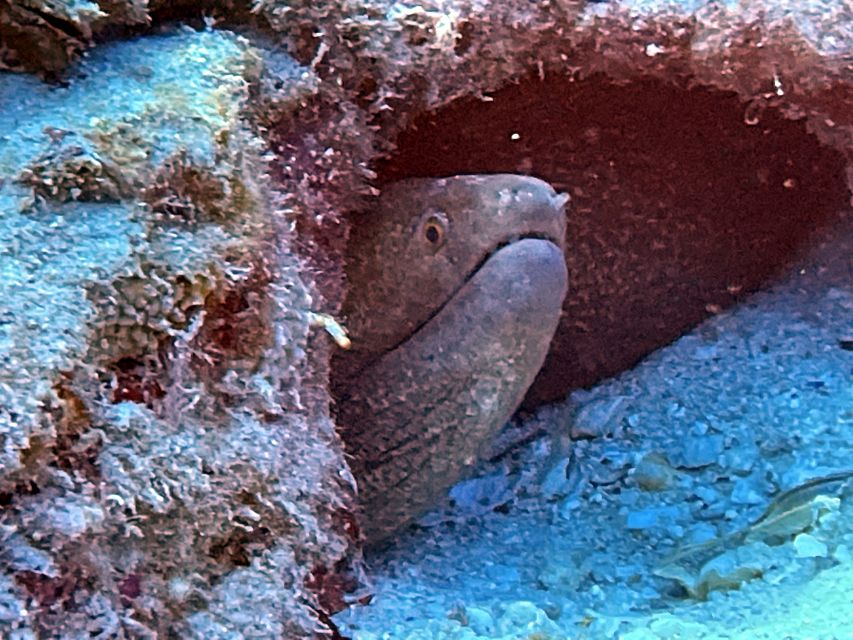
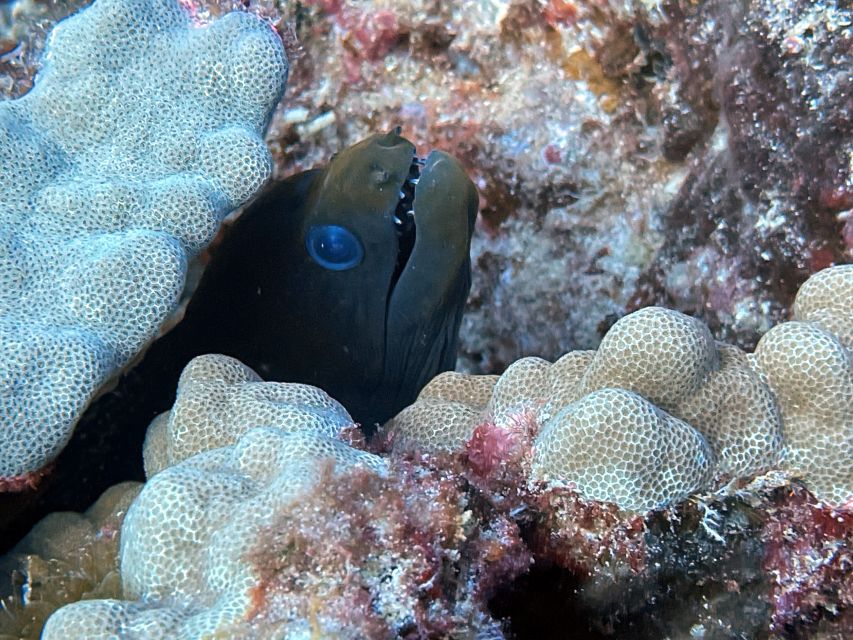
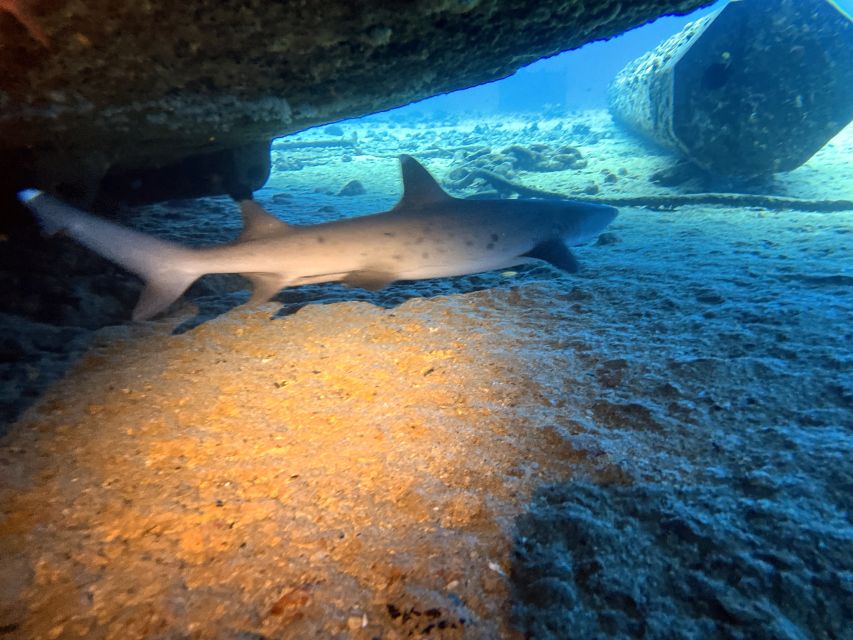
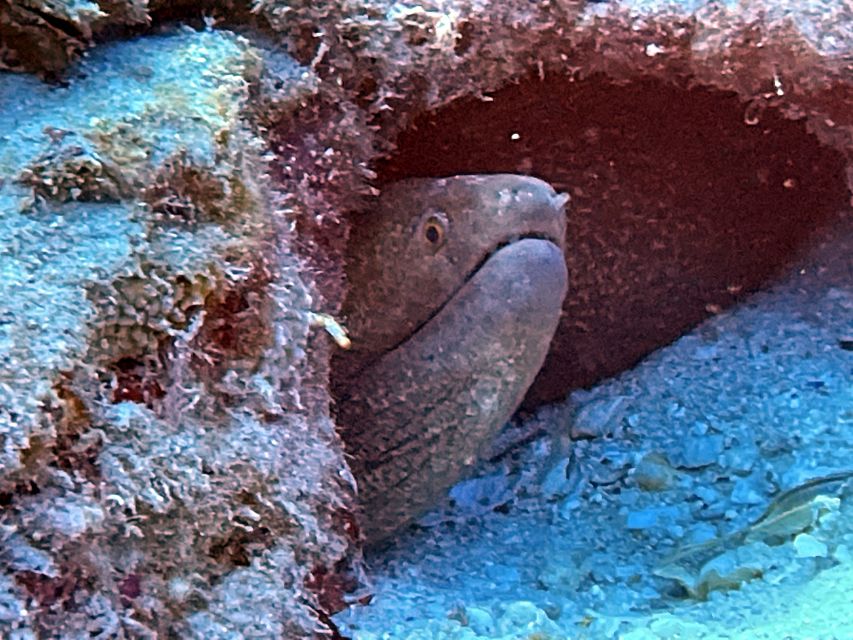
The tour description specifically flags possible encounters such as sharks, turtles, eels, rays, octopus, starfish, crabs, Hawaiian endemic fish, and dolphins. You’re not guaranteed every animal, but the range is a strong hint that the guides are scouting for more than just “pretty reef views.”
Surface interval (about 30 minutes): snacks and sunset downtime
Between the two sessions, there’s a break of about 30 minutes. This is when you’ll likely warm up a bit, regroup, and refuel with snacks and refreshments. It’s a smart rhythm: you get time to reset before the second push into darkness.



Second guided session (about 1 hour): night behavior with included lights
The second guided tour is described as ocean nightlife on Oahu’s south shore, with complimentary underwater lights. You’ll go in when it’s dark enough that you truly feel the difference between twilight and night.
The tour wording emphasizes going into near-total darkness during this second session. That’s where the guide’s role becomes extra important, because you’ll rely on controlled sightlines: what your light reveals, what the guide points out, and what the group avoids so you don’t accidentally kick up a cloud or drift.
Back onboard
After the second guided session, you return to the meeting location. The whole structure—briefing, first session, break, second session—keeps the outing focused. You’re not spending hours doing “waiting around.” You’re doing scheduled underwater time with a recovery window built in.
What you’ll likely see after dark (and what that really means)
Night scuba is not just daytime underwater with your lights turned on. The animal behavior changes, and you feel it quickly once you’re in.
During twilight, you’re in that in-between zone. Some life is still active from daytime, and other creatures are beginning to shift into nocturnal rhythms. The tour specifically calls out reefs in transition. In plain terms: you may see more of the larger cruisers while also getting small, cautious movement near the structure of the reef.
Then, after dark, it’s about behavior you don’t get in sunlight. With lights provided, you’ll notice animals that behave like they’ve been saving their attention for this hour. That’s when the tour’s list becomes more relevant—things like eels and octopus, plus rays and other reef-linked creatures that can look effortless until you see how they use the cover.
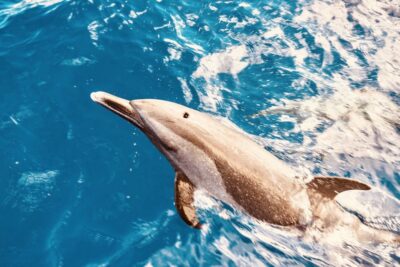
The tour also mentions dolphins. You won’t necessarily see dolphins every night, but the fact that it’s specifically in the encounter list tells me the operators have routes and scouting routines that consider surface wildlife, not just the reef.
One more practical point: with any night session, your “seeing” depends on buoyancy and positioning. If you hover well and keep your kicks minimal, you’ll keep the water clear enough to enjoy what the guide is finding. If you get tense and thrash, you’ll spend more time managing yourself than enjoying the reef.
The two dive locations strategy: getting more variety, not just repeating yourself
A single night underwater outing can feel repetitive if it’s just one long run. This one is designed to add variety by covering two locations (or two distinct “windows” on Oahu’s south shore).
The first session is at twilight, which is a big deal. Twilight isn’t full day and it isn’t full night. That means you can catch creatures that don’t fully commit to either schedule. It’s also a gentler mental shift: you’re still learning the dark rhythm, but the reef isn’t completely blank.
The second session is explicitly the darker half, when the included lights matter most. That gives you a clear before-and-after comparison that’s hard to get with a single location.
If you’re the type of diver who likes progression—like training your senses to see better at night—this format works well because it gives you a built-in upgrade. You get one pass to settle in, then the second pass asks you to pay attention to more subtle nocturnal activity.
Premium gear rental: the value of not hunting equipment last minute
At $248 per person for about 3 hours, the value hinges on what you’re getting. This tour includes premier gear rental: 2 tanks, dive lights (provided as complimentary lighting for the night session), a wetsuit, weights, fins, and a BCD.
That’s a big deal if you don’t want to haul your own setup or if you’re traveling with limited luggage. Night scuba equipment is also not the place to “make do.” Your lights, buoyancy control gear, and wetsuit fit all affect comfort and safety. When the rental is standard and included, you can spend your mental energy on the experience instead of gear logistics.
Also: two tanks matters. It’s one reason the trip can pack in two guided sessions without feeling like a quick hit. For you, it translates to more real underwater time within the 3-hour window, rather than running on fumes and rushing the second part.
If you’re used to renting on-island, you’ll still appreciate this package because it’s clearly designed for night conditions—especially the lights, which aren’t always included on smaller trips.
On the charter boat: comfort details that actually help at night
Night outings make boat comfort more important than it sounds. When you’re changing gear, waiting for the next go-in moment, and dealing with salt air, small conveniences add up.
This charter includes:
- a sun deck and a shaded deck
- plenty of space to move around
- a restroom onboard
You don’t need a “luxury” boat to have a good experience, but you do need enough room to kit up without turning it into a slapstick choreography practice. Shaded space is also huge if you’re arriving from daytime heat and you don’t want to bake while you wait for dusk.
And the restroom matters more than people think—especially when the schedule involves a safety briefing, gear prep, and a surface interval where you’re likely to drink something and snack.
Pricing and value: is $248 fair for what you get?
$248 for a 3-hour night scuba outing isn’t a bargain price, but it doesn’t look overpriced for what’s included. Here’s the value logic:
You’re paying for:
- two guided sessions with PADI-certified instruction
- gear rental that includes tanks and key night equipment (lights, wetsuit, weights, fins, BCD)
- snacks and refreshments on the surface
- a charter with sun and shaded seating and a restroom
If you had to arrange tanks, wetsuit, buoyancy gear, weights, and lights separately, the total can climb quickly—especially for night-specific gear like lighting. This ticket bundles it all, which is what you want when you’re short on time and don’t want to gamble on finding quality equipment in a rush.
Also, the structure is efficient: you’re not dragging this across an entire half-day. You get two distinct underwater windows in a compact time frame. If you value variety and guided attention, the price feels more reasonable.
Still, the rating of 3.6 out of 5 from six reviews tells me you should set your expectations correctly. Night conditions are weather- and visibility-dependent, and night comfort is very personal. If you hate cold, darkness, or floating discipline, the “wow” factor might not land the way it does for other divers.
Who should book this night scuba outing—and who should skip it
This one is clear about requirements, and you should treat that as a good sign. It’s not trying to be everything for everyone.
Best fit
You’ll probably love this if you:
- are a certified diver who wants a structured night experience
- like guided instruction and want help navigating nocturnal conditions
- want to see a broad mix of reef life, including the possibility of larger animals like sharks, turtles, rays, and dolphins
- prefer having gear handled for you so you can focus on the water time
Not suitable
Skip it if:
- you’re under 15
- you’re pregnant
- you have pre-existing medical conditions
- you’re not able to swim or aren’t in good health (you’ll need to meet the activity’s readiness expectations)
Also note the rule about flying: you must not fly within 24 hours after diving. If your itinerary includes a quick hop to another island or a same-day flight, you’ll need to plan your schedule carefully.
How to prepare so night conditions feel fun, not stressful
You don’t need special night training, but you do need to show up ready.
Bring:
- swimwear
- a towel
- your diving certification proof (you must present it at the boat)
Plan around comfort:
- think about wetsuit fit and how you’ll manage getting it on and off calmly in the changing area
- bring your own routine for staying warm and hydrated before the second session
And do a little pre-commitment thinking:
- You’re going into complete darkness during the second guided session, with lights included. If you struggle with darkness or get anxious in low visibility, talk with your guide ahead of time or choose a different type of outing.
Lastly, your own safety is part of the experience. If you arrive tired, rushed, or overcaffeinated, night scuba won’t feel as good. Show up early, take the briefing seriously, and you’ll set yourself up for the kind of night “wow” that keeps divers talking long after they surface.
My take: should you book this night scuba outing off Oahu?
If you’re a certified diver and you want a real Oahu night experience with guided structure, this is the kind of trip that makes sense. Two separate underwater windows—twilight first, then darker water with included lights—give you variety, not just repetition. I also like that the gear is handled end-to-end: 2 tanks, wetsuit, weights, fins, BCD, and lighting.
You should hesitate only if your schedule can’t accommodate the no-fly-after rule, or if you know you’re uncomfortable with darkness and night water conditions. Also, the overall rating isn’t “perfect,” so it’s smart to focus on what’s included and whether it matches your needs.
FAQ
Do I need scuba certification to join this night outing?
Yes. You must be a certified diver and you’ll need to present proof of your certification at the boat.
How long is the experience?
The total duration is about 3 hours.
What time of day are the two underwater sessions?
The first session is at twilight, and the second session is after dark.
Is there a break during the outing?
Yes. There is a 30-minute break between the two guided underwater sessions, with snacks and refreshments.
What gear is included in the price?
Premier gear rental is included, including 2 tanks, dive lights, a wetsuit, weights, fins, and a BCD.
Are snacks and drinks included?
Yes. Snacks and refreshments are included during the surface interval.
Where do I meet the group?
Meet at the harbor at the front row, slip 8, and look for the large picture of a turtle.
Is parking included?
Parking is not included. There is parking at Kewalo Basin for $1 an hour or Ala Moana Beach Park for free.
Can I fly after the scuba sessions?
No. You must not fly within 24 hours after diving.
Who can’t join this activity?
It’s not suitable for children under 15, pregnant women, or people with pre-existing medical conditions.
What’s the cancellation and payment flexibility?
You can cancel up to 24 hours in advance for a full refund. You can also reserve now & pay later.