REVIEW · NATIONAL PARKS
Oahu to Big Island Volcanoes National Park Adventure Tour
Book on GetYourGuide →Operated by Dynamic Tour USA · Bookable on GetYourGuide
Volcanoes that never quit shape your day. This one-day Hawaii Volcanoes National Park adventure is packed with real, in-your-face geology, from Kīlauea Iki Crater to the steaming ground around the caldera. I also love the stop-and-stroll feel of Banyan Tree Drive, where the trees carry famous names and make the route feel like a living outdoor museum. The biggest catch is simple: lunch isn’t included, so you’ll want a plan for food between stops.
What makes this tour especially appealing is how it strings together the Big Island’s drama in a logical order—start with the park context at the Visitor Center, then move into lava-tube and crater views, and finally cool down with Hilo’s gardens and waterfall country. You’re not just getting scenery; you’re getting stops that explain what you’re seeing. One more thing to know upfront: this is a full-day flow tied to flights, so you’ll want to be ready to move when your flight window opens.
In This Review
- Key points before you go
- Oahu to Hilo: a one-day Big Island reality check
- Hawaii Volcanoes National Park: from Visitor Center to real heat
- Kīlauea Iki Crater and Chain of Craters Road
- Lava tube, sulfur banks, and volcanic steam vents
- Richardson Black Sand Beach and the Hilo Bay contrast
- Liliuokalani Gardens, Rainbow Falls, and Wailuku River State Park
- Banyan Tree Drive: a walk under named living landmarks
- Food, pace, and what $580 is buying you
- Who this tour fits best (and who should skip)
- Should you book this Oahu to Big Island Volcano tour?
- FAQ
- What does the tour include?
- Is lunch included?
- How long is the tour?
- Does the tour include Hawaii Volcanoes National Park entry?
- What are the main sightseeing stops?
- What type of guide do I get?
- What should I bring?
- Do US citizens need a passport?
- What about vaccine information?
- Is the tour refundable?
Key points before you go
- Kīlauea Iki Crater, described as the most active crater gives you a rare chance to see ongoing volcanic energy from viewpoints on the rim.
- Hawaii Volcanoes National Park entry is included, so you can spend less time on logistics and more time looking around.
- Steam vents and sulfur banks add variety beyond viewpoints, showing how heat and groundwater interact at the surface.
- Hilo Bay, Liliuokalani Gardens, and Rainbow Falls give you a second side of the island: lush water-and-garden Hawaii after the volcanic core.
- Historic Banyan Tree Drive is a memorable palate cleanser, with banyans named after famous people who planted them.
- Richardson Black Sand Beach is a strong contrast stop that’s all about texture, not views of craters.
Oahu to Hilo: a one-day Big Island reality check
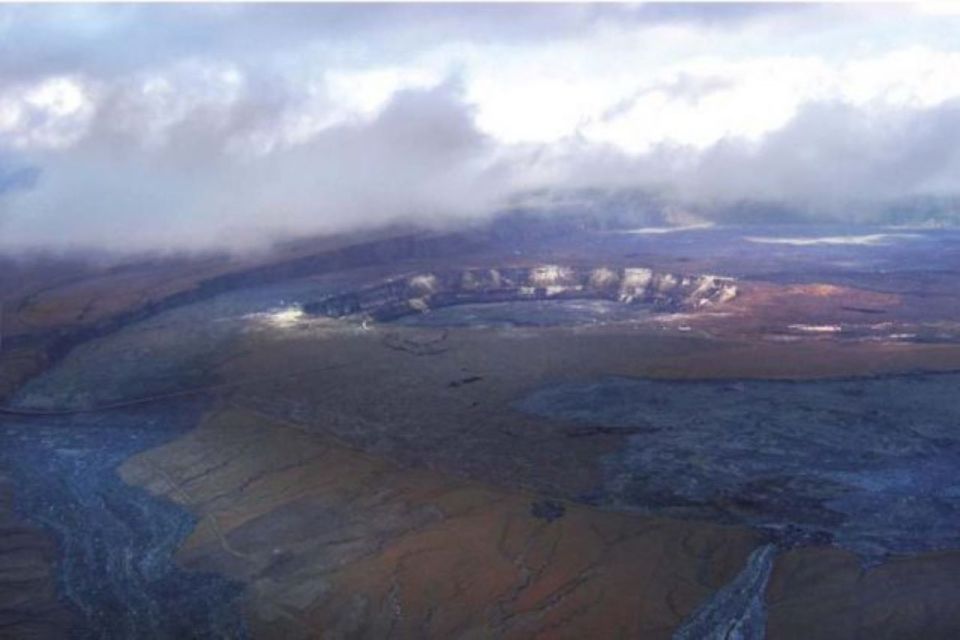
This tour is designed to take you off Oahu and onto Hawaiʻi Island for a fast, full-day hit of the Big Island’s most recognizable natural sights. Because it includes an air ticket and runs for one day, the rhythm is straightforward: you fly, you ride, you look, you stop, you move on. That makes it a great fit if you want depth without needing multiple days of planning.
The meeting pattern matters. Your flight details are sent after confirmation, and you’re expected to check in with the airline for your boarding passes. Keep your timing tight: boarding happens 30 minutes before departure, and doors close 15 minutes before. The tour ends back at the meeting point, so it’s not a situation where you can casually extend your day on your own.
You’ll also want to bring the documents listed: a government-issued ID or passport (required for non-U.S. citizens, required for U.S. citizens as ID), plus your vaccine card as requested by the tour’s information. Pack weather-appropriate clothing because the Big Island can change mood quickly, especially when you’re moving between coastal Hilo and the park’s higher elevations and open areas.
You can also read our reviews of more tours and experiences in Honolulu.



Hawaii Volcanoes National Park: from Visitor Center to real heat
The day’s anchor is Hawaii Volcanoes National Park, with admission included. The park matters because it’s not just a scenic drive—it’s a place tied to two active volcanoes: Kīlauea and Mauna Loa. It was established in 1916, and that long history shows in how the park is organized around learning what you’re seeing.
At the Visitor Center, you get the context you’ll be glad you have before you start aiming your camera at craters. You’ll get oriented to the caldera area and the way Kīlauea’s activity has shaped the landscape over time. I like this kind of start because it prevents the classic mistake: seeing volcano views as random scenery instead of parts of one system.
From there, the tour keeps pulling you closer to volcanic features. You’ll head into areas like volcanic steam vents and sulfur banks, and you’ll also pass through routes that get you eyes-on with the park’s active energy. Even if you know volcano basics already, seeing these features with a guide helps you connect the dots faster—why certain spots steam, why the ground can look different here, and why the crater views feel so intense from the right vantage points.
Kīlauea Iki Crater and Chain of Craters Road
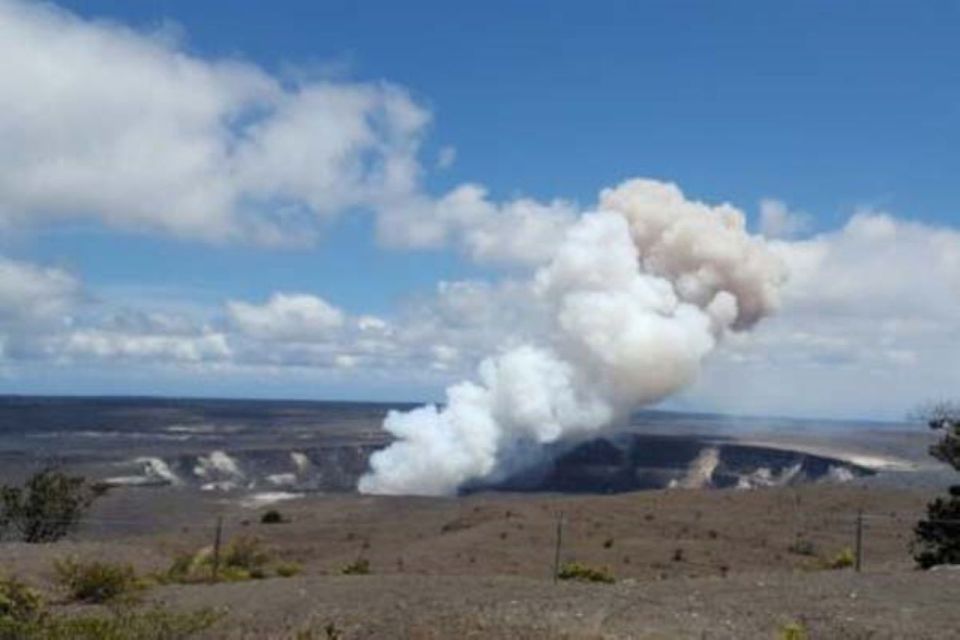
One of the main reasons people choose this tour is Kīlauea Iki Crater—the tour describes it as the most active volcano crater in the world. That claim might be dramatic, but the real value for you is how the crater changes your sense of scale. Craters can look like geology diagrams in textbooks; from viewpoints, they start to feel like a working system.
You’ll also spend time on the Chain of Craters Road, which is one of those drives that turns the landscape into a sequence. The value isn’t only the views; it’s the pacing. You get moments where you can stop, look, and then move to the next scene with a clearer idea of what you’re looking at. That is exactly what you want on a one-day schedule, because you don’t have time to wander slowly.
The tour also includes Mount Kilauea as an active shield volcano. That helps you connect crater activity to broader volcanic behavior instead of treating Kīlauea Iki as an isolated spectacle. If you’re a geology lover, this is the kind of day that gives you multiple angles on a single story: active heat moving through a landscape that keeps reshaping itself.
Lava tube, sulfur banks, and volcanic steam vents
The tour includes an ancient lava tube, which is a fantastic counterpoint to open-air crater views. Lava tubes feel different because you’re moving from the big, obvious crater drama to something more hidden and physical. The idea is simple but powerful: lava didn’t just erupt and cool—it traveled underground and left behind tunnels.
Then you’ll get to areas like the Steam Vents and Sulfur Banks. The steam vents are explained in the tour details as groundwater seeping down into hot volcanic rocks and returning to the surface as steam. That explanation matters. Instead of just noticing steam coming out of the ground, you can picture the heat, the water, and the path that turns them into vapor.
This is also where I’d slow down if I were traveling at your pace. When steam is rising, it’s easy to keep snapping photos, but take a minute to look around the whole area. The tour info notes the area between the caldera’s edge and outer cliffs as a treeless plain, which helps you see how barren some sections can look even while the ground remains active. Sulfur banks add another texture layer—think color, smell, and the sense of chemical activity near the surface.
Richardson Black Sand Beach and the Hilo Bay contrast
After the park’s volcanic core, the tour shifts toward Hilo and the coast. This is where the contrast becomes part of the appeal: black sand is a different kind of visual story than steam and crater rims.
Richardson Black Sand Beach is called out as the only beach in the Hilo area with black sand. Even if you’ve seen black sand elsewhere in Hawaiʻi, it’s still worth it to feel the difference up close. Black sand has that magnetic, almost gritty look that makes the shoreline feel less generic and more created by volcanic material.
Then you’ll move into the Hilo Bay area. Hilo Bay is a large bay on the eastern coast of the island of Hawaiʻi, and the tour’s focus there supports a practical goal: you don’t just see lava; you see where the lava-world connects to town-world. The bay area helps you reset your eyes after lots of mineral rock tones and steam-gray air.





Liliuokalani Gardens, Rainbow Falls, and Wailuku River State Park
A big win of this tour is that it doesn’t treat waterfalls as random stops. You’ll visit Liliuokalani Gardens, and the tour notes the gardens’ site was given by Queen Liliʻuokalani. That gives the stop a deeper human layer, not just a pretty yard view.
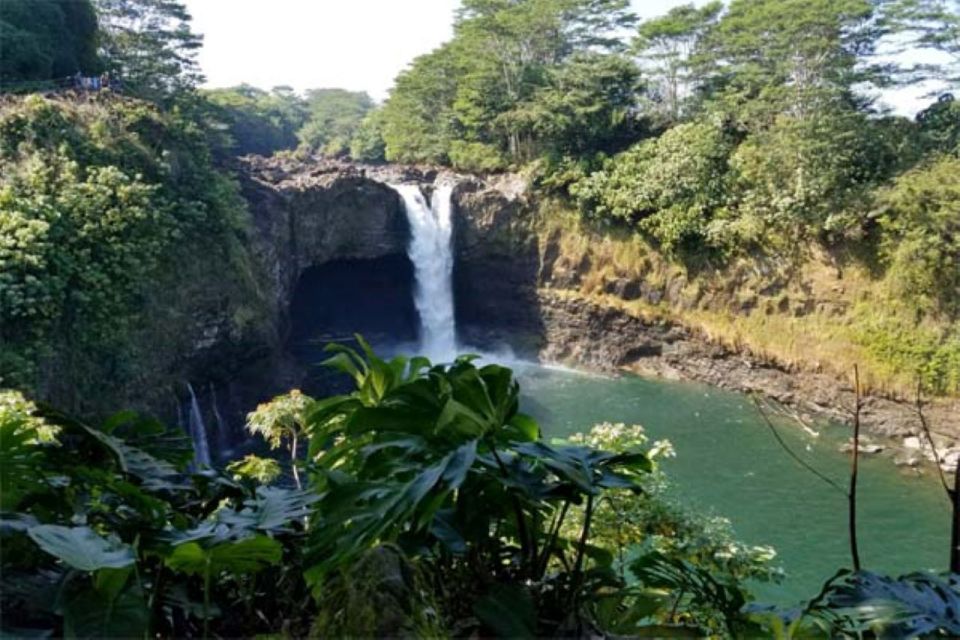
From there, you’ll head toward Rainbow Falls—noted as a waterfall with never-ending rainbows—and also Rainbow Falls State Park. The way the tour information repeats Rainbow Falls across stops suggests you’re likely to get multiple moments to view it rather than just a quick walk-by. If you like photo light that changes as clouds shift, these kinds of waterfall viewpoints can keep rewarding you.
You’ll also visit Wailuku River State Park, with a reference to Tale of Hina coming to life. I take that as a hint that the park has a storytelling or cultural element built into the experience, which can make the walk feel more grounded than a simple sightseeing sweep.
The practical value here is pacing. After volcano features that can pull you into science mode, gardens and waterfalls bring you back to sensory travel—water sound, mist, greenery, and the relaxed rhythm of coastal Hawaii.
Banyan Tree Drive: a walk under named living landmarks
No Big Island highlights list feels complete without Banyan Tree Drive. The tour calls it historic, and it’s easy to see why: the banyans bear names of famous people who planted them. The tour specifically mentions President Theodore Roosevelt, Babe Ruth, and Richard Nixon, among others.
What I like about this stop for you is that it turns a drive into a guided story with a walking-friendly payoff. A thick canopy can make the route feel cooler and more shaded than expected, and it gives you a break from volcanic heat and open crater terrain. Even if you’re not obsessed with the celebrity list, the bigger point is that these trees are living landmarks—old enough to create the atmosphere of a place that has been shaped over time.
If you’re the kind of traveler who likes your nature stops to have context, this one works. It’s not just about seeing leaves. It’s about understanding how culture and place get braided together in the islands.
Food, pace, and what $580 is buying you
At $580 per person for a one-day tour, the value question is all about what’s included and what isn’t. The tour includes a full day of guided sightseeing, an air ticket, and snacks and water. It also includes park admission for Hawaii Volcanoes National Park. Lunch is not included.
That last point is the most important practical note. If you have a sensitive stomach, strong preferences, or you hate improvising meals on a tight schedule, you’ll want to plan ahead. Bring extra snacks if you think you’ll need them, because snacks and water don’t automatically replace a full meal. Also, think about timing: when your day is flight-based and park-based, you can’t assume you’ll always find an easy, quick lunch between stops.
The pace is likely compact. One day means you’ll spend time moving between islands’ highlights without the luxury of lingering forever at any single viewpoint. That’s not automatically bad—it can actually be efficient if your goal is a memorable sampler of Big Island icons: crater, steam, lava tube, black sand, gardens, and waterfalls.
The bigger value you’re paying for is guidance and sequencing. A guide can help you connect Kīlauea activity, what you see at the steam vents and sulfur banks, and how those features relate to the park’s broader volcanic context. Without that framework, it can still be stunning—but with it, you’ll understand more and forget less.
Who this tour fits best (and who should skip)
This tour makes the most sense if you want a guided, high-impact day on the Big Island without building a DIY plan around volcanic sites and Hilo highlights. It’s a strong pick for first-timers who want the major names—Kīlauea Iki, Hawaii Volcanoes National Park, Hilo Bay, Rainbow Falls, Banyan Tree Drive, and black sand—packed into one coherent route.
It’s also a good match for travelers who like their nature with context: Visitor Center orientation, explanations of steam vent processes, and cultural references at garden and river stops.
You should think twice if you have mobility impairments, since the tour information says it’s not suitable for people with mobility impairments. Also, if you strongly prefer long unhurried downtime—especially meals—this one-day structure may feel a bit tight because lunch isn’t included and the day is built around flights.
Should you book this Oahu to Big Island Volcano tour?
I’d book it if your priority is a single-day, guided hit of the Big Island’s most famous volcano and water highlights, with park admission and airfare rolled in. The standout strength is the mix: you get crater drama plus steam and sulfur, then you cool down with Hilo Bay, gardens, and Rainbow Falls. Add in the historic and oddly charming Banyan Tree Drive, and you’re getting more than one kind of Big Island experience.
I’d hesitate if you hate meal uncertainty or you need extra flexibility. Lunch isn’t included, and the day’s schedule is tied to flight timing, so you’ll want to be the kind of traveler who can handle a structured day.
If you do book, prepare smart: double-check your start details when your flight information arrives, plan food for the day, and dress for changing conditions. Do those two things and you’ll spend your time on what matters—looking at the places where the Earth is still doing its thing.
FAQ
What does the tour include?
The tour includes a full day tour, air ticket, snacks and water, and admission to Hawaii Volcanoes National Park.
Is lunch included?
No. Lunch is not included.
How long is the tour?
It’s listed as a one-day tour.
Does the tour include Hawaii Volcanoes National Park entry?
Yes. Volcanoes National Park admission is included.
What are the main sightseeing stops?
You’ll visit places such as Hawaii Volcanoes National Park (including the Visitor Center), an ancient lava tube, Kīlauea Iki Crater, sulfur banks, volcanic steam vents, Liliuokalani Gardens, Hilo Bay, Rainbow Falls areas, Wailuku River State Park, Historic Banyan Tree Drive, and Richardson Black Sand Beach.
What type of guide do I get?
You’ll have a live tour guide in English.
What should I bring?
Bring your passport or government-issued ID and weather-appropriate clothing.
Do US citizens need a passport?
The info says ID or passport is required for US citizens, and passport is needed for foreign citizens.
What about vaccine information?
The tour information asks you to have your vaccine card with you to travel.
Is the tour refundable?
It offers free cancellation up to 24 hours in advance for a full refund.