REVIEW · OAHU
Honolulu Haunts and Hauntings Ghost Tour
Book on Viator →Operated by Honolulu Haunts By Us Ghost Adventures · Bookable on Viator
Night in Honolulu has a second face. This 1-hour ghost tour mixes famous landmarks with carefully told local legends, from Iolani Palace to the city’s oldest burial ground. I especially like the small-group feel and how the route stays easy, with flat walking and frequent story-stops so you can actually follow along.
One heads-up: the spooky side is usually more story-driven than scream-your-head-off scary. If you want maximum goosebumps, you may find the paranormal moments subtle and best enjoyed alongside the history.
In This Review
- Key highlights worth planning around
- Price and what $32 really buys in Honolulu
- The 1-hour pacing: easy walking, tight group energy
- Stop 1: Iolani Palace grounds and the monarchy coup that still echoes
- Stop 2: Kaua’nona’ula intersection and the sightings that love rainbows
- Stop 3: The old building, the white kimono rumor, and a tragic twist
- Stop 4: Supreme Court grounds, an orphanage past, and banyan-tree laughter
- Stop 5: The first Christian Church cemetery and what 296 stones can’t show
- Stop 6: Two oldest missionary homes and spirits tied to Protestant beliefs
- The guide factor: why Lon, Jade, and Hope can make or break the experience
- Respecting sacred spaces while keeping the spooky mood
- Who this tour is best for (and who should skip it)
- Should you book Honolulu Haunts and Hauntings?
- FAQ
- How long is the Honolulu Haunts and Hauntings Ghost Tour?
- What is the price per person?
- Where does the tour start and end?
- What language is the tour offered in?
- Is this tour suitable for kids or families?
- Do I need to tip?
- Is food or drink included?
- What’s included in the tour price?
- Are service animals allowed?
- What is the cancellation policy?
Key highlights worth planning around
- Iolani Palace, coup-era lore, and the last queen’s lingering legend
- Kaua’nona’ula intersection sightings tied to the meaning rain with a red rainbow
- A white kimono ghost story connected to a tragic news report rumor
- Supreme Court grounds with orphanage ties and banyan-tree “child laughter” folklore
- Honolulu’s oldest cemetery atmosphere with whispers, smells, and a young boy sighting tale
- Two oldest missionary homes where long-dress spirits and children sounds enter the story
Price and what $32 really buys in Honolulu
At $32 per person for about one hour, this tour sits in the mid-range for ghost tours in Oahu. The value is that you’re paying for (1) a guided, mapped walk through multiple historic sites and (2) a consistent theme—Honolulu’s past—rather than hopping around for isolated photo-ops.
You also get practical extras built in, including all fees and taxes and a guide who is expected to use intensely researched history and documented accounts of paranormal activity. That matters. A lot of ghost tours turn into pure folklore with little grounding. Here, the aim is that the eerie stories hang on the city’s real landmarks: royal grounds, courts, cemeteries, and early missionary-era spaces.
You can also read our reviews of more tours and experiences in Oahu.



The 1-hour pacing: easy walking, tight group energy
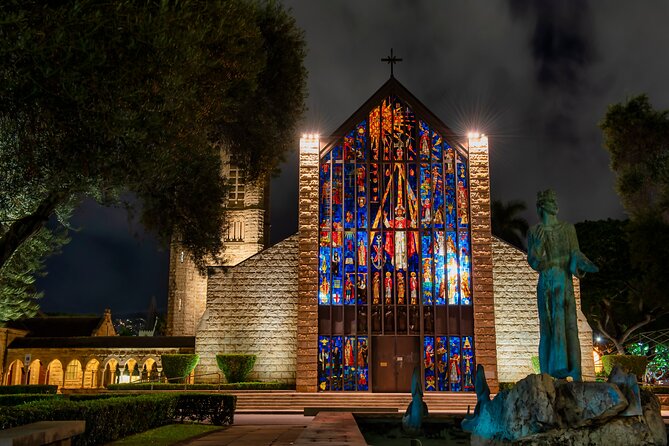
This is designed as a short evening stroll, not an all-night haunting. You’ll spend roughly an hour moving between stops, with the overall route kept approachable—good news if you don’t want long distances or steep terrain.
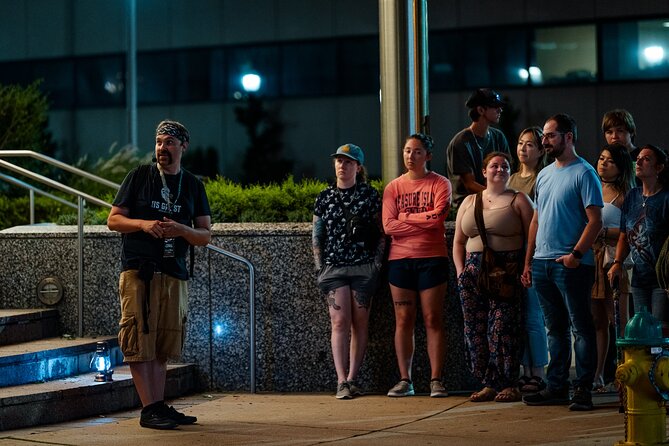
Group size is capped at 35, and that cap matters mainly because it keeps the experience from becoming a noisy crowd parade. In real life, the tour often feels even smaller. People describe intimate groups (including tours with just a handful of people), which typically makes the difference between hearing stories and repeating what you guessed you heard.
Also pay attention to the stated fitness level: moderate physical fitness. That’s not code for hiking. It’s more about being comfortable walking through city sidewalks for about an hour at night.
Stop 1: Iolani Palace grounds and the monarchy coup that still echoes
The tour begins with the grounds of Iolani Palace, built around 1879. This stop isn’t just about architecture. It’s about a moment in Hawaiian history that’s framed as the only coup of a sitting monarchy in American history.
Here’s why it’s so effective for a ghost tour: this is a place where power, betrayal, and survival all share the same walls and grounds. The stories you’ll hear focus on royalty, the historic coup, and the last queen who fought for a free Hawaii until her death—then the legend shifts into the spiritual. The guide’s account includes the idea that the queen’s spirit still lingers while looking over Honolulu.
Practical tip: at Iolani Palace, you may notice attention-getting visual effects like flickering lights. Some people interpret that through the paranormal lens. I’d treat it as both: enjoy the mood, but also remember there are totally normal reasons lights flicker in the city.
Stop 2: Kaua’nona’ula intersection and the sightings that love rainbows
Next up is an intersection known as Kaua’nona’ula, a name that translates to rain with the red rainbow. This is a different kind of storytelling stop. The name is poetic, but the legend is the point—there’s no specific historic event tied here. Instead, the tour highlights ghost sightings and unexplained encounters people have linked to the area.
This stop is a reminder that not all “haunted” places on a ghost walk are about one historical tragedy. Some are about patterns: how often people report something, how consistently the stories show up, and how the setting invites the imagination.
What you’ll want from the guide here is context. You don’t need the supernatural to be true for the storytelling to be fun and memorable—you need the guide to make the legend feel grounded in place.
Stop 3: The old building, the white kimono rumor, and a tragic twist
One of the most discussed stops is an old building where stories come from workers and customers connected to the site. The centerpiece is a recurring rumor of a ghost in a white kimono. The tour’s version of the tale also references a news article connected to a tragedy that follows after the host reveals herself.
That combination—folklore plus media mention—tends to hook people. It also explains why this tour can feel more theatrical than research-only in the middle portion.
Still, a balanced way to enjoy this stop is to treat it as an account of how legends travel through a community. If you’re someone who wants only fully verifiable history, you might feel a little strain here because you’ll be leaning on story traditions and what’s been passed along.



Stop 4: Supreme Court grounds, an orphanage past, and banyan-tree laughter
The tour then heads to the Supreme Court, opened in 1871. This place is framed as a final destination for serious cases—before punishment in the early legal era, it also had a different chapter. The grounds once held an orphanage.
For the haunted element, the story moves to the edge of the lot where there are banyan trees. The legend says that if you sit under those trees, you can hear the laughter of children. Then it gets darker: there are also accounts of hearing or encountering the lost souls of people sentenced to death in the early 1900s.
This stop works well because it layers grief and youth in the same setting. It’s not just one ghost. It’s a theme: suffering leaving echoes.
Practical note: even if you don’t take the paranormal claims literally, you’ll still get something valuable here. You’ll see how Honolulu’s institutions evolved, how spaces changed purpose, and how the people behind those changes are still part of the storytelling fabric.
Stop 5: The first Christian Church cemetery and what 296 stones can’t show
The next stop focuses on the first Christian Church built in Hawaii, and it carries a lot of atmosphere because it sits inside the oldest cemetery in the state.
You’ll hear that the cemetery has 296 gravestones, but the tour also shares an estimate that many more bodies lie beneath the surface than the headstones suggest. That detail sets the tone: even when you think you can count, the past has missing pages.
In the paranormal account, visitors report:
- strange smells
- quiet whispers
- a ghost of a young boy who wanders
This is a stop where tone really matters. The best guides keep it respectful. You’ll get more out of it if you think less about trying to “catch” a ghost and more about hearing how people interpret a cemetery as a living memory.
Stop 6: Two oldest missionary homes and spirits tied to Protestant beliefs
The final major stop brings you to two of the oldest homes in Hawaii, built by New England missionaries to spread Protestant beliefs. The haunted stories here shift again from formal institutions to domestic spaces—homes tend to feel more personal, and the legends reflect that.
People report seeing ghosts of missionary women in long dresses and hearing sounds of children. It’s the same theme you heard earlier: youth and loss, only now the tone is tied to the missionary-era mission and daily life.
If you like history that connects religion, culture, and everyday spaces, this ending is satisfying. It also helps the tour land on something coherent: Honolulu’s past isn’t one straight line. It’s overlapping eras, each with its own set of stories.
The guide factor: why Lon, Jade, and Hope can make or break the experience
The biggest variable in how this tour feels is your guide. The tour’s reputation gets a lot of praise for storytelling talent and local details, with names like Lon, Jade, and Hope showing up repeatedly in positive experiences.
Here’s what tends to work especially well when the guide hits their stride:
- interactive pacing that doesn’t feel rushed
- time for questions
- a clear mix of history plus paranormal lore
- an emphasis on respecting sacred places
You’ll also see some variation in delivery. A few people noted that one guide spoke softly, making it hard to hear over traffic. Another complained that some stories felt more like secondhand rumor than solid history.
So my practical advice is simple: if you want more history clarity, use your first chance to ask a direct question like what part is documented and what part is legend. A good guide can usually explain the difference on the spot.
Respecting sacred spaces while keeping the spooky mood
A ghost tour in Honolulu touches royal grounds, courts, and cemeteries. That means the right attitude matters more than it does on, say, a haunted house attraction.
Aim for quiet focus at the cemetery and church-related stops. Keep your phone brightness down so you’re not turning it into a photo-shoot moment. If the guide talks about sacred places, treat that as a real instruction, not a throwaway line.
Also, keep expectations in line with how the tour is built. This is a guided walk with stories. It’s not a paranormal investigation lab. The “proof” parts are part of the narrative style.
Who this tour is best for (and who should skip it)
This tour makes the most sense if you want:
- a short, easy night walk
- a mix of Honolulu history plus mild-to-moderate spooky storytelling
- places with names you’ll recognize from your own Honolulu reading and sightseeing
- a guide who can connect the dots between institutions and legends
It also works well for first-timers in Hawaii who want to get off the typical tourist circuit and understand why certain places feel heavy—even before the ghost stories start.
You might be less happy if you’re chasing hardcore paranormal effects, big scares, or a strictly “facts only” history lecture. Some accounts mention the ghost portion can feel lighter, and story sourcing can vary from guide to guide.
Should you book Honolulu Haunts and Hauntings?
I’d book it if you like short guided walks where the setting does most of the work. For $32 and about an hour, you’re getting multiple historic anchors in one loop—palace grounds, a famous court site, an oldest-in-state cemetery, and historic missionary-era homes.
I’d also book it if you’re the kind of traveler who enjoys the social side of ghost lore: how people keep telling the same stories because those stories help them make sense of what they’re seeing.
Don’t book it if you need verifiable history every minute and no legend at all. The tour’s whole point is that Honolulu’s past and its hauntings share the same sidewalks.
If you do book, go in with two goals: learn the timeline of Honolulu through the places, and let the spooky moments be part of the atmosphere rather than the main event.
FAQ
How long is the Honolulu Haunts and Hauntings Ghost Tour?
It lasts about 1 hour.
What is the price per person?
The price is $32.00 per person.
Where does the tour start and end?
It starts at 447 S King St, Honolulu, HI 96813, USA and ends back at the meeting point.
What language is the tour offered in?
The tour is offered in English.
Is this tour suitable for kids or families?
The tour is described as safe for children in at least one review, and it’s also described as not requiring lots of walking.
Do I need to tip?
Tips and gratuities are not included, so you should plan to tip if you’d like.
Is food or drink included?
No, food and drink are not included.
What’s included in the tour price?
It includes all fees and taxes, professional and courteous guides, intensely researched true stories of history, and documented accounts of hauntings and paranormal activity.
Are service animals allowed?
Yes, service animals are allowed.
What is the cancellation policy?
There is free cancellation. You can cancel up to 24 hours in advance for a full refund. Canceling less than 24 hours before the start time means no refund.