REVIEW · HISTORICAL TOURS
Pearl Harbor with USS Arizona and Hawaiian Kingdom History Tour
Book on Viator →Operated by Go Tours Hawaii · Bookable on Viator
Pearl Harbor hits different at sunrise. I like the way this tour pairs the USS Arizona Memorial with Honolulu’s Hawaiian Kingdom-era sites—so you understand the attack in context, not just as a headline. One thing to watch: Pearl Harbor rules can mean waiting and strict limits on what you can bring, so show up early and pack light.
For the money, this works because the day is built around essentials: USS Arizona access, the main Pearl Harbor storytelling stop, and then a set of downtown landmarks you’d otherwise try to line up yourself. Many guides on this kind of route lean hard into local perspective, and names like Bob and Kanoe show up in real-world experiences as examples of guides who keep people engaged.
The setup is simple: you get picked up around Waikīkī in an air-conditioned vehicle, you ride as a small group (up to 24), and you’re guided through the major stops. The main drawback is that the pace and time limits of a shared tour can leave less room for extra add-ons or slow, solo browsing.
In This Review
- Key things to know before you go
- Waikīkī pickup and getting to Pearl Harbor the allowed way
- USS Arizona Memorial: film, ferry ride, and time to reflect
- Pearl Harbor Historic Sites Visitor Center and the Road to War Exhibit
- Royal Honolulu without a car: Iolani Palace and Kamehameha Statue
- Downtown Honolulu and the Hawaii State Capitol: politics you can see
- Mission Houses Museum and Kawaiahao Church: early Hawaiian-era cultural contact
- How long the day really feels (and who it suits)
- Price and value: what $57 actually buys you
- Should you book this Pearl Harbor and Hawaiian Kingdom history tour?
- FAQ
- Is the tour price only for transportation, or does it include key entry tickets?
- What are the main places you stop during the day?
- Where do I meet the tour if I’m staying in Waikīkī?
- How long is the experience?
- Is the tour offered in English?
- Are there any rules about what I can bring into Pearl Harbor?
Key things to know before you go
- USS Arizona includes your ticket and starts with a short film, then a ferry ride to the memorial area.
- Pearl Harbor Visitor Center matters because it adds context through exhibits like Road to War.
- Royal and political Honolulu stops include Iolani Palace and the Hawaii State Capitol.
- Hotel pickup in Waikīkī helps you avoid rental car stress and parking headaches.
- Plan for Pearl Harbor bag rules and possible standby waiting during busy times.
- Small-group pacing is efficient, but it does not feel like a flexible private tour.
Waikīkī pickup and getting to Pearl Harbor the allowed way
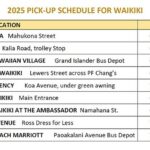
This tour’s biggest practical win is that it starts where most people already are—Waikīkī. Your morning pickup is scheduled from common hotels (Ala Moana, Modern Honolulu, Hilton Hawaiian Village, Hyatt Regency Waikiki, and others), and you’ll head to Pearl Harbor in an air-conditioned vehicle. If you hate figuring out buses, that alone can make the day feel easier.
One rule you should take seriously: the operator can’t meet you at Pearl Harbor or hand out tickets there. You must meet in Waikīkī, then ride as part of the group. That matters because it removes a lot of improvisation. If you’re late or end up at the wrong pickup point, the day can go sideways fast.
Also, pack like you’re visiting a security-sensitive national site. Even though this tour runs as a bus day, Pearl Harbor rules can limit what you can carry into the memorial area. Some past participants reported they had to store bags and that it can be confusing if it isn’t clearly communicated to everyone. Your best move: bring a small day bag, skip bulky luggage, and keep your essentials easy to grab.
You can also read our reviews of more historical tours in Honolulu

USS Arizona Memorial: film, ferry ride, and time to reflect
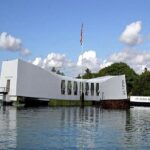
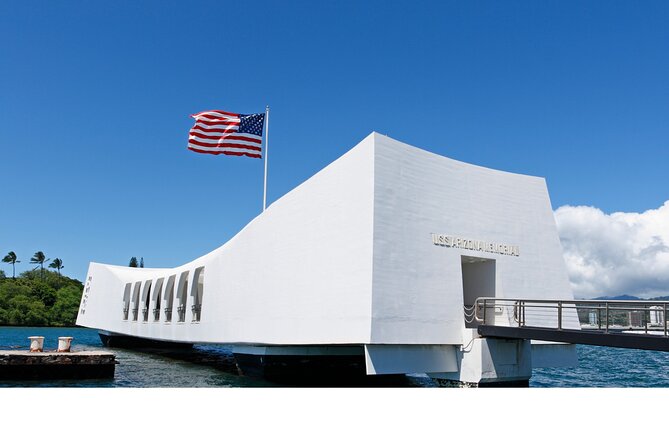
The core moment is the USS Arizona Memorial. Before you’re taken over to the memorial site, you watch a film that sets the scene for December 7, 1941. That film isn’t just “background”—it’s what helps the memorial make emotional sense. It’s also a good way to center the day, especially if you’re traveling with teens or anyone who only knows Pearl Harbor as a brief history unit.
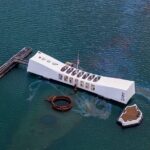
After the film, you ride a Navy-operated vessel to the memorial area, which is built over the submerged battleship USS Arizona. The time at the memorial is built for quiet respect, not sightseeing speed. You’ll see the memorial space up close, and you get time to read, absorb, and reflect without the pressure of constant movement.
Two practical notes. First, the ferry ride and memorial experience can involve waiting, especially in busy periods. Second, don’t assume you’ll be able to move around freely with large bags. If you’ve got a choice, travel light and let the memorial be the main event—because it is.
Pearl Harbor Historic Sites Visitor Center and the Road to War Exhibit
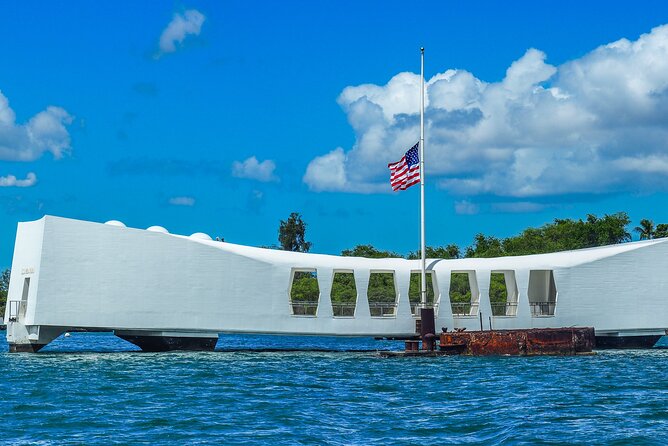
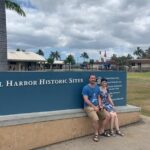
After USS Arizona, the tour shifts into explanation mode at the Pearl Harbor Historic Sites Visitor Center. This stop is where the day becomes more than a moving visit. You get interactive displays and multimedia storytelling that track how the attack changed Hawaii’s trajectory and reshaped events beyond the islands.
A highlight called out in the itinerary is the Road to War Exhibit. It’s the kind of exhibit that helps you understand cause-and-effect instead of just listing dates. If you want the story to connect—pre-attack tensions, the decision chain, and what followed—this is where that happens. It also helps if you’re not a “stand-in-front-of-a-sign” museum person. The exhibits do more than show artifacts; they build a narrative.
Timing is reasonable for a guided tour day, but it’s still a national-site schedule, not a museum marathon. If you’re the type who wants to linger with every display, you might feel a little rushed. If you like structure and want the big story covered without research homework, you’ll appreciate the way this stop is folded into the overall plan.
Royal Honolulu without a car: Iolani Palace and Kamehameha Statue
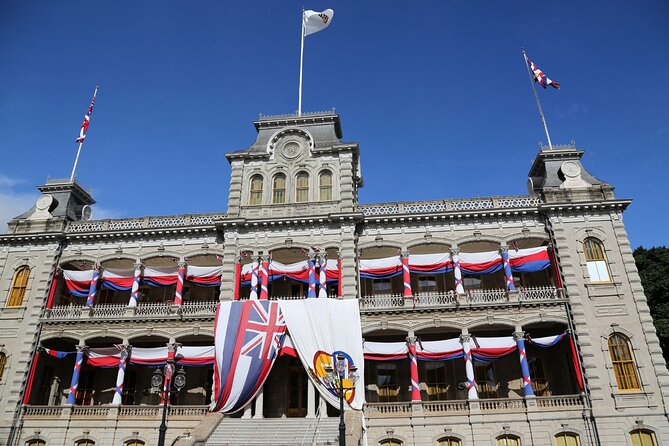
The tour doesn’t stop at war history. It pivots into Honolulu’s deeper layers through Hawaiian Kingdom-era landmarks, and that’s one of the most satisfying parts of the whole day.
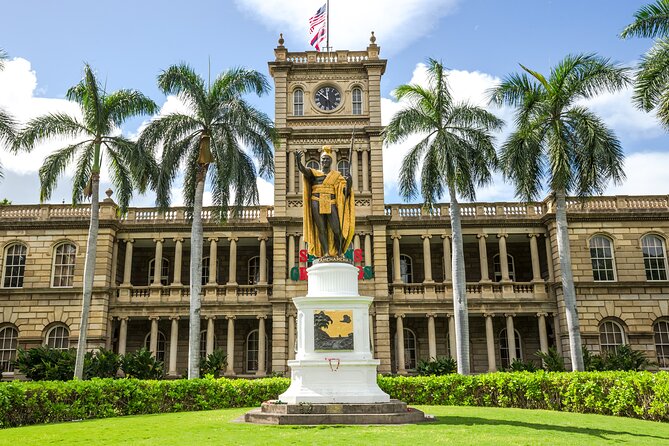
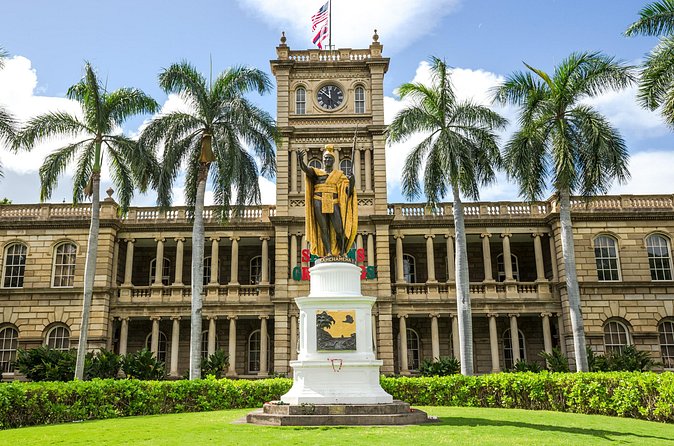
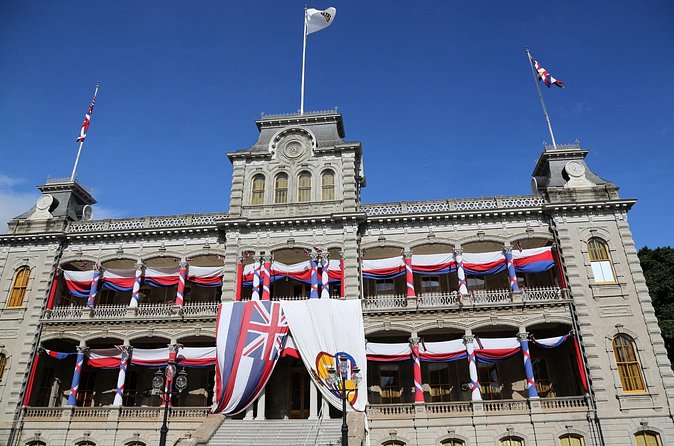
Iolani Palace is the only royal palace in the United States. Built in 1882 during King David Kalākaua’s reign, it served as the official residence of Hawaiian monarchs until the overthrow of the Hawaiian Kingdom in 1893. Today it operates as a museum, and it’s one of the easiest places to feel the contrast between political power, cultural identity, and the fast-moving forces that reshaped the islands.
Then you hit the King Kamehameha Statue, a monumental bronze sculpture of King Kamehameha I. It’s about 18 feet tall and commissioned in 1878 by King David Kalākaua, sculpted by Thomas Ridgeway Gould. Even if you only know Kamehameha as a name from school, seeing the scale of the statue helps you understand why he’s such a central symbol in Hawaiʻi’s story.
A fair heads-up: some visitors have described palace time as more of a drop-off and exterior viewing than a full inside tour experience. What you can do to protect yourself is simple: ask your guide what’s included for Iolani Palace time before the bus departs downtown, and keep your expectations aligned with a tour schedule.
Downtown Honolulu and the Hawaii State Capitol: politics you can see
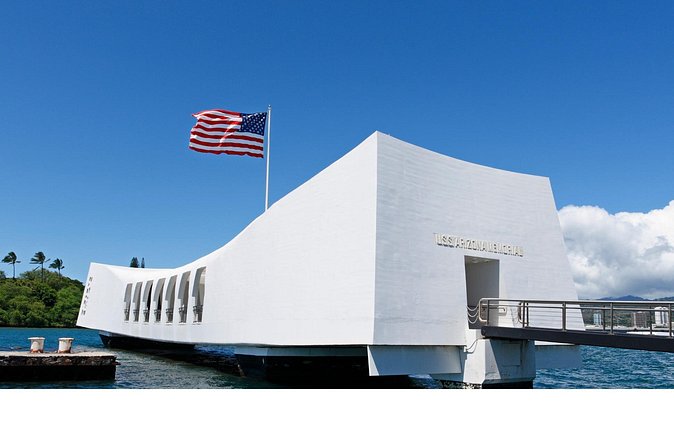
Downtown Honolulu acts like the spine of the city, and this tour uses it well. You stop at the major civic points that show how government works here—past and present—without turning the day into a lecture.
The Hawaii State Capitol is a standout architectural visit. Completed in 1969 and designed by John Carl Warnecke, it has a volcano-inspired shape. The two legislative chambers are designed to resemble lava flows, and the central rotunda is described with the feeling of an eye of a hurricane. Around it, you’ll find an open-air courtyard with native Hawaiian plants and a reflecting pool—so even though it’s government-focused, you’re not stuck in concrete heat.
If you want your Pearl Harbor day to feel “three-dimensional,” this is a smart pairing. War history happened in a living place with active politics and cultural institutions. Seeing the Capitol afterward is a reminder that Hawaiʻi’s story continued to evolve long after 1941.



Mission Houses Museum and Kawaiahao Church: early Hawaiian-era cultural contact
This portion of the tour brings you into Honolulu’s older institutional history through two stops that feel different from the palace and the Capitol.
The Mission Houses Museum is a historic complex with three restored missionary homes: the Frame House (1821), Chamberlain House (1831), and the Printing Office (1841). You’ll see period furnishings and artifacts that connect to the daily lives of American Protestant missionaries and the cultural exchanges around that era. It’s not a simple “missionaries good/bad” stop—it’s an encounter with how outside influence took shape locally over time.
Next is Kawaiahao Church, established in 1820. The building is known for its coral block construction and a tall steeple visible in the skyline. Inside, you’ll find koa wood furnishings and a calm, worship-focused atmosphere. It’s also tied to royal and spiritual life in Hawaiʻi, which makes it a natural companion to the earlier royal sites.
Together, these stops help you see how Hawaiʻi absorbed, adapted, and negotiated changing cultural forces. If you enjoy history that’s more than just battles and monuments, you’ll get extra value from this pair.
How long the day really feels (and who it suits)
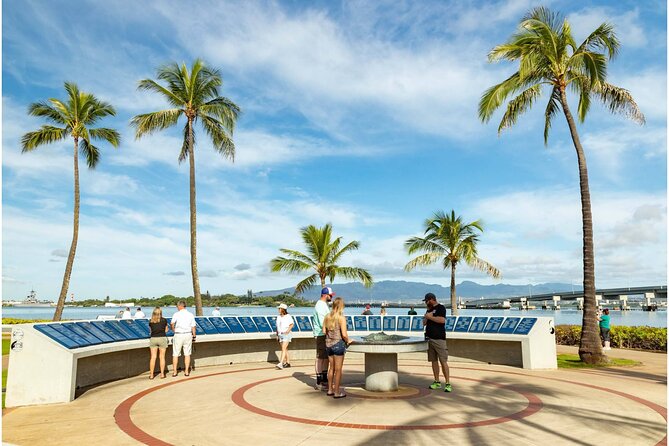
This tour runs about 5 hours, but the total time includes transport between stops. That means you’ll cover a lot of ground efficiently—and you’ll also need to accept that you won’t have hours of unstructured time in every location.
The tour is designed for moderate physical fitness. You’ll be walking and standing, and you’ll do multiple transfers across downtown and Pearl Harbor. If you can handle typical city walking for a few hours, you’ll be fine.
Who it suits best:
- First-time Oʻahu visitors who want the big Pearl Harbor moment plus major Honolulu landmarks
- People who want hotel pickup and an organized plan more than DIY map-pin hopping
- Families and groups who benefit from guided narrative, especially for teens
Who should consider alternatives:
- Anyone who expects a deep, slow, fully guided inside experience at every site
- Visitors who want unlimited time at USS Arizona or the Visitor Center without schedule pressure
- Anyone who travels with lots of bags and hates strict site rules (pack light)
Price and value: what $57 actually buys you
At $57 per person, this tour is competitive mainly because it bundles the expensive part of the day: access to USS Arizona with a structured visit plan, plus hotel pickup and narration.
Included:
- Air-conditioned vehicle
- Waikīkī hotel pickup and drop-off
- Fully narrated tour
- USS Arizona ticket
The itinerary also indicates admission ticket inclusion for the USS Arizona Memorial and the Pearl Harbor Visitor Center. When those are bundled, you avoid the “nickel and dime” feeling that can happen with separate tickets and separate transportation.
Where value can feel weaker:
- If your expectations are for a long, detailed palace interior tour or a heavy museum time schedule
- If you hit a day with standby complications or unclear instructions around meeting points inside the memorial area
- If your group is very large and the schedule becomes tighter than you want
But overall, if you show up early, pack light, and let the guide manage the flow, the pricing makes sense for a first-pass introduction to both Pearl Harbor and downtown Honolulu.
Should you book this Pearl Harbor and Hawaiian Kingdom history tour?
Book it if you want a single day that connects Pearl Harbor to Hawaiʻi’s broader political and cultural story. I like that the tour doesn’t treat 1941 as a standalone event—it keeps moving through Honolulu’s royal and civic landmarks so the day feels connected, not clipped.
Skip it or be cautious if you need lots of time inside each site, or if you’re the type who gets frustrated by security rules and schedule constraints. The USS Arizona experience itself is the emotional anchor, and the rest of the stops work best as “important highlights,” not leisurely deep research.
If you do book, do three simple things: confirm your pickup location, keep luggage minimal, and listen carefully when your guide explains where to meet after each stop—especially around Pearl Harbor.
FAQ
Is the tour price only for transportation, or does it include key entry tickets?
The tour price includes round-trip Waikīkī hotel pickup and drop-off, an air-conditioned vehicle, a fully narrated tour, and the USS Arizona ticket. The tour schedule also lists admission tickets included for the USS Arizona Memorial and the Pearl Harbor Visitor’s Center.
What are the main places you stop during the day?
You’ll visit the USS Arizona Memorial, the Pearl Harbor Historic Sites Visitor Center (including the Road to War exhibit), and multiple downtown Honolulu and historic landmarks such as Iolani Palace, the King Kamehameha Statue, the Hawaii State Capitol, the Mission Houses Museum, and Kawaiahao Church.
Where do I meet the tour if I’m staying in Waikīkī?
You meet at one of the scheduled Waikīkī pickup points listed for your tour morning start time, such as Ala Moana Hotel, Modern Honolulu, Hilton Hawaiian Village, and other nearby hotels. The tour also notes you cannot meet at Pearl Harbor.
How long is the experience?
It’s about 5 hours total, including transportation between stops.
Is the tour offered in English?
Yes, the tour is offered in English.
Are there any rules about what I can bring into Pearl Harbor?
Pearl Harbor sites have strict regulations. Based on the information provided, bag rules can affect what you’re allowed to bring into the memorial area, and you may need to store items in storage facilities rather than keeping them with you.