REVIEW · HISTORICAL TOURS
History & Culture Tour in Honolulu via Segway
Book on Viator →Operated by Segway of Hawaii - Kakaako · Bookable on Viator
Honolulu history can be a lot on foot. This Segway tour uses radios and small group pacing to cover major landmarks fast, without feeling rushed. You’ll also get a clear narrative arc, from early missionary days to monarchy, then into government, business streets, and waterfront change.
I especially love how the two-way headset system keeps the tour cohesive, even while you’re riding. I also love that the group is capped at 8 travelers, so your guide can slow down when questions pop up. One thing to keep in mind: this runs on good-weather conditions, and Waikiki transfers cost extra.
If you want a history-and-culture route that feels like transportation plus storytelling, this is a strong match. It’s also a smart choice if your feet are already tired from beaches and shopping.
Key takeaways (before you book)
- Max 8 riders for more personal attention and easier traffic flow
- Two-way radios/headsets so you can hear the guide clearly on the move
- Iolani Palace + Royal Barracks as a major centerpiece, with stops at key statues
- Aloha Tower + harbor plus a look at the waterfront’s restored ecosystem
- Kakaʻako Waterfront Park and Ehime Maru Memorial before rolling back to Ala Moana
In This Review
- Why a Segway History Tour Works in Honolulu
- Price, time, and who this 2.5-hour ride fits
- Getting started at Kakaʻako: meeting point, language, and gear
- Mission Houses to Honolulu Hale: where the story begins
- Kamehameha Statue and the Supreme Court: monarchy meets law
- Iolani Palace, Royal Barracks, and Queen Liliʻuokalani’s statue
- State Capitol and Hotel Street: government and the city’s everyday layer
- Chinatown shopping mall: markets, noodle factories, and mixed neighborhoods
- Bishop Street and Merchant Street: old Honolulu’s “Wall Street”
- Aloha Tower and Honolulu Harbor: 1926, plus coral reef life
- Kakaʻako Waterfront Park, Point Panic, and the Ehime Maru Memorial
- Back to Ala Moana: finishing with sea air and a calmer ending
- Guides and pacing: the difference between a ride and a real tour
- Should you book this Honolulu History & Culture Segway Tour?
- FAQ
- What’s the duration of the tour?
- What time does the tour start?
- Where does the tour start and end?
- What’s included in the price?
- Do I need to speak English?
- What’s the maximum group size?
- Is a transfer from Waikiki available?
- Do I need to tip the guide?
- What happens if the weather is poor?
- What’s the cancellation deadline for a full refund?
Why a Segway History Tour Works in Honolulu
Honolulu can feel spread out, but this tour keeps you in the city’s most story-heavy zones. You ride between power centers (palace and courts), working streets (downtown commercial corridors), and water-front landmarks (Harbor and Aloha Tower area). That’s a big deal on Oʻahu, where one more stop by car can eat your time quickly.
The Segway also helps you stay in rhythm. You’re not stopping every block, and you’re not doing a “quick photo sprint” every ten minutes either. Instead, you glide from one meaningful place to the next, then get the context while you’re there.
The small-group setup matters. With fewer riders, the guide can manage intersections and spacing more calmly. And if you’re someone who likes asking follow-up questions (or wants extra explanation on what you’re looking at), it’s easier when the group isn’t large.
Price, time, and who this 2.5-hour ride fits
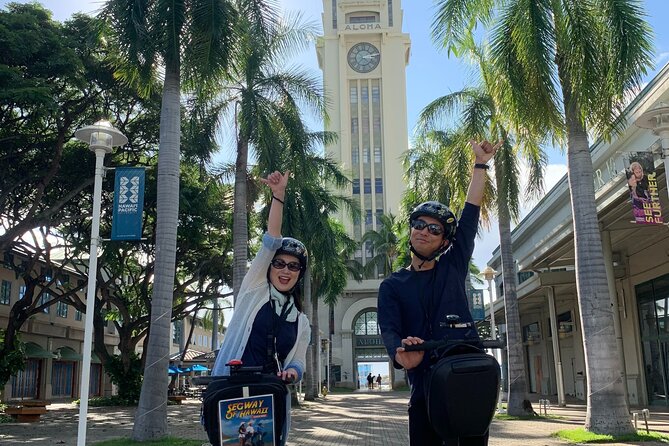
The price is $254.14 per person for about 2 hours 30 minutes. That sounds high until you look at what’s included: a guide, helmet, bottled water, and the gear that keeps communication clear as you ride. You’re paying for a shortcut—more ground covered than a walking history route in the same time window, with less physical grind.
Value also depends on how you’re getting there. Round-trip transfer from Waikiki to Kakaʻako is $20 per person. If you’re already close to Kakaʻako (or using public transportation), you may feel the cost differently.
This tour makes the most sense if you:
- Want a structured overview of downtown Honolulu in one morning window
- Prefer riding over long stretches of walking
- Like history that’s tied to places you can actually see, not just names on a list
It may be less ideal if you’d rather linger slowly at just one site for a long time. This is built to connect multiple stops into one coherent route.
You can also read our reviews of more historical tours in Honolulu


Getting started at Kakaʻako: meeting point, language, and gear
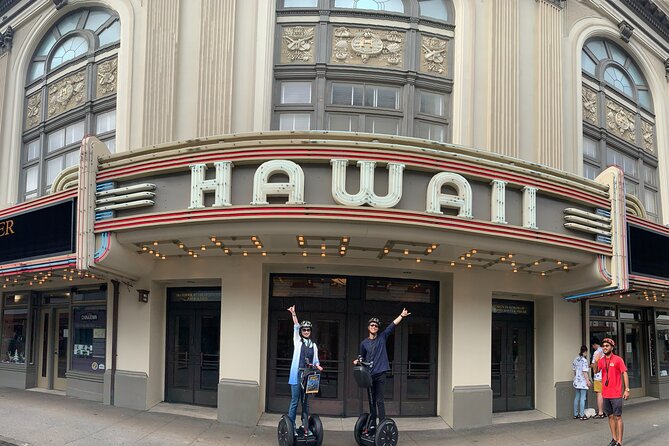
Your tour meets at Segway of Hawaii – Kaka’ako at 1687 Kalauokalani Way in Honolulu, starting at 9:00 am. The activity ends back at the same starting point.
You get mobile tickets, and the tour runs in English. Bottled water is included, plus a colorful helmet and two-way radio headsets. Those radios sound like a small detail until you’re actually navigating streets—suddenly you can focus on what the guide is saying, rather than trying to catch every word while moving.
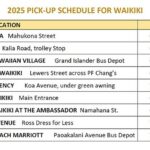
There’s also a practical advantage: you’re near public transportation, so you’re not totally dependent on Waikiki shuttles. If you do want the transfer, the provider mentions four pickup locations in Waikiki, and you arrange it directly with the company.
Mission Houses to Honolulu Hale: where the story begins
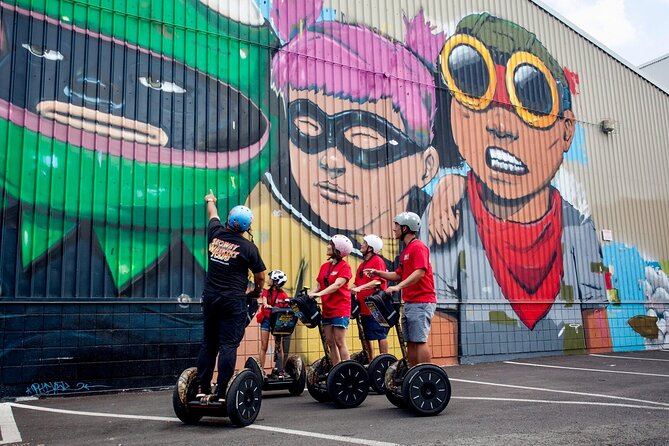
The first stop is the Mission Houses, built in 1820 by Hawaii’s first missionaries. This is one of those places where the architecture and setting immediately signal a shift: you’re looking at early institutional life in a growing Honolulu.
Right next door, you’ll see Kawaiahao Church and graveyard, also dating to 1820. The graveyard matters because it connects you to Hawaiian leadership history—many former Aliʻi (royalty) are buried here. Standing in that space gives you a stronger sense of who held influence, and how sacred sites and governance evolved side by side.
From there, you’ll also catch Honolulu Hale across King Street. Even if you don’t know the building’s full story yet, seeing it early in the route helps you understand the tour’s structure: you’re moving from early mission-era institutions to later civic power centers.
A drawback to this kind of opening segment: you’re building context while you’re still “warming up.” If you’re the type who likes to learn one place fully before moving on, you may want to take a beat and absorb the Mission Houses stop before the ride continues.
Kamehameha Statue and the Supreme Court: monarchy meets law
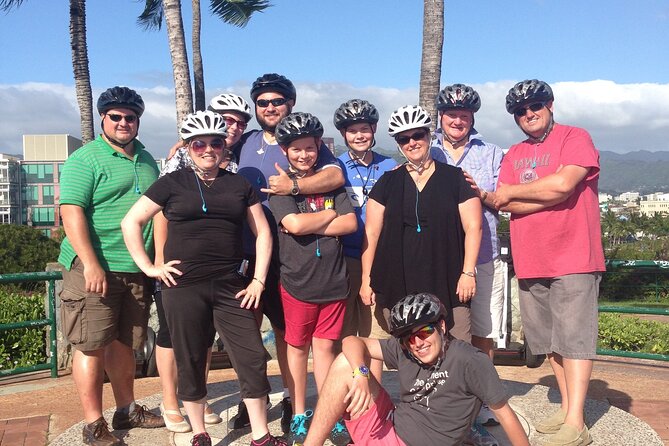
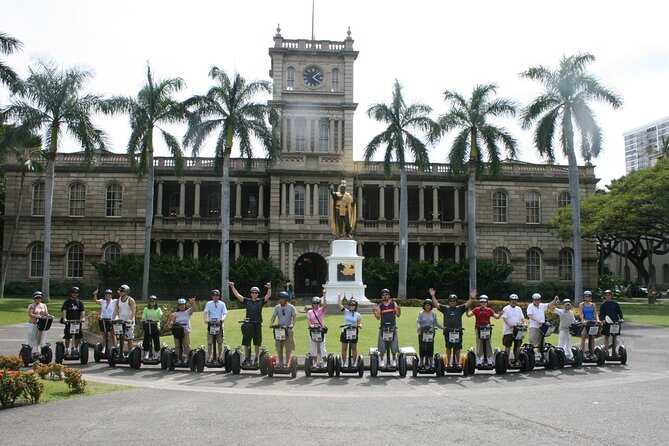
Next you glide to the gold-encrusted King Kamehameha Statue, notable for being one of three in the world. It sits in front of Hawaii’s State Supreme Court building, which was once the seat of Hawaii’s government when the islands were a nation.
This is a good moment in the tour to pay attention to the symbolism. You’re standing by a monument to royal authority, then looking at a building tied to national governance. The location helps you connect monarchy and state power, instead of treating them like separate chapters.
The photo opportunities here are real. Statues give you strong lines, and the court building provides a backdrop that feels distinctly civic, not just scenic. And because you’re gliding rather than walking for every transfer, you arrive with less fatigue than you’d likely have on foot.
Iolani Palace, Royal Barracks, and Queen Liliʻuokalani’s statue
Crossing King Street, the tour enters the grounds of Iolani Palace and Royal Barracks. This is a centerpiece stop for good reason: it’s described as the only palace on American soil built by King Kalakaua, and it operates as a museum today. That alone makes it a unique stop—this isn’t a “generic palace photo,” it’s a specific historic seat of power.
You’ll glide around the grounds, checking out the banyan trees and stopping at the Queen Liliʻuokalani Statue. Queen Liliʻuokalani was Hawaii’s last ruling monarch, until her government was overthrown by the Americans. Hearing that outline while you’re physically near the palace helps the story land. It’s one thing to know a date; it’s another to stand in the setting tied to the end of a kingdom.
One small consideration: palace grounds are meaningful, but the tour pace means you may not get long, slow “museum reading time.” If you want deep time inside exhibits, consider this as your orientation and context first—then plan a return if anything sparks your interest.




State Capitol and Hotel Street: government and the city’s everyday layer
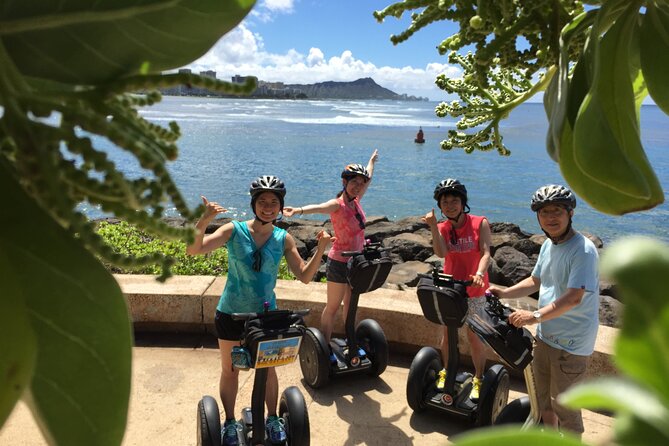
Behind the palace, you move to Hawaii’s State Capitol Building, known in the route description for its unique architecture. Then the tour passes the State Art Museum and continues along historic Hotel Street.
Hotel Street is framed with its colorful past, and that’s where this tour does something useful: it doesn’t keep everything at the royal-and-government level. You start to see how culture and public life sit next to power buildings. That street-level contrast is part of why the route feels like a city tour, not just a checklist of famous names.
By the time you’re near Chinatown’s direction, the tour begins to broaden its lens. You’re shifting from what power looked like to what everyday life looked like as Honolulu grew.
Chinatown shopping mall: markets, noodle factories, and mixed neighborhoods
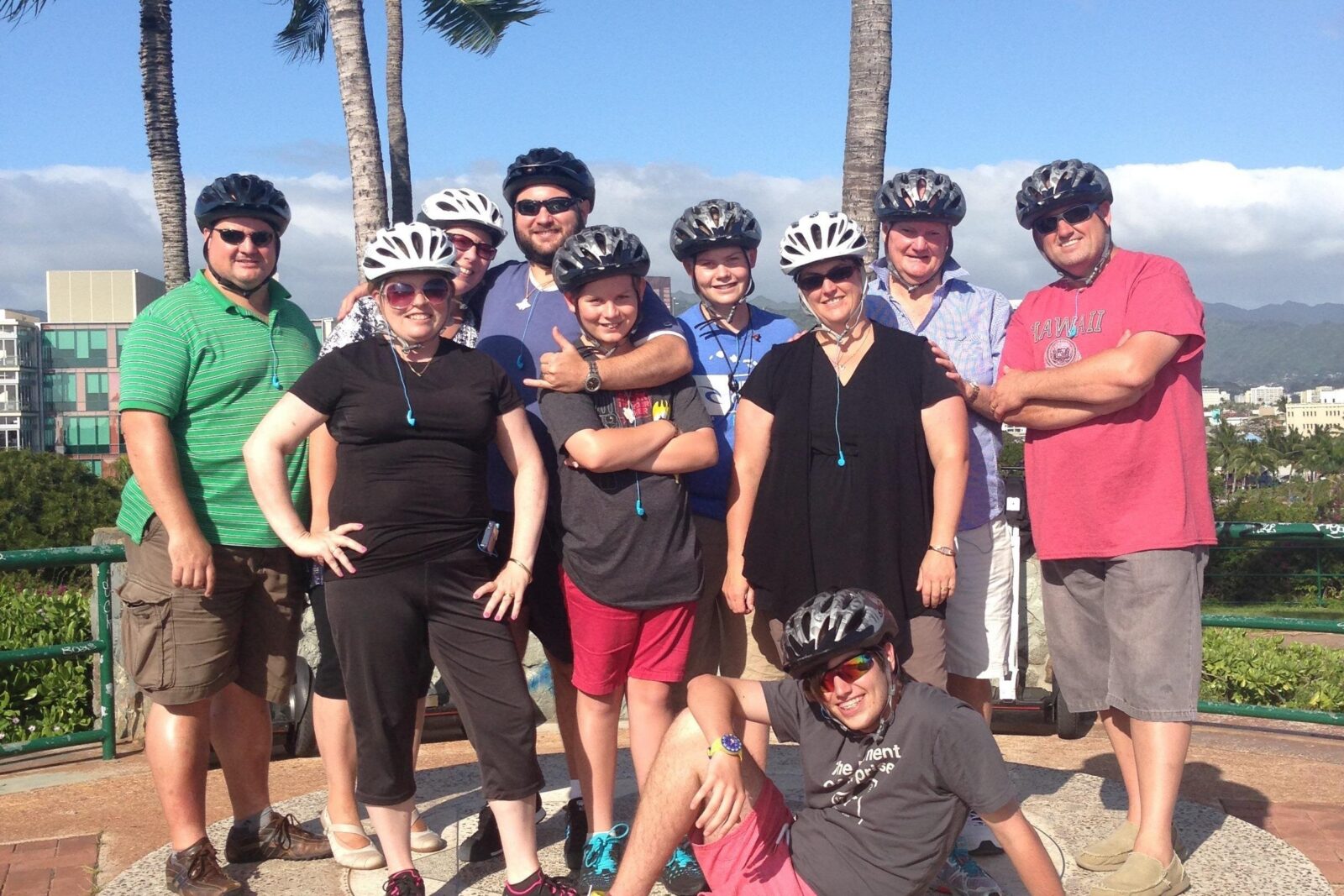
The route heads toward Chinatown’s shopping mall area, described with noodle factories, open markets, and a mix of people from all over the world. Chinatown here isn’t treated as a single monument. It’s presented as a living zone where commerce and community overlap.
This stop is valuable because it breaks the tour’s rhythm. Earlier stops are heavy on government and monuments. Chinatown brings you back to daily rhythm: shops, food production, and the sense that people are moving and trading right now, not only remembering then.
One practical note: because the tour is designed around riding, you’ll likely want to be ready to take quick in-the-moment pictures. If you’re the type who hates feeling rushed in markets, treat this as a glimpse that might point you toward a longer follow-up wander on your own.
Bishop Street and Merchant Street: old Honolulu’s “Wall Street”
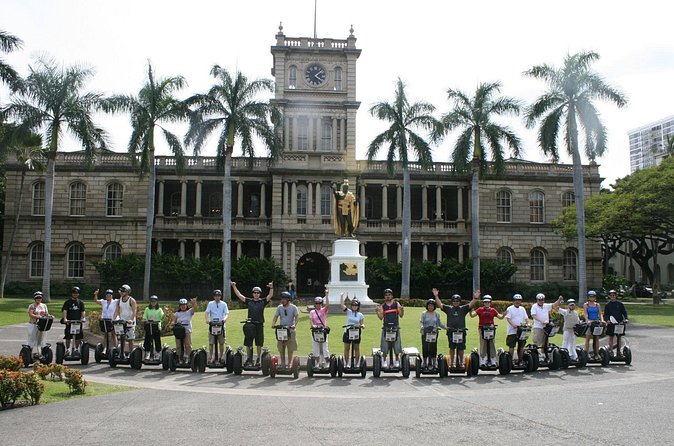
Next comes a route highlight for urban history fans: Honolulu’s “Wall Street” on Bishop Street, described as the first paved street in Honolulu. Nearby, you see Merchant Street with its artistic buildings and historic transportation buildings that are more than 150 years old.
This part of the tour helps you understand how Honolulu’s modern identity formed. Once you’ve seen palace and court symbolism, downtown streets can feel like a new kind of power: business, shipping, movement, and commerce.
It’s also a good segment for your own observational skills. Look at how sidewalks, street layouts, and building fronts shape people’s movement. Even on a moving Segway tour, you’ll notice the city’s bones.
The only consideration here is comfort: downtown streets can involve more traffic noise and visual cues. That’s where the headsets matter. Clear audio keeps you connected to the story instead of mentally drifting.
Aloha Tower and Honolulu Harbor: 1926, plus coral reef life
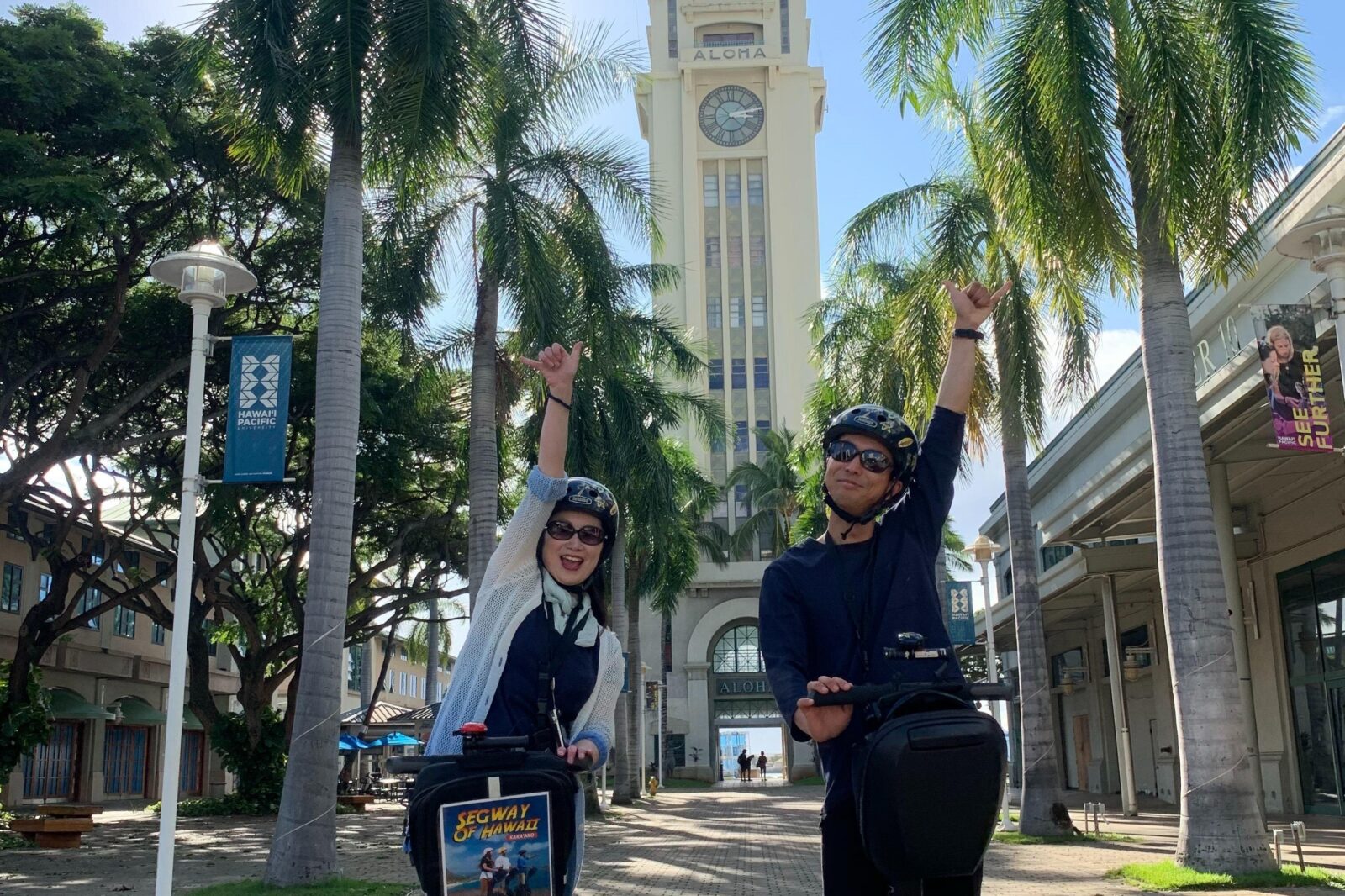
The tour then reaches Honolulu Harbor and the famed Aloha Tower. When it was built in 1926, it was the tallest building in Hawaii. That fact anchors the site in a time when Honolulu was making a statement about growth and reach—especially tied to port life.
You’ll also check out a restored area described as a coral reef and fish that come close by to feed. That’s one of those details that changes the feel of a “history tour.” You’re not only looking backward. You’re also seeing how the waterfront environment has been restored and is actively drawing marine life.
This portion is described as taking you back through history while you ride on today’s technology. I like that framing because it’s exactly what this tour does well: it turns a route through time into something you can physically experience, not just imagine.
Kakaʻako Waterfront Park, Point Panic, and the Ehime Maru Memorial
After the harbor segment, you glide back toward the ocean and into Kakaʻako Waterfront Park, described with a Promenade where you can check out surfers at Point Panic. That’s a neat contrast: serious memorial and history nearby, then a reminder that Honolulu is also a place of sport and movement.
Then the tour continues up the hill to see the Ehime Maru Memorial and the Echo Stone. Memorial spaces can feel solemn, and the pacing here matters. Because this is a guided Segway tour, the guide can set context as you arrive, rather than leaving you to guess what the place is about.
One caution: this part of the route may feel more emotionally intense than the downtown segments. If you prefer upbeat history only, be aware that memorial stops are part of the design here.
Back to Ala Moana: finishing with sea air and a calmer ending
You glide back toward the ocean and finish at Ala Moana Regional Beach Park. For me, that’s a smart ending. You get the final payoff of a waterfront route: open space, sea views, and a sense of decompression after streets full of buildings and monuments.
Ending at the same meeting point you started from keeps it straightforward. No complicated “find your way back” stress.
If you’re planning the rest of your day, this finish helps. You’re already near where you’d want to be for lunch, a beach break, or an easy ride back toward Waikiki.
Guides and pacing: the difference between a ride and a real tour
The highest praise from the experience centers on guide performance and how well the tour runs in motion. Multiple guides are named in the feedback, including Jeanne (Jeanie), Michael, and Zach. People also mention guides like Allen, and a team dynamic with Tyler and Zachary. That suggests you’re likely to get someone practiced at explaining Honolulu without turning it into a lecture.
What I find especially useful is how the communication tools pair with the guide style. Two-way headsets make the narration easier to follow, and the small group helps avoid chaos at each stop. In other words, it’s not just the Segway doing the work—it’s the operation behind it.
The safety side matters too. Feedback points out that first-time riders can pick up the Segway quickly when the guide sets expectations clearly. You can also expect the tour to be organized so people don’t get separated.
If you want a tour that feels like you’re getting a structured story while moving efficiently, this is the kind of setup that usually delivers.
Should you book this Honolulu History & Culture Segway Tour?
Book it if you want the best shot at seeing key downtown and waterfront landmarks in one morning, with clear guide communication and a group size that stays manageable. The route design makes sense for first-timers who want context for places like Iolani Palace, the Kamehameha Statue, and Aloha Tower, without spending the entire day walking.
Skip it if you’re only interested in one or two sites and want long, slow time inside museums. This is built for connecting stops, not for deep “stay as long as you want” visiting at a single location.
Also, factor in weather. This is a good-weather format, so if your trip window is shaky, plan a backup activity for the same day.
Bottom line: for a 2.5-hour window in Honolulu, this is strong value if you like city history that’s tied to real places you can point at and understand.
FAQ
What’s the duration of the tour?
It runs for about 2 hours 30 minutes.
What time does the tour start?
The start time is 9:00 am.
Where does the tour start and end?
It starts at Segway of Hawaii – Kakaʻako, 1687 Kalauokalani Way, Honolulu, HI 96814, and it ends back at the same meeting point.
What’s included in the price?
The tour includes bottled water, a colorful helmet, and a knowledgeable guide with two-way radio headset support.
Do I need to speak English?
The tour is offered in English.
What’s the maximum group size?
The tour has a maximum of 8 travelers.
Is a transfer from Waikiki available?
Yes. Round-trip transfer from Waikiki to Kakaʻako is available for an additional $20 per person, and there are four pickup locations.
Do I need to tip the guide?
Gratuity is not included in the tour price and is greatly appreciated.
What happens if the weather is poor?
This experience requires good weather. If it’s canceled due to poor weather, you’ll be offered a different date or a full refund.
What’s the cancellation deadline for a full refund?
You can cancel up to 24 hours in advance for a full refund. If you cancel less than 24 hours before the start time, the amount paid will not be refunded.