REVIEW · OAHU
Private Efoil Experience in Ke’ehi Lagoon
Book on Viator →Operated by Efoil Waikiki · Bookable on Viator
Flying over water is the real deal. This private-feeling eFoil lesson in Ke’ehi Lagoon turns a technical machine into something you can actually control fast. I like the structured progression, from belly riding and knee turns to standing, and I like the safety setup with a certified guide and radio communication in the water. One consideration: at $188 for about 2 hours and roughly 30 minutes of total riding time per person, this is value-focused rather than a long all-day session.
What makes this experience especially workable is how quickly the learning arc starts. You begin with land-based instruction, then you practice on an eFoil simulator to feel the control before you ever get wet. The operator’s lesson plan is designed so first-timers can kneeride and stand during their first lesson, with many people confidently eFoiling after 30–60 minutes of training. Still, you’ll want good balance and patience, since the “sweet spot” is different for everyone.
If you’re over 205 lb, there’s an additional Big and Tall charge, and if you want photos there’s a $39 add-on. You also need good weather since the experience requires it.
In This Review
- Key things to know before you go
- Why Ke’ehi Lagoon Works for First-Time Efoilers
- Price and What You Actually Get for $188
- The 2-Hour Lesson Plan, From Simulator to Standing
- Safety First: Certified Guide and Radio Communication
- Water Time Math: Three 10-Minute Runs Per Student
- Getting Your Balance: Belly Down, Knees, and the Touch-and-Go Foil
- Who This eFoil Lesson Suits Best on Oahu
- Meeting Point in Kailua and How to Plan Your Timing
- Extras That Can Change Your Total Cost
- What If the Weather Isn’t Cooperating?
- Should You Book This Private Efoil Session in Oahu?
- FAQ
- How long is the eFoil lesson, and how much time is actually in the water?
- Do I need surf experience to do eFoiling here?
- What training happens before you get on the water?
- Is there a weight limit?
- What ages can participate?
- What if weather cancels the experience or I need to cancel?
Key things to know before you go
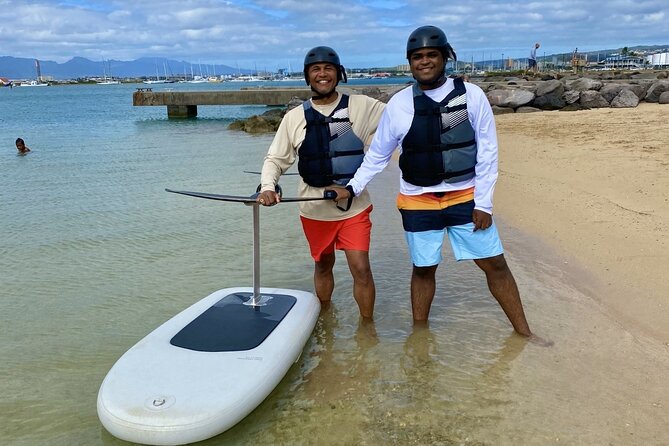
- Simulator training first: you learn center of gravity and control before you’re on the water.
- Three riding positions taught: belly down, knee riding, then pop-up to standing.
- 30 minutes of water time per student: split into three 10-minute runs.
- Certified guide with clear communication: helmets with radios make it easier when you get a bit away from the instructor.
- Beginner friendly with support: no surf experience required, though board-sport balance helps.
- Small-group format with 1 eFoil per 2 students: minimum 2 students to book, and you’ll ride as part of your group.
Why Ke’ehi Lagoon Works for First-Time Efoilers
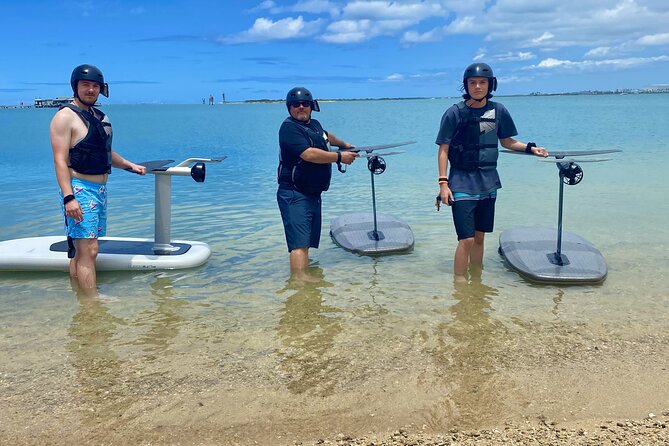
Ke’ehi Lagoon is the kind of place where an electric hydrofoil lesson feels more like controlled training than a gamble. You’re not fighting waves the way you would on a traditional surfboard. Instead, the focus stays on learning the board’s physics: thrust from the motor, lift from the hydrofoil, and the way your body position changes everything.
That matters because eFoiling is not just “balance.” It’s balance plus timing plus throttle control. When the setting is calm and predictable, the learning curve is shorter. I like that this lesson is built for first-timers, not advanced riders who already know how to ride a board while your brain is doing ten other things.
It’s also the sort of place where you might notice life around you. One rider called out seeing turtles from the air-water view. You’re close enough to the surface to feel the water, but high enough to feel like you’ve changed the rules.
You can also read our reviews of more private tours in Oahu

Price and What You Actually Get for $188
At $188, this is priced like an activity, not like a “half-day adventure tour.” What you’re paying for is the full package that makes eFoiling realistic: ground school, a simulator practice phase, safety gear, a certified guide, and a structured time in the water.
You’re not paying for nonstop riding. Instead, you’re paying for instruction that helps you get to the point where you can actually do the thing. The included lesson includes 15–30 minutes of ground school and about 30 minutes of total water time per student, divided into three 10-minute water runs.
For many people, that’s the key value. You’re not trying to wing it. You’re being taught a progression so you leave with skills you can repeat. Even the operator’s promise is skills-based: 100% of clients managed to kneesurf and stand during their first lesson, and many become confidently eFoiling after 30–60 minutes of lessons. That’s exactly the sort of outcome that justifies the cost.
There are also a couple of potential add-ons to factor in:
- Photos are available for $39.
- If you’re over 205 lb, there’s a $49 Big and Tall charge.
The 2-Hour Lesson Plan, From Simulator to Standing
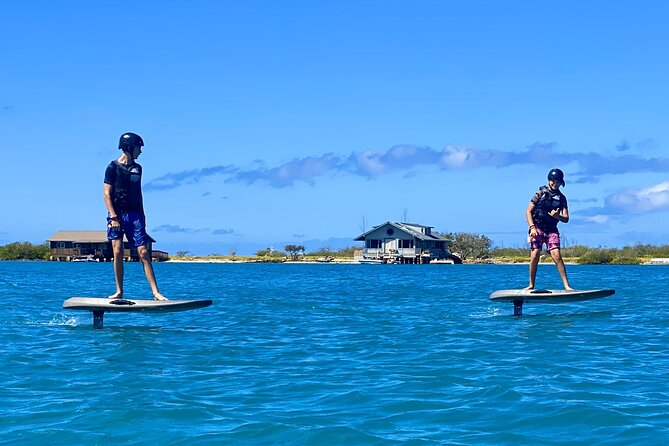
This is not a “jump on and hope” situation. The lesson is progressive, and each step teaches a specific control problem.
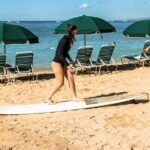
First comes the land-based part. You start with a comprehension land lesson and a safety class. This is where you learn how to think about the board before you’re ever holding a remote at speed. Then you move to the eFoil simulator, a balance board setup where you practice controlling your center of gravity and navigating three riding positions: belly down, knee riding, and standing.
Next comes your water time. The total water time per student is about 30 minutes and is split into three 10-minute runs. That timing matters because it creates mini “learning loops.” You practice, get coached, then apply the feedback again.
Here’s how the progression typically unfolds:
- Belly rides first: learn remote control, turning, and how the board responds to weight shifts.
- Knee riding next: you build stability and start doing some touch-and-go foiling.
- Then the pop-up: you practice moving into standing and doing more controlled e-surfing.
- Finally, longer sustained rides: once you can handle touch-and-go foiling, you work on staying up longer and making longer runs.
The best part is the emphasis on doing it at your own speed. That’s practical. Some people pop up quickly; others need more repetitions to feel comfortable. Either way, the lesson plan is built so you still progress without being pushed into a move you’re not ready for.
Safety First: Certified Guide and Radio Communication
eFoiling can look effortless from the outside. In real life, it’s a powered sport, so safety and communication aren’t optional.
This experience includes safety equipment and a certified guide. Helmets are used, and one rider specifically noted radio communication through the helmets, which makes instruction easier when you drift a bit from the instructor during early rides. That small detail is a big deal. If you’re learning something new at speed, you don’t want to be guessing what your guide is trying to tell you.
Also, you’re taught with a step-by-step plan that starts on land. The goal is to prevent common beginner problems like overcorrecting your stance or panicking with the remote. When you practice body position first on the simulator, the water feels less like a surprise.
If you’re the kind of person who worries about getting embarrassed, this is reassuring. The coaching style described around Ben is patient and very clear, with no wasted time on the schedule. You’ll feel like the lesson is moving with purpose, not rushing you.
Water Time Math: Three 10-Minute Runs Per Student
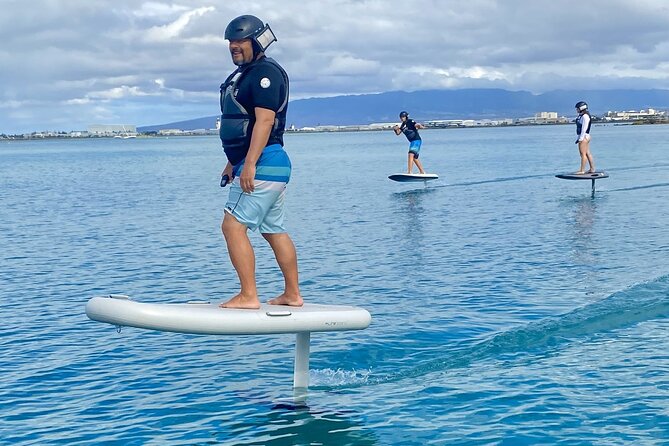
A lot of eFoil experiences market big ride time. Here, you get something more useful: repeated attempts.
You receive about 30 minutes of total water time per student, made up of three separate 10-minute runs. In practice, that means you won’t just do one long run where you spend the first half figuring things out. Instead, each run becomes a focused coaching block.
- Run 1 is usually about controlling the board, turning, and getting comfortable with the remote.
- Run 2 shifts toward kneeriding and short “foil moments” (touch and go).
- Run 3 is where standing and more sustained eFoil rides typically start to happen.
This format is especially good for beginners because it reduces mental fatigue. After a few minutes, you start to learn what your body wants to do when you feel the lift. Then you can reset and apply corrections.
One rider even said they were able to get airborne within about 10 minutes. I wouldn’t treat that as a guarantee, but it does show how quickly the setup can click for some people when instruction is tight and you’re comfortable with balance.





Getting Your Balance: Belly Down, Knees, and the Touch-and-Go Foil
The secret sauce of this lesson is how it teaches control through body position.
You’ll start in belly down riding, which is stable and lets you focus on remote control and turning. Belly position helps your brain map the board response without worrying about standing strength or foot placement too soon. It’s also a gentler way to learn how weight affects lift.
Then comes knee riding. This is where you start to feel more actively involved. One goal here is to get you to touch-and-go foiling, so you begin experiencing the “on the foil” sensation and then learning how to return smoothly.
Finally, the pop-up to standing. This stage can be exciting. It’s also the stage where the lesson needs you to keep your movement clean and controlled. If you’ve wakeboarded, knee boarded, or even skateboarded, you’ll likely recognize the body mechanics and progress faster. If you haven’t, it’s still doable. The simulator stage helps a lot.
Here’s my practical advice for the standing phase: keep your expectations modest early on. The first standing attempts are about getting stable, not about perfect riding. Once you feel the sweet spot, you’ll start to trust the board and the runs get smoother.
Who This eFoil Lesson Suits Best on Oahu
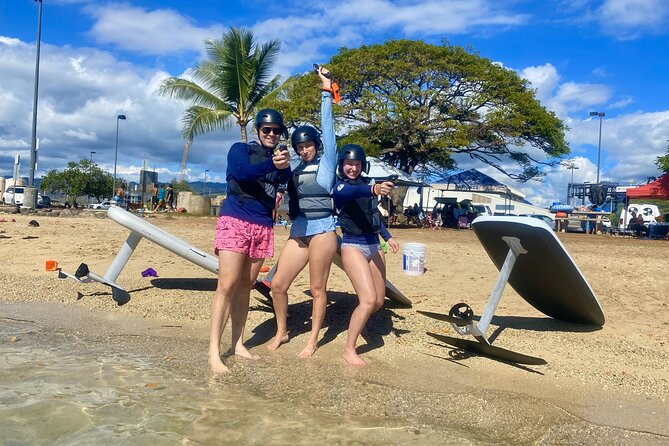
This lesson is designed for students age 13 and up. No surf experience is required, but board-sport balance helps you move faster from eSurfing to eFoiling.
So who should book?
- First-timers who want structured coaching, not improvisation.
- Families with teens who can follow instructions and stay safe while learning.
- People who like tech and gadgets, but also want real instruction.
- Anyone who’s done stand-up paddle or skateboarding and wants a bigger challenge.
Who should think twice?
- If you’re expecting a lot of continuous ride time. This is a coached progression with breaks and re-starts.
- If you’re over 205 lb and don’t want to add the Big and Tall charge.
- If you’ll struggle with the idea of practice on a simulator and repeating basics in the water.
One more point: this is described as a group lesson format with a minimum of 2 students required to book. That can be a good thing. You get guidance with a plan, but you also have a small shared setup rather than one-on-one time. The operator also says you can call to add additional students to create a customized semi-private lesson.
Meeting Point in Kailua and How to Plan Your Timing
You’ll meet at Hawaii Efoil Experience, 1216 Akumu St, Kailua, HI 96734, and the activity ends back at the same meeting point.
Because the lesson is scheduled around ground school and water runs, arriving on time matters. You’re not just meeting a person; you’re joining a paced session that starts with safety and simulator training. If you’re late, it can throw off the timing for everyone’s water turns.
Also, plan around the reality of a 2-hour experience. Even though the total time sounds short, you’ll be doing multiple phases: land instruction, simulator practice, then three water runs. Wear gear that works for being in and out of water, and expect you’ll spend time listening, watching, and adjusting.
Good news: the meeting area is described as near public transportation, so you’re not forced into a complicated private transfer plan.
Extras That Can Change Your Total Cost
Two common add-ons matter most.
Photos cost $39. If you want proof of the flying moment, this is the cleanest way to get it without scrambling for your own shots during the lesson.
The other is weight. Students over 205 lb pay an additional $49 Big and Tall charge. That doesn’t mean you can’t do it. It means the operator accounts for equipment needs.
Finally, the experience is booked using a mobile ticket. That’s simple, but it’s smart to save your confirmation on your phone so you can get checked in without hunting.
What If the Weather Isn’t Cooperating?
eFoiling needs good weather. If it’s canceled due to poor conditions, you’ll be offered a different date or a full refund. This is not a “we’ll run no matter what” activity, and that’s a good thing. Powered water sports are safer and more enjoyable when conditions are right.
If you have flexibility in your Oahu schedule, I’d pick your eFoil day when the forecast looks most stable. Also, if you’re visiting around variable trade winds, have another water-day activity as a backup.
Should You Book This Private Efoil Session in Oahu?
If you want a beginner-friendly “fly over water” experience with coaching that’s built for real learning, I’d book it. The biggest reason is the progressive structure: simulator training, safety instruction, belly rides, knee riding, then standing, with three water runs designed to keep learning moving forward.
It’s also a strong value if you want the guided version of eFoiling rather than figuring it out on your own. You’re getting certified guidance, safety gear, and a plan that aims to get you to kneesurfing and standing during your first lesson.
Book it especially if:
- You’re traveling with teens age 13+ who learn well with clear instruction.
- You want something more exciting than snorkeling but less chaotic than learning surfing from scratch.
- You like the idea of tech sports with a human coach guiding the technique.
Skip it if your top goal is maximum time continuously on the board, with minimal instruction and minimal practice. This is a lesson first. The flying is the reward.
FAQ
How long is the eFoil lesson, and how much time is actually in the water?
The experience is about 2 hours. Each student gets about 30 minutes of total water time, split into three separate 10-minute water runs.
Do I need surf experience to do eFoiling here?
No surf experience is needed. Board-sport balance helps you progress faster, but beginners are included in the lesson plan.
What training happens before you get on the water?
You start with a comprehension land lesson and safety class. Then you practice on an eFoil simulator to learn control using your center of gravity and practice riding positions before the real water time begins.
Is there a weight limit?
There’s an additional Big and Tall charge for students over 205 lb. The experience still uses the standard lesson plan, but the pricing changes for heavier riders.
What ages can participate?
The lesson is for students ages 13 and up.
What if weather cancels the experience or I need to cancel?
The activity requires good weather. If it’s canceled due to poor weather, you’ll be offered a different date or a full refund. You can cancel for a full refund up to 24 hours in advance; within 24 hours, there’s no refund.