REVIEW · SURFING LESSONS
1.5-Hour Semi Private Surfing Lesson in Honolulu
Book on Viator →Operated by Gone Surfing Hawaii · Bookable on Viator
Surfing in Waikīkī is strangely easy to start. This 1.5-hour semi-private Honolulu lesson starts right on the sand, then gets your group into the water for gentle, beginner-friendly waves with up to five friends. Safety and coaching are front and center, with instructors trained in first aid and lifeguard-level CPR.
The main thing I like is the small-group vibe: you get hands-on attention and clear instruction instead of feeling like you’re just getting pushed out there. One possible drawback: surfing depends on real ocean conditions, and if the waves don’t show up (like too-high tide), you may be rescheduled or refunded.
In This Review
- Key things to know before you go
- Waikīkī Sand Start: How the 1.5 Hours Really Works
- Where to Meet: Gone Surfing Hawaii in Honolulu
- Gear Included: Surfboard and Rash Guard Setup
- From Safety Briefing to Wave Reading: What Happens Before You Paddle Out
- In the Water Coaching: Small Group Attention That Actually Helps
- Waikīkī Surf Etiquette and Takeoff Basics (The Stuff That Saves You)
- Instructors Trained for Safety, Not Just Cool Moves
- Photos and Souvenirs: What’s Optional and What You Can Skip
- Physical Fitness and Who This Lesson Fits Best
- Price and Value: What You’re Paying For (Without the Math)
- Should You Book This Waikīkī Surf Lesson?
- FAQ
- How long is the surfing lesson?
- How big is the group for this semi-private lesson?
- Where does the lesson start?
- What’s included in the lesson?
- What should I bring or plan for?
- Is there a minimum age?
- Do I need to know how to swim?
- What if weather or ocean conditions prevent the lesson?
Key things to know before you go

- Small semi-private group (up to five friends) so you’re not lost in a crowd.
- Starts on Waikīkī sand with wave awareness and safety before you paddle out.
- Licensed instructors with first aid and lifeguard-level CPR.
- You get the board and rash guard, so you travel lighter.
- Beginner-focused coaching: wave reading, positioning, and surf etiquette.
Waikīkī Sand Start: How the 1.5 Hours Really Works
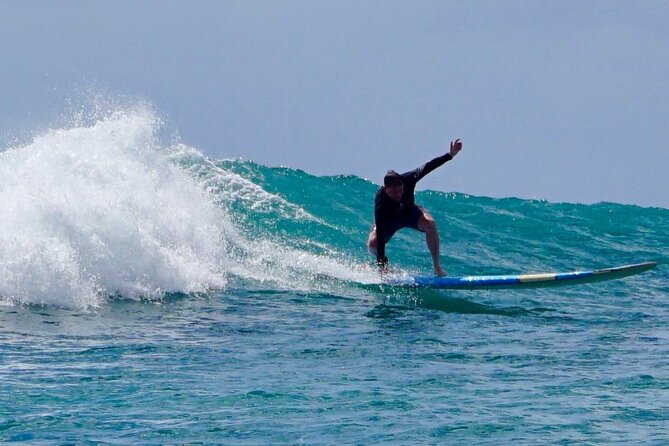
This lesson is built for first-timers and “I’m rusty” surfers. You begin on the sand at Waikīkī Beach, where your instructor sets the tone: ocean awareness, what the waves are doing that day, and the basics of surf safety. It’s not a long lecture. It’s quick, practical, and designed to get you confident before you get wet.
Then comes the best part: you go into the water at Waikīkī, where the waves are typically forgiving for learning. That matters because the fastest way to improve in surfing is not just trying—it’s trying at the right moment with the right guidance. When your group can actually catch waves, you get momentum instead of frustration.
Timing-wise, expect about 1 hour 30 minutes total. Some sessions may feel quicker if conditions are smooth, but the flow stays the same: sand coaching first, then surfing. If you’re the type who worries about the unknown, this structure is soothing. You know exactly what comes next.
You can also read our reviews of more private tours in Oahu


Where to Meet: Gone Surfing Hawaii in Honolulu
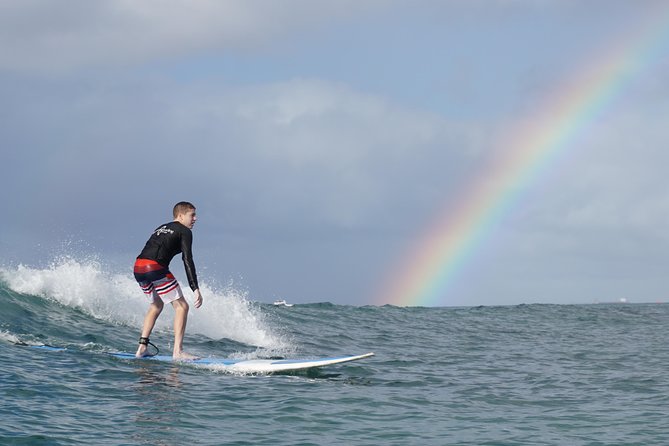
Meet at Gone Surfing Hawaii, 2169 Kālia Rd Ste 102, Honolulu, HI 96815. The tour ends back at the same meeting point. That’s convenient if you want to keep your day simple in Waikīkī—no long transfers, no mystery logistics.
You’ll use a mobile ticket, so bring your phone and keep it handy. The shop is also listed as near public transportation, which is useful if you’re not renting a car and you’re planning to keep your Honolulu day walkable.
One thing I appreciate about meeting at a dedicated surf provider location: you’re not scrambling for gear on the beach. The lesson is set up to get you equipped and moving fast, so you can spend your energy where it counts—in the water.
Gear Included: Surfboard and Rash Guard Setup
This is one of the cleaner “included stuff” lessons. You get a surfboard and a rash guard, and that saves you the usual Hawaii hassle: figuring out where to rent, what fits, and what to do with your stuff.
The rash guard also makes the lesson more comfortable. It helps with sun and skin contact, and it’s one less thing to think about when you’re learning balance and timing. Surfboards feel bigger than you expect when you’re on land. Then, when you’re paddling and turning, you realize why the coaching starts the way it does.
A practical tip: treat this as your gear day. Wear a swimsuit you’re okay with getting sandy. If you bring a bag, use it like you mean it—sand and water will find every loose zipper. If you’re planning to grab photos, keep any valuables secured and out of the way until you’re back on shore.
From Safety Briefing to Wave Reading: What Happens Before You Paddle Out
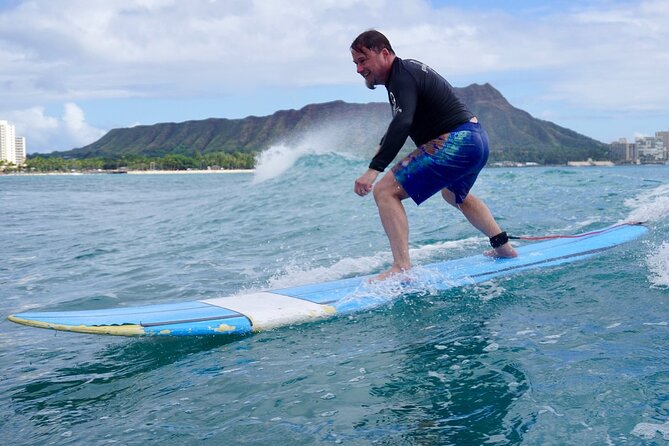
The lesson begins on the sand for a reason. You’re learning the ocean, not just the sport. Your instructor covers ocean awareness, wave conditions, and surf safety first—then you practice the motions that help you take off when you get your chance.
In the water, the coaching focuses on three big skill buckets:
- Reading waves so you know when to commit
- Positioning for takeoff so you’re lined up instead of spinning your wheels
- Surf etiquette so you share space safely with other surfers
This is where value shows up. Surfing can feel like chaos if nobody tells you what to watch. A good coach gives you a short list of cues—what to look for, what to ignore, and what to do when you get knocked around (because you will).
And yes, conditions can matter. Some sessions won’t produce good surf if tide and surf conditions don’t cooperate. One review notes a situation where the instructor was upfront, the waves weren’t happening, and the booking was handled with a refund when it couldn’t be safely delivered.
In the Water Coaching: Small Group Attention That Actually Helps
This is a private group experience for your party, and the lesson is designed around semi-private coaching. You can learn with up to five friends, and your group is matched with the appropriate number of licensed instructors. Translation: you should feel like the lesson is about you, not about moving people through a factory line.
Coaches also tend to adapt to nervous first-timers and mixed ability groups. In reviews, instructors like Mick and Trevor are repeatedly praised for being kind, encouraging, and patient—especially when people are scared or physically overwhelmed by paddling. Names that pop up often include Owen, James, Austin, Jarret, Jason, Nate, and Jojo. That doesn’t guarantee which coach you’ll get, but it does show a pattern: the team is trained for beginners and real human emotions.
Here’s what you can expect in practice:
- Your instructor helps you get into position instead of just telling you to figure it out.
- Many lessons include hands-on assistance, like helping you paddle out or offering a push/tow technique when it helps conserve energy (not every session, but it shows up in multiple lessons).
- You’re coached wave-by-wave, and you get feedback right after you try.
That loop—try, fix one thing, try again—is why so many first-timers report standing up quickly. When conditions cooperate, some people come away with multiple rides in one lesson, including examples like riding several waves each.
You can also read our reviews of more tours and experiences in Oahu






Waikīkī Surf Etiquette and Takeoff Basics (The Stuff That Saves You)
Surf etiquette isn’t just politeness. It’s what prevents collisions and keeps the session calm. Your instructor teaches you how to follow proper surf etiquette, and it’s usually tied directly to what you’re doing:
- Where to be positioned
- When to paddle for a wave
- How to act once you’re on the board
Takeoff is the other critical piece. The lesson emphasizes how to position your body so you can actually stand when the wave comes. Beginners often try to stand too late or too early, or they paddle in a way that puts them sideways to the wave. A coach helps you line up your timing and weight shift so you’re set for success.
One subtle but important detail: the sand coaching helps you rehearse the motions before you’re dealing with saltwater, foam, and adrenaline. Reviews mention instructors teaching motions on land so people are ready before they ever paddle out. That’s smart. It turns surfing from a guessing game into a skill you can learn step-by-step.
Also, Waikīkī can feel crowded if you pick the wrong corner. One review specifically notes that the spot felt calmer and more out of the way from heavy water traffic. You can’t assume that for every day, but it hints that the team tries to choose learning-friendly conditions.
Instructors Trained for Safety, Not Just Cool Moves
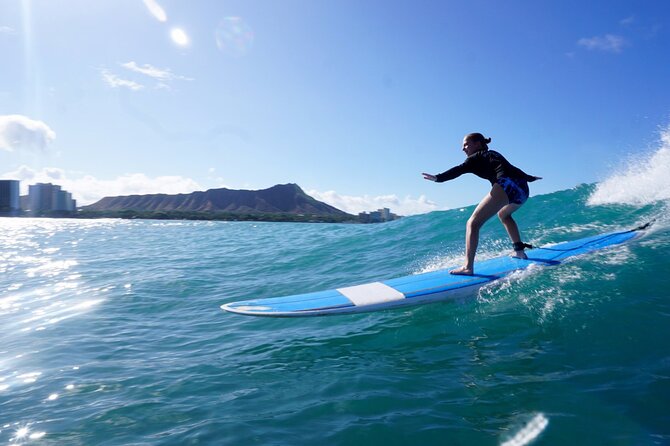
One of the strongest parts of this experience is safety training. Instructors are trained in first aid and lifeguard-level CPR, and that shows up in how lessons are taught. You’ll get clear rules and guidance, and it’s easier to relax when you know the person coaching you has serious readiness.
Instructors are also described as energetic without being chaotic. People mention the coaching style as friendly, encouraging, and easy to follow. Several reviews highlight patience with kids and teens, which is a good sign if you’re bringing younger surfers who need reassurance and structure.
If you’re nervous, pay attention to this part: the coaching is designed to reduce panic. One review notes an instructor helping nervous surfers feel comfortable and safe, while another describes a coach pumping confidence after wipeouts. That matters because surfing is part fear, part fitness, and part timing. A supportive instructor helps you keep your brain switched on when your body gets tired.
Photos and Souvenirs: What’s Optional and What You Can Skip

Included in the lesson are the core activities and gear: surfboard, rash guard, and instruction. Souvenir photos are not included, but they are available to purchase. Reviews mention photographers like Mackenzie, Vicente, and others capturing surfing moments, with a selection of images you can choose from later.
If you’re the type who wants proof you actually did it, plan to budget for photos. If you don’t care, you can focus on the experience and skip them.
Souvenir options like t-shirts and rash guards are also listed as available for purchase, along with souvenir rash guards. That’s nice if you want a Hawaii memory that doesn’t live only on your phone.
Physical Fitness and Who This Lesson Fits Best
This experience is listed as requiring moderate physical fitness, and everyone must know how to swim. There’s also a minimum age of 13 years. If you’re bringing kids, this matters: the guidance says booking anyone under 13 on a private lesson is required while keeping the group together on the same date/time.
So who is it best for?
- Teenagers and adults who want a beginner lesson with real attention
- Couples and friends who prefer shared learning with a coach guiding both of you
- Families with older kids who want everyone to learn together in a structured way
- First-time surfers who don’t want a long, intimidating process
Who might want to think twice?
- If you’re uncomfortable around water or you don’t swim confidently
- If you’re expecting a guarantee of getting multiple rides regardless of tide and conditions
- If your group has very mixed expectations (some people want adrenaline, others want calm reassurance)
The upside is that beginners are the target. Reviews back it up: many first-timers describe standing up, catching waves, and coming away excited enough to rent boards again.
Price and Value: What You’re Paying For (Without the Math)
No single number is provided here, but the value logic is clear from what’s included. You’re paying for:
- Licensed, safety-trained instructors (first aid and lifeguard-level CPR)
- Semi-private coaching for small groups, not a crowded walkthrough
- Real-time instruction on wave reading, takeoff positioning, and etiquette
- Included surfboard and rash guard
That’s a lot covered up front. It usually beats the “rent a board and hope for the best” approach, especially if you’re new. Surfing uses muscles you don’t normally use. It’s easier to respect the sport when someone teaches you the right technique and the safe way to be out there.
Also, the session can be handled responsibly if conditions don’t cooperate. One review notes an honest decision when tide made waves unlikely and a refund was provided because it couldn’t be done another way that day. That reduces the odds of you feeling like you paid for nothing.
Should You Book This Waikīkī Surf Lesson?
I’d book it if you want a beginner-focused Honolulu activity that feels structured, not random. This is the kind of lesson where you should leave with better wave awareness and at least a few real attempts. With a small semi-private group, you get feedback fast, which is exactly what learning needs.
Skip it or wait to book if:
- You’re not comfortable swimming
- Your group includes anyone under 13 and you’re not ready for the required private lesson setup
- You know you’ll be crushed if ocean conditions don’t cooperate that day
Otherwise, it’s a smart way to check surfing off your Hawaii list. Waikīkī’s reputation for beginner-friendly learning is earned, and the instruction here is built to turn first-timer panic into first-wave confidence.
FAQ
How long is the surfing lesson?
The experience is about 1 hour 30 minutes.
How big is the group for this semi-private lesson?
You can learn with up to five friends, and it’s a private tour/activity so only your group participates.
Where does the lesson start?
The lesson begins on the sand in Waikīkī at Waikīkī Beach.
What’s included in the lesson?
It includes the local instructor, surfboard, rash guard, and professional instruction, plus the surfing lesson activities.
What should I bring or plan for?
This experience includes the board and rash guard, but souvenir photos and t-shirts (and souvenir rash guards) are available to purchase separately. You should also plan for a moderate physical activity level.
Is there a minimum age?
Yes, the minimum age is 13 years.
Do I need to know how to swim?
Yes, all participants must know how to swim.
What if weather or ocean conditions prevent the lesson?
This experience requires good weather. If it’s canceled due to poor weather, you’ll be offered a different date or a full refund.