REVIEW · SURFING LESSONS
Surfing Lessons On Waikiki Beach
Book on Viator →Operated by Big Wave Dave Surf & Coffee · Bookable on Viator
First-timers often worry about looking silly. This lesson turns that into controlled practice on Waikiki’s beginner-friendly shoreline. You get a focused lesson format, gear included, and coaching that aims for real takeoffs instead of just watching from the beach.
What I like most is the small-group setup (max five) and the way the instruction starts on land before you ever paddle out. You’ll also appreciate the locker and included board + leash, which means you can travel light and skip extra rentals unless you want them. The one drawback to keep in mind: surf spots in Waikiki can get busy, and a few reports mention that water conditions and instructor communication can make the lesson harder than it should be.
In This Review
- What you’ll get (and what to watch for)
- Key points that matter
- Entering Waikiki Surf: Why this lesson fits first-timers
- Big Wave Dave check-in: fast setup, low stress
- The beach lesson: where confidence gets built
- In the water: what coaching feels like when it works
- How to get more waves in less time
- Equipment and clothing: what’s included, what you may want
- Price and value: $129 for 90 minutes of coaching
- Small-group promise: what you should expect on a busy day
- When conditions or the instructor vibe doesn’t match the moment
- Where the lesson runs: the Waikiki reality check
- Who this is best for (and who should rethink it)
- Should you book this Waikiki surf lesson?
- FAQ
- Where is the meeting point for the Waikiki surfing lessons?
- What’s included in the price?
- Do I need my own surfboard or leash?
- Is a rash guard required?
- Can I join if I can’t swim well?
- Is there a cancellation policy if weather is bad?
What you’ll get (and what to watch for)

You’ll meet at Big Wave Dave Surf & Coffee in Waikiki, check in about 20 minutes early, then gear up with the surfboard and leash provided. The lesson runs about 1 hour 30 minutes, with time on the beach for safety and technique, then hands-on coaching as you try to stand and ride.
Key points that matter
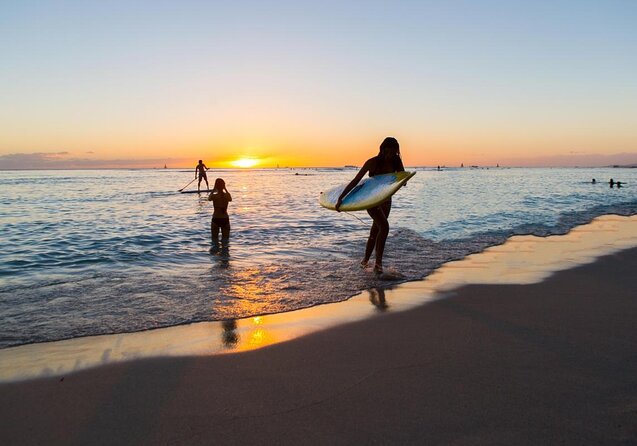
- Beginner-friendly water in Waikiki: south-facing coast with soft sand and shallow areas
- A 20-minute on-land fundamentals block: safety etiquette, paddling, board control, wave handling
- Coaching while you try: instructor stays right with you as you practice standing and riding
- Gear and locker included: no need to bring a board or hunt for a place to stash your stuff
- Morning vs afternoon waves: morning can mean more favorable water for learning; afternoons can start gentler
- There can be noise and crowd pressure: busy launch areas and wave sound can make instructions harder to catch
You can also read our reviews of more tours and experiences in Oahu

Entering Waikiki Surf: Why this lesson fits first-timers
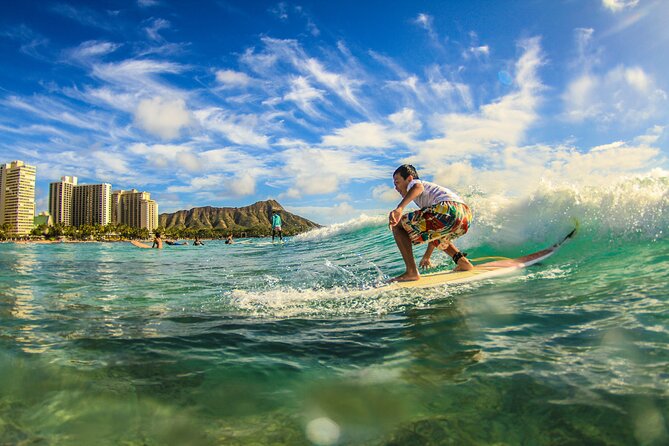
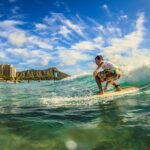
Waikiki is one of the best places on Oahu to start, and not because it’s magical. It’s good because it’s practical. The lesson is set on the south-facing coast, where conditions tend to be friendlier for learning, with soft sand and shallow water that helps you recover and reset.
You’re also learning in a place with real surf culture around you. The program is built to give you more than just technique. You’ll get some context about how surfing works in Hawaii, which helps you feel like you’re joining something local rather than doing a tourist stunt.
Big Wave Dave check-in: fast setup, low stress
Your session starts at 226 Lewers St #154, Honolulu, at Big Wave Dave Surf & Coffee. You’ll be near Waikiki Beach Walk, and you should plan to arrive about 20 minutes early so you can check in, get sorted, and breathe before the ocean takes over your schedule.
They provide a locker for your belongings, which is a big deal in Waikiki where space can be tight. You bring what you need—then you store the rest and focus on surfing. If you want extra comfort, you can rent items like a rash guard ($5), and there’s an option for a lock rental ($5) if you need it.
Quick note for planning: the lesson is offered in English, uses a mobile ticket, and runs about 1 hour 30 minutes. It’s also near public transportation, so you’re not forced into a car-only day.
The beach lesson: where confidence gets built
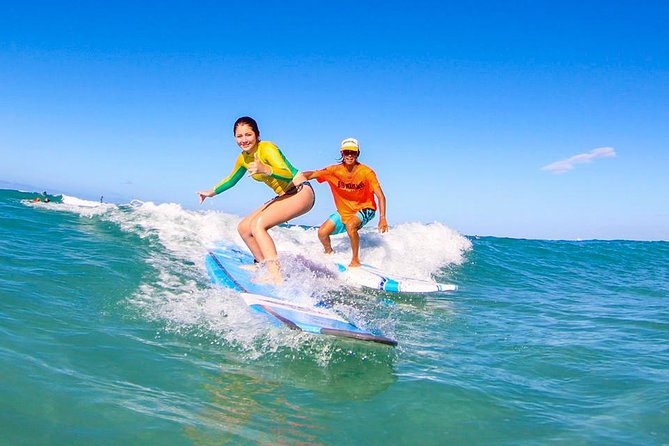
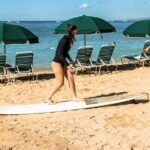
Before anyone paddles out, you start with about 20 minutes on land. That portion is often the difference between a fun first session and a chaotic one. Here, you learn the essentials: water safety etiquette, how to paddle efficiently, how to move the board, and what to do when a wave is coming.
This matters because your body is learning at least three things at once: balance, timing, and not panicking when the ocean changes its mind. Standing on a surfboard for the first time is awkward. Having the instructor run you through the steps on sand helps you avoid the classic beginner problem: paddling like crazy, then freezing at the moment you should pop up.
I also like that the lesson doesn’t treat you like a mystery box. You’re told what to do and why, so you’re not just trying random movements and hoping the ocean grades on a curve.
In the water: what coaching feels like when it works
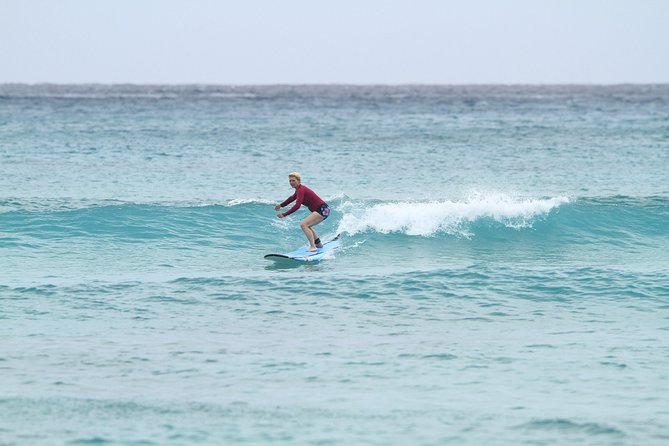
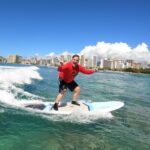
Once you’re in the water, the lesson shifts from instructions to feedback. Your coaching focuses on two main skills: standing up and then riding waves with your instructor close by. This is the part where you’re most likely to feel nervous, because the water motion makes everything harder than it looks.
In a good lesson, the instructor helps you find the moment where you can actually get up. The goal isn’t to become a surfer in one go. It’s to leave with the feeling that you can do it—and that you know what to repeat next time.






How to get more waves in less time
Some people expect a long parade of waves. With a 1.5-hour lesson, you’re not going to ride nonstop. You’ll usually get a handful of attempts, and timing depends on wave sets and where the group is positioned.
If your goal is maximum chances to pop up, pick a time that tends to offer smoother learning conditions. One tip echoed in feedback: morning can be better for higher tides, while afternoons can be gentler to start.
Equipment and clothing: what’s included, what you may want
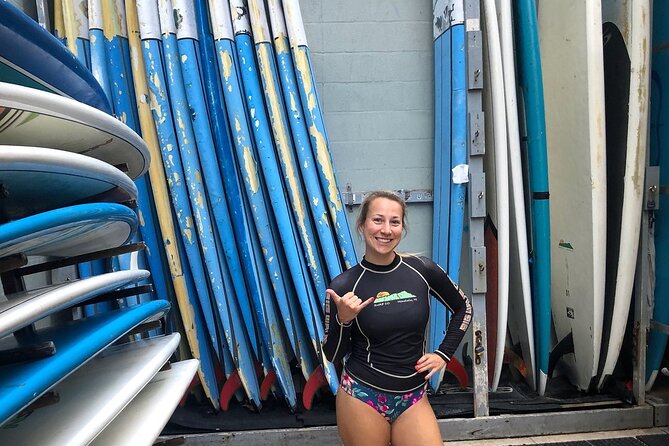
The lesson includes the big stuff: surfboard + leash. You don’t need to bring your own equipment. That’s value right there, because boards and wetsuit-related rentals can add up fast once you’re already paying for your trip.
You can also rent a rash guard for $5 if you want extra comfort and protection. It’s not listed as required, but it can make the session feel better on a busy beach day. If you’re prone to feeling cold in the water, you might want to budget for that extra layer option.
The locker is included, and that’s the quiet hero of the whole setup. Waikiki is convenient, but it can be crowded. Knowing you can stash bags safely keeps you from turning your lesson into an all-day juggling act.
Price and value: $129 for 90 minutes of coaching
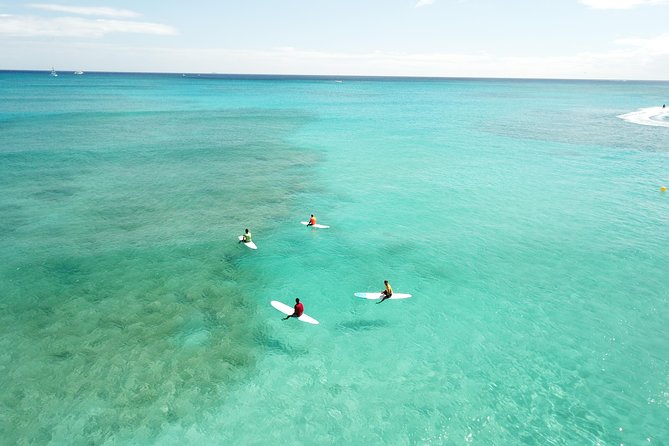
At $129 per person, this is not a bargain deal, but it can be good value if you want real instruction for a short window. You’re paying for three things:
- A professional instructor who helps you with technique and safety
- Small-group attention (advertised max five, which is a key part of the value)
- Equipment included, plus locker access
Where the value gets shaky is when the lesson runs into the two usual problems: waves that aren’t cooperating, or communication that’s hard in a noisy shoreline environment. One less-than-perfect report mentioned difficulty hearing instructions over water noise and wave timing issues that limited quality rides.
Here’s the balanced take: if your instructor can clearly guide you and conditions support beginners, you’ll likely feel the price makes sense. If conditions are rough or communication breaks down, you might feel like you paid a lot for only a few attempts.
Small-group promise: what you should expect on a busy day
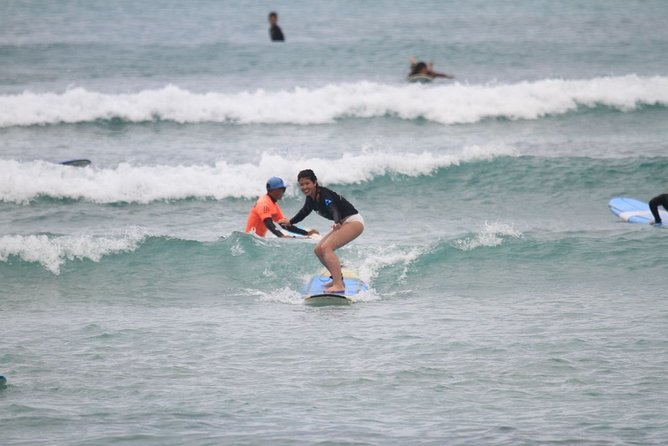
The lesson is listed as maximum five travelers, which is ideal for beginners. Fewer people means less waiting, more individual attention, and more time correcting mistakes.
Still, on a crowded Waikiki day, you may find groups can feel bigger than the ideal scenario. Some experiences describe larger groups than the max five message suggests, and when the water is shared with other activities, coaching gets more complicated.
What you can do: when you arrive, watch how the staff organizes everyone. If the group size seems larger than you expected, pay extra attention to safety instructions and ask questions before you go out.
When conditions or the instructor vibe doesn’t match the moment
Most of the feedback points to instructors who are patient, encouraging, and focused on getting you standing. You’ll see names like Derek, Tanner, Joshua, Alex, Cody, and Mouse mentioned as standout coaches. That’s a good sign because beginners do better when the instructor’s style is calm and hands-on.
But I’ll be real with you: there are outlier negative reports. One described a serious breakdown in supervision and communication during a challenging moment in the water. Another mentioned the instructor’s voice didn’t carry well enough and that getting good waves took longer than expected.
You should not ignore that. If you’re booking, choose a time and day that you feel comfortable with, and take safety seriously. If an instructor seems distracted or instructions feel vague, it’s okay to speak up during the lesson setup on land. Your best surfing comes from feeling safe and clear about what to do next.
Where the lesson runs: the Waikiki reality check
The activity ends back at the meeting point at Big Wave Dave Surf & Coffee. That matters because you’re not spending the day traveling between zones. Waikiki keeps it simple: short walk from the surf shop area to the water is part of the appeal.
The flip side: the water near Waikiki can be active with other groups. That’s why the safety brief is important. Also, the launch area can be tight when you share the beach with other tours and boats.
Practical advice: wear footwear you trust on sand and uneven spots. Bring a bag you don’t mind getting wet if you’ll be heading straight to other parts of your day afterward. Then plan a relaxed pace after the lesson; surfing is more tiring than most people expect.
Who this is best for (and who should rethink it)
This isn’t just for teenagers and action heroes. It’s meant for beginners, and Waikiki’s shallower, gentler conditions make it a good first step.
You should be ready for a moderate physical fitness level and you must be able to swim. If you’re uncomfortable in open water or you don’t feel confident swimming, find a different type of lesson or a smaller, more guided option that matches your comfort level.
This lesson can be especially great if:
- you want a first surfing experience without bringing gear
- you value a coach who stays right with you while you practice
- you’re traveling with family or teens and want a structured class format
It may feel less ideal if:
- you’re expecting a huge number of high-quality rides in 90 minutes
- you’re very sensitive to noise and want quieter teaching conditions
- you need a lesson style that is highly verbal and slow-paced (you’ll want clear communication to get the most out of it)
Should you book this Waikiki surf lesson?
I’d book it if you’re a first-timer who wants gear included, a beginner setup, and instruction that starts on land so you know what to do before you paddle out. The small-group model, the locker convenience, and the focus on standing and riding are the core reasons this can be a great Oahu memory.
I would pause before booking if you’re prone to feeling anxious in the water and you know you struggle with hearing instructions over ocean noise. And if you’re the kind of person who needs extra reassurance, plan on choosing the time window that tends to offer smoother beginner conditions, since morning vs afternoon can change how comfortable learning feels.
If you do book, arrive early, listen carefully during the safety talk, and be ready to practice popping up in small steps. Waikiki can be forgiving, but surfing still asks you to trust the process.
FAQ
Where is the meeting point for the Waikiki surfing lessons?
You’ll meet at Big Wave Dave Surf & Coffee, located at 226 Lewers St #154, Honolulu, HI 96815.
What’s included in the price?
The lesson includes a professional instructor, all required equipment (surfboard and leash), and locker use for your belongings.
Do I need my own surfboard or leash?
No. You’re provided the surfboard and leash as part of the lesson, so you don’t need to bring any equipment.
Is a rash guard required?
No. A rash guard rental is available for $5, but it’s not listed as required. You can also bring your own.
Can I join if I can’t swim well?
You must be able to swim. The activity also notes a moderate physical fitness level.
Is there a cancellation policy if weather is bad?
Yes. You can cancel free up to 24 hours in advance for a full refund. If it’s canceled due to poor weather, you’ll be offered a different date or a full refund.