REVIEW · SURFING LESSONS
Oahu: Beginner-Friendly Waikiki Beach Surfing Lesson
Book on GetYourGuide →Operated by Surfer Girl Academy, LLC · Bookable on GetYourGuide
Your first wave in Waikiki should be easy. This surf lesson at Waikiki Beach is built for all levels, with lifeguard-certified instructors keeping a close eye so you can move from “where do I put my feet?” to actually riding. The small-group feel matters here—when things get chaotic in the lineup, you want coaching, not guesswork.
The second thing I like a lot is the pacing: 20–30 minutes on land to learn the basics, then about 70 minutes in the water with steady supervision. They also supply most of what you need (board, leash, rash guard, and reef shoes), which cuts down on pre-trip stress. One consideration: photos and video downloads cost extra, so plan for that if you want the full recap.
In This Review
- Key Points You Should Know Before You Go
- Waikiki Surf, Beginner-First at Surfer Girl Academy
- The 2-Hour Plan: How You Go From Stand-Up Confusion to Wave Time
- Gear Included: What You Get and What You Still Need
- Where the Coaching Happens: Ocean Safety and Wave Selection in Real Time
- Small Group Size: Why the 1-to-4 Ratio Changes Everything
- Instructors With Real Coaching Energy: Names to Look For
- Pictures and Video: Plan for the Extra Cost
- Cost and Value: Is $125 Worth It in Waikiki?
- Who Should Book This Lesson (and Who Should Skip It)
- Practical Tips Before You Show Up
- Should You Book This Waikiki Beginner Surf Lesson?
- FAQ
- Is this surf lesson suitable for beginners?
- How long do we spend on land instruction versus surfing?
- What gear is included in the lesson?
- How many people are in the group?
- Where do we meet, and is there parking?
- Are photos or video included, and can I cancel?
Key Points You Should Know Before You Go
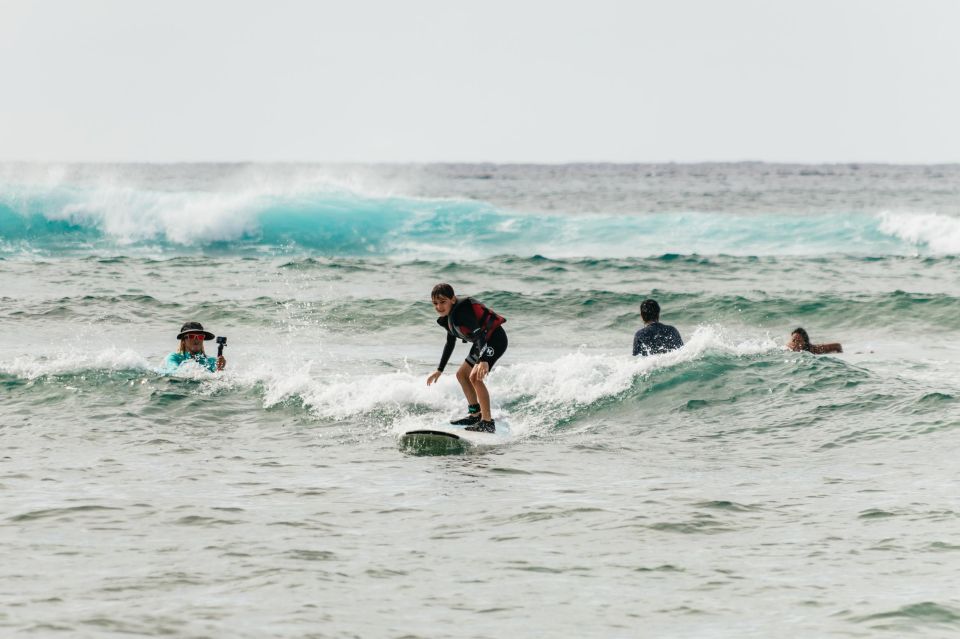
- Small group support: Limited to 8 participants, with one instructor for every four people
- Land practice first: A focused 20–30 minute dry session covers stance and ocean safety
- Real time in the water: Roughly 70 minutes of supervised surf, not a token swim-and-hope
- Gear included: Surfboard, leash, Hurley rash guard, and reef shoes come with the lesson
- Wave choices tailored to you: Instructors help you pick the right waves and correct posture in real time
Waikiki Surf, Beginner-First at Surfer Girl Academy
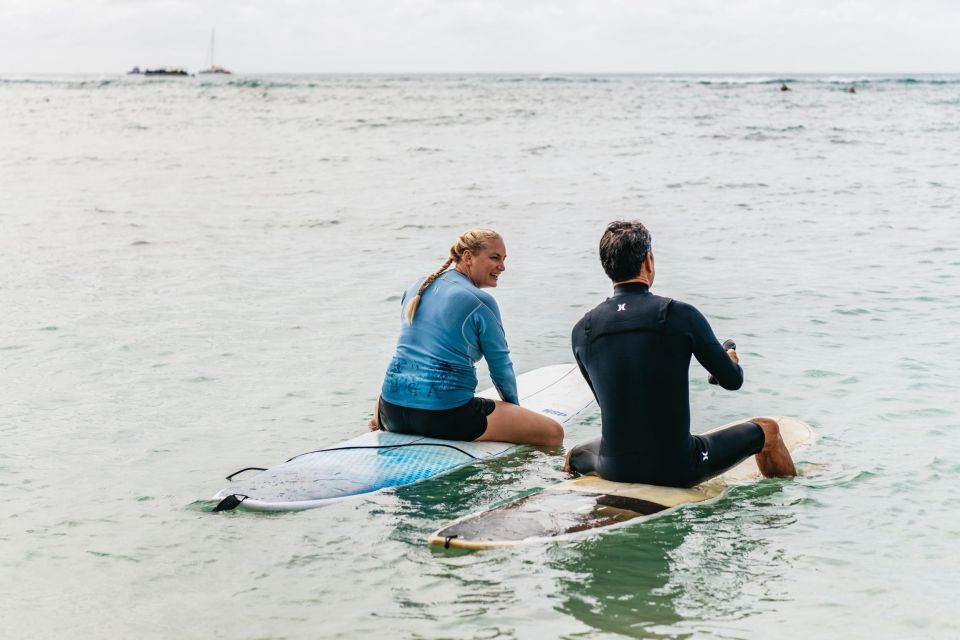
Waikiki has the kind of surf that looks effortless from the beach. Up close, it is still surf—choppy sets, shifting water, and a lot happening fast. That is why I like the setup here. You are not thrown into the deep end with zero structure.
The lesson runs through Surfer Girl Academy, right by the ocean. The meeting point is simple enough to find if you arrive with a little time, and parking by the ocean is free. If you are driving and you worry you might get turned around, still give yourself buffer time. The beach area is busy, and the actual spot for lessons is on the smaller side.
The big promise is beginner-friendly coaching for all skill levels. That sounds broad, but the details hold up: lifeguard-certified instructors, a small group size, and close supervision so you get corrected early—before you lock in bad habits.
You can also read our reviews of more tours and experiences in Oahu



The 2-Hour Plan: How You Go From Stand-Up Confusion to Wave Time
The lesson timing is one of the most practical parts of this experience. It is short enough that you stay focused, and long enough that you should catch waves with real coaching.
First comes 20–30 minutes of dry land instruction. This is where you learn the basics of surfing and get clear directions on how to stand on the board. You also get ocean safety guidance. In plain terms: you are setting yourself up so that when you hit the water, you understand what you are supposed to do instead of only hoping.
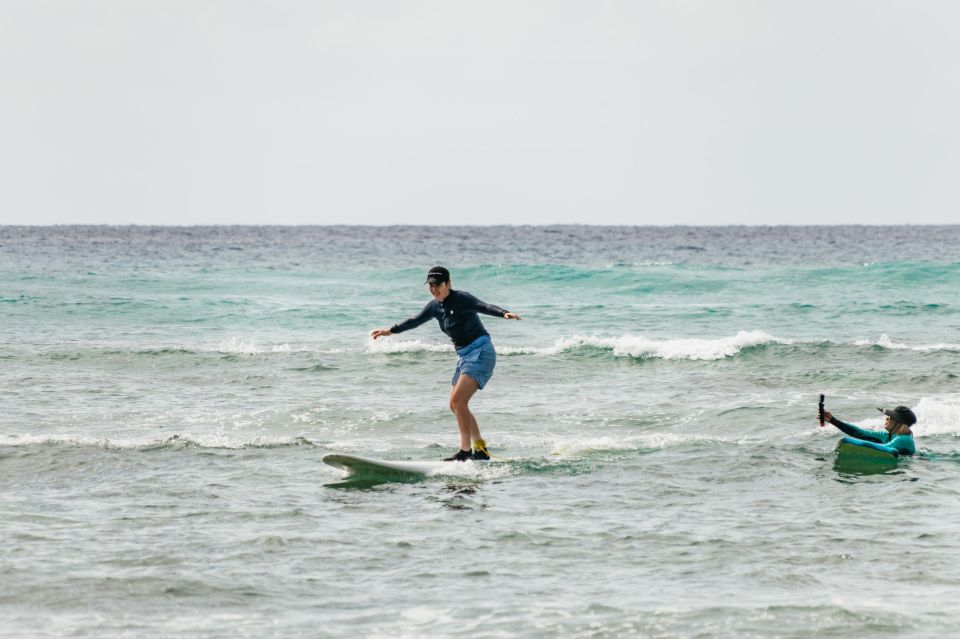
After that, you head into the water for about 70 minutes of supervised surfing. This is the part you came for. You will work on standing and riding at your own pace while instructors keep you moving through the water. The coaching rhythm is the key: you are not waiting around for long stretches, and you are not left to figure out timing alone.
The experience also aims for an uncrowded stretch of water along Waikiki. That matters because a beginner’s biggest problem is often not the wave—it is traffic, timing, and getting around other surfers without panic.
Gear Included: What You Get and What You Still Need

You can show up with the basics and let them do the heavy lifting. Included gear covers the essentials for getting comfortable in the ocean.
Here is what comes with your lesson:
- Surfboard
- Leash
- Hurley rash guard
- Reef shoes
- Instructor-led lesson and supervision
- Wetsuit is optional
- Sticker
That list means you do not have to juggle rentals or improvising with beach sandals. Reef shoes are especially important in the ocean environment, and the leash is what helps you stay connected to the board when you fall.
What you should bring yourself:
- Swimwear
- Change of clothes
- Towel
- Sunscreen
- Water
- Cash
A small practical note: Waikiki sun hits hard. Even if the water feels inviting, you still burn. Bring sunscreen and keep it handy for reapplication during breaks.
If you get cold easily, ask about the wetsuit option before you go out. Since the wetsuit is listed as optional, you can choose what makes you comfortable.
Where the Coaching Happens: Ocean Safety and Wave Selection in Real Time
Surfing has a safety side, and this lesson treats it seriously. The dry land portion includes general ocean safety and directions on standing properly, which helps you understand what you are getting into. Once you are in the water, instructors also guide you through the practical stuff: where to go, when to try, and what to do when things do not work.
Another reason this lesson feels beginner-friendly is wave selection. The goal is for you to get enough success to build confidence, without forcing you onto waves that are too big or too messy. Instructors help you choose the best waves for your level and correct your posture as you go. That kind of adjustment is the difference between riding a board for five seconds and getting a real, repeatable rhythm.
Also, the water can be part classroom and part nature show. One of the more memorable details from participants is spotting turtles during the session. You should not expect wildlife on cue every single time, but it is a reminder that Waikiki surf is happening in an active ocean, not a set stage.
Small Group Size: Why the 1-to-4 Ratio Changes Everything
This lesson is capped at 8 participants, with one instructor for every four participants. That ratio is what makes the difference you feel immediately.
In larger surf groups, you can end up watching a teacher work while you wait your turn. Here, you are close enough that they can spot what is going wrong and adjust fast. People also note that instructors will position you in a way that makes learning more efficient—especially early on when your stance is still new and your balance needs time.
The most helpful coaching moments are usually the ones you get right after you fail. You go from slipping off the board to understanding what needs adjusting. That feedback loop is why participants often describe the lesson as something where they were riding within the first hour or soon after.
In some sessions, you may also see a division of roles: one instructor works with you in the wave zone while another pays attention to technique from the front and helps with photos/video. That structure means you are not just being pushed into waves—you are being watched while you try.






Instructors With Real Coaching Energy: Names to Look For
Surfer Girl Academy uses a team of instructors, and the coaching style shows through in the way people talk about specific teachers. Names that come up include John, Mito, Yuko, Noah, Kai, and Shuji/Shuzi.
What is consistent across the names is patience and encouragement. First-time surfers often feel their fear show up in their body—shoulders tighten, knees stiffen, and balance goes. Multiple participants say the instructors helped them keep calm, gave advice quickly, and kept them moving toward a goal they could actually reach.
If you have a particular preference, it is worth noting that the lesson lists languages as English and Japanese. That can be helpful if you want the coaching in the language you feel most comfortable hearing.
Pictures and Video: Plan for the Extra Cost
Your lesson includes a lot of attention on technique, and they also capture your session for purchase afterward. The activity explicitly notes that pictures and video downloads are not included, but are available to buy.
In practice, people often mention a GoPro-style photo/video package available right after the lesson for an extra fee, with some mentioning around $45. That means if you are the type who wants a visual proof of learning to stand up and ride, budget for it. If you are watching costs carefully, you can also treat it as optional: buy only if you love what you see.
One more detail to know: some participants say the footage is high quality and worth it for the “first time” milestone. If you are learning for the first time, you may not even realize you improved until you review what happened on the waves.
Cost and Value: Is $125 Worth It in Waikiki?
At $125 per person for a 2-hour experience, you are paying for more than the board and the beach time. You are paying for structured coaching, safety guidance, and enough supervised water time that you are likely to make progress.
Here is what makes the value feel reasonable:
- You get most of the necessary gear (board, leash, rash guard, reef shoes).
- The class is small, capped at 8, with an instructor-to-participant ratio designed for hands-on help.
- You spend meaningful time in the water, with supervision rather than a short introduction and a quick send-off.
The only place the price can feel annoying is the add-ons. Photos and videos are extra. If you want every piece of that memory, the total can climb. Still, the lesson is not just a quick photo opportunity; it is a real learning session.
If you are comparing surf lessons in Hawaii, think in terms of time and coaching attention, not just whether you get a board. Here, the time structure and support are part of what you are buying.
Who Should Book This Lesson (and Who Should Skip It)
This is a strong fit if you:
- Have never surfed and want beginner-first instruction
- Like guided practice where instructors correct your stance while you learn
- Want an efficient way to spend time in Waikiki without committing to a full day
It is also suitable for all levels, meaning you can join even if you already have some board experience and want focused coaching.
It is not suitable for:
- Children under 12
- Pregnant women
- Wheelchair users
If any of those apply, you will want to look for a different activity.
Practical Tips Before You Show Up
A few small things can make the lesson feel smoother:
- Wear or bring swimwear you feel comfortable moving in.
- Bring a change of clothes and a towel so you can dry off quickly afterward.
- Bring sunscreen and water. You will feel it even if you think you will stay in the shade.
- Have cash available, since the tour data lists it as something to bring.
If you are tempted to overthink surf technique before you go: don’t. The lesson gives you the basics on land first. Your job is mostly to pay attention, follow instructions, and try again after a wipeout.
Should You Book This Waikiki Beginner Surf Lesson?
I would book it if you want the Waikiki surf experience without the usual beginner stress. The small group size, the lifeguard-certified coaching, and the clear split between land instruction and water time add up to a lesson that feels designed for learning, not just being present in the ocean.
Skip it only if you know you do not want an instructor-led session, or if your priorities are purely sightseeing and you do not care about skill-building. Also factor in the photo/video cost if you want a complete memory set.
If your goal is to catch waves, feel supported, and leave with the confidence to try again, this one is a solid bet.
FAQ
Is this surf lesson suitable for beginners?
Yes. The lesson is suitable for all skill levels, including beginners.
How long do we spend on land instruction versus surfing?
You’ll get about 20–30 minutes of dry land instruction first, then roughly 70 minutes of supervised surfing in the water.
What gear is included in the lesson?
Your package includes the instructor, lesson, surfboard, leash, Hurley rash guard, and reef shoes. A wetsuit is optional.
How many people are in the group?
The group is small, limited to 8 participants, with one instructor for every four participants.
Where do we meet, and is there parking?
Meet at Surfer Girl Academy. Parking by the ocean is free.
Are photos or video included, and can I cancel?
Photos and video downloads are not included; they are available for purchase. The experience also offers free cancellation up to 24 hours in advance for a full refund.