REVIEW · SCUBA DIVING
Waikiki 2 Tank World Class Wreck SCUBA Diving – Certified Only
Book on Viator →Operated by WAIKIKI DIVE CENTER · Bookable on Viator
If you want Oahu’s water with structure, this fits. You get a wreck swim and a reef swim off Waikiki, guided by working pros. It’s set up for certified divers, so the pace is steady and the underwater time actually matters.
I especially like the wreck option (think Sea Tiger, YO-257, or San Pedro wreck). Then you follow it with a reef session along Waikiki, which is where the sea turtles and tropical fish energy shows up. It’s one morning, two different kinds of underwater scenery, and you don’t have to manage the logistics yourself.
The main catch: you must bring proof of certification, and this isn’t a “maybe you’ll be fine” setup. If you arrive without the right paperwork, you’re denied for the wreck portion. Also, you’ll need enough comfort for deep-ish conditions (about 100 ft expectations) and you must be able to carry 30 lb tanks.
In This Review
- Key Highlights You’ll Actually Feel
- Waikiki Wreck + Reef: Why This Two-Tank Morning Works
- Certification Rules: The Gatekeeper Part (Read This Twice)
- Getting Ready On Land: 30 lb Tanks and Early Check-In
- Out to the Water: What the Morning Feels Like
- Stop One Underwater: Wreck Time Off Waikiki
- Stop Two Underwater: Reef Along Waikiki
- The Crew and Safety: What You’re Buying Beyond Gear
- Price and Value at $269: What Makes It Fair
- Timing, Weather, and the No-Fly Rule
- Who Should Book This Waikiki Two-Tank Scuba Session
- Should You Book It?
- FAQ
- What certification do I need for the wreck portion?
- Are wreck and reef both included in this experience?
- What wrecks might we see?
- Is scuba equipment included?
- Is lunch included?
- How long is the tour?
- Where do we meet?
- Do I need to fill out a health questionnaire?
- Can I fly soon after scuba?
- What if I’m late for check-in?
Key Highlights You’ll Actually Feel
- Two underwater stops in one trip: a shipwreck first, then a reef along Waikiki
- Sea Tiger / YO-257 / San Pedro wreck are on the menu, depending on conditions
- Provided equipment plus snacks and bottled water, but no lunch
- Small-group feel with a max of 16 travelers, plus separate grouping rules for non-certified divers
- Named guides with strong safety habits, including Ron, April, Dylan, Yoshi, Alex, and Marcia
- Rule-based guiding: Hawaii law requires staying close to the guide during the whole tour
Waikiki Wreck + Reef: Why This Two-Tank Morning Works
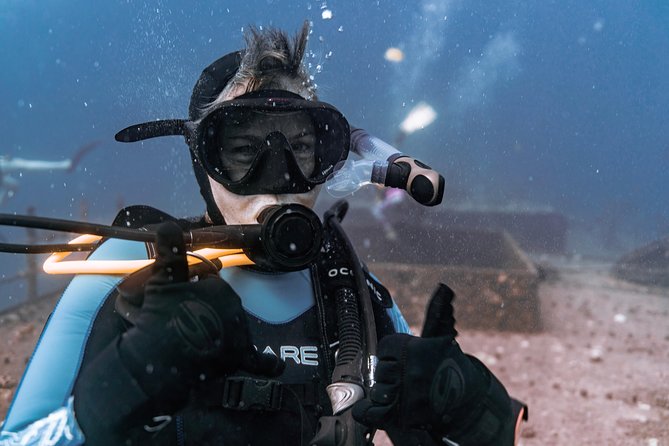
This isn’t the kind of scuba outing that feels random. It’s a “do it in the right order” plan: you go wreck first, then reef. That matters because wreck environments set a different mood—more structure, more points to navigate around—while reef time is more about cruising and spotting.
Off Waikiki, you’re also in a part of Oahu that’s built for repetition. You’ll see plenty of marine life without needing a long, exhausting boat ride. In practical terms, it’s a great choice if you want serious underwater time but still want your day to stay usable afterward.
You’ll check in early, then get transported out to the water. The tour runs about 5 hours. Expect a morning rhythm: gear gets staged, you get briefed, you go in, you switch tanks, then you go back in again.
You can also read our reviews of more scuba diving tours in Oahu
Certification Rules: The Gatekeeper Part (Read This Twice)
This experience is certified-only for the wreck portion, and there’s no wiggle room. The shipwreck and night dive options require you to be certified to book them, no exceptions.
Here’s the standard the operator states for the wreck/night setup: you need to be Advanced Open Water certified or have equivalent experience doing deep dives (around 100 ft). On top of that, you must show evidence of your diver certification at check-in. If you don’t, the operator says you’ll be denied for the shipwreck or night dive trips, with no refund and no free rescheduling for that situation.
Also keep in mind the “real life” layer: this is run for divers who can handle their own gear flow. One experienced diver noted that for this type of format you should be ready to assemble your gear and do tank changes, with less hands-on prompting than you’d see in a beginner-focused program. If you want extra personal attention or longer comfort checks, the operator offers a private instructor option for an added fee.
Getting Ready On Land: 30 lb Tanks and Early Check-In
This tour asks you to be physically capable, even before you get wet. You must be able to carry 30 lb tanks, so don’t plan to rely on the idea that it’ll be “easy just like a rental car.” If you have any trouble with carrying gear, stairs, or short walks with weight, this is a factor.
Timing is strict. You should arrive by 6:30am. There’s a grace period to 6:45am. After that, your booking is marked as a no-show and canceled automatically in full charge.
One more item people forget until the last minute: the operator requires a health questionnaire prior to diving. If you have pre-existing medical conditions—like asthma or heart conditions—doctor clearance may be required, and those conditions can prevent you from diving. If you’re unsure, plan ahead and talk to your doctor before vacation.
Out to the Water: What the Morning Feels Like
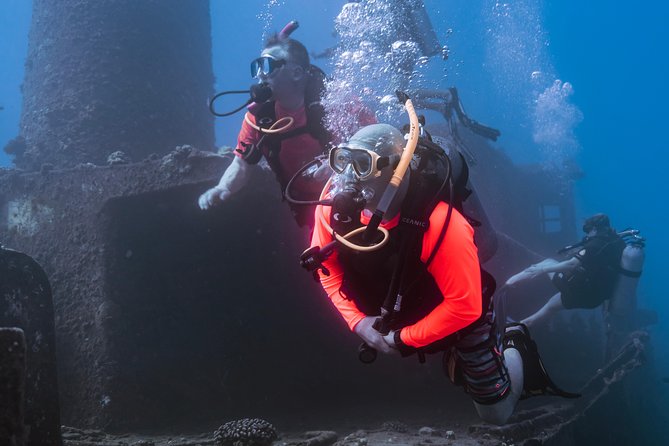
Once you’re checked in, you’ll head from the meeting point at 424 Nāhua St, Honolulu toward the harbor and the Waikiki-area water for the two underwater segments. The meeting point is listed as near public transportation, which is useful if you don’t want to depend on a car at sunrise.
The trip is offered in English, and it’s capped at 16 travelers, so you’re not disappearing into a huge crowd. Still, you should assume this is a working dive day. The crew’s goal is to keep the schedule tight, match divers by readiness level, and follow conservation and safety rules.
That focus is a big deal in Hawaii. The operator states that by Hawaii law, divers must stay close to the local dive guide during the entire tour for conservation regulations. Translation: stay with your guide, watch your air, and don’t wander off to play “freestyle explorer.”
Stop One Underwater: Wreck Time Off Waikiki
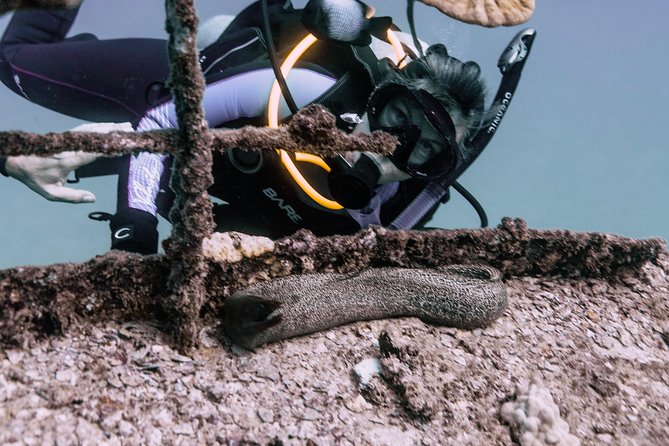
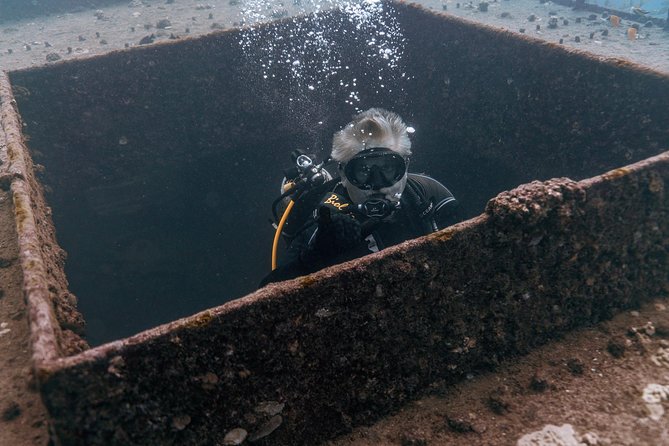
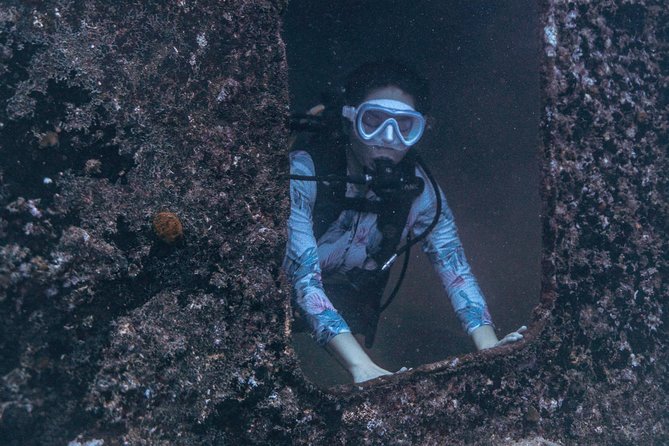
The first underwater segment is the wreck portion. Which wreck you’ll see can vary, but the operator lists options like the Sea Tiger, YO-257, or San Pedro wreck. If you like your underwater experiences with a storyline—metal shapes, textures, and life growing over manmade structure—this part tends to deliver.
The wreck segment is also where your certification level shows. You’ll be dealing with typical advanced-diver expectations: buoyancy control, situational awareness, and smooth navigation around the wreck structure. The operator’s requirement of Advanced Open Water (or equivalent deep experience) isn’t random. It’s trying to match the conditions to divers who can handle them calmly.
From an enjoyment standpoint, wreck time can be both visually interesting and psychologically calming. You have reference points. You can look, re-check your depth and buoyancy, and stay oriented. And if you’ve been told you’re not quite ready for wrecks yet, this format is a good sign that they’re building this day for the right people, not improvising.
You can also read our reviews of more tours and experiences in Oahu


Stop Two Underwater: Reef Along Waikiki
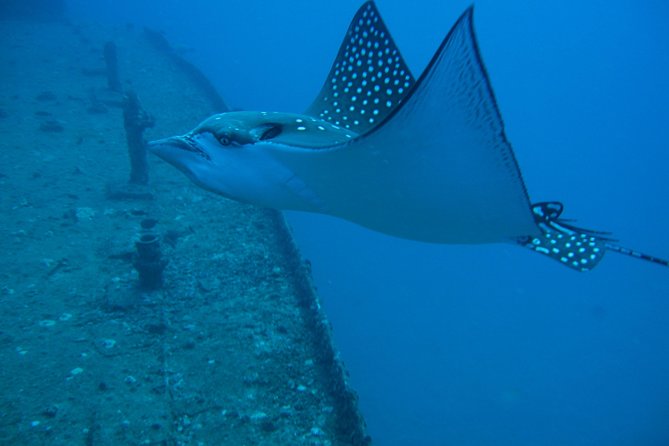
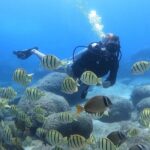
After the tank change, you shift to reef time along Waikiki. This is where the trip tends to feel more relaxed and “alive.” Reef habitats bring different fish behavior and more frequent wildlife encounters than wreck-only itineraries.
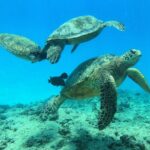
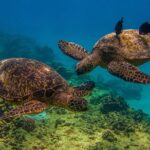
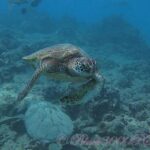
The operator positions this as discovering Oahu’s secret underwater treasures, and the day is designed to mix wreck structure with reef cruising. From divers’ feedback, the standout wildlife often includes sea turtles and lots of tropical fish, with chances at other marine life like eels and sea urchins depending on the exact sites and conditions that day.
A practical tip: reef time can feel easier than wreck time, but don’t let your focus drop. Keep your air management tight and maintain buoyancy discipline. The operator’s rules about staying with your local guide apply all day, not just when you’re close to the boat.
The Crew and Safety: What You’re Buying Beyond Gear
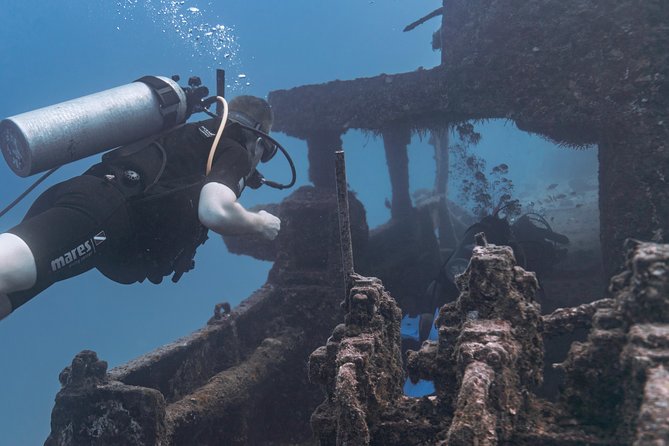
Yes, the package includes all required scuba equipment—so you don’t need to pack or rent a separate kit. But the bigger value is the crew’s control of the whole flow: check-in, safety briefing, site guidance, and conservation compliance.
You’ll likely recognize the vibe from how divers describe their experiences with specific staff members like Ron and April, Dylan and Yoshi, and Marcia and Alex. Across these named guides, the common thread is that they help the day run smoothly in and out of the water, and they focus on making experienced divers feel prepared.
One detail worth noting from diver feedback: you should be comfortable with the way the crew may handle entry. For example, some experienced divers mentioned being guided through a Giant Step-style water entry. Even if every day isn’t identical, the best move is to show up practiced, calm, and ready for the physical steps of the day—not just the underwater part.
And since it’s a certified-only wreck format, expect the guides to prioritize safety and navigation over extra coaching for brand-new skills. If you need that kind of support, the operator offers a private instructor option at $180 per each four-diver group increment. That can be a smart upgrade if your last dive was a while ago or you want more personal reassurance and bottom time.
Price and Value at $269: What Makes It Fair
The price is $269 per person for about 5 hours, with equipment included plus snacks and bottled water. Lunch is not included.
So what are you paying for?
- You’re paying for the sites and the structure: wreck first, reef second, with a plan built around experienced diver readiness.
- You’re paying for the crew: professional guidance, safety emphasis, and the local knowledge that helps you actually find wildlife and stay on track.
- You’re paying for convenience: equipment provided, and you don’t have to coordinate rentals on your own.
Where the price might sting a little is that you’ll still need to handle food on your own since lunch isn’t included. For value, I’d treat this like a morning food plan: eat before you go, then use the included snacks and bottled water on the boat. Bring a simple snack if you’re the type who gets hungry early, as the included snacks are not described with specific amounts.
Timing, Weather, and the No-Fly Rule
Two timing rules matter most for real-world Hawaii planning:
First, don’t dive and fly the same day. The operator specifically says diving within 18 hours of flying is not allowed. That means if you’re hopping between islands or heading off Oahu, you need to build time into your schedule.
Second, this activity requires good weather. If it gets canceled due to poor weather, the operator says you’ll be offered a different date or a full refund. This is one of those situations where flexibility can save your vacation schedule.
Also plan for a fairly early morning start. If you’re the type who thinks you’ll “sleep in and stroll over,” the 6:30am check-in requirement will surprise you.
Who Should Book This Waikiki Two-Tank Scuba Session
This is best for:
- Certified divers who already meet Advanced Open Water expectations or equivalent deep experience
- Divers who like structure and want wreck plus reef in one shot
- People who value a safety-minded crew and don’t need heavy beginner coaching
- Anyone comfortable carrying a 30 lb tank and managing their own gear flow
It may not fit well if:
- You’re not confident in deep-ish conditions around 100 ft
- You’re rusty and need extra hand-holding beyond what a certified group format provides
- You want a relaxed, “show up and someone else will manage everything” day
- You’re flying soon after your trip or you don’t have time flexibility
If you’re not sure whether your certification matches the wreck requirement, it’s worth clarifying before you show up. This operator is clear that certification evidence is required for the wreck portion.
Should You Book It?
Yes, I think you should book this if you’re already certified and ready for wreck-level conditions. The value is strong: equipment is included, the sites are meaningful, and you get a two-part underwater day off Waikiki without the stress of planning and gear logistics.
But don’t book it if you’re cutting it close on certification proof or comfort. This is a shipwreck format with strict rules, and the operator isn’t set up for last-minute uncertainty. If you meet the standard, you’ll likely appreciate the safety focus and the chance to see marine life like sea turtles in both wreck and reef environments.
FAQ
What certification do I need for the wreck portion?
You must be certified to book the shipwreck or night dive tours. The operator states you need Advanced Open Water certification or equivalent diving experience doing deep dives around 100 ft, and you must show evidence of certification at check-in.
Are wreck and reef both included in this experience?
Yes. The plan is a wreck swim first, followed by a reef swim along Waikiki.
What wrecks might we see?
The operator lists wreck options such as the Sea Tiger, YO-257, or San Pedro wreck.
Is scuba equipment included?
Yes. All required scuba equipment is provided.
Is lunch included?
No. Snacks and bottled water are included, but lunch is not.
How long is the tour?
The duration is listed as about 5 hours.
Where do we meet?
The meeting point is 424 Nāhua St, Honolulu, HI 96815, USA. The activity ends back at the meeting point.
Do I need to fill out a health questionnaire?
Yes. All participants are required to complete a health questionnaire prior to diving, and some pre-existing medical conditions may prevent you from diving.
Can I fly soon after scuba?
No. The operator states that diving within 18 hours of flying is not allowed, and you’re also reminded not to dive and fly the same day.
What if I’m late for check-in?
You should arrive by 6:30am, with a grace period to 6:45am. For delays beyond 6:45am, your booking is marked as a no-show and canceled automatically in full booking charge.