REVIEW · CYCLING TOURS
Historical Honolulu Bike Tour
Book on Viator →Operated by Bike Tour Hawaii · Bookable on Viator
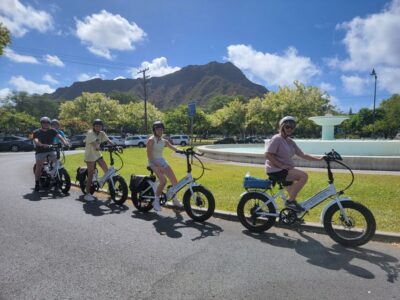
Honolulu looks different when you pedal it. This 4 to 5 hour morning bike tour threads together Waikiki, canals, Chinatown, and royal landmarks with a guide who keeps the pace easy and the stories sharp. I especially like the small group (max 10), which makes it feel personal without turning into a slow slog. I also like that the tour takes care of the basics with bikes, helmets, snacks, and bottled water, so you can focus on the ride and the sights. One thing to consider: even though the cap is 10, a past booking reportedly ran slightly larger and one bike issue was mentioned, so do a quick safety check the moment you’re handed your bike.
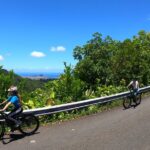
You’ll cover about 13.5 miles on mostly flat roads, with frequent stops for photos and breaks. If you’re the type who hates traffic junctions, you’ll still find the route manageable because the guide picks safer timing and keeps you bunched together, but you should be ready for a real city ride, not a park path.
In This Review
- Key things that make this tour worth your time
- Why 7:00 am works so well for seeing Honolulu by bike
- From Kuhio Beach to Waikiki: the ride begins with easy wins
- Honolulu Zoo, the Ala Wai Canal edges, and the 1929 story you’ll remember
- Central Honolulu’s big hitters: mission homes, coral-stone churches, and power shifting
- Aloha Tower by elevator: one stop that earns its time
- Kaka’ako murals, Chinatown fruit, and downtown flavors you can’t plan from maps
- Magic Island and Ala Moana Park: the reclaimed-land lesson
- The pace, safety, and the small-group advantage you’ll actually feel
- Price and value: what you’re paying for at $149
- Who should book this tour, and who might prefer something else
- Quick practical tips for a smoother morning ride
- Should you book this Historical Honolulu Bike Tour?
- FAQ
- What is the duration of the Historical Honolulu Bike Tour?
- How far will I ride during the tour?
- What time does the tour start, and where do I meet?
- What group size should I expect?
- What’s included in the price?
- Is the terrain difficult?
- What language is the tour offered in?
- Does the tour run in bad weather?
- Are kids allowed on the tour?
- What is the cancellation policy?
Key things that make this tour worth your time
- Max 10 riders keeps the group easy to manage and makes photo stops less chaotic
- A guide who helps with photos so you’re not stuck asking strangers to shoot your vacation
- Aloha Tower by elevator for wide harbor views without the long climb
- Mission, church, and palace stops that explain how Honolulu’s power shifted over time
- Fruit sampling in Chinatown for a taste of everyday local culture
- Mostly flat terrain plus regular rests, so you can enjoy rather than grind
Why 7:00 am works so well for seeing Honolulu by bike
The best part of a morning start is that Honolulu hasn’t decided what kind of day it wants to be yet. You’ll begin at 7:00 am at Kuhio Beach (2453 Kalākaua Ave), and the city feels calmer while you’re moving. The route is designed for a smooth flow of stops, so you’re not stuck waiting around for long stretches.
This also matters because a bike tour is a time tradeoff. You’re paying for guidance, safety, gear, and access to viewpoints you might skip on your own. Starting early means you get more useful daylight for photos and fewer crowds around major photo anchors like the palace area, Aloha Tower, and the mural district.
You’re not on an all-day endurance mission either. The tour runs about 4 to 5 hours, covering roughly 13.5 miles, with short breaks to regroup and reset your legs.
You can also read our reviews of more cycling tours in Oahu

From Kuhio Beach to Waikiki: the ride begins with easy wins
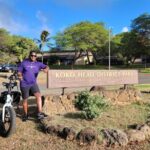
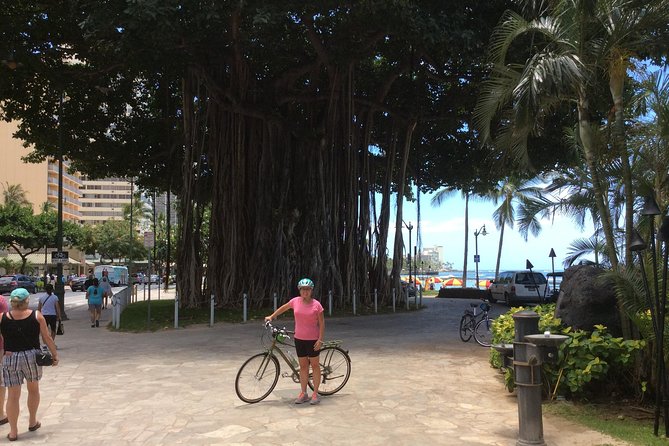
You meet at the Kuhio Beach Hula Mound, a fitting start because it ties together place, performance, and the beach rhythm. You’ll learn about Free Hula shows and why that banyan tree area is more than decoration. It’s a small introduction, but it sets your lens for the rest of the ride: Honolulu isn’t just beaches and shopping—it’s layered, and the guide keeps pointing out what’s changed.
Then it’s pedal time past some of Waikiki’s most recognizable edges. Expect narration as you move, not a lecture. The tone is friendly and practical, and it helps you notice things at speed: canal lines, the feel of different neighborhoods, and where the city turns from tourist strip into real local spaces.
If you’re wondering whether you’ll feel hurried, this is the tour’s sweet spot. The route is mostly flat, and you’re regularly stopped for photos and rest stops, so you can enjoy the scenery without turning every light into a sprint.
Honolulu Zoo, the Ala Wai Canal edges, and the 1929 story you’ll remember
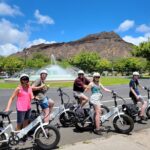
After Waikiki, you ride past the Honolulu Zoo. Even if you’re not stopping inside, it’s a good landmark because it marks the shift from resort scenery into the city’s more everyday geography.
Next comes a stretch along the golf-course edge, one of those places most visitors pass without really thinking about what surrounds it. You’ll also hear about changes on the horizon, like plans to add a Top Golf facility in the area—useful context if you like seeing how neighborhoods evolve.
Then you get to one of the most interesting “wait, I didn’t know that” moments: the ride along the Ala Wai canals. These waterways were developed in 1929, and the guide explains the past, present, and future of the landmark. Even if you’re not a history buff, you’ll feel the value here because it changes how you interpret what you’re seeing. The canals aren’t just a backdrop; they’re a reason Honolulu looks the way it does.
Central Honolulu’s big hitters: mission homes, coral-stone churches, and power shifting
This is where the tour earns its “history” label. The stops are short, but they’re chosen to build a timeline you can feel as you ride.
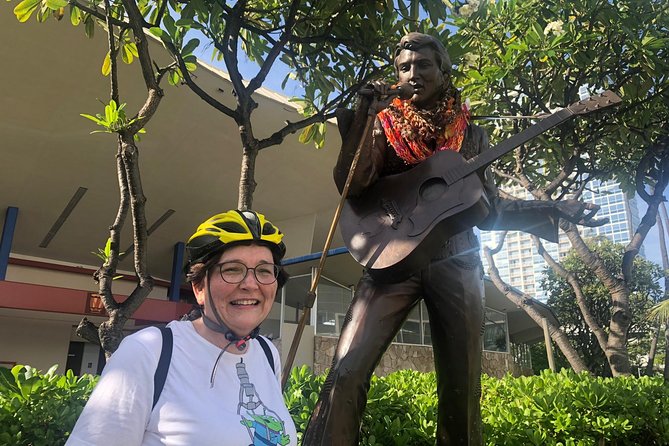
At Neal S. Blaisdell Center, you’ll get a look at the Elvis connection—this is the venue where Elvis Presley performed his last concert in 1973. There’s a statue here, and it turns pop-culture into a real sense of place.
Then you hit the Hawaiian Mission Houses Historic Site and Archives. You’ll hear about Hawaii’s first western-style home brought over by ship and built by the Hall Missionary family. The stop includes the detail about a printing press that produced the first Bible printed in Hawaiian language. That’s the kind of fact that sticks because it’s specific and it reframes a lot of what you might assume about contact history.
Next is Kawaiahaʻo Church. The construction detail matters: over 14,000 coral stones were used. You’ll also learn how the church fits into modern life, including the fact that Sunday service runs at 8:30 am (so it’s active, not just a museum stop).
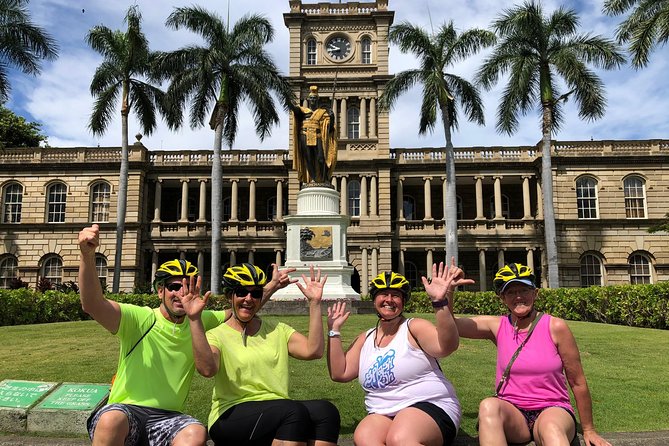
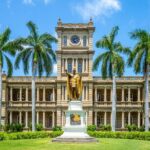
From there you roll toward royal symbols and governance. You’ll see the King Kamehameha Statue, tied to his role uniting the islands. It’s also been refurbished with real gold paint, which gives it a noticeably different look than the usual stone-and-metal statues.
You’ll then ride through Iolani Palace, the royal residence of the Kingdom of Hawaii. It’s described as the only royal palace on U.S. soil, and it’s listed as a National Historic Landmark on the National Register of Historic Places. Even without going deep inside, the stop helps you connect the city’s skyline and streets to the era that shaped its identity.
Aloha Tower by elevator: one stop that earns its time
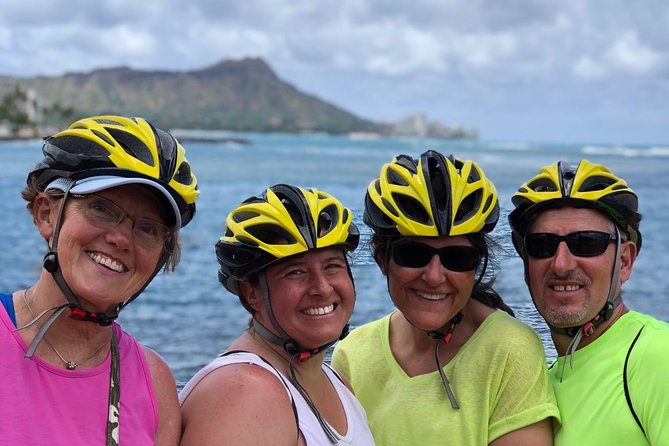
If you like a great viewpoint, this is the moment. You’ll head to Aloha Tower Marketplace and ride up via the first elevator in the Pacific for sweeping harbor views.
This stop works because it breaks the rhythm. You’ve been riding through streets and stopping on sidewalks; now you get height and a sense of scale—ships, shoreline, and the harbor’s working life. The guide also points out local details like the fish stock that frequents the harbor and the healthier coral life you can spot in clear water.
It’s also an excellent place to reset photos. You’ll have already gotten shots at street level, but this adds a different angle that makes the whole trip feel more complete.
You can also read our reviews of more historical tours in Oahu

Kaka’ako murals, Chinatown fruit, and downtown flavors you can’t plan from maps
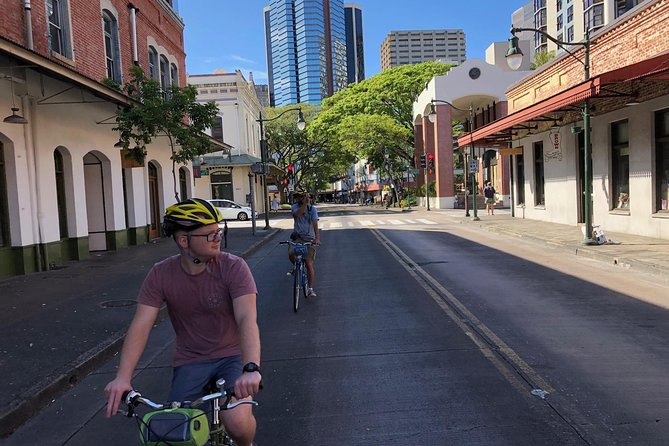
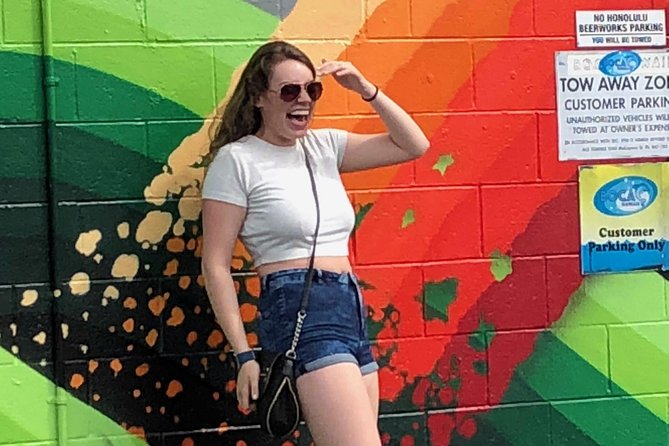
After the tower, you ride toward Kaka’ako, a district known for murals and street art. You’ll photograph your group here, and the key value is not just the art—it’s the contrast. Kaka’ako shows a Honolulu that’s creative and still changing, with construction activity tied to big future plans. The murals are the easy part. The context is what makes the stop feel like you’re learning the city, not just ticking boxes.
Then comes Chinatown and downtown. The tour includes a stop where you sample exotic fruits. This is one of those experiences that feels small until you realize it’s the kind of thing you often struggle to organize on your own. You may know what you want to eat, but it’s hard to find variety and guidance without sounding out shopkeepers or guessing.
If you’re curious about food culture, this fruit sampling is a practical win. You taste a few things, you learn what’s local and seasonal, and you get a shortcut to better food choices later in your trip.
Magic Island and Ala Moana Park: the reclaimed-land lesson
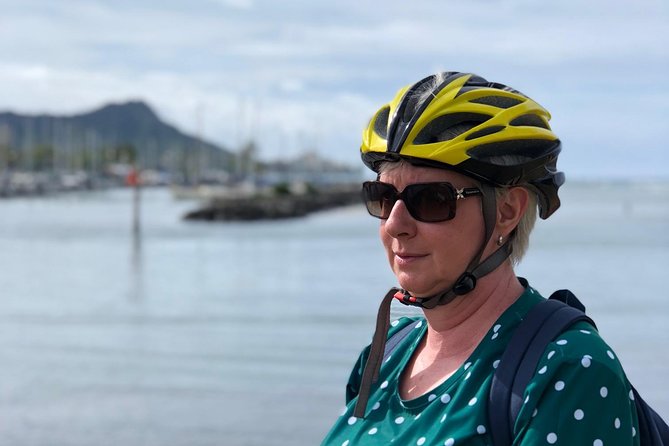
Next you head toward Magic Island, part of Ala Moana Park, often described as the People’s Park. The story here is that the park grew from a landfill and that the reclaimed land mass became a major public space after construction in 1947.
This stop is a reminder that Honolulu’s natural-and-built mix is always evolving. What looks like simple beach park scenery has an engineering backstory. When the guide explains it, the place stops being just a pretty spot and starts being a case study in how cities reuse land.
You’ll also move through the final stretches near the Hawaii Convention Center, finishing with a section shaded by ficus trees. It’s a nice way to close: less dramatic than Aloha Tower, but pleasant and photo-friendly.
The pace, safety, and the small-group advantage you’ll actually feel
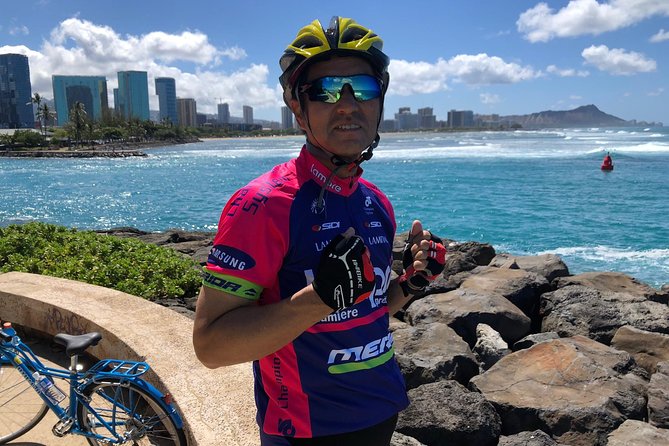
This tour stays fun because the structure supports your energy. The route is mostly flat, bikes and helmets are included, and you stop regularly for photo ops and rest. That combination matters if you’re traveling with limited bike time.
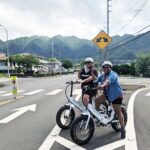
The group size is capped at 10, which changes the experience immediately. You’re not constantly waiting for riders to catch up. You’re also less likely to feel unsafe at intersections because the guide can keep attention on the whole line.
I also like how photo support is built into the experience. In past rides, the guide named Kelly took lots of pictures and shared them afterward, including helpful setups for solo travelers who usually struggle getting good shots. One review even mentioned a video-style recap. That’s not just convenience—it’s value, because it saves you from scrambling for your phone camera at the exact moment the best angle appears.
Price and value: what you’re paying for at $149
At $149 per person, the price feels fair only if you look at what’s bundled:
- Bicycle and helmet provided, so you avoid rental hassle
- Snacks and bottled water included, which keeps you from spending extra mid-ride
- Guided narration that ties stops together into a coherent story
- A small-group setting that improves safety and photo timing
- Many stops are marked as free admission during the visits, so you’re not paying separate entry fees for every pause
- The route includes time at major landmarks like Iolani Palace area, Kawaiahaʻo Church, and Aloha Tower, plus the less touristy-feeling mural and fruit moments
In practical terms, you’re paying to trade planning time for guided context. If you were to DIY this with bike rental, routing, and research, you’d spend hours figuring out logistics and still might miss the connections the guide points out—like the Ala Wai canals timeline and the printing press detail at Mission Houses.
The one value watch-out is bike condition. One rider mentioned a bike chain issue, which is rare in a well-run setup but still worth taking seriously. When you get your bike, do a quick check: brakes, chain movement, and that everything feels steady before you roll.
Who should book this tour, and who might prefer something else
This works best if you want a Honolulu overview with actual context. You’ll enjoy it if you like:
- History stops that are short but meaningful (mission homes, churches, royal sites)
- A guided city ride without the stress of navigating traffic on your own
- Photo help, especially if you’re traveling as a couple or solo
- Trying food basics like fruit you wouldn’t necessarily pick blind
It may not be your best fit if you need a totally hassle-free ride on perfectly maintained equipment every minute. Shared bikes can vary, and if you’re very sensitive to mechanical issues or want a very quiet ride with zero group interaction, you might prefer a different style of tour.
Also, bring your expectations: this is a real urban bike loop with city crossings. The terrain is mostly flat, but it’s not a closed track.
Quick practical tips for a smoother morning ride
- Wear breathable clothes. The ride is about 4 to 5 hours, and mornings can still warm up.
- Bring sun protection. You’ll be outdoors for most of the tour, and you’ll want comfort at each photo stop.
- If rain is possible, dress for it. The tour operates in all weather conditions and also notes that you should dress appropriately, so come prepared.
- Expect frequent stops. That’s part of the design, and it keeps the ride enjoyable rather than exhausting.
- Do a bike check at pickup. Even with gear included, you’ll be happier if brakes and chain feel solid before the first major stretch.
Should you book this Historical Honolulu Bike Tour?
Yes, if you want the fastest way to connect Waikiki to Honolulu’s core landmarks while still feeling like you’re seeing local neighborhoods. I think it’s especially good value if you like guided storytelling and you want photo support without asking strangers.
I’d consider a different option if you’re highly equipment-sensitive or you want a more private, ultra-quiet experience. But if you can handle a city bike morning and you’re excited to learn why the places matter—this tour is a smart use of your trip time.
If you book, go in with one goal: stop judging Honolulu only by what looks famous on postcards, and instead watch how the guide ties together beaches, canals, churches, and power centers. That’s when the ride turns into something you’ll remember.
FAQ
What is the duration of the Historical Honolulu Bike Tour?
It runs about 4 to 5 hours.
How far will I ride during the tour?
The riding distance is about 13.5 miles.
What time does the tour start, and where do I meet?
The start time is 7:00 am. You meet at Kuhio Beach, 2453 Kalākaua Ave, Honolulu, HI 96815.
What group size should I expect?
The tour has a maximum of 10 travelers.
What’s included in the price?
Bottled water, snacks, helmet use, bicycle use, and national park fees are included.
Is the terrain difficult?
The terrain is mostly flat, and it’s a good fit for people with moderate physical fitness.
What language is the tour offered in?
The tour is offered in English.
Does the tour run in bad weather?
It operates in all weather conditions and asks you to dress appropriately. It also states that the experience requires good weather, so if it’s canceled due to poor weather, you’ll be offered a different date or a full refund.
Are kids allowed on the tour?
Children must be accompanied by an adult.
What is the cancellation policy?
You can cancel for free up to 24 hours in advance for a full refund. If you cancel less than 24 hours before the start time, the amount you paid will not be refunded.