REVIEW · OAHU
Oahu Off the Beaten Path Small-Group Tour from Honolulu
Book on Viator →Operated by Spiritual Tours Hawaii · Bookable on Viator
A morning drive through Oahu’s quiet corners beats the usual beach-only plan. This small-group half-day tour blends big views with meaningful stops tied to Hawaiian heritage, geology, and spiritual practice. I like that it’s paced for real conversation, not a race from photo spot to photo spot.
Two things I especially enjoy here: the small group (max 20), which makes it easier to ask questions and get attention from your guide, and the mix of places that are different in feel and purpose. You’ll go from Makapu‘u’s lookout energy to temple and heiau sites where the stories are about place, people, and belief.
One consideration: the visit includes at least one site where admission isn’t included, so budget for that one ticket on the spot. Also, you’ll be in the car enough to justify the morning start, so it’s best if you’re comfortable with a short day that still feels active.
In This Review
- The key stops in plain terms
- Off the Beaten Path, with air-conditioning and a smart route
- Price and value: what $144 buys you
- The first wow: Makapu‘u Point and the bulging-eye legend
- Kaka‘ako Waterfront Park: “Point Panic Park” energy without the chaos
- Byodo-in Temple Hawaii: Japanese roots and Hawaiian commemoration
- Ulupo Heiau State Monument: sacred space and ancient leadership
- He‘eia State Park on the Windward side: fishpond history you can still picture
- Kahi Hali‘a Aloha: a memorial with a purpose you can feel
- The guide makes the whole day: Ama and Simina’s style
- What to expect from the pacing and small-group format
- Who this tour is best for (and who might want something else)
- Practical tips: smart casual, wear-ready feet, and listen for the “why”
- Should you book this Oahu small-group heritage tour?
- FAQ
- How long is the Oahu Off the Beaten Path Small-Group Tour?
- What does the tour cost?
- Where is the meeting point and when does the tour start?
- How many people are in the group?
- Is the tour in English?
- Is bottled water included?
- Are admission fees included for all stops?
- What kind of vehicle is used?
- What is the cancellation policy?
- Is there an age requirement?
The key stops in plain terms
- Makapu‘u Point lookout for the bulging-eye legend and one of Oahu’s most scenic angles
- Kaka‘ako Waterfront Park spiral views that feel more local than tourist-famous
- Byodo-in Temple with Japanese-Hawaiian connections (admission not included)
- Ulupo Heiau State Monument where legends and ancient leadership meet
- He‘eia State Park fishpond area tied to Windward history and plant life
- Kahi Hali‘a Aloha memorial focused on dignified protection for Hawaiian ancestral remains
Off the Beaten Path, with air-conditioning and a smart route
This is the kind of tour that helps you understand Oahu beyond the shoreline. You’ll start in Honolulu with a guided ride in an air-conditioned vehicle, then head out to a sequence of places chosen for what they teach, not just what they look like on Instagram.
The value starts with the format. At about 5 to 6 hours, it’s long enough to cover multiple regions of the island, but short enough that you’re not stuck all day. And the max 20 people setup matters. When the group stays small, your guide can adjust pace, answer questions, and make sure you actually hear what’s being explained.
There’s also a practical side: bottled water is included. That sounds minor until you remember Oahu sun can flatten your energy fast, even when the day isn’t “beach day.”
You can also read our reviews of more tours and experiences in Oahu.


Price and value: what $144 buys you
At $144 per person, you’re paying for more than a ride and a few stops. You’re buying a half-day guided experience with a driver/guide plus a local guide, and your ticket price covers added costs like fuel surcharge and landing/facility fees. You also get the comfort factor of an air-conditioned van and bottled water.
The real value is the way the stops connect. Instead of only viewpoints, you’ll visit spiritual and historical sites that explain why these places matter. That’s harder to replicate on your own because the “why” often depends on local context, not just geography.
One smart budgeting note: admission is not included for The Byodo-in Temple Hawaii. Everything else listed as free is free at the time of visit, but you should plan for at least that one ticket so the day stays smooth.
The first wow: Makapu‘u Point and the bulging-eye legend
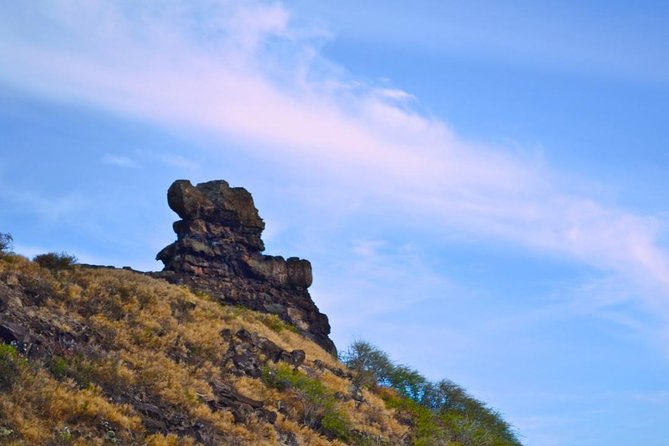
Makapu‘u Point is the kind of lookout where your brain instantly goes quiet. You get that wide horizon feel, plus an immediate sense of being out on Oahu’s edge. The name alone pulls you in: Makapu‘u means bulging eye in Hawaiian, tied to a Tahitian god legend who lived in a cave in the area and had eight bright eyes.
Your stop here is short, about 15 minutes, so the aim isn’t lingering. It’s a quick orientation moment. Your guide can connect the view to cultural story, and you get a chance to take photos without letting the day drag.
If you’re the type who likes scenery but also wants meaning behind it, this stop is a strong start. If you’re prone to needing lots of time to photograph, you may want to move a touch faster through the first 10 minutes so you don’t run out of time.
Kaka‘ako Waterfront Park: “Point Panic Park” energy without the chaos
Next up is Kakaʻako Waterfront Park, a public park south of downtown Honolulu. People call it Point Panic Park, and that nickname fits the vibe: it’s a place where sea breezes hit, angles look good, and people linger to watch the water.
This is also a good “reset” stop. After a lookout, you move into an easy-walk park area for about 20 minutes. The highlight you’ll likely notice right away is the park’s spiral of whales chamber—an element that gives the shoreline a distinct character.
This isn’t just about views. Kakaʻako is one of those areas where Oahu’s modern life meets coastal space. Even with a short stop, it helps you see that the island isn’t only temples and lookouts. There’s an everyday Honolulu layer too.
Byodo-in Temple Hawaii: Japanese roots and Hawaiian commemoration
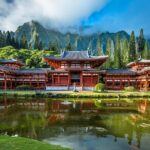
The tour’s cultural centerpiece is The Byodo-in Temple Hawaii in Valley of the Temples Memorial Park. This stop lasts about 25 minutes, and it’s designed to give you time to take in the setting without making it feel rushed.
Here’s what makes it special: it was established on June 7, 1968, to commemorate the 100-year anniversary of the first Japanese immigrants to Hawaii. The temple is a smaller-scale replica of the Byodo-in Temple in Uji, Japan, which is recognized as a UNESCO World Heritage Site.
Admission isn’t included for this stop, so plan for the extra cost. But think of it as part of the experience. You’re not just walking by a building. You’re stepping into a place where Japanese history and Hawaiian setting overlap in a way that’s visible and understandable.
A practical tip: this is a good moment to slow down. Wear shoes you can stand in comfortably, because the best part is often noticing details, not just taking a single photo.


Ulupo Heiau State Monument: sacred space and ancient leadership
Next you’ll visit Ulupo Heiau State Monument, a site tied to legend and layered leadership. The area is associated with the menehune in story, and later with high chiefs of Oʻahu such as Kakuhihewa in the 15th century and Kualiʻi in the late 17th century.
Your stop is about 15 minutes, so again, it’s not meant as a long educational lecture. It’s more like a guided snapshot that helps you recognize what you’re looking at and why people treated these spaces with importance.
This is one of those moments where group size helps. With a small number of people, you’ll usually get more personal guidance on respectful behavior and how to think about what you see. It’s the kind of stop where listening matters more than speed.
He‘eia State Park on the Windward side: fishpond history you can still picture
After the mid-tour cultural sites, you head to the Windward side for Heʻeia State Park, known in connection with Keʻalohi Point. This stop runs about 20 minutes, and it’s less about dramatic architecture and more about how land and water were managed.
You’ll learn about the significant changes in this place over time and how it ties into indigenous and Polynesian introduced plants. That plant detail matters because it links ecology to culture. It’s not a random nature walk. It’s a way to see how people adapted, introduced, and maintained living systems.
One highlight: you’ll see the oldest fish pond on Oahu. Fishponds are a big deal in Hawaiian history because they show planning, skill, and a relationship with the sea that’s far more complex than taking a boat and fishing.
This stop can be a favorite if you like tangible history—places where you can still picture how it once worked. It may be less of a thrill if your ideal tour is only viewpoints and quick photo stops, since this one is more interpretive.
Kahi Hali‘a Aloha: a memorial with a purpose you can feel
Toward the end, you’ll visit Kahi Hali‘a Aloha, described as the place of loving remembrance. This is a memorial designed by lineal descendants to accommodate Hawaiian ancestral remains. It’s also noted as the first of its kind to offer permanent and dignified protection for generations of Hawaiian ancestral remains.
The time here is about 20 minutes, and the tone is different. This isn’t about scenery. It’s about respect and meaning, and your guide should help you understand the intention behind what you’re seeing.
If you’re the type who likes tours that teach you how to act appropriately in sacred spaces, this stop will land. It asks you to slow down and understand why remembrance matters.
The guide makes the whole day: Ama and Simina’s style
What really comes through is how much the guides shape the experience. Ama, described as a native Hawaiian, is praised as a wealth of local and historical information. You can expect his storytelling to tie the physical places to cultural context, which is exactly what turns a route into a meaningful tour.
Simina is another name you’ll hear in the standout reviews. People highlight that she’s patient and thoughtful, attentive to needs, and very security conscious. That matters on a tour like this where you’re moving between coastal viewpoints and sacred spaces. Simina is also praised for a comfortable Mercedes van and for taking her time to share Hawaiian culture stories.
Both guide styles share a common thread: they slow down when the group is small and adjust stops to keep people comfortable. That small-group attention is one reason this tour earns such strong ratings.
What to expect from the pacing and small-group format
The schedule is about short stops that add up. Think of it as a sequence of 15 to 25 minute windows, not long stays. That can be great because you cover more territory without feeling trapped in one location.
Because the max group size is 20, your guide can handle questions and sometimes adjusts the plan so you’re not rushing. In a bigger group, that kind of flexibility often disappears.
You’ll also be in an air-conditioned vehicle between stops, which helps a lot in Hawaii heat. It’s not a “sit in traffic forever” tour, but you are moving around the island’s key areas on a half-day timeline.
Who this tour is best for (and who might want something else)
This tour fits best if you want a guided understanding of Oahu’s heritage, geology, and spiritual sites. If you like learning real place-based stories—and you don’t mind that some stops are brief—this is an excellent way to make a short morning meaningful.
It’s also a good fit if you want a lighter, respectful approach compared to tours that feel like sightseeing marathons. The presence of heiau and memorial sites shifts the day into something more thoughtful than a standard scenic loop.
If your top goal is only beaches and long scenic walks, you might find this tour more educational than relaxing. But if you’re curious and you want to leave with context, it’s hard to beat this route.
Practical tips: smart casual, wear-ready feet, and listen for the “why”
Dress code is smart casual, so skip beach flip-flops if you’d rather not stand on uneven surfaces. Shoes that grip are your friend, especially at lookout areas and park stops.
Since bottled water is included, you’re covered on hydration, but you’ll still do better if you bring a hat or sunglasses. The day is mostly outdoor and you’re on an island where the sun can act fast.
Finally, a small mindset shift helps: treat this as a guided education session you’re moving through. When your guide connects the view, the place name, and the spiritual meaning, the day clicks into focus.
Should you book this Oahu small-group heritage tour?
I’d book it if you want heritage-focused stops in a short half-day, with a guide who can explain the stories behind the scenery. The combination of air-conditioned comfort, small group size, and sites tied to spiritual and historical meaning gives you strong value for the money.
You might skip it if you’re looking for a purely relaxed beach day or if you strongly prefer long time at a single location. The stops are short by design, and one admission ticket isn’t included.
If you’re trying to understand Oahu beyond the obvious, this is one of the more direct ways to do it.
FAQ
How long is the Oahu Off the Beaten Path Small-Group Tour?
It runs about 5 to 6 hours.
What does the tour cost?
The price is $144.00 per person.
Where is the meeting point and when does the tour start?
You meet at Honolulu Zoo, 151 Kapahulu Ave, Honolulu, HI 96815, and the tour starts at 9:00 am.
How many people are in the group?
The tour has a maximum of 20 travelers.
Is the tour in English?
Yes, it’s offered in English.
Is bottled water included?
Yes, bottled water is included.
Are admission fees included for all stops?
Admission is free for several stops listed, but Byodo-in Temple Hawaii admission is not included.
What kind of vehicle is used?
You’ll ride in an air-conditioned vehicle.
What is the cancellation policy?
You can cancel for free up to 24 hours in advance of the experience start time for a full refund.
Is there an age requirement?
The minimum age is 18 years.