REVIEW · PEARL HARBOR TOURS
O’ahu: Pearl Harbor Virtual Reality Center
Book on GetYourGuide →Operated by Pacific Historic Parks · Bookable on GetYourGuide
A headset is a strange way to meet WWII, and it works here. This National Park Service virtual reality center gives you 360-degree tours tied to the events of December 7, 1941, plus easy staff guidance and a one-ticket, value-priced experience.
What I like most is the way you can pick the angle you want: the attack timeline on the USS Utah, or a flight viewpoint with aircraft and radio details, or a 360 look at USS Arizona. I also like that check-in is simple at the Pearl Harbor Visitor Center, and the experience is paced so you get clear explanations without feeling rushed.
One drawback to plan around: the VR ticket covers the VR tours, but it does not include boat access to the USS Arizona Memorial. You’ll still need reservations for the memorial separately.
In This Review
- Key takeaways before you put on the headset
- Pearl Harbor Virtual Reality Center: where it fits in your day
- Picking your VR tour: choose the WWII lens you care about
- Air Raid Pearl Harbor: the attack timeline from the USS Utah deck
- Skies Over Pearl Harbor: cockpit perspective, radio silence, and aircraft details
- USS Arizona 360 experience: walking the deck on December 7, 1941
- USS Arizona Today: the wreck, guns, barbettes, and what survivors never fired
- Meeting point and what check-in feels like
- Price and value: why about $11 is a smart add-on
- Duration and timing: plan for a 1-day slot
- Who this VR experience is best for
- Practical tips to get the most from your VR tour
- Should you book the Pearl Harbor Virtual Reality Center?
- FAQ
- How much does the Pearl Harbor Virtual Reality Center cost?
- How long is this experience available?
- Do I need reservations for the USS Arizona Memorial?
- Does the VR tour include boat tickets to the USS Arizona Memorial?
- What is included in the ticket?
- What tour options are available?
- Is there staff training?
- Is the experience wheelchair accessible?
Key takeaways before you put on the headset
- 360-degree WWII viewpoints built around specific moments from December 7, 1941
- Choose one VR tour focus, then use staff training so you’re comfortable fast
- Real National Park Service experience on site inside the Pearl Harbor Visitor Center
- Good value at about $11 per person for the VR tour + VR player
- USS Arizona Memorial access is separate (VR does not include boat tickets)
Pearl Harbor Virtual Reality Center: where it fits in your day
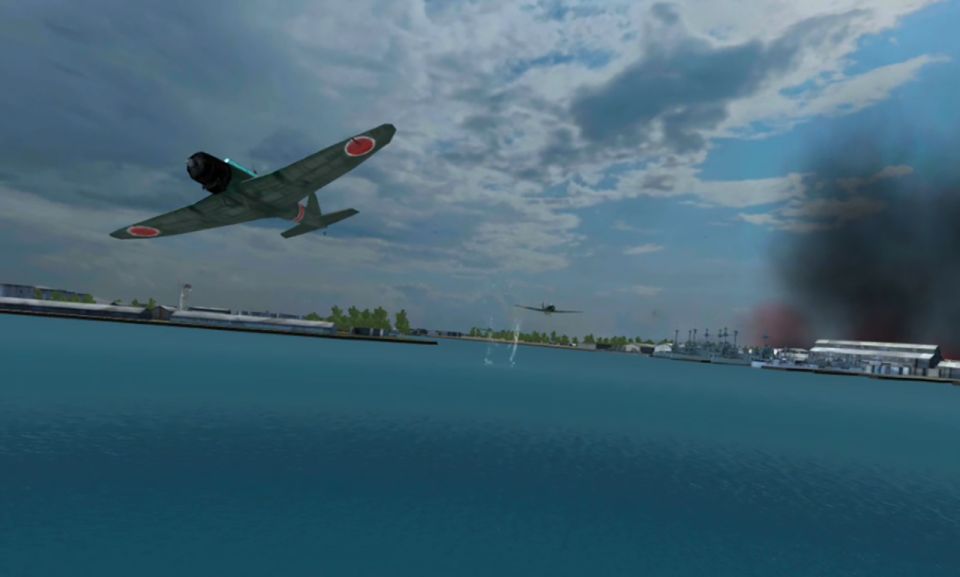
The Pearl Harbor Virtual Reality Center is located inside the Pearl Harbor Visitor Center at 1 Arizona Memorial Place in Honolulu. If you’re building a Pearl Harbor itinerary, this is the kind of add-on that helps you “place” the memorial in context, not just read about it on a sign.
The practical win is that you’re not stuck doing only museum-style looking. You’re doing something closer to a guided, point-of-view lesson. You’ll have an instructor in English, and you’re trained by VR staff before the main tour starts. That matters, because VR can be distracting if you’re still figuring out controls while the story is going by.
Also, it’s wheelchair accessible, so it’s a solid option if you want history without relying on long outdoor walking.
You can also read our reviews of more tours and experiences in Oahu.



Picking your VR tour: choose the WWII lens you care about
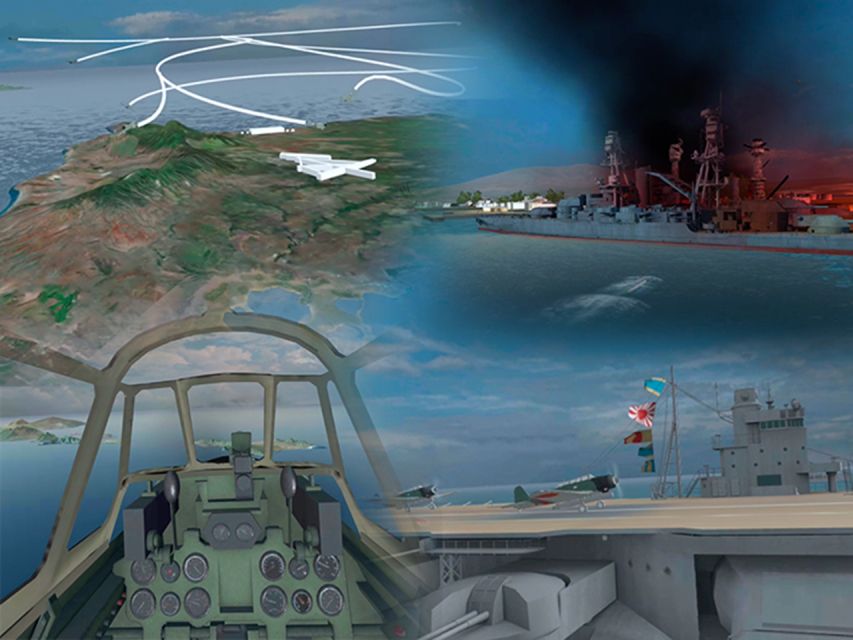
Your visit centers on one of the VR tour options. The experience is set up so you can select what you want to experience most, and each tour focuses on a different slice of the attack.
Here’s the set of tour themes you can choose from:
- Air Raid Pearl Harbor: you’re placed on the USS Utah deck as the attack unfolds
- Skies Over Pearl Harbor: you’re in the cockpit as a Japanese fighter departs the carrier Akagi
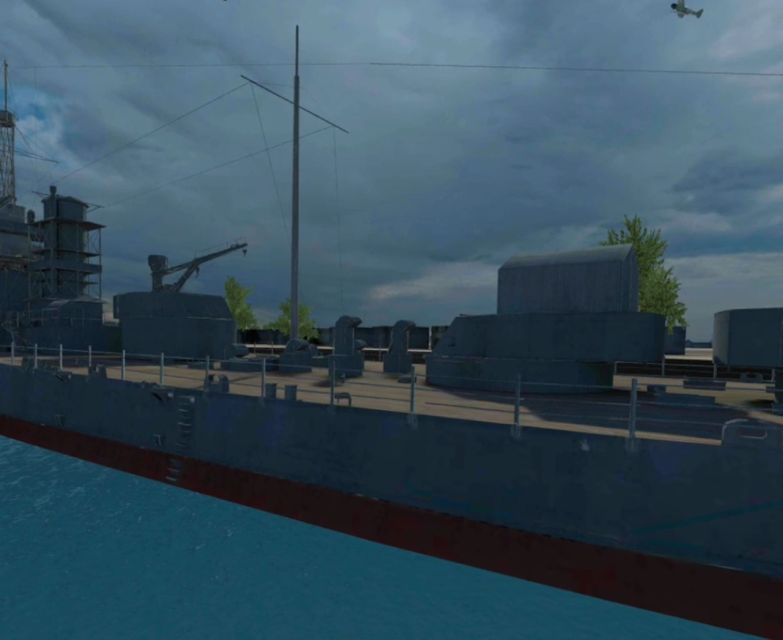
- USS Arizona-focused experience: a historically accurate 360 view of USS Arizona, including the perspective of walking the main deck, plus additional context about the ship today and what divers are able to view
If you’re sensitive to motion or prefer stillness, stick to the kind of narrative that feels easiest to you. VR is powerful, but you’ll enjoy it more when the storyline matches your comfort.
Air Raid Pearl Harbor: the attack timeline from the USS Utah deck
If you want the story with a clear clock, choose Air Raid Pearl Harbor. This tour gives you the timeline of the attack and puts you on the deck of the USS Utah, one of the battleships destroyed on that Sunday morning.
A key moment is the timing of the warning. The experience highlights how, roughly three minutes after the first Japanese war planes arrived, a message was sent that would resonate through history: Air Raid Pearl Harbor, this is no drill. Then the tour frames what followed in human terms: within about two hours, 2,390 Americans were killed and 1,178 wounded.
Why this viewpoint helps: being on the deck makes the attack feel less like headlines and more like sequence and consequence. You’re not just seeing damage in a museum photo. You’re watching the attack unfold as a chain of events.
What to watch for as you go: this option is about timing and placement. If you want the most emotion and clarity from one story, this one often delivers it best.
Skies Over Pearl Harbor: cockpit perspective, radio silence, and aircraft details
The Skies Over Pearl Harbor tour is your best choice if you prefer an operational angle. Instead of the deck-level timeline, you’re in the cockpit of a Japanese fighter plane as it departs the carrier Akagi, heading about 230 miles north of Oahu toward the military airfields and Pearl Harbor.
This tour doesn’t only show the flight. It also includes lesser-known details about how the attack was carried out, including:
- different types of aircraft used
- how pilots maintained radio silence
- how they still used a Honolulu radio signal to guide their way to Oahu
Why that’s valuable: most people learn Pearl Harbor as a single catastrophe. This tour helps you understand it as a coordinated operation. And that makes the bigger story feel more real, because it explains the planning behind the violence.
A consideration: if you go in expecting a ground battle reenactment, this one is different. It’s about flight path, approach, and the mechanics of movement toward the target.
USS Arizona 360 experience: walking the deck on December 7, 1941
For many people, the USS Arizona content is the emotional center of a Pearl Harbor visit, and the VR approach gives you an unusual way to experience it. In the historically accurate virtual reality version, you can view the ship from the main deck as it was on the day it was sunk by an armor-piercing bomb.
The big technical advantage is the 360-degree perspective. You can look around to understand spatial layout. It’s one thing to see the ship’s dimensions on a plaque. It’s another to turn in a space that feels like the deck itself.
Practical tip: take a slow moment when the scene loads and before the action picks up. If you rush your first look, you’ll miss the layout cues that make the experience memorable later.
Drawback to consider: because it’s an in-headset viewpoint, it can feel intense. If you prefer lighter context, choose another tour instead of the one that focuses most directly on the Arizona’s sinking day.



USS Arizona Today: the wreck, guns, barbettes, and what survivors never fired
This is where the VR content connects the past to what’s still there now. The experience describes USS Arizona as a 608-foot-long ship resting on the floor of Pearl Harbor, and it explains that diving is strictly controlled in one of America’s revered war graves.
You’ll get a view below the waterline that points to the mammoth Arizona guns that were never fired in battle, plus the gun emplacements called barbettes. The experience also guides you to Barbette #4, including the entrance to the well where USS Arizona survivors’ remains are interred to join their fellow shipmates in eternity.
Why this matters for your understanding: the memorial is an act of remembrance. This VR layer adds physical context, so the stories feel grounded in specific parts of the ship rather than general tragedy.
One more planning note: this part of the experience explains what’s on the wreck, but it does not replace an on-site visit to the memorial grounds. Think of VR as the orientation and context tool.
Meeting point and what check-in feels like
Your day starts with check-in at the Pearl Harbor Virtual Reality Center inside the Pearl Harbor Visitor Center. The listed meeting point is at 1 Arizona Memorial Place, Honolulu.
In real terms, you’re aiming for the time you select (since valid access is tied to availability and starting times). The experience uses VR players that are provided, and staff training is part of the experience, so you’re not walking in cold.
Based on the overall feedback theme, the welcome and explanations are quick and clear, and the pacing is the kind that tends to work even if you’re not a tech person.
Price and value: why about $11 is a smart add-on
At about $11 per person, this is priced like a practical history stop, not a premium add-on. The value comes from a few things that add up fast:
- you’re getting access to one full VR tour experience
- the VR player is provided
- you get staff training so you don’t lose time figuring things out
- it’s located right where you’re already going for Pearl Harbor, so it supports the rest of your day
If your budget is tight, this is one of the best ways to add meaning to your memorial time. Even if you only plan to visit the memorial itself, pairing it with one VR viewpoint helps you understand what you’re looking at.
Where you should be careful with value: because the USS Arizona Memorial boat tickets are not included, you may pay more overall once you add the memorial reservations. Still, the VR portion itself stays a strong deal for what it teaches.
Duration and timing: plan for a 1-day slot
This activity is valid 1 day, with starting times based on availability. That means you’ll want to treat it as a scheduled block rather than a walk-in “maybe later” event.
In an ideal day plan, book your VR slot so you can still comfortably handle whatever comes next (especially memorial reservations, since those are required separately). If you can, avoid stacking too many timed items back-to-back.
Who this VR experience is best for
This is a great match if you:
- want history that feels tied to perspective, not just reading
- like the idea of choosing a focus: deck, flight, or USS Arizona
- want a short, structured experience with clear guidance
- are visiting Pearl Harbor and want your memorial time to make more sense
It’s also a good option for families and mixed-age groups, because the learning happens through the experience rather than long lectures.
Consider this less if:
- you strongly dislike VR headsets or get motion discomfort
- you were hoping the ticket includes all parts of the USS Arizona Memorial experience (it doesn’t)
Practical tips to get the most from your VR tour
VR is more rewarding when you give your brain a moment to “trust” the scene. A few simple moves help:
- Arrive with enough time to find the check-in area without stress
- When your selected tour loads, do a slow 360 scan to orient yourself
- Pay attention to the tour’s unique focus: timeline and deck for USS Utah, cockpit and radio guidance for Skies, ship layout and barbettes for USS Arizona
Also, don’t forget the biggest planning detail: reservations are required for access to the USS Arizona Memorial, and your VR tour ticket does not include the boat tickets.
Should you book the Pearl Harbor Virtual Reality Center?
I’d book it if you want a low-cost way to connect the memorial to what happened and why it mattered. For about $11, the combination of staff training, provided VR equipment, and a choice of WWII viewpoints makes it a smart, efficient stop on Oahu.
Skip it only if you know VR isn’t your thing, or if you’re skipping the memorial entirely and don’t want the extra context. Otherwise, it’s the kind of add-on that turns a visit from “I was there” into “I understand what I saw.”
FAQ
How much does the Pearl Harbor Virtual Reality Center cost?
The price is listed as $11 per person.
How long is this experience available?
The activity is valid for 1 day, and you should check availability to see the starting times.
Do I need reservations for the USS Arizona Memorial?
Yes. Reservations are required to access the USS Arizona Memorial.
Does the VR tour include boat tickets to the USS Arizona Memorial?
No. This tour does not include the boat tickets to the USS Arizona Memorial.
What is included in the ticket?
You get one of three VR tours and use of a quality VR player.
What tour options are available?
The experience includes VR tours focused on Air Raid Pearl Harbor, Skies Over Pearl Harbor, and USS Arizona (including content about walking the deck and exploring USS Arizona as she rests on the harbor floor).
Is there staff training?
Yes. You get trained by VR staff before the VR tour begins.
Is the experience wheelchair accessible?
Yes. The activity is listed as wheelchair accessible.
If you’d like, tell me what else you’re planning for your Pearl Harbor day (memorial time slot, museum stops, and whether you prefer deck or flight viewpoints), and I’ll suggest the smoothest order.