REVIEW · NORTH SHORE TOURS
Private Surfing Lessons on the North Shore of Oahu
Book on Viator →Operated by Catch'a Wave · Bookable on Viator
North Shore surfing can feel intimidating. This private lesson on Oahu’s North Shore makes it feel doable, thanks to one-on-one instruction and coaching that’s tailored to your experience and goals. I particularly like the way the lesson starts with dry-land technique and then moves into the ocean, which helps you get your first successful ride faster. The other big win is the instructor’s hands-on control of the session, including guidance on where to surf so you can focus on learning instead of dodging chaos. The main drawback to plan around is simple: surf depends on conditions, and if it’s too rough or there are no rideable waves, the lesson may need to be changed or refunded.
I also like the structure: you’re not just given a board and sent off. You’ll get an introduction, a safety and surf-etiquette chat, a warm-up, then focused practice on paddling, popping up, and catching beginner-friendly waves. The session is private, so your group stays together with the instructor the whole time, and gear like a rash guard and leash is included. One more consideration is the physical part: you should have a moderate fitness level since you’ll be in the water paddling and standing repeatedly, even if you’re starting out.
In This Review
- Key things that make this lesson work
- Where it starts: Puaʻena Point, gear, and a fast reality check
- The safety briefing and surf etiquette you actually need
- Warm-up on land: the pop-up technique that builds confidence
- Paddle out with coaching: catching the right waves, not just any waves
- Turning into longer rides: balance, timing, and control
- What the private format changes for beginners
- Value for the price: is $150 for 2 hours worth it?
- Weather reality on the North Shore: rain or shine, but not chaos
- Who this surfing lesson is best for
- Should you book this private North Shore surf lesson?
- FAQ
- How long is the private surfing lesson?
- How much does it cost?
- Where do we meet for the lesson?
- What surfing gear is included?
- Do I need my own transportation?
- What happens if the weather is bad?
- Is this tour private, and can children participate?
Key things that make this lesson work
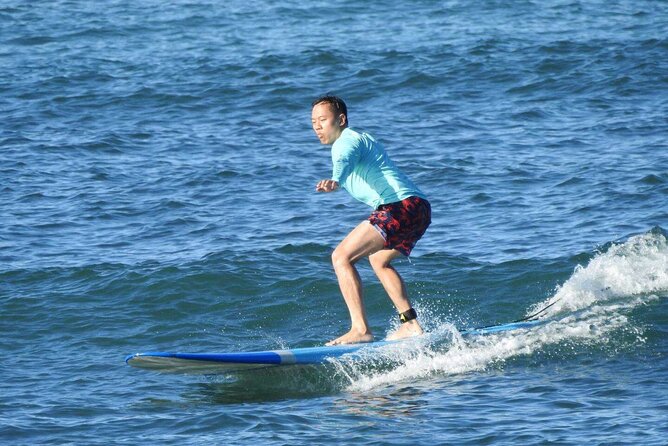
- Dry-land pop-up practice to lock in foot placement and balance before you paddle out
- Surf etiquette and safety basics so you know how to read the water and act around others
- Small-wave targets with coaching focused on getting your first real wave ride
- Private, tailored coaching that adjusts to your skill level, goals, and confidence
- A guide who manages the busiest moments so you can learn without constant stress
Where it starts: Puaʻena Point, gear, and a fast reality check
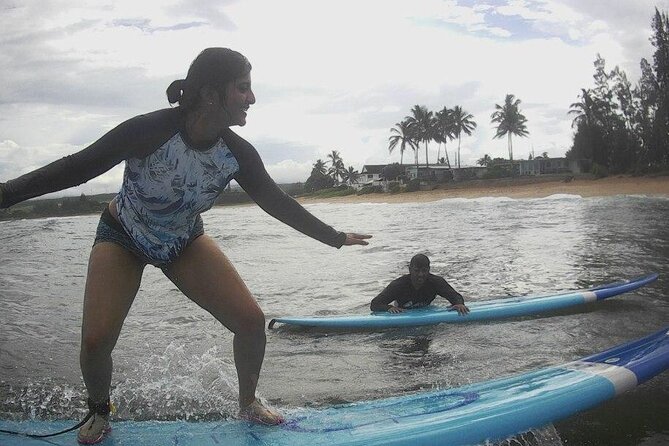
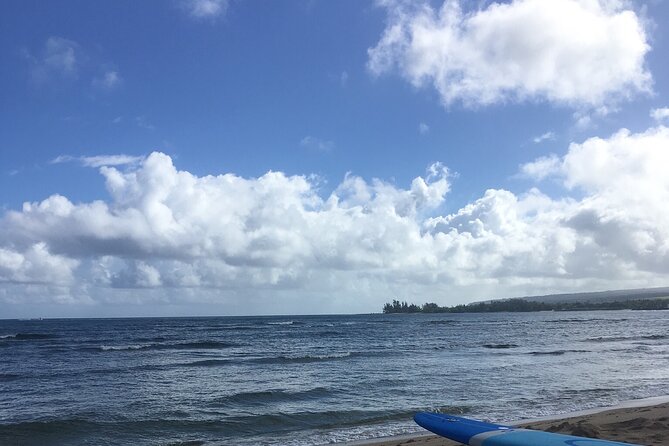
Your lesson kicks off at Puaʻena Point Beach Park in Haleiwa, and it ends back at the same spot. That matters more than it sounds. North Shore trips often involve logistics and traffic, and here you can keep your morning simple: show up, get set, and focus on surfing for two hours.
Once you arrive, your instructor greets you and handles the essentials: gear, setup, and a quick overview. You’ll get a surfboard and the basics that make learning safer and less annoying, including a leash, fins, and rash guard. If you’ve ever tried to rent or improvise for your first surf session, you already know why this is a big deal. The first thing you want to do is stop thinking about equipment and start thinking about technique.
Then comes the reality check. Before you even hit the water, you’ll get a safety briefing and ocean-condition context. This is where the session becomes more than a fun activity. Good instruction reduces wasted effort and helps you avoid the common mistakes that turn a beginner lesson into a scary swim session.
You can also read our reviews of more private tours in Oahu

The safety briefing and surf etiquette you actually need
In many surf lessons, safety gets said once and forgotten. Here, it’s treated like part of the lesson. You’ll cover surf basics, including ocean conditions and surf etiquette, so you understand how the water works and how to behave around other surfers.
For first-timers, etiquette is less about rules you memorize and more about protecting your body and your chances of riding waves. When you’re paddling out, taking off, and stepping off the board, you want to avoid creating problems for other people. You also want to avoid putting yourself in a situation where you can’t control what’s happening.
Your instructor will also help you “select beginner-friendly waves.” That phrase is key. Surfing the North Shore has a reputation for being intense, but in a lesson like this the goal is not to prove you can handle the toughest conditions. The goal is to learn how to paddle, pop up, and time your takeoff in waves sized for success.
Warm-up on land: the pop-up technique that builds confidence
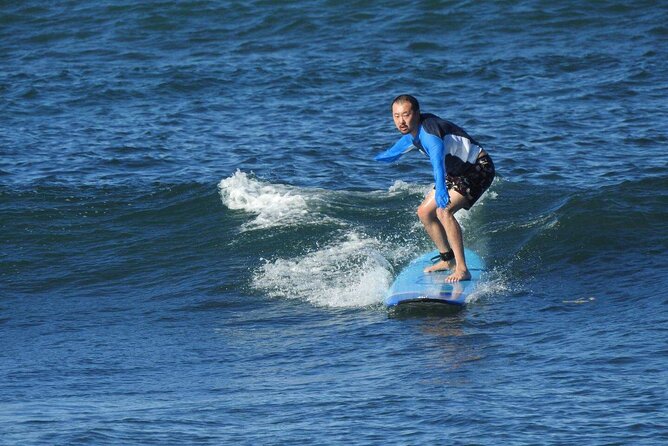
After the briefing, you’ll do a warm-up and then practice the pop-up technique on land. This is one of those parts that sounds basic until you realize most beginners never practice it with any structure.
You’ll focus on foot placement and balance. That matters because the pop-up is the moment everything can fall apart. If your feet land wrong or your weight is on your heels, you’ll either wobble or lose the board. Practicing on dry land helps you fix the mechanics before you’re rushing the move in moving water.
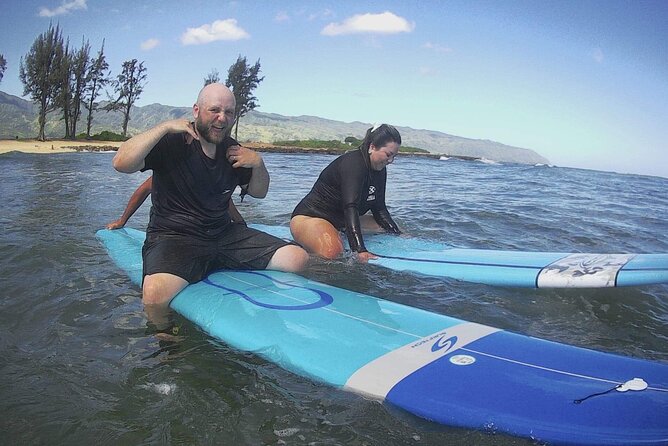
This is also where the private format pays off. You’re not repeating the same instructions while the instructor bounces between multiple groups. You can ask questions in real time, and the instructor can correct your stance before you build bad habits.
In a session described as private, the land warm-up isn’t a “break.” It’s your head start. It’s what turns the first wave from an accident into a goal you’re working toward.
Paddle out with coaching: catching the right waves, not just any waves
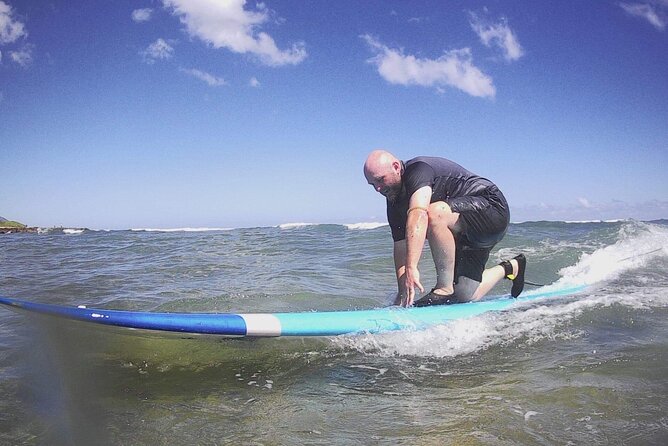
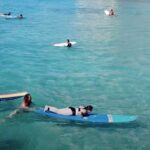
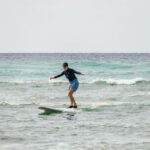
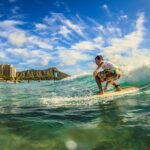
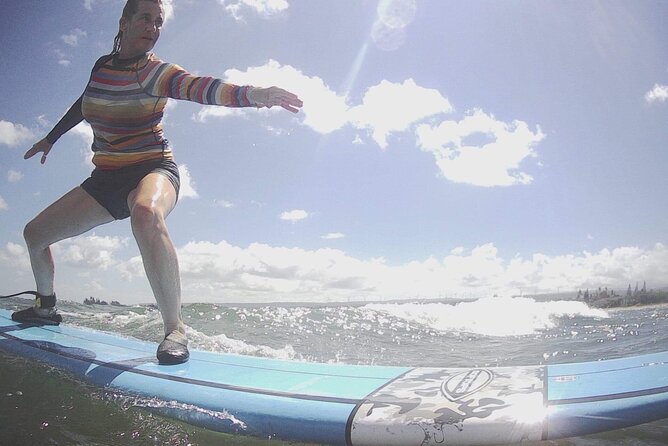
Once you’re ready, you’ll head into the ocean to catch small waves. The instructor guides you through paddling and standing, and you’ll work on applying what you practiced on land.
This part is about repetition, but smart repetition. You’re not just trying to “get lucky” with the ocean. You’ll be coached on what to do before you even start paddling, like how to position yourself and how to respond when a wave approaches.
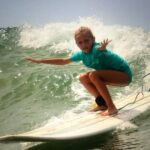
Your first big win is usually getting your first successful wave ride. Your instructor will help you apply the pop-up technique so that first ride becomes an achievement, not a chaotic scramble. That’s exactly how these lessons should feel: a mix of nerves, effort, and then a moment where things click.
Turning into longer rides: balance, timing, and control
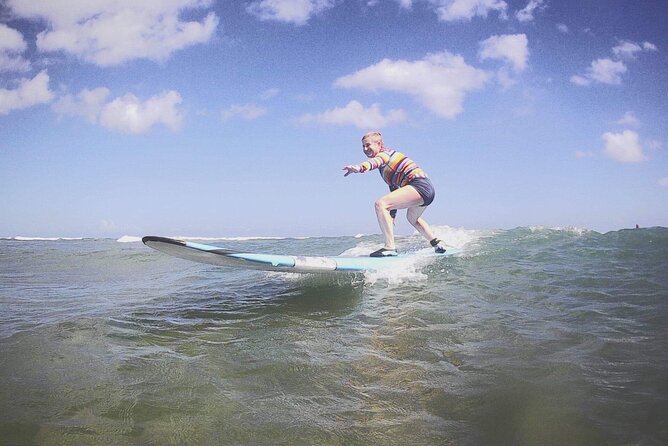
After you catch a few waves, the instructor keeps refining your skills. The next step is improving balance, then adding control for turning and wave timing.
This is where many beginner sessions lose momentum, because the lesson turns into, “Catch the wave, good luck.” In a well-structured private lesson, you keep progressing because someone is watching you and adjusting the plan.
You’ll focus on:
- Balance so you can stay stable as the wave moves under you
- Turning so you start to steer rather than just survive
- Timing so you paddle, pop up, and ride at the right moment
The goal is not to make you a shortboard wizard by the end. The goal is to leave you with a usable foundation and a clear sense of what to practice next time.
And on Oahu’s North Shore, that foundation is worth a lot. Even if you only take one or two waves at first, you’re still learning the core skills that transfer to future sessions.
You can also read our reviews of more tours and experiences in Oahu
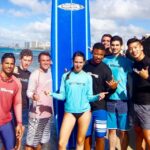
What the private format changes for beginners
This is where the lesson stands out. Private instruction is about speed and focus. You’re not waiting your turn. You’re not wondering what someone else is being told. Your instructor can keep adjusting based on what you’re actually doing, not what you’re supposed to be doing.
There’s also a confidence factor. Learning to surf can be frustrating because the ocean doesn’t reward effort the way land sports do. When coaching is one-on-one, it helps you separate the frustration of getting wiped out from the progress of learning the next correct step.
The lesson also emphasizes navigating around busy conditions. Instructors can position you and guide you so you spend more time learning and less time stuck in the “in-between” moments.
I’d call that one of the highest-value parts of this experience. If you’re going to pay for a surf lesson, you want your money to buy focused coaching time, not just access to equipment.
Value for the price: is $150 for 2 hours worth it?
At $150 per person for about two hours, this lesson sits in the “premium but targeted” category. That price makes sense because you’re buying real personal coaching, plus the gear you’d otherwise have to figure out on your own.
Here’s how I think about value:
- You’re not sharing instruction, so the learning time per person is higher than most group formats.
- Gear is included, including a rash guard, leash, fins, and board. That reduces friction and extra spending.
- You’re getting a structured progression from land technique to ocean practice, and then skill refinement for control and timing.
If you’re the kind of traveler who learns faster with hands-on feedback, private lessons usually pay off. If you’re happy self-teaching and you already know your basics, you might not get the same value. But for first-timers and returning surfers who want clean correction, this format is a strong match.
One more value point: it’s booked ahead. On average, it’s reserved about 23 days in advance, so plan ahead if your schedule is fixed.
Weather reality on the North Shore: rain or shine, but not chaos
The lesson runs rain or shine, but it won’t happen if conditions are too dangerous. That’s just surf logic, and it’s why planning with a little flexibility helps.
There’s also a specific risk factor on the North Shore: sometimes the ocean doesn’t cooperate. In at least one situation connected to this outing, the instructor communicated quickly when waves weren’t happening and the session was canceled. That tells you the real priority here is safety and rideable conditions, not pushing through regardless of the ocean.
My practical advice: if you’re traveling during a period when weather can swing, keep your expectations flexible. If you’re staying nearby, that flexibility is easy. If you’re tightly scheduled, consider building in buffer time so a wave-dependent lesson doesn’t knock your whole day sideways.
Who this surfing lesson is best for
This experience is a great fit if you want:
- A true beginner pathway with land practice and coached first rides
- Private guidance tailored to your goals and skill level
- A structured way to learn surf without guessing
You should also be comfortable with moderate physical fitness. Paddling, standing, and getting in and out of the water takes effort even when you’re focused on small waves.
Kids can do it too, with a key rule: children must be accompanied by an adult.
Service animals are allowed, and the meeting spot is near public transportation. Transportation to and from the beach is not included, so plan how you’ll get there.
Should you book this private North Shore surf lesson?
Yes, if you want the fastest, safest path to your first wave ride and you like having an instructor focus on you, not a crowd. The lesson’s structure—dry-land pop-up technique, safety and etiquette, then coached small waves—sets you up to learn something repeatable. At $150 for about two hours, it’s priced like a premium activity, but the included gear and true one-on-one coaching make it feel more reasonable than a simple rental-and-hope plan.
I’d skip it or think twice only if you’re on a strict, immovable schedule with no flexibility for wave conditions, or if you’re looking for a relaxed tour with zero physical effort. This is an active learning experience, and you’ll get the most out of it when you show up ready to try.
FAQ
How long is the private surfing lesson?
It runs for about 2 hours.
How much does it cost?
The price is $150.00 per person.
Where do we meet for the lesson?
The meeting point is Puaʻena Point Beach Park, Kahalewai Pl, Haleiwa, HI 96712. The activity ends back at the meeting point.
What surfing gear is included?
You’ll receive a surfboard, leash, fins, and rash guards, plus a professional surf instructor.
Do I need my own transportation?
Transportation to and from attractions is not included, so you’ll need to arrange how you get to the meeting point.
What happens if the weather is bad?
The lesson is scheduled rain or shine, but it may be canceled if conditions are too dangerous. If it’s canceled due to poor weather, you’ll be offered a different date or a full refund.
Is this tour private, and can children participate?
It’s private, so only your group participates. Children can take part, but must be accompanied by an adult.