REVIEW · SURFING LESSONS
Semi-Private Surf Lesson for 2 or 3 people on Waikiki Beach
Book on Viator →Operated by Big Wave Dave Surf & Coffee · Bookable on Viator
Learning Waikiki surf rules is a big deal. This semi-private lesson pairs small-group teaching (up to four) with the classic Waikiki setting, so you get more time with your instructor than you would in a big crowd. I especially like the step-by-step flow: land teaching first, then ocean coaching right after the safety basics, which helps your brain stop panicking. One thing to consider: this lesson needs a minimum of two people to run, and it depends on good weather.
The 1 hour 30 minute format is long enough to go from stiff-in-the-shorts beginner to trying real techniques, not just watching others. Plan to arrive 20 minutes early at Big Wave Dave Surf & Coffee on Lewers St so you have time to check in and get ready. You’ll want a moderate fitness level, mostly for paddling and getting up, and you should bring or rent the basics you need.
In This Review
- Key things that make this surf lesson work well
- Why Waikiki is such a practical place to learn surfing
- Semi-private setup: max four people, minimum two, real attention
- Check-in at Big Wave Dave Surf & Coffee: what to do before you hit the sand
- From land demonstration to ocean safety: how the lesson is paced
- In the water at Waikiki: paddling, catching waves, and getting your first real try
- What’s included, what to rent, and what to bring for less hassle
- Price and value: is $139 per person fair for 1.5 hours in Waikiki?
- Who this surf lesson suits best in Honolulu
- Small-group coaching reality check: the one drawback to keep in mind
- Should you book this Waikiki semi-private surf lesson?
- FAQ
- How long is the semi-private surf lesson?
- How many people are in the group?
- Where do I check in?
- What time should I arrive?
- What’s included in the price?
- Do I need to rent a rash guard?
- Is photography included?
- Do I need a lock for the locker?
- What fitness level do I need?
- What happens if weather is bad?
- What’s the cancellation window for a full refund?
Key things that make this surf lesson work well
- Small-group coaching (max four): you get more chances to try than a giant class
- Land demo to ocean time: you learn the why, then use it quickly on the waves
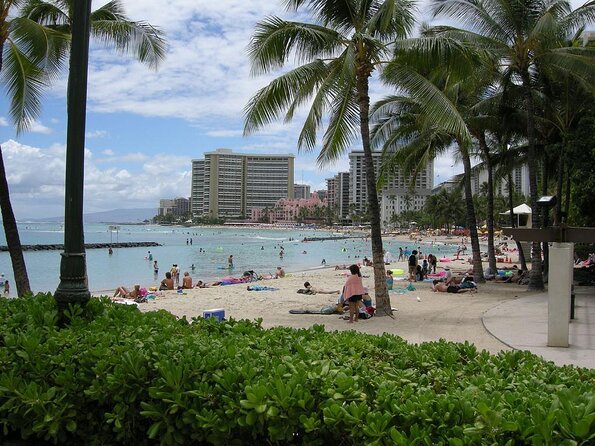
- Waikiki Beach setting: world-famous surf with beginner-friendly conditions most days
- Lockers included: store your stuff on the beach with a rented or brought lock
- Semi-private runs with at least two: build your group early so you don’t get stuck waiting
Why Waikiki is such a practical place to learn surfing
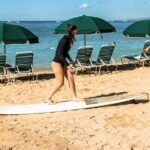
Waikiki Beach is famous for a reason, but for your lesson the real benefit is predictability. You’re at a highly established teaching spot where instructors can focus on fundamentals instead of guessing how a wave will break from minute to minute. That matters when you’re trying to learn paddling rhythm, board control, and the timing of catching a wave.
You also get the bonus of doing something that feels unmistakably Oahu. After instruction, you’re right in the middle of Honolulu life—so the day doesn’t feel like a sealed-off activity. It’s an easy way to add an outdoor skill to a trip that might otherwise be mostly city sightseeing.
And because this is a semi-private format, you’re not fighting for attention. That’s huge for beginners. Surf feels simple until you’re on the water, and that’s exactly when good coaching helps you get unstuck fast.
You can also read our reviews of more private tours in Oahu

Semi-private setup: max four people, minimum two, real attention
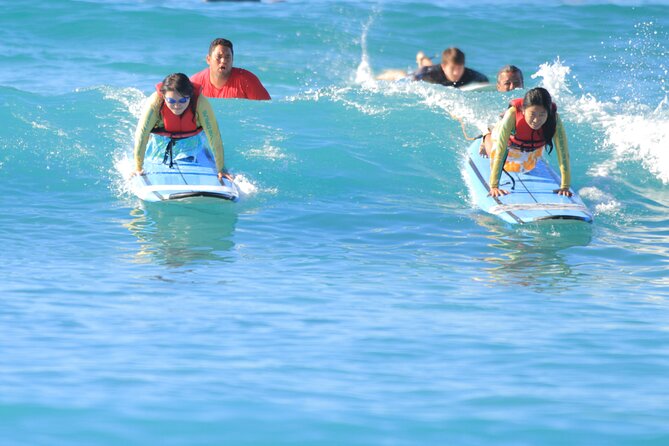
This lesson is designed to stay small. The limit is up to four travelers, which keeps the group manageable. In that size, instructors can watch your body position, correct small technique issues, and keep your confidence from draining out after one wipeout.
There’s also a clear requirement: semi-private lessons need a minimum of two people to book. In real life, that means it’s best if you’re traveling as a couple, with friends, or with family that can share the booking. If you’re solo, you may end up looking at a different lesson format elsewhere.
One review vibe I keep coming back to is patience. People talked about instructors being friendly and calm, and making sure everyone felt supported. That tends to happen when the group is small enough that the instructor can slow down for real coaching instead of rushing through the basics.
Check-in at Big Wave Dave Surf & Coffee: what to do before you hit the sand
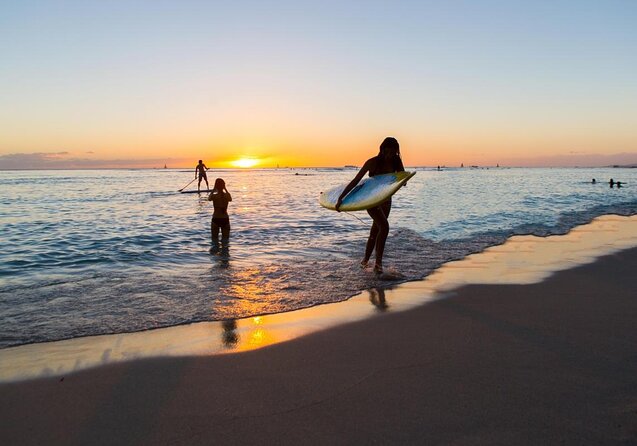
The meeting point is Big Wave Dave Surf & Coffee, 226 Lewers St #154, Honolulu. Check in is 20 minutes before your start time, and the activity ends back at the same spot.
That early arrival window is more than paperwork. It gives you time to:
- Get oriented and meet your instructor
- Store your personal items in the locker area
- Make sure you have what you need before everyone walks to the beach
The good part here is simple: you’re not scrambling while the lesson is already starting. Surf lessons move with the tide and conditions, so being on time protects your chances to actually practice.
From land demonstration to ocean safety: how the lesson is paced
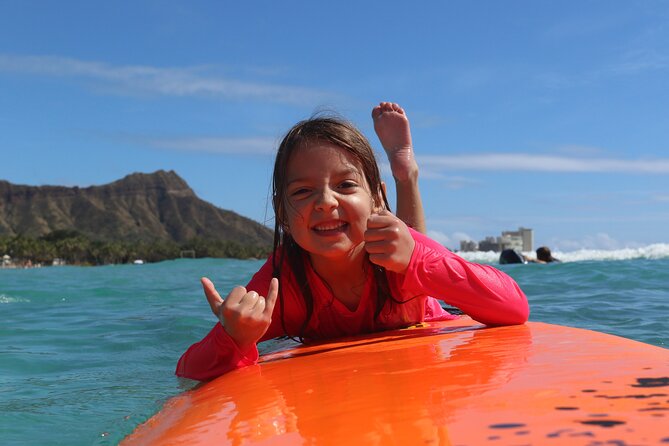
The structure is straightforward. You begin with a land demonstration, then you move into the water once the safety basics are covered.
Why that order is smart: most beginners can’t process instructions while cold water is hitting their face and the board is wobbling under them. Land teaching helps you learn the sequence first—what you do before you try to catch a wave. Then, once you’re in the ocean, the instructor can focus on corrections instead of repeating everything from scratch.
You’ll also get a safety walkthrough. Surfing isn’t dangerous because it’s dramatic—it’s risky because people ignore small rules. Having ocean safety addressed before you start trying to catch waves is exactly the kind of practical step that prevents frustration and keeps the session smooth.
This is the part that typically separates a fun first surf from a painful one. When you know what you’re supposed to do, you fall less, and you stand up sooner. And the better your first successes, the more your confidence holds for the later attempts.
In the water at Waikiki: paddling, catching waves, and getting your first real try
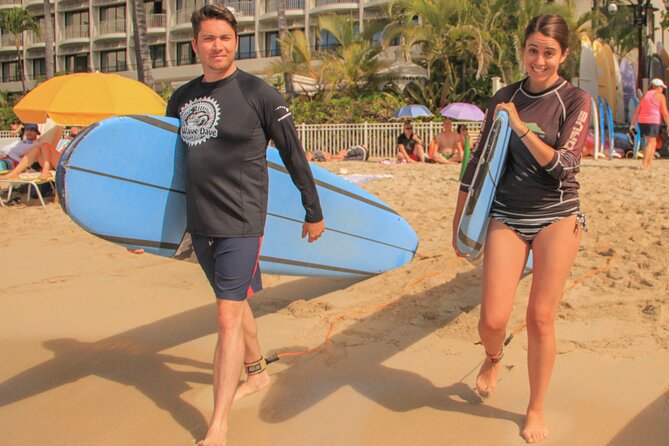
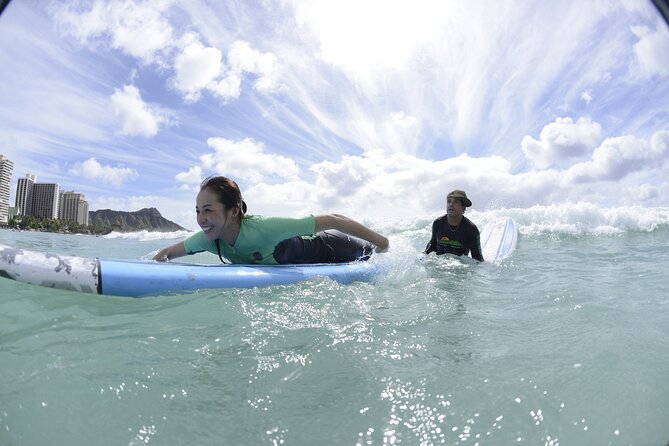
Once you’re ready, the instructors guide you into the ocean after the land portion is done. The lesson is built around the core skills:
- Understanding your surfboard basics
- Paddling technique
- How to catch waves
- Getting the timing right enough to stand (eventually)
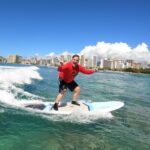
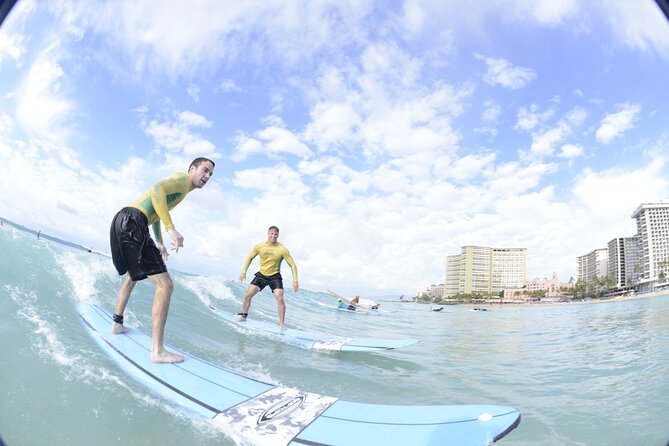
In Waikiki, conditions can be small and steady, which is ideal for learning. Several people specifically described instructors working to keep the group moving and getting multiple tries, not one dramatic attempt and then done. That aligns with the goal of a lesson like this: practice beats theory.
Expect that you might not stand up until later in the session. That’s normal. One review even described a parent thinking they wouldn’t stand until a final try—then it clicked. Surf teaches humility fast, and a good instructor’s job is to turn wipeouts into useful feedback instead of discouragement.
Also, shoulder endurance matters. Surf paddling takes more effort than you’d think. If you’re moderately fit, you’ll likely be fine. If you haven’t done much upper-body work, be ready for the burn—and treat it like exercise, not a sign you did something wrong.
You can also read our reviews of more tours and experiences in Oahu


What’s included, what to rent, and what to bring for less hassle
The pricing includes all taxes, fees, and handling charges, plus a fuel surcharge and landing/facility fees. So the $139 price is meant to be the full lesson cost.
Included in the on-site setup:
- Lockers to store personal belongings (you bring or rent a lock)
Not included:
- Rash guard rental: $5
- Photography: available only with advance reservations
- Lock rental: optional at $5, or bring your own
For clothing, a rash guard is worth planning for. If you’re prone to skin irritation from sun and salt, paying the $5 rental can save you from an uncomfortable finish to your day.
For lockers, think like this: you want your lesson experience to be about surfing, not carrying everything you own to the water. The lockers are there, but you must handle the lock part—either rent one or bring your own.
One caution from real-world experience: in at least one story, instructors advised water shoes as a smart idea because the area can involve reef-like sections. That detail isn’t part of the official included list, but it’s a good reminder to pack footwear you’re comfortable walking in and that won’t get you slipping around.
Price and value: is $139 per person fair for 1.5 hours in Waikiki?
At $139 per person for about 1 hour 30 minutes, you’re not paying for a long sightseeing tour. You’re paying for instruction, safety guidance, and the small-group coaching setup.
The value case is strongest if:
- You’re a beginner who will actually use technique corrections
- You want a smaller group (max four) instead of a crowded class
- You want to learn the basics efficiently without spending hours researching spots and logistics
If you already surf well, this may feel short. If you’re new, this is about getting your first real foundation and leaving with a better sense of what to practice next time.
Also consider the locker setup and the fact that taxes and fees are included. A lot of outdoor activities sneak extra charges into the final cost. Here, the price is designed to be more predictable.
Who this surf lesson suits best in Honolulu
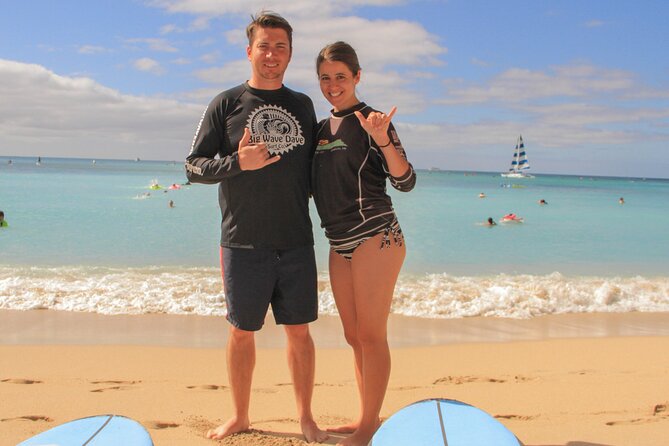
This works well for:
- Traveling families who want a structured, guided activity on Oahu
- Couples who want semi-private attention
- Friends who can book together to meet the minimum of two
The physical requirement is described as moderate fitness. That doesn’t mean you need to be an athlete, but you should be prepared for paddling and repeated tries.
If you’re traveling with kids, it can still work—one review mentioned an instructor being amazing for boys aged 10 and 13. The keys are attitude (kids need patience during wipeouts) and listening during instruction so they can follow safety rules quickly.
If you’re anxious about getting out on the water, the small-group format and patient teaching style can help a lot. Surf can feel intimidating until you realize the instructor is actively managing the experience so you keep trying.
Small-group coaching reality check: the one drawback to keep in mind
The main downside is not really the lesson content. It’s that semi-private depends on group size and weather.
- If you’re trying to book with just one person in your party, the semi-private requirement of at least two may not fit.
- If weather is poor, the experience can be canceled and you’ll need to reschedule or get a refund.
So if your surf date is your only “flexible” day, you’ll want a Plan B. Otherwise, you might end up staring at waves that look perfect while your session gets shifted.
Also, check the add-ons list before you show up. Rash guard rental isn’t included, and photography costs extra if you want it. That’s normal, just don’t let it surprise you mid-session.
Should you book this Waikiki semi-private surf lesson?
Book it if you want a guided first surf on one of the world’s most famous beaches, with small-group attention and a lesson that starts with land basics and moves into the ocean with safety coaching.
Don’t book it only if:
- You’re trying to do it solo and don’t want to deal with lesson-format rules
- You’re dealing with a tight schedule and can’t reschedule if weather shuts it down
- You’re hoping for a long, leisurely activity with sightseeing time built in
If you’re a beginner, this is the kind of activity that can pay you back for the rest of the trip. You’ll spend less time guessing and more time learning what to do with your body—paddle, timing, and wave-catching—so your next attempt (on this trip or later) feels easier.
FAQ
How long is the semi-private surf lesson?
It’s approximately 1 hour 30 minutes.
How many people are in the group?
The maximum is four travelers. Semi-private lessons require a minimum of two people to book.
Where do I check in?
Check in is at Big Wave Dave Surf & Coffee, 226 Lewers St #154, Honolulu, HI 96815.
What time should I arrive?
You should check in about 20 minutes before the lesson start time.
What’s included in the price?
The price includes all taxes, fees, and handling charge, fuel surcharge, and landing and facility fees. Lockers are included for storing personal belongings.
Do I need to rent a rash guard?
Rash guard rental is not included. It costs $5 if you want to rent one.
Is photography included?
No. Photography is not included, but it can be reserved in advance.
Do I need a lock for the locker?
You’ll need to bring or rent a lock. Lock rental is optional and costs $5.
What fitness level do I need?
You should have a moderate physical fitness level.
What happens if weather is bad?
The experience requires good weather. If it’s canceled due to poor weather, you’ll be offered a different date or a full refund.
What’s the cancellation window for a full refund?
You can cancel up to 24 hours in advance for a full refund. If you cancel less than 24 hours before the start time, it won’t be refunded.