REVIEW · WORKSHOPS
Surf HNL: Surf Lessons near Ko’olina!!!!!
Book on Viator →Operated by Surf HNL · Bookable on Viator
Surfing in Hawaii isn’t just scenery, it’s skill. This 1-hour surf lesson near Barber’s Point is built for first-timers, with small groups (max 4 per instructor), full gear (including reef shoes and rash guard), and instructors trained for safety with lifeguard and CPR credentials. The sand-to-waves setup is efficient, so you spend more time practicing than waiting around, which matters when you’re paying for an experience that’s only about an hour in the water.
One thing to consider: depending on the day’s wind and current, you may get tired fast from paddling out. That’s normal surf work, but your instructor’s coaching becomes the difference between giving up and getting a wave.
In This Review
- Key Takeaways Before You Go
- Ko Olina Pickup and Barber’s Point: the easy start
- Eisenhower Beach: why this setup works for first-timers
- The 1-hour surf plan: sand practice, paddling out, then waves
- Step 1: Learn the basics on sand
- Step 2: Coach help paddling out
- Step 3: Find your wave spot, then try riding
- Step 4: More time in the water than you expect
- Small groups and safety: what the CPR-trained team actually means
- Included surf gear: you save money and stay comfortable
- The arm workout: wind and current can be real
- How long is it, and what’s the real value of $169?
- Who should book Surf HNL (and who should think twice)
- This is a strong fit if you want
- You might think twice if
- Age notes
- Tips to get better results on your first session
- The practical bottom line: should you book?
- FAQ
- How long is the surf lesson?
- Where does the activity take place?
- Do I get picked up from my Ko Olina resort?
- What if I’m a beginner?
- Is the group small?
- What surf gear is included?
- Do I need to bring food or drinks?
- What’s the minimum age?
- What fitness level do I need?
- Are service animals allowed?
- Is cancellation free?
Key Takeaways Before You Go
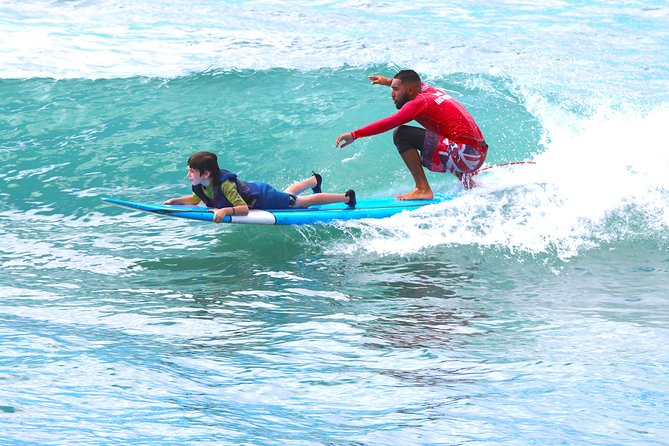
- Small groups up to 4 students per instructor mean more hands-on help.
- Gear is included (reef shoes, surfboard, leash, rash guard), so you don’t show up shopping.
- Sand instruction first helps you get the basics fast, then you’re in the water.
- CPR-trained, lifeguard-certified instructors add real peace of mind.
- Pickup from Ko Olina resorts keeps logistics easy for you.
- Beginner-friendly coaching often gets people standing quickly, including kids.
Ko Olina Pickup and Barber’s Point: the easy start
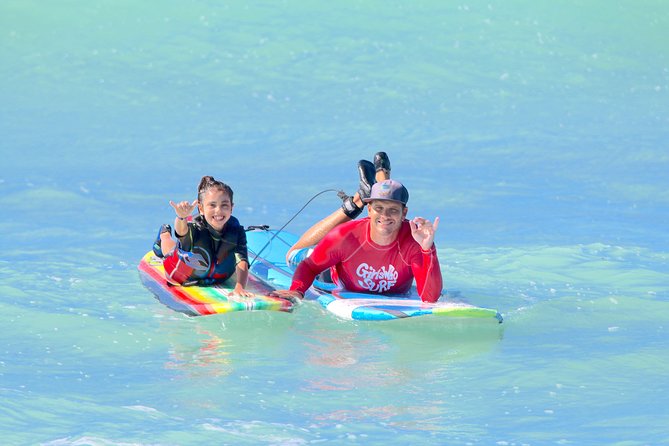
Your experience starts with hotel pickup from your Ko Olina resort. After that, you’ll head to the meeting area near Barber’s Point to meet your instructor and group. The timing is simple: you’re looking at roughly 1 hour 15 minutes total, with about 1 hour focused on the lesson itself.
This matters because surf lessons can get messy when travel time eats the “learning” portion. Here, the lesson is the point. You’re not spending most of the experience standing in line, watching other people do cool stuff while you wait your turn.
And yes, you can treat this as a true beginner activity. You’ll be matched with a board that fits your height, which helps you get better balance without feeling like you’re fighting the equipment.
You can also read our reviews of more tours and experiences in Oahu
Eisenhower Beach: why this setup works for first-timers
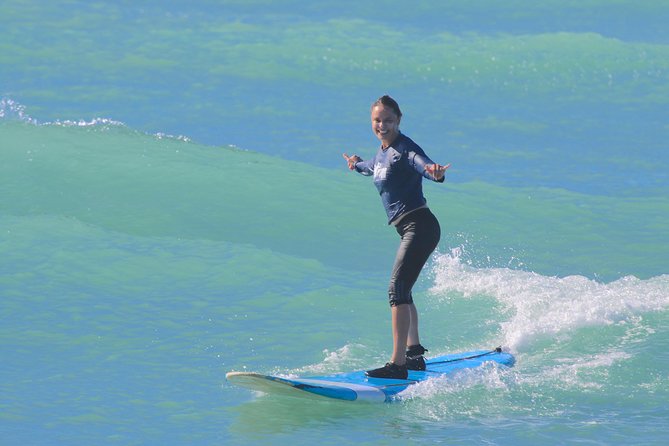
You’ll be working from Eisenhower Beach (Eisenhower Rd, Ewa Beach). The vibe from the field reports is that this is a more local-feeling spot with wide open water, and it can be pretty manageable for learning because conditions can be gentle enough for beginners to practice. Some instructors also steer beginners toward areas where the water feels less intimidating when you fall.
For you, the practical win is this: you start on sand, then you move into the water with confidence. That short transition is the secret sauce. A lot of “try surfing” experiences skip the sand portion or make it too long. This one keeps the sand lesson brief—just enough to get your technique set—then gives you time to actually ride.
There’s also a strong “instructional coaching” feel to the whole process. Your instructor is actively helping you find where to sit, how to paddle, and how to time your stand.
The 1-hour surf plan: sand practice, paddling out, then waves
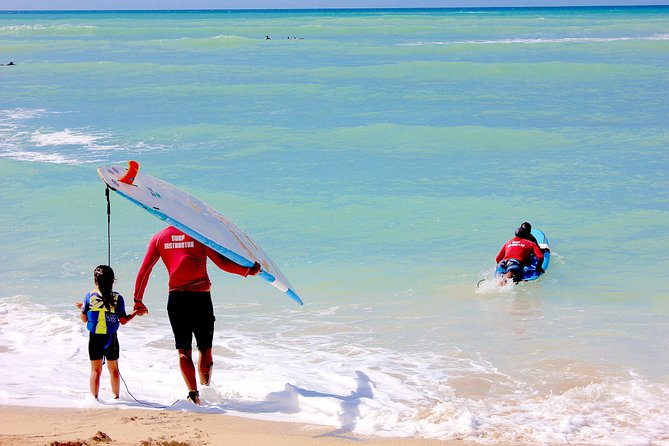
Here’s what your lesson flow looks like, in plain terms.
Step 1: Learn the basics on sand
Before you paddle out, you’ll start on the sand. You’ll practice how to paddle and how to stand up on the board. This sounds simple, but it’s huge. Most first-timers lose the first wave because they’re thinking about everything at once: board position, arm motion, timing, feet placement. Sand practice is where you reduce the number of things your brain has to juggle once you’re in moving water.
You’ll also get your board properly set up for your body. If your board is wrong, nothing feels right. Getting matched to the right size makes the whole session more likely to end with you catching a wave.
Step 2: Coach help paddling out
When you’re ready to get in the water, your instructor helps you with paddling out. A good coach doesn’t just point—you get specific guidance on how and where to paddle, and what to watch for as the waves come in.
This is where you benefit from the small group size. With no more than 4 students per instructor, you’re not getting coached only through distance shouting. You’re getting feedback when it matters.




Step 3: Find your wave spot, then try riding
Once you’re in the right spot, your instructor helps you find the best place to sit and time your effort. They may even give a gentle push to help you catch a wave when you’re in position.
That push can feel like magic the first time it happens. You’re still learning, but it helps you link what you practiced on sand to what happens when waves lift the board.
Step 4: More time in the water than you expect
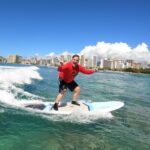
Because the sand lesson is short, you should have plenty of time in the water to practice riding. That’s the main reason this format gets such high marks: you’re not spending your session watching. You’re working.
And the encouraging pattern in the feedback is clear—people often get up quickly. Some kids got their first ride on day one. Couples and solo adults also report that the hour is the right length: long enough to feel real progress, not so long that you’re burned out before you learn anything.
Small groups and safety: what the CPR-trained team actually means
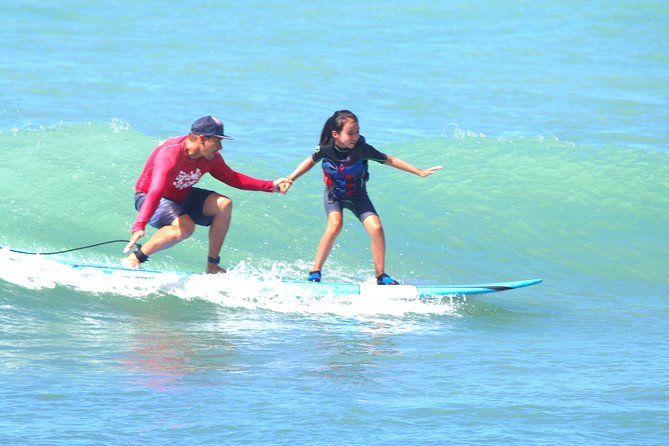
Surfing is fun, but it’s also ocean energy. That’s why I like that this lesson includes lifeguard and CPR-trained instructors. You don’t need to panic about safety details every time you get in the water, but it’s smart to pick a provider that treats safety as a baseline, not a marketing line.
The other major win is coaching density. A group that stays at 4 students per instructor is where you get actual correction. If you’re the only one paddling wrong, your instructor can fix it right away instead of waiting for the next set.
You’ll often see that in the names that come up in feedback. Instructors like Sam, Kira, and Sophia are specifically mentioned for being patient and for pushing beginners toward success, not just for keeping things moving.
One more safety-related practical point: a lot of the “trying to surf” pain is physical—wind, current, and paddling fatigue. When the day is tough, strong coaching matters even more. Your instructor helps you manage effort so you don’t blow your energy before you get waves.
Included surf gear: you save money and stay comfortable
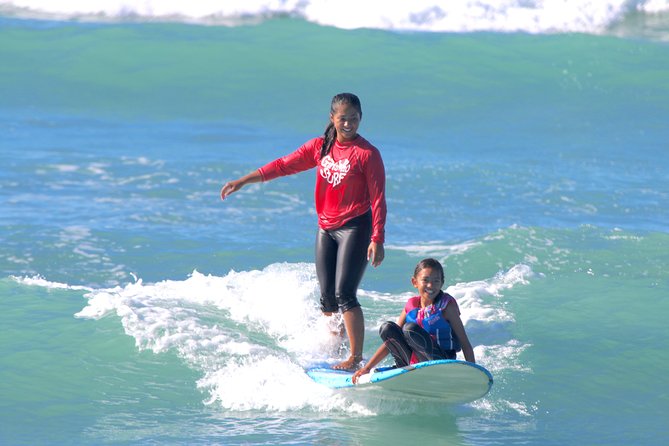
The gear list is straight and helpful, and it removes a lot of friction from day one. You’ll get:
- Surfboard
- Leash
- Reef shoes
- Long-sleeved rash guard
This is the kind of inclusion that you’ll appreciate on day-of logistics. If you show up without reef shoes, you risk uncomfortable feet, and you also lose time figuring out what to wear. Rash guards help with sun and minor friction, so you can focus on balance and technique instead of worrying about skin.
Also, the leash is non-negotiable in practice. It helps keep your board close when you wipe out, which is part of what makes learning feel safer and less chaotic.
The arm workout: wind and current can be real
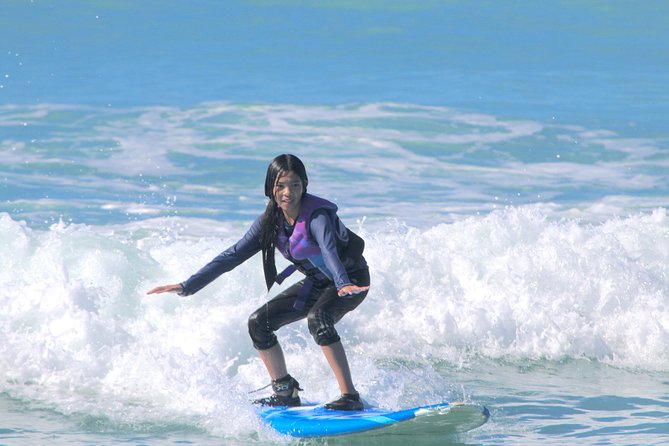
Surf lessons aren’t gentle cardio class. Even when you’re a beginner, paddling out is work—especially on days with strong wind or current. Some people report it’s tiring enough that they really felt the value of coaching during the toughest moments.
Here’s how to prepare in a common-sense way:
- Expect that paddling against conditions may feel like an upper-body workout.
- Rest when your instructor gives you breaks. Instructors often manage pacing so you don’t burn out between attempts.
- Focus on technique, not brute strength. The right paddling rhythm helps you move faster with less wasted effort.
One useful pattern from feedback: when instructors encourage you and help you with positioning, it can completely change the outcome. People who thought they’d fail often end up catching waves because they finally get into the right spot at the right time.
How long is it, and what’s the real value of $169?
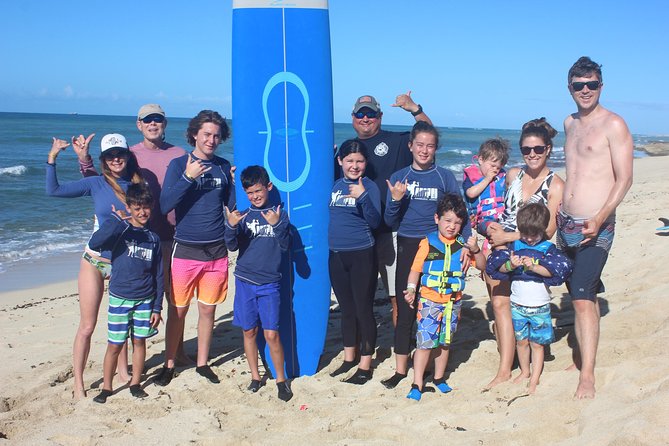
Price is $169 per person, and the duration is about 1 hour 15 minutes total, with a 1-hour lesson. At first glance, it’s not “cheap,” but it’s not just renting a board either.
You’re paying for:
- A certified, safety-minded instructor
- Real coaching in the water (not just a talk on land)
- Small-group limits (max 4 students per instructor)
- All core gear, including rash guard and reef shoes
- Transportation from Ko Olina resorts as part of the experience flow
For beginners, that’s where value lives. If you tried to self-teach with a rented board, you’d likely lose time, waste attempts, and risk feeling overwhelmed by currents and wave timing. Here, you get structured instruction and direct help that can get you standing faster.
If you’re someone who learns best from feedback in the moment, this price starts looking reasonable. If you’re mainly looking for a casual beach day with a board, you might want to lower expectations and remember that surf lessons are active.
Who should book Surf HNL (and who should think twice)
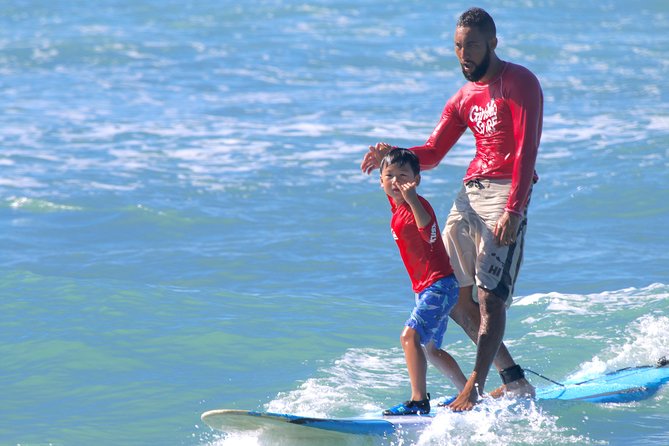
This is a strong fit if you want
- A first-time surf lesson with coaching and encouragement
- A low-stress group size (max 4 travelers in the max group size limit, and max 4 per instructor)
- Equipment handled for you
- A lesson that puts you in the water quickly after brief sand basics
You might think twice if
- You have very limited physical ability for paddling. The experience calls for moderate physical fitness level, and some days can feel more demanding because of wind/current.
- You’re expecting a long, leisurely beach hang. This is about learning technique and catching waves in an hour.
Age notes
For group bookings, the minimum age is 12. For private bookings, the minimum age is 5. Service animals are allowed.
Tips to get better results on your first session
You’ll learn the core steps during the lesson, but you can help the experience go smoother with a few smart choices.
- Arrive ready to move your arms. If you’re coming straight from a long day of sightseeing, it may be harder than you expect.
- Bring a plan for sun and wind. You get a rash guard, but you’ll still want to think about hydration and comfort.
- Be ready for short instruction blocks. The session is timed to get you into the water fast, so listen closely and then get moving.
And if you’re anxious about the ocean, you’re not alone. The coaching style here is built around getting you into a successful rhythm. People mention being encouraged and helped with paddling out and with getting into waves, even on windy days.
The practical bottom line: should you book?
I’d book Surf HNL if you want the best shot at standing up and riding during your first surf lesson, without spending your trip figuring out logistics. The combination of small groups, gear included, CPR-trained lifeguard-style safety, and a lesson format that shifts quickly from sand to waves makes this a value-focused way to try surfing in Oahu.
If your main goal is low-effort downtime, this won’t feel like that. There’s real effort involved, especially if conditions are strong. But if you’re willing to work for it and you want an instructor driving your success, Surf HNL is the kind of activity that can land you with a story you’ll keep telling.
FAQ
How long is the surf lesson?
The experience is about 1 hour 15 minutes total, with approximately a 1-hour surf lesson.
Where does the activity take place?
The lesson is near Barber’s Point on Oahu. The meeting point is Eisenhower Beach (Eisenhower Rd, Ewa Beach, HI 96706).
Do I get picked up from my Ko Olina resort?
Yes. Your tour begins with hotel pickup from your Ko Olina resort.
What if I’m a beginner?
You’ll start with instruction on sand, then learn paddling and standing up on your board. Your instructor will also help you with paddling out and finding where to sit to catch waves.
Is the group small?
Yes. The experience limits groups to no more than 4 students per instructor, and it lists a maximum of 4 travelers.
What surf gear is included?
Surf gear is included: reef shoes, a surfboard, a leash, and a long-sleeved rash guard.
Do I need to bring food or drinks?
Food and drinks are not included.
What’s the minimum age?
For group bookings, the minimum age is 12. For private bookings, the minimum age is 5.
What fitness level do I need?
You should have a moderate physical fitness level.
Are service animals allowed?
Yes, service animals are allowed.
Is cancellation free?
Cancellation is free up to 24 hours in advance for a full refund. If you cancel less than 24 hours before the start time, the amount paid is not refunded.