REVIEW · NORTH SHORE TOURS
Surf Lesson in Haleiwa
Book on Viator →Operated by Go Nuts Hawaii · Bookable on Viator
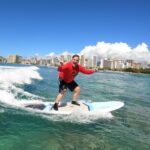
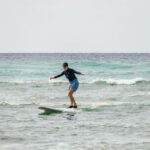
If you want less guessing, start with a surf lesson in Haleiwa. This North Shore session is built for real beginners and also works well if you want stronger coaching, with options like private and semi-private setups.
What I like is how the experience is shaped around one-on-one attention. You’ll get instruction from lifelong watermen who are trained for safety (including CPR/AED), and you’re not just dropped into the ocean with a board.
One thing to consider: the North Shore can be intense, and the lesson runs about 2 hours, so you’ll get real progress—but not instant mastery. Also, good weather is required for the session to run.
In This Review
- What makes this Haleiwa surf lesson worth your time
- Haleiwa’s North Shore: a great place to learn (if you pick the right lesson)
- Price and what you actually get for $99 per person
- Where you meet and how the session runs
- Private, semi-private, or group-style: picking the right lesson size
- Private lesson
- Semi-private lesson
- Group-style lesson
- What happens during those roughly two hours in the water
- 1) Getting set up and choosing the right equipment
- 2) Learning wave selection and where to go
- 3) Mounting and standing up basics
- 4) Riding and repeat attempts
- Safety on the North Shore: why the CPR/AED detail matters
- Extra touches that reduce stress (and help you enjoy the day)
- How fit you need to be (and what moderate fitness really means here)
- Who should book this Haleiwa surf lesson
- Should you book Go Nuts Hawaii in Haleiwa?
- FAQ
- What is the duration of the Haleiwa surf lesson?
- What lesson sizes are available?
- Is pickup offered?
- Where is the meeting point?
- How much does it cost?
- Do I need to book ahead?
- Do they require good weather?
- Is the lesson only for my group?
- Are service animals allowed?
What makes this Haleiwa surf lesson worth your time
- You choose the coaching intensity (private for solo learners, semi-private for couples/siblings, or group-style with 3–4 students per instructor).
- Safety is a headline, not a footnote, with instructors up to date on CPR/AED.
- Instruction is tailored fast, especially on wave choice and board mounting for first-time riders.
- The local touch matters—people consistently name instructors like Cesar, Samuel, Pedro, Jeronimo, Kainehi, and Garrett.
- Support for the non-surfing crew shows up in small ways, like chairs for friends who aren’t going out.
Haleiwa’s North Shore: a great place to learn (if you pick the right lesson)
Haleiwa sits on Oahu’s North Shore, where the ocean has a reputation for big energy. That can sound intimidating, but it’s exactly why a structured surf lesson here can work so well: you’re learning in the right surf zones, with an instructor who understands which waves are realistic for your skill level.
The big value is that the lesson isn’t framed as a generic show. It’s coaching with a goal: get you up and riding while keeping things safe. The lesson description specifically calls out first-timers and also intermediate-to-advanced riders who want better technique and better decision-making in the water.
Even if you’re nervous, this setup can calm things down fast. When the instructor is focused on getting you on the right board, to the right spots, and at the right time, your attention stops floating and starts landing on useful cues—like how to mount the board when the set comes in.
You can also read our reviews of more tours and experiences in Oahu
Price and what you actually get for $99 per person
At $99 per person for about 2 hours, the price sits in the “serious activity” range. What makes it feel fair is that it’s not just equipment rental and a vague wave recommendation.
You’re paying for:
- Real coaching from a surf instructor (private or shared with a small number of students)
- Safety-minded supervision in the water
- Help choosing what to ride—especially important if you’re used to one style of board and need a different feel for learning
One detail I’d treat as part of the value: this school also offers pickup and supports mobile ticket entry. That reduces the mental load on what is already a day that includes driving, timing tides, and handling beach logistics.
If you’re on a budget, you’ll want to compare lesson type. A private lesson can be a great splurge when you want faster feedback, while semi-private can be the sweet spot for couples or siblings who learn well side-by-side.
Where you meet and how the session runs
The lesson starts at 58-106 Kaunala St, Haleiwa, HI 96712, and it returns to the same meeting point. That “start and finish at the same place” matters more than it sounds. It keeps you from having to plan a second pickup or figure out how to get back to your car after you’re tired and salty.
Pickup is offered as well, which helps if you’re staying farther out or you don’t want to manage parking and timing on the North Shore. Also, the tour description notes a mobile ticket, which usually means fewer paper steps once you arrive.
The session is approximately 2 hours. For most first-time surfers, that’s enough time to learn the essentials (paddling basics, mounting technique, and what to do when a wave actually comes). It’s also enough time for the instructor to adjust your approach without starting over from scratch.
Private, semi-private, or group-style: picking the right lesson size
The school offers three formats:
- Private surf lesson (1 student per instructor)
- Semi-private surf lesson (2 students per instructor), ideal for couples or siblings
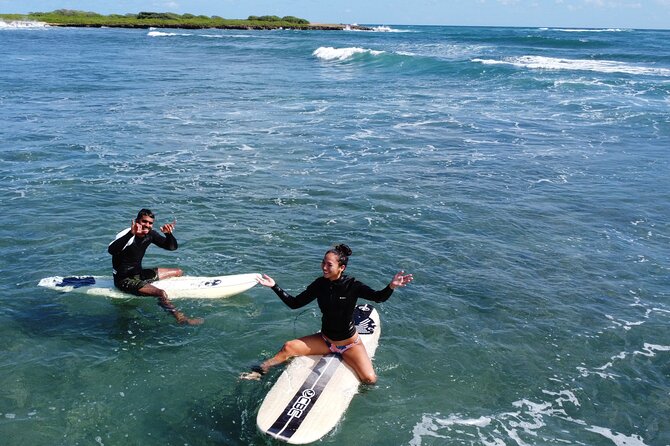
- Group surf lesson (3–4 students per instructor), for friends and small groups
Here’s how that translates into real-life coaching value.
Private lesson
If you want fewer variables, pick private. You get direct attention at every step: what board you’re on, how you position your body, when you start paddling, and what to change immediately after a wipeout.
People mention instructors like Samuel and Pedro providing very focused help, with a calm, knowledgeable teaching style. That fits the private format perfectly: no waiting your turn, no guessing what your instructor is telling someone else.



Semi-private lesson
Semi-private is often the best “value-with-attention” option. You get a second person to share the experience with, but you’re still not lost in a crowd. For siblings or couples, it can also make the whole day feel more social—without turning into a chaotic group scene.
Group-style lesson
Group surf lessons can work if:
- You’re okay sharing attention
- You learn well by watching and copying
- You don’t need every cue repeated
Because the instructor stays with a small set (3–4 students), it’s not a massive class. Still, if you’re truly new and easily overwhelmed, you’ll likely progress faster with private or semi-private.
What happens during those roughly two hours in the water
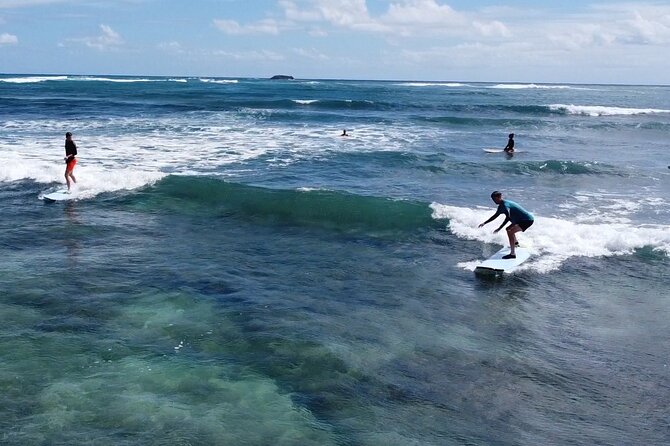
Surf instruction tends to fall into a pattern, and the best sessions follow that pattern tightly. Based on the experience details and what guests describe, here’s what your time is likely to focus on.
1) Getting set up and choosing the right equipment
Even if you’re bringing your own board, the school provides board options and helps you ride what fits your skill level. People mention getting help with board sizing and even renting boards on site when their own equipment wasn’t ideal for learning.
If you’re used to longboards and you’re trying a short board for the first time, expect extra coaching on the move from paddling to stance. That kind of transition can feel weird at first, but instructors can correct it quickly.
2) Learning wave selection and where to go
A lot of beginners don’t fail because they lack courage. They fail because they’re trying to catch the wrong wave. Instructors help you find the wave patterns that match your ability, so you’re not constantly waiting for impossible sets.
One guest called out gaining the confidence to spot good wave locations and understand essential technique for mounting. That’s exactly what you want from day one: the ability to read the ocean a little, not just follow instructions blindly.
3) Mounting and standing up basics
Mounting (getting your feet set as the wave arrives) is the make-or-break step for first-timers. You’ll be coached on where your body goes, how to time it, and what to do when the board wiggles under you.
This is where calm instruction really matters. People mention instructors keeping things steady and helpful even when the North Shore is doing North Shore things.
4) Riding and repeat attempts
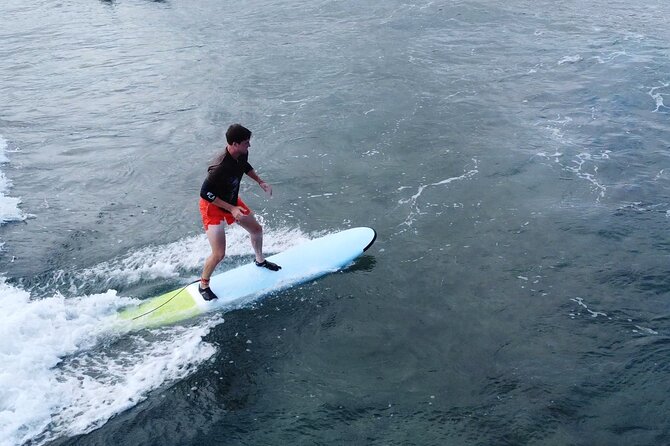
The goal is not one perfect ride. The goal is repeat rides with feedback. Over two hours, you should get multiple tries—enough to feel your progress even if you’re still working on consistency.
Also, small moments pop up. One guest mentions seeing a big turtle during the session. North Shore lessons can include those “you’re really in it” nature encounters.
Safety on the North Shore: why the CPR/AED detail matters
The lesson is led by instructors who are up to date with CPR/AED lifeguarding skills. That might sound like administrative wording, but here’s what it means for you: it raises the likelihood that the instructor is thinking clearly about risk, not just the fun factor.
When you’re learning, risk isn’t only about big injuries. It’s also about:
- being positioned in the right spot
- knowing when to wait
- keeping swimmers spaced and safe
- reacting correctly if conditions change
Because the school also stresses safety as the number one priority, it’s a good sign that the instruction will be structured, not chaotic. In other words: you’ll spend time learning instead of wandering around trying to figure out how not to get in trouble.
Extra touches that reduce stress (and help you enjoy the day)
A lesson can go sideways when logistics are messy. This school seems to handle small logistics smoothly, which makes the whole experience feel easier.
Here are a few examples from the details provided:
- Pickup is offered, which simplifies timing.
- Service animals are allowed.
- Chairs and support for friends not surfing came up in feedback, which helps if you’re bringing a whole group.
- Some guests received help arranging boards for their situation, including cases where a board was delivered early to lodging.
- Local tips on where to surf were shared as part of the service.
If you’re traveling with family, that last point is underrated. The North Shore isn’t one beach with one correct choice. A good local suggestion can help you avoid wasting your remaining beach time.
How fit you need to be (and what moderate fitness really means here)
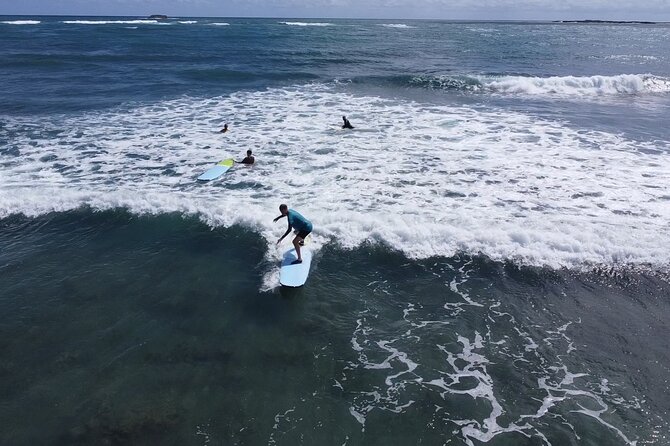
The description says travelers should have a moderate physical fitness level. That generally means you should be able to:
- paddle for short bursts
- get up from the water safely with assistance if needed
- stand on a moving board for brief moments
- handle the physical reality of wiping out (which is part of the learning curve)
You don’t need to be an athlete to start. But if you have mobility issues, severe balance limitations, or medical concerns related to exertion, you’ll want to think carefully and ask before booking.
Who should book this Haleiwa surf lesson
This lesson is a strong fit if you:
- want a true introduction to surfing on Oahu’s North Shore
- like the idea of being coached rather than figuring it out alone
- want private attention (solo learners) or shared attention (couples/siblings)
- appreciate safety-first instruction
It also makes sense for people who have surf goals beyond just standing up once. Intermediate-to-advanced riders are specifically mentioned as being in the right place for coaching, which suggests the instructors can tailor feedback to higher skill levels too.
If you’re traveling with non-surfers, it can still work because there appears to be some level of support for people who stay onshore.
Should you book Go Nuts Hawaii in Haleiwa?
Yes, if you want a lesson that treats first-time surfing like a real sport skill—with instruction that focuses on the fundamentals and on safety. The mix of lesson sizes, safety-trained instructors, and practical support (pickup, mobile ticket, local tips) makes it a good value at $99 per person for a roughly two-hour session.
If you dislike uncertainty, a private or semi-private lesson is the way to go. You’ll get the most direct coaching per person, which helps you turn North Shore chaos into something you can actually learn from.
And if you’re on the fence because you think you might not stand up right away: that’s normal. The real win is learning how to read waves and mount the board so your practice time at home (or on a later Oahu day) has direction.
FAQ
What is the duration of the Haleiwa surf lesson?
The lesson is about 2 hours (approx.).
What lesson sizes are available?
There are private lessons (1 student per instructor), semi-private lessons (2 students per instructor), and group lessons (3–4 students per instructor).
Is pickup offered?
Yes, pickup is offered.
Where is the meeting point?
The start point is 58-106 Kaunala St, Haleiwa, HI 96712, USA, and the activity ends back at the meeting point.
How much does it cost?
The price is $99.00 per person.
Do I need to book ahead?
On average, this is booked 24 days in advance.
Do they require good weather?
Yes. The experience requires good weather, and if it’s canceled due to poor weather, you’ll be offered a different date or a full refund.
Is the lesson only for my group?
Yes. The activity is described as private for your group.
Are service animals allowed?
Yes, service animals are allowed.