REVIEW · WORKSHOPS
Surf lessons for beginners in Waikiki
Book on Viator →Operated by Hawaiian Boy Surf School · Bookable on Viator
Surfing Waikiki is a real bucket-list move. A private beginner lesson here turns that wish into step-by-step coaching. You’ll learn ocean safety and basic technique first, then get into the water with focused feedback from a single instructor—often people like Preston, Jameson, or Scotty.
Two things I like a lot: you get private one-on-one attention (not a crowded group vibe), and the session is built to get you catching waves fast. The format is also friendly for first-timers and families, including teens, with instructors pushing confidence without rushing you.
One drawback to consider: the experience quality depends heavily on smooth scheduling and instructor arrival. A small number of reports mention mix-ups (like being bumped to a different time) or, in worst cases, a no-show—so it’s smart to confirm details the day before and plan some buffer time.
In This Review
- Key Things That Make This Waikiki Surf Lesson Worth Your Time
- Why Waikiki Is a Smart Choice for Beginner Surfing
- Private One-on-One Coaching: What You Actually Get
- Getting to the Duke Paoa Kahanamoku Statue Meeting Point
- Waikiki Beach Session: How the Lesson Moves From Sand to Waves
- Step one: Safety and ocean conditions
- Step two: Basic technique, then real attempts
- What the best moments feel like
- Surfboards, Guide Support, and What You Should Bring
- Price and Value: Is $100 Fair for a Private Lesson?
- Instructor Quality Is the Real Variable
- Two Hours in the Water: Why Timing Matters
- Who Should Book This Waikiki Surf Lesson
- Should You Book It?
- FAQ
- Where is the meeting point?
- How long is the surf lesson?
- Is this a private lesson or a group lesson?
- What’s included in the price?
- What is not included?
- What does the lesson cover before you get in the water?
- Will I be able to stand and catch a wave?
- What language is the tour offered in?
- Do I need a printed ticket?
- What’s the cancellation window?
- Is it suitable for beginners?
Key Things That Make This Waikiki Surf Lesson Worth Your Time
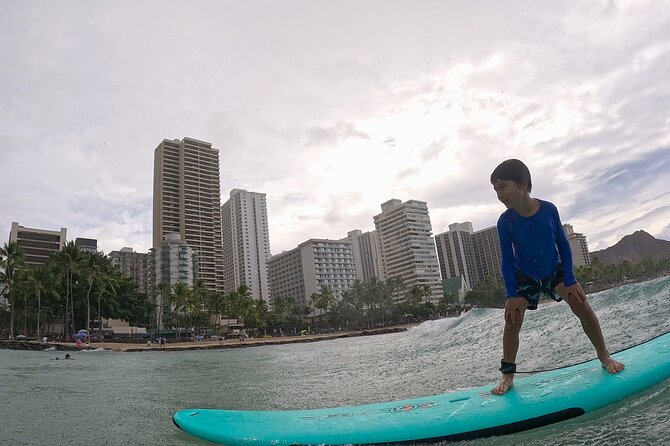
- Private, one-on-one coaching focused on your exact skill level
- Surfboards included, plus help getting set up so you can spend time learning, not struggling
- Waikiki Beach location tied to a legendary beginner-friendly scene
- Lots of practice attempts—the goal is getting you standing on a first wave
- Instructors like Preston, Jameson, and Scotty show up repeatedly in positive feedback, especially for patience and clear directions
Why Waikiki Is a Smart Choice for Beginner Surfing
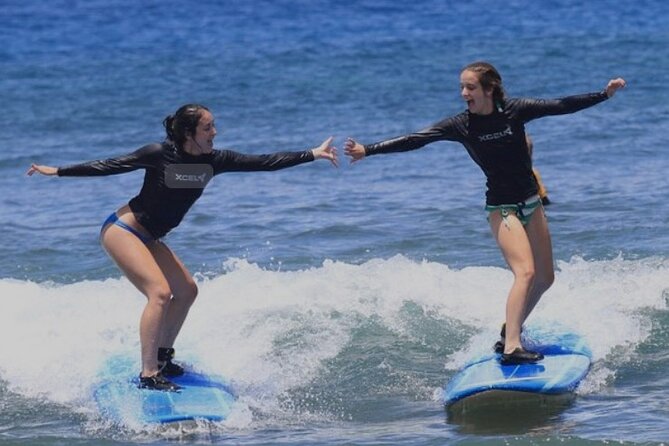
Waikiki is one of the easiest places to start because it’s set up for teaching. The beach is iconic, and the surf culture is right there. More importantly, the coaching here is designed for people who are stepping in for the first time.
In a beginner lesson, what matters isn’t just the waves. It’s learning how to move safely in the water, how to read what the ocean is doing that day, and how to time your attempt. That’s exactly what this lesson emphasizes: safety protocols, ocean conditions, and then basic techniques—before you’re left to figure anything out on your own.
You’re also in Honolulu, so you’re not committing to some far-off drive or complicated logistics. If you’re building a Waikiki itinerary, this fits naturally as a memorable morning or afternoon activity.
You can also read our reviews of more tours and experiences in Oahu


Private One-on-One Coaching: What You Actually Get
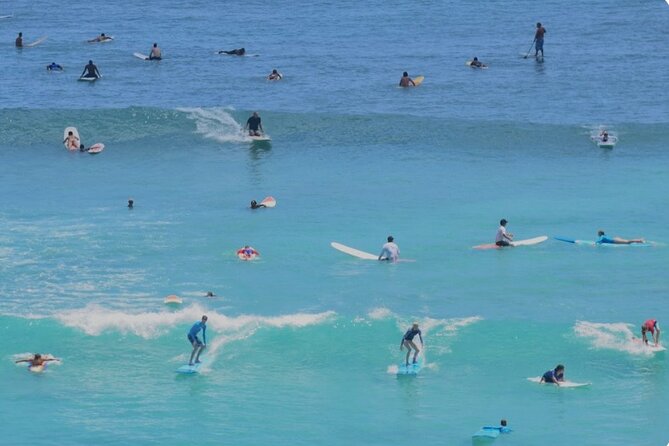
This is a private experience. That sounds obvious on a listing, but here it changes the whole feel of the lesson. With one instructor, your time in the water doesn’t get diluted.
Instead, you get coaching that targets real beginner trouble spots: board handling, paddling rhythm, positioning for a wave, and what to do once you’re up. Multiple recent lessons highlight instructors being patient and encouraging—especially with teens and kids—because that kind of calm matters when you’re learning something that’s both physical and a little intimidating.
You should also notice the feedback style. The positive accounts talk about simple step-by-step explanations and repeated attempts, with the instructor adjusting after each try. That loop—try, feedback, try again—is how beginners start to make progress quickly.
Getting to the Duke Paoa Kahanamoku Statue Meeting Point
Your lesson starts at the Duke Paoa Kahanamoku Statue on Kalākaua Ave in Honolulu. It’s a well-known spot in Waikiki, and that helps when you’re trying to meet on time without turning your trip into a scavenger hunt.
The lesson ends back at the same meeting point. That’s practical. No long transfer after you’re tired from paddling, and no guessing where to go once you’ve used up your energy.
Two details to keep in mind:
- You’ll want to arrive with enough buffer time to locate your instructor quickly.
- Some mixed feedback mentioned unclear directions at arrival, so it’s worth double-checking the meeting instructions and confirming your exact start time in advance.
Waikiki Beach Session: How the Lesson Moves From Sand to Waves
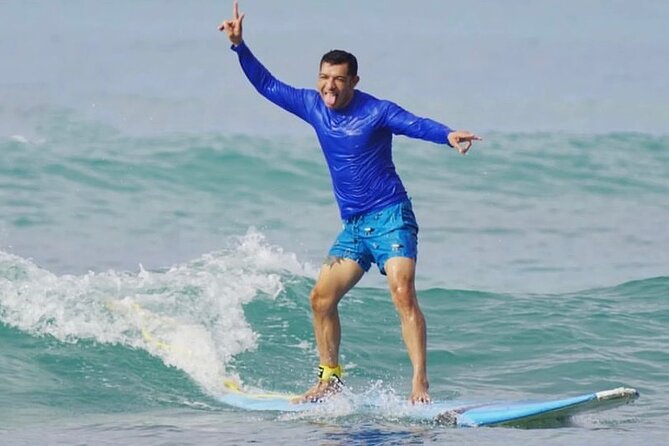
The session is about 2 hours. Think of it as a two-part arc: preparation first, then getting your body comfortable on the board.
Step one: Safety and ocean conditions
Before you hit the water, you’ll cover safety protocols and talk through the ocean conditions. For beginners, this is huge. It’s the part that keeps you from treating the waves like a random roller-coaster ride.
Instructors also spend time helping you understand what to expect from that specific area of Waikiki Beach that day. Even when the waves aren’t perfect, learning how to read what’s happening helps you make better choices during your attempts.






Step two: Basic technique, then real attempts
After the quick orientation, you’ll get into the water and start trying to catch waves. The lesson is built around getting you standing by the end. That doesn’t mean every wave is smooth or that every attempt works—but it does mean the instructor structure is aimed at progress, not just “show up and watch.”
Many strong reviews note that learners were standing within a short part of the session, including kids and teens. The private format helps here because the instructor can correct what’s preventing you from getting up—like paddling timing or board angle—while you’re still engaged.
What the best moments feel like
Expect the fun to start fast once you’re on your board. Several accounts describe the instructor focusing on catching as many waves as possible. In practice, that means fewer long waits and more chances to reset and try again.
One interesting detail from the instructor experience: the coaching often includes a simple progression. A few reviewers mention instructors using clear, repeatable steps and confidence-building cues. When you’re learning, clarity beats fancy talk every time.
Surfboards, Guide Support, and What You Should Bring
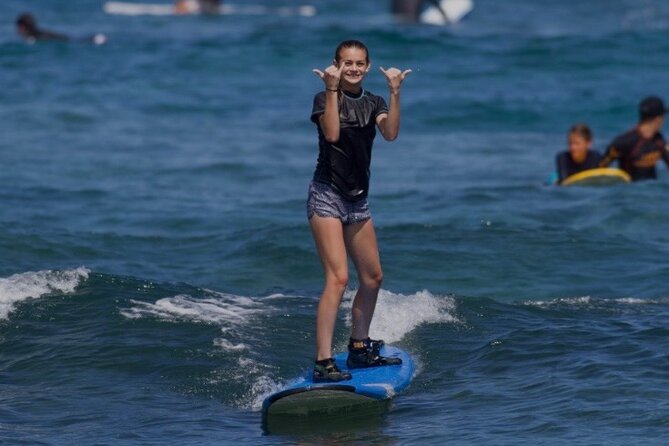
Included in the lesson:
- Surfboards
- Guide
Not included:
- Bottled water
There’s also a strong theme in positive feedback: you don’t have to carry the heavy board yourself. Some reviewers and instructor responses mention that surfboards are helped onto the sand and into position so you can maximize time learning. That matters because your arms are going to get worked paddling; you don’t want to waste strength on hauling gear.
About belongings: one mixed account said there wasn’t an obvious place to leave stuff, and that created stress mid-lesson. The follow-up response from the business stated they leave items with the concession stand desk attendant, with beach storage lockers available but requiring payment. Since that’s not always the same setup people expect, you should plan to keep essentials minimal and be ready to use the on-site option provided.
If bottled water isn’t included, plan to have it handled before you arrive.
Price and Value: Is $100 Fair for a Private Lesson?
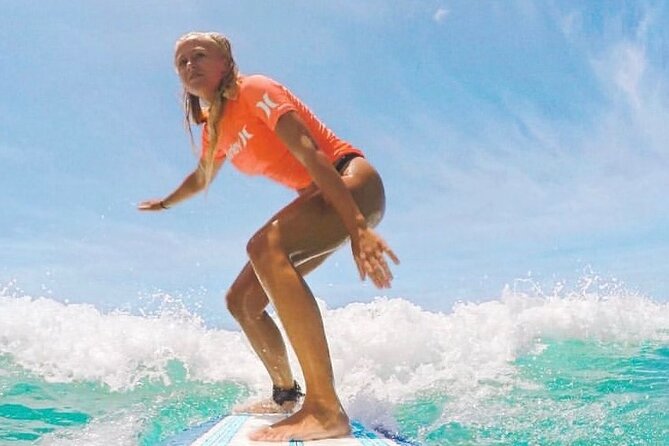
At $100 per person, this lesson sits in the “worth it if you’re serious about learning” category. Here’s why:
You’re paying for three things that group lessons usually dilute:
- Private instruction time with one instructor
- Surfboard access without extra rental steps
- A structured attempt plan aimed at standing on your first wave
If you’re the kind of person who learns faster with direct coaching, the value can be strong. Reviews repeatedly credit quick progress to personalized feedback—especially for first-time surfers who might get lost in the shuffle with larger groups.
On the flip side, one critique argued that a less-than-ideal lesson felt light on instruction and suggested renting a board alone could be cheaper. That’s a real consideration. If you’re expecting a certain level of hands-on teaching, you’ll want to be proactive: arrive on time, ask questions early, and communicate what you want most—standing quickly, confidence, or wave timing.
So yes, it’s not the cheapest way to surf. But for first-timers, $100 can feel reasonable when you’re getting targeted coaching and multiple practice attempts inside a two-hour window.
Instructor Quality Is the Real Variable
Most of the positive feedback reads like the same story with different names: patient teaching, clear explanation, and confidence that grows after each attempt.
Instructors mentioned in feedback include:
- Preston (a frequent name in successful lessons)
- Jameson
- Scotty
The common thread is how they break down surfing into understandable chunks. One-on-one lessons also make it easier for instructors to adjust in real time. If you’re stiff, they correct how you paddle. If you’re losing balance, they cue what to change on the board. If you’re anxious, they keep you moving without embarrassment.
That said, the lower ratings show that lesson quality can be disrupted by operational issues. A few reports described problems like being bumped, difficulty finding the instructor, or—in the worst cases—no instructor showing up. Those failures aren’t about surfing skill. They’re about reliability.
My advice: if you book, treat your confirmation as serious. Send a message the day before to verify your time and meeting spot. Then give yourself a little buffer on arrival.
Two Hours in the Water: Why Timing Matters
The lesson is approximately 2 hours, which is long enough to do more than a quick demo.
For beginners, short lessons can feel like whiplash: orientation happens, then you’re out on the water before you really understand your next steps. The two-hour structure gives time for:
- basics on shore
- getting positioned on the board
- repeated wave attempts with feedback
- a final push to stand and ride
Also, this business mentions that evening sessions can be favored because of sunset while surfing. If you have flexibility, that can be a pleasant bonus: you get a slower, more scenic end to the day while learning something physical and memorable.
Just remember: sunset conditions still depend on the ocean, and instructors will adjust based on what’s safe and workable that day.
Who Should Book This Waikiki Surf Lesson
This lesson is a good match if you:
- Are a first-time surfer and want private coaching
- Have kids or teens who need patience and confidence-building
- Want a focused learning experience instead of a group “tour” vibe
- Prefer a plan that aims for standing and riding within the session
It may be less ideal if:
- You’re extremely sensitive to schedule changes or last-minute adjustments
- You’re counting on a very exact time with tight wedding or event logistics and no flexibility
- You expect instructors to let you fully handle every step alone (some lessons help you with setup to save time)
If you’re booking for a special day, I’d still do it—but I’d also confirm everything early.
Should You Book It?
If your top goal is learning to surf quickly with one-on-one coaching in Waikiki, this is a strong option. The best feedback highlights fast confidence gains, lots of practice attempts, and instructors who explain in a way beginners can use immediately—especially when learning is shared by teens and families.
The main risk isn’t the surfing. It’s reliability. Because a small number of experiences reported no-shows or scheduling confusion, I’d book with eyes open. Confirm your meeting details and arrival time, and keep some slack in your schedule.
If you do that, you’re likely to walk away with the kind of story you’ll tell for years: your first standing moment on a Waikiki wave, guided step-by-step by someone who’s there to make sure you try again.
FAQ
Where is the meeting point?
The lesson starts at the Duke Paoa Kahanamoku Statue on Kalākaua Ave, Honolulu, HI 96815, USA.
How long is the surf lesson?
The surf lesson runs for approximately 2 hours.
Is this a private lesson or a group lesson?
This is a private tour/activity. Only your group participates.
What’s included in the price?
The included items are the surfboards and the guide.
What is not included?
Bottled water is not included.
What does the lesson cover before you get in the water?
You’ll go over essential safety protocols, understand ocean conditions, and learn basic techniques before trying to catch your first wave.
Will I be able to stand and catch a wave?
The lesson description states a guarantee to get you standing and surfing your first wave by the end of the lesson.
What language is the tour offered in?
The lesson is offered in English.
Do I need a printed ticket?
You’ll receive a mobile ticket.
What’s the cancellation window?
You can cancel up to 24 hours in advance for a full refund.
Is it suitable for beginners?
Most travelers can participate, and the lesson is specifically described as for beginners.
If you want, tell me your travel month and the age range of your group. I’ll help you pick a smart time window in Waikiki for the best odds of a smooth first surf experience.