REVIEW · MUSEUMS
Bishop Museum General Admission Ticket
Book on Viator →Operated by Bishop Museum · Bookable on Viator
Bishop Museum turns one ticket into an island story. I especially like the Hawaiian Hall Complex for grounding you in Hawaiian history and traditions, and the Science Adventure Center for making Hawaiʻi’s environment feel real through interactive exhibits. One catch: the campus is big, so if you rush, you’ll miss a lot.
You’re not just walking through one museum room. This is a whole collection of connected buildings—history, culture, astronomy, and hands-on science—so your day can flex from a quick browse to a deep stay.
Plan for a solid visit if you want the highlights. You should also dress for all-weather visiting, because it runs in all conditions, and you’ll want some moderate physical fitness for moving around the grounds.
In This Review
- Key highlights you’ll notice right away
- Bishop Museum in Honolulu: a whole campus, not a quick stop
- What your general admission includes (and what might cost extra)
- Hawaiian Hall Complex: start here for Hawaiian history and traditions
- Pacific Hall: migration stories with values and context
- Jhamandas Watumull Planetarium: the sky show depends on the day
- Richard T. Mamiya Science Adventure Center: interactive Hawaiʻi science
- Castle Memorial Building and rotating exhibits: worth a peek, not a mission
- How long should you plan? (Use the 1–8 hour range wisely)
- Getting value from a $38.95 general admission ticket
- Best for families, culture buffs, and rainy-day planners
- Should you book this Bishop Museum general admission ticket?
- FAQ
- Is the planetarium show included with the general admission ticket?
- What does general admission get you at Bishop Museum?
- Are parking fees included?
- How long does the visit take?
- Is the ticket available on a mobile device, and is it offered in English?
- What’s the cancellation policy?
Key highlights you’ll notice right away
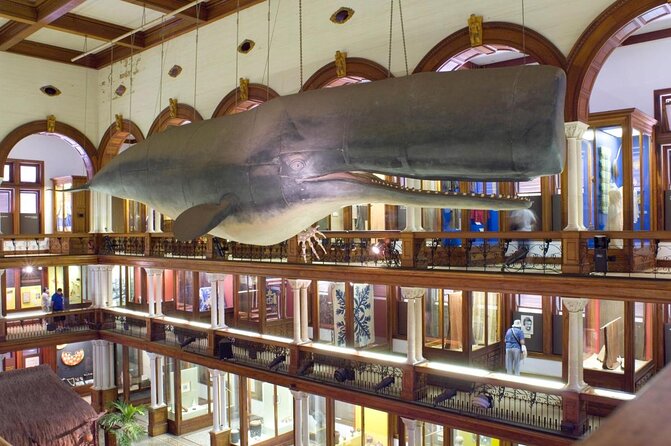
- Hawaiian Hall Complex gives you the clearest start on Hawaiian culture and history
- Pacific Hall focuses on origins, values, and how Pacific peoples migrated and settled
- Watumull Planetarium is where you can see the sky over Hawaiʻi and Polynesia (hours vary by day)
- Richard T. Mamiya Science Adventure Center links science to Hawaiʻi and Pacific environments, including lava themes
- Castle Memorial Building has changing exhibits, so it feels different from visit to visit
- General admission only covers entry; planetarium shows and special exhibits may cost extra
Bishop Museum in Honolulu: a whole campus, not a quick stop
Bishop Museum in Honolulu is built like a small world of its own. Founded in 1889, it’s earned a reputation as Hawaii’s top museum attraction, and the campus layout helps you move from culture to science without leaving the grounds.
Here’s the good part for your planning: a single general admission ticket can stretch from a focused 1 to 8 hours, depending on how you like to travel. If you enjoy reading and artifacts, you’ll naturally slow down. If you want broad strokes, you can still get a meaningful visit without turning it into a second job.
One more practical point: this is the kind of museum where you’ll do best if you pace yourself. The experience works on a rainy day too, because it’s mostly indoors, but you still need to be ready for outdoor transitions between buildings. The museum operates in all weather, so pack layers and wear shoes that handle campus walking.
You can also read our reviews of more tours and experiences in Honolulu


What your general admission includes (and what might cost extra)
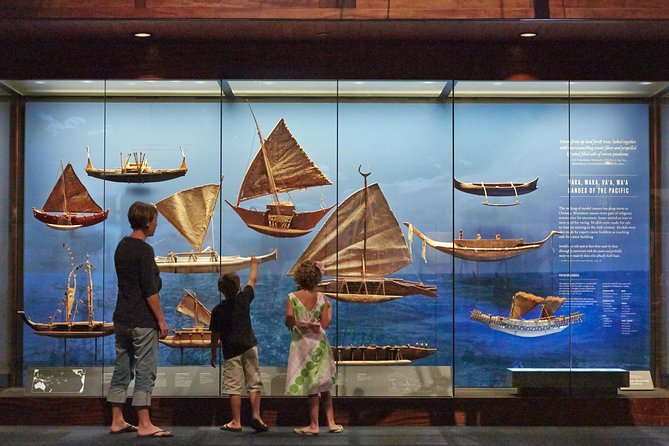
Your ticket gets you general admission into the Bishop Museum complex. That means you can explore the main exhibit spaces across the campus, including the Hawaiian Hall Complex, Pacific Hall, the astronomy-focused planetarium building area, and the Science Adventure Center.
What’s not automatically included is the experience programming that can run separately. The planetarium show is listed as optional, and special exhibits may have additional fees. Parking is also optional and typically costs extra, so if you’re driving, you’ll want to factor that into your day budget.
This setup can be good value if you treat the ticket as your base. You’ll enjoy plenty even if the optional shows don’t line up with your schedule. If you really want the planetarium and any special exhibits, you’ll get more out of your day by planning time around what’s running.
Hawaiian Hall Complex: start here for Hawaiian history and traditions
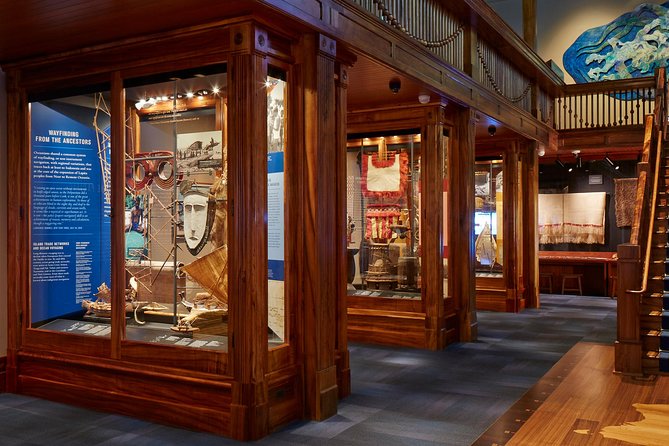
If you want the clearest entry point, head to the Hawaiian Hall Complex first. It’s described as the world’s premier showcase of Hawaiian history and culture, and that claim isn’t just marketing fluff. The whole point of this section is to help you understand Hawaiʻi from the inside out: stories, traditions, and historical context that make later exhibits click.
What I like about this approach is that it doesn’t treat culture like decoration. You’re learning a framework—how traditions connect to daily life and how history shaped what you see today. If you’re the type who wants to leave with names, timelines, and cultural context (not just photos), this is where you’ll get it.
One practical consideration: Hawaiian Hall is often where people slow down the most. If you start late in the day, you may feel like you’re sprinting through the parts that deserve time. Build your day so this isn’t your “just one more stop” location.
Pacific Hall: migration stories with values and context
After Hawaiian Hall, Pacific Hall gives you a bigger picture. It explores the origins, culture, and values of Pacific people, including migrations and settlement across Pacific Islands.
This hall is especially useful if you’re trying to understand Hawaiʻi as part of a wider ocean network rather than an isolated island. Even if you only read parts of what’s on display, the themes help you connect the dots between navigation, movement, community, and shared cultural patterns across the region.
There’s also a natural flow advantage. Pacific Hall doesn’t feel like it’s trying to compete with Hawaiian Hall—it complements it. If you give yourself time here, you’ll come out of the museum with a stronger sense of where ideas and people traveled, and why those journeys matter.
Jhamandas Watumull Planetarium: the sky show depends on the day
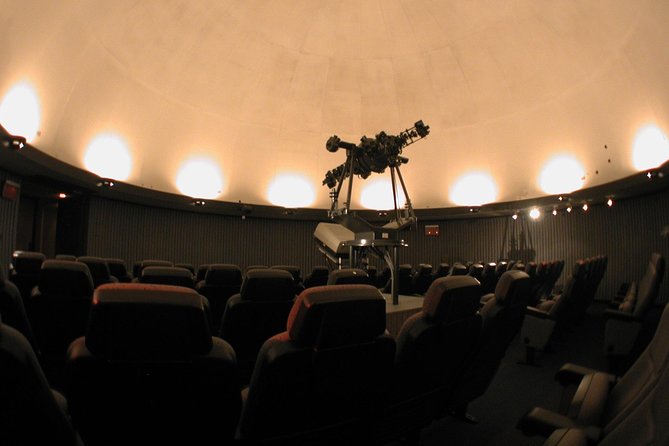
The Jhamandas Watumull Planetarium is the astronomy highlight built into the museum campus. It’s set up so you can explore the skies of Hawaiʻi and Polynesia in the ways ancient travelers once did, with an educational focus on astronomy.
Here’s the reality check: planetarium access can be tricky because the show itself is listed as optional, and some visitors find it closed or unavailable on certain dates. So don’t plan your entire day around the assumption that the show will definitely run.
My advice is simple: check the schedule as soon as you arrive. If a show is running, grab your spot and fit the rest of the museum around it. If it’s not, you can still enjoy the planetarium building area and the surrounding exhibits, but you’ll get more peace of mind if you treat the show as a bonus rather than the core plan.
You can also read our reviews of more museum experiences in Honolulu
Richard T. Mamiya Science Adventure Center: interactive Hawaiʻi science
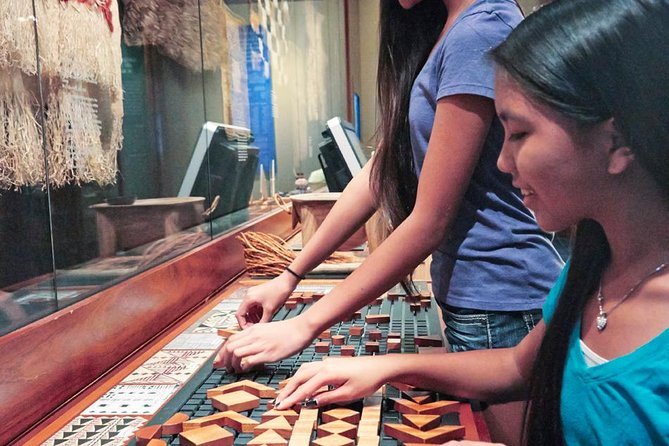
The Richard T. Mamiya Science Adventure Center is where the museum becomes hands-on. It focuses on science as it relates to Hawaiʻi and Pacific environments, and it includes learning about lava and how the Hawaiian Islands form. The experience is designed to be engaging for different ages, which is great if you’re visiting with kids.
One of the most memorable angles here is the lava theme. The museum experience highlights a live lava melting show, but schedules and demonstrations can vary by day. If you’re traveling with time pressure, don’t assume every demonstration will run on your exact visit hour—use it as something to look for, then enjoy the interactive science even if the live moment isn’t happening.
If you’re a parent or you just learn best by doing, this is the building that can keep your energy up when the history exhibits start to feel heavy. Even as an adult, you’ll likely find yourself slowing down to try things rather than just reading.
Castle Memorial Building and rotating exhibits: worth a peek, not a mission
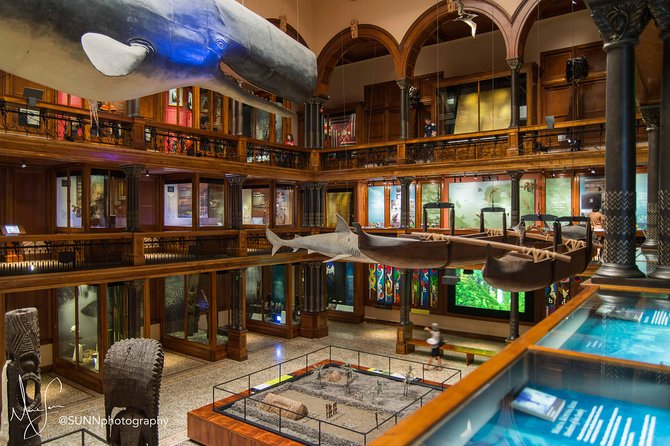
Castle Memorial Building is there for changing exhibits over limited time periods. That means it’s a flexible stop: sometimes it will feel like a major highlight, and other times it may be more of a “quick scan and keep moving” area, depending on what’s on when you visit.
If you’re trying to manage your time, I’d treat Castle Memorial as your flexible slot. Give it a reasonable chunk early, but don’t let it steal time from the halls that form the core of the museum’s Hawaiian and Pacific story.
Also, parts of the museum campus can have closures at certain times. So if you arrive and notice some areas aren’t accessible, don’t panic. Use the time to focus on the Hawaiian Hall Complex and the Science Adventure Center first, since those are consistently central to the museum’s identity.
How long should you plan? (Use the 1–8 hour range wisely)
The experience is listed as 1 to 8 hours, and that range matters. A short visit can work if you’re selective, but if you want to actually understand what you’re seeing, aim longer.
Based on how the museum is set up, I’d plan around your style:
- If you want photos plus key themes, start with Hawaiian Hall and one other major section, then stop when you hit your limit.
- If you’re serious about learning, you’ll want at least half a day so you’re not rushing through the story.
- If you’re traveling with kids or you love science interactives, plan extra time for the Science Adventure Center so you’re not skipping the fun parts.
The museum is big enough that last-minute timing can feel frustrating. A common mistake is waiting too long to start, then discovering closing time cuts off the deeper reading and the hands-on activities. Start early whenever you can, even if you don’t know exactly what you want to do first.
Getting value from a $38.95 general admission ticket
At $38.95 per person, Bishop Museum isn’t a bargain ticket, but it can feel like good value if you use the campus breadth. You’re paying for a major Hawaiian and Pacific culture institution, plus access to indoor learning across multiple exhibit areas.
The best value strategy is to pair the ticket with your priorities:
- If you care most about Hawaiian and Pacific history, spend your time in Hawaiian Hall Complex and Pacific Hall.
- If you’re traveling with children or you learn through hands-on activities, protect time for the Science Adventure Center.
- If you’re interested in the planetarium experience, treat it as optional but worth checking first—when it runs, it can help connect the culture and ocean navigation themes to the sky.
One caution for budget math: prices can vary depending on the booking channel and what’s offered for your exact date. At least one visitor reported seeing a lower ticket price at the museum on their day compared to what they paid through a third-party booking. That’s not guaranteed, but it’s a reason to verify pricing if you’re comparing options.
Best for families, culture buffs, and rainy-day planners
This is a strong choice if you want a single stop that mixes culture and science. The museum’s design lets you go from Hawaiian history and Pacific migrations to astronomy and lava-themed learning without hopping between venues.
It’s also a great fit when the weather turns. Since it runs in all conditions and many spaces are indoors, you can make the museum your anchor plan instead of gambling on outdoor activities.
If you’re visiting with moderate mobility needs, plan for campus walking and stairs between buildings. The museum doesn’t claim full step-free access details in the information you have here, so it’s smart to wear supportive shoes and keep a slower pace.
Should you book this Bishop Museum general admission ticket?
I’d book it if you want a high-quality, indoor-friendly way to understand Hawaiian culture and Hawaiʻi’s natural world in one day. The museum’s hall-to-hall flow makes it easy to stay interested, especially with Hawaiian Hall Complex and the Science Adventure Center doing the heavy lifting for context and hands-on learning.
Skip or adjust expectations if you’re only interested in one show. The planetarium show is optional, special exhibits can cost extra, and some areas may be closed depending on the day. Also, bring time and patience—this is a big campus, and rushing cuts value fast.
If you’re aiming for a balanced Honolulu day, this ticket is one of the easiest choices: solid learning, multiple styles of exhibits, and enough flexibility to match your pace.
FAQ
Is the planetarium show included with the general admission ticket?
The planetarium show is listed as optional, so it’s not automatically included with general admission.
What does general admission get you at Bishop Museum?
General admission gives you entry to the Bishop Museum exhibit spaces across the campus.
Are parking fees included?
No. Parking fees are listed as optional and not included.
How long does the visit take?
The experience duration is listed as 1 to 8 hours, so you can plan a quick visit or a longer stay.
Is the ticket available on a mobile device, and is it offered in English?
Yes. You get a mobile ticket, and it’s offered in English.
What’s the cancellation policy?
You can cancel for a full refund up to 24 hours in advance. If you cancel less than 24 hours before the start time, the amount paid is not refunded. The information also notes you’ll be offered a different date or a full refund if canceled due to poor weather.