REVIEW · 2-HOUR EXPERIENCES
Oahu: Waikiki 2-Hour Semi-Private Surfing Lesson
Book on GetYourGuide →Operated by Kai Sallas' Pro Surf School Hawaii · Bookable on GetYourGuide
First waves on Oahu can be oddly calming. A 2-hour semi-private lesson near Waikiki pairs a secluded beach with pro coaching that builds real confidence fast. I like how you start with a land lesson covering currents, tides, and surf etiquette, and I like that you get tailored board-and-gear help. One drawback to plan for: instruction is English, so language needs matter.
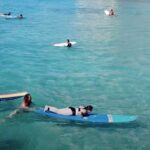
You’ll spend about 20 minutes on land learning how waves work, how to position yourself, and how to stay safe. Then you’ll gear up with equipment provided and move into the water to practice paddling, turning, and standing up on a board.
If you’re hoping for a quick party-board ride with no instruction, this isn’t that. But if you want clear steps, a small group vibe, and real technique, this lesson is a smart way to start surfing on Oahu.
In This Review
- Key things you’ll notice
- Waikiki’s quiet side: learning on a secluded beach
- Two hours that start on land: waves, currents, tides, and etiquette
- Gear up right: surfboard, leash, rash-guard, reef and booties
- In the water: paddling, turning, maneuvering over crashing waves
- Hawaiian surf culture: learn the why behind the rules
- Who this semi-private lesson suits best (and who should skip it)
- Price and value: is $156 for 2 hours worth it?
- Quick planning tips so your lesson feels smooth
- Should you book the Waikiki 2-hour surf lesson?
- FAQ
- How long is the Waikiki 2-hour semi-private surfing lesson?
- Where does the surfing lesson take place?
- What is included in the lesson?
- What should I bring with me?
- Is the instructor fluent in English?
- Is this lesson suitable for beginners?
- Are there any age or swimming ability requirements?
Key things you’ll notice
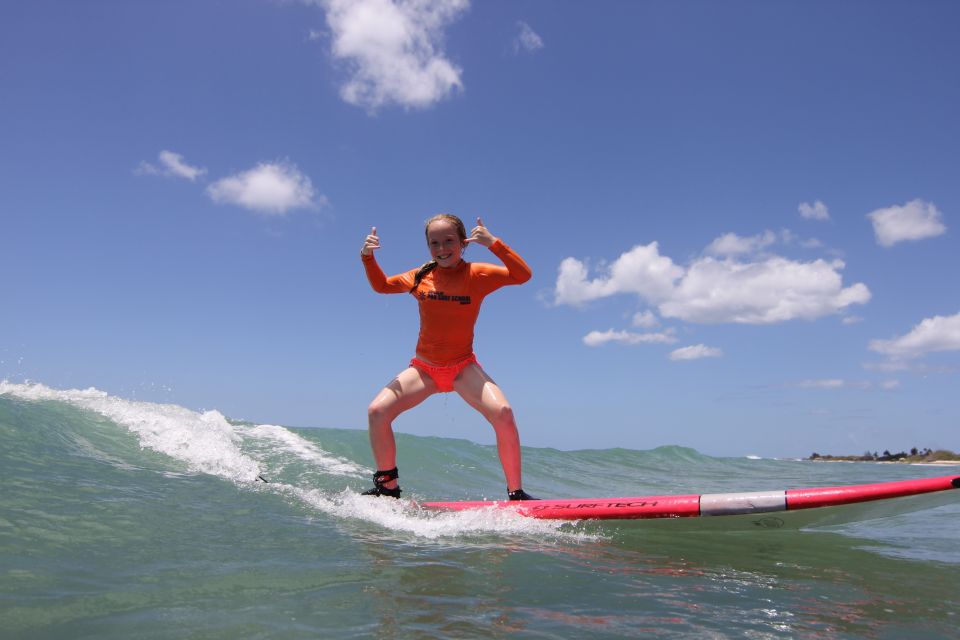
- Secluded beach near Waikiki: less of the Waikiki crowd energy, more room to learn your first moves
- 20-minute land start: waves, currents, wind, tides, positioning, etiquette, and safety before you get wet
- Equipment matched to your skill: surfboard, leash, rash-guard, reef, and booties are included
- Pro coaching in the water: paddling technique, turning, maneuvering, then standing and riding waves
- English-only instruction: great if you speak English; limiting if you need another language
Waikiki’s quiet side: learning on a secluded beach
Waikiki is famous for a lot of things, but when you’re learning to surf, noise and crowding can be your enemy. This lesson is set up near Waikiki, yet it’s described as happening at a secluded beach, which matters more than you’d think. Less chaos means fewer interruptions while you’re figuring out paddling rhythm and where to position yourself.
The other big reason this works is the instructor approach. The lesson is built around making sure you understand what’s happening out there—waves, currents, wind, and tides—not just what to do with your arms. That kind of coaching helps you stop guessing and start surfing with a plan.
You can also read our reviews of more private tours in Oahu

Two hours that start on land: waves, currents, tides, and etiquette
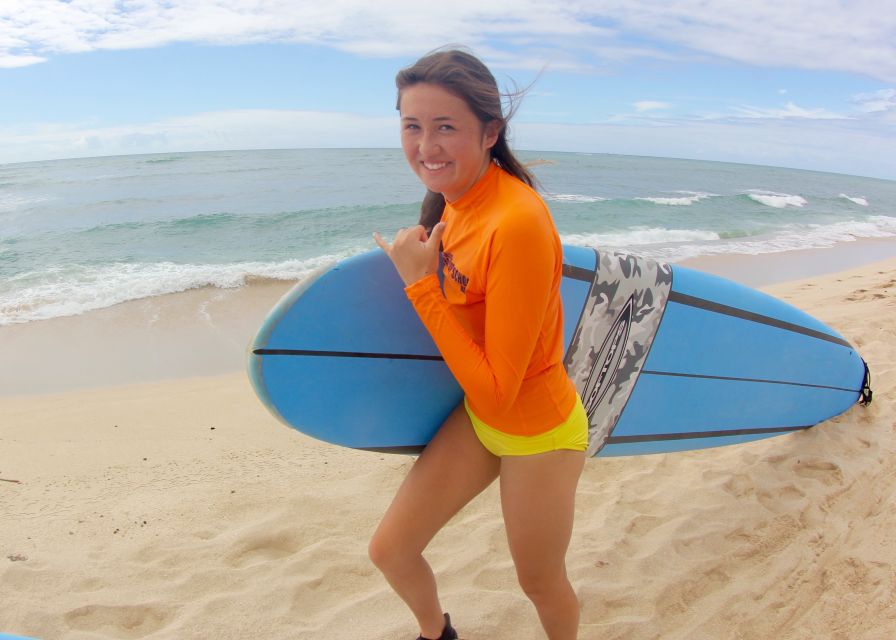
You don’t jump straight into the ocean. You start with a quick land session of about 20 minutes, and it’s the part that often saves beginners from frustration later.
Here’s what you learn on land:
- how waves behave and what to look for
- the role of currents and tides (so you’re not fighting the ocean blindly)
- how wind affects the surface and your timing
- proper positioning so you can stand up when you have the right chance
- surf etiquette—how to share waves and avoid dangerous moves
- water safety basics that keep things calm and controlled
Then you get a brief on your equipment: how to use your board, leash, and fins. Even if you’ve seen surfing before, these small details change how your session feels in the water. A leash you understand equals fewer panic moments. Fins you use correctly mean better control as you start turning.
Gear up right: surfboard, leash, rash-guard, reef and booties
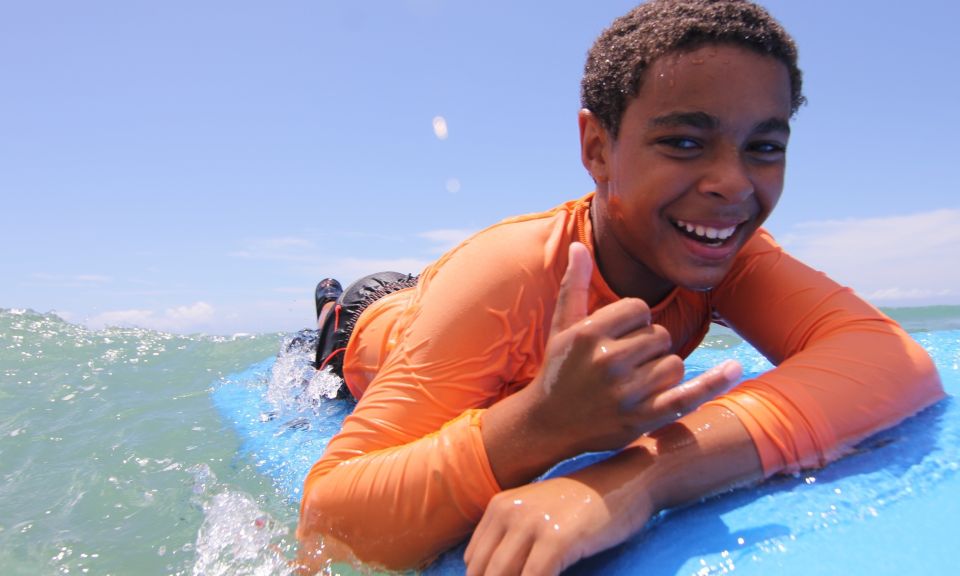
You don’t need to hunt down surf gear in advance. The lesson includes everything you’ll need:
- surfboard
- leash
- rash-guard
- reef and booties
That list is more than convenience. It’s about keeping you comfortable long enough to practice. A rash-guard helps with sun and board friction. Reef and booties protect your feet, which matters when you’re launching and walking around near the waterline.
You also get equipment based on your ability level, so you’re not stuck on a board that makes every attempt harder than it needs to be. On a first surf lesson, small mismatches can turn a fun session into a body workout with no payoff. This setup tries to prevent that.
Two practical add-ons: bring a towel and sunscreen. You’ll be in the sun, and you’ll want to dry off fast after.
In the water: paddling, turning, maneuvering over crashing waves
Once you’re geared up, the real work starts. The instruction focuses on moving over and through the kind of waves you’ll actually face at the beach.
Your coaching in the water covers:
- how to maneuver over crashing waves (so you’re not just getting tossed)
- paddling technique (this is where speed and balance begin)
- turning and maneuvering skills
- standing up and then riding waves
For beginners, the big win is learning paddling and positioning before you try to stand. Standing too early can feel like you’re doing everything right and still not going anywhere. With the guidance here, you practice the steps that make standing possible.
For more experienced surfers, this can still be useful. Even if you can surf, learning local conditions—how waves break here and how currents affect your entry—can help you clean up your approach. This lesson is designed for complete beginners and also for surfers who want to learn the local setup.
Hawaiian surf culture: learn the why behind the rules
Surfing in Hawaii isn’t just a sport. It’s tied to respect for the ocean and to shared wave etiquette.
During the land session, you’ll cover surf etiquette and water safety, and that’s where the cultural side becomes practical. Etiquette keeps you from creating danger for yourself and others. Water safety keeps your session short, steady, and injury-free.
You’ll also get familiar with Hawaiian surf culture in the way the lesson is taught, not in a lecture style. That means you learn the reason behind the rules—what to do, what not to do, and how to make space for other surfers.
Think of it as learning the local game, not just catching waves.
You can also read our reviews of more tours and experiences in Oahu




Who this semi-private lesson suits best (and who should skip it)
This is a great fit if you want:
- a professional instructor guiding you step-by-step
- a small group setting where you can actually get feedback
- a mix of land instruction and hands-on ocean practice
- both beginners and returning surfers who want local conditions
It’s also clearly not for everyone. The experience is not suitable for:
- pregnant women
- people with back problems
- people with mobility impairments
Also, kids matter here. Children 10 years of age and under (or weak swimmers) are required to take a private one-on-one lesson for safety reasons. That’s worth taking seriously. Surfing involves wipeouts, and the ocean can move fast.
Price and value: is $156 for 2 hours worth it?
At $156 per person for a 2-hour lesson, it’s not a “cheap try surfing once” deal. But value depends on what you get.
Here’s what you’re paying for:
- professional instruction in both land fundamentals and in-water coaching
- equipment included: surfboard, leash, rash-guard, reef, booties
- a setup geared toward skill-level choice, so you’re less likely to struggle due to poor board matching
If you had to rent a board, buy a rash-guard, and piece together safety gear, the economics start to look different fast. Plus, the instructional part is the real cost driver. Learning to surf safely takes coaching, not luck.
For me, the strongest value signal is the structure: you learn key ocean concepts first, then you practice the technique that those concepts enable. That reduces the common beginner problem: spending the whole session falling without a clear reason.
Quick planning tips so your lesson feels smooth
These are small things that can make a big difference:
- Bring your towel and sunscreen so you can dry off and protect your skin.
- If English isn’t your strong language, plan carefully: instruction is listed as English.
- Wear sun-protective layers when possible, even with a rash-guard.
- Expect some falling. That’s normal. Your job is to learn the next step after each attempt, not to avoid getting wet.
Should you book the Waikiki 2-hour surf lesson?
Book it if you want a guided start with a calm learning setup near Waikiki, clear technique coaching, and gear taken care of. The biggest selling points are the secluded beach, the land lesson that covers ocean fundamentals (currents, tides, positioning, etiquette), and the in-water focus on paddling, turning, and standing.
Skip or rethink it if you need instruction in a different language than English, or if the listed restrictions apply to you or your group. Also be honest about swimming comfort. The safety rules for young children and weak swimmers aren’t there for paperwork—they’re there because the ocean doesn’t negotiate.
If you’re ready for a real learn-to-surf session with pro help, this one is a strong choice for Oahu.
FAQ
How long is the Waikiki 2-hour semi-private surfing lesson?
The lesson lasts 2 hours.
Where does the surfing lesson take place?
It happens at a secluded beach near Waikiki on Oahu, Hawaii.
What is included in the lesson?
The lesson includes a surfboard, leash, rash-guard, reef, and booties.
What should I bring with me?
Bring a towel and sunscreen.
Is the instructor fluent in English?
Yes. The instructor provides instruction in English.
Is this lesson suitable for beginners?
Yes. It’s designed for complete beginners and also for advanced surfers who want to learn local conditions.
Are there any age or swimming ability requirements?
Children 10 years of age and under, or weak swimmers, are required to take a private one-on-one lesson for safety reasons.