REVIEW · WORKSHOPS
Private & Semi-Private Surf Lessons in Waikiki
Book on Viator →Operated by Ty Gurney Surf School · Bookable on Viator
Learning to surf starts with one great coach.
This 2-hour Waikiki experience uses Grays Beach as the training ground, and you get real coaching that aims at standing up while you’re actually on the board. I love the focus on water time (not a long classroom setup), and I like that the package includes the board and a rash guard so you can show up light and ready.
The one consideration is physical: even as a beginner, your arms and legs can feel it afterward. If you’re expecting a gentle stroll, swap your expectations now and plan for sore muscles the next day.
In This Review
- Key things to know before you go
- Why Grays Beach Works So Well for Beginners
- From 205 Lewers St to Your First Waves in About Two Hours
- What’s Included: Board, Rash Guard, Coaching, and Storage
- Coaching That Targets Standing Up, Not Just Surviving
- The Real Safety Piece: Briefing First, Then Into the Water
- Culture on the Beach: Surfing as More Than a Checklist
- Gear and Comfort: Rash Guard Helps You Learn Faster
- Video and Photos: Worth It If You Want Proof You Improved
- Price and Value: What You Get for $102.80
- Who Should Book This Surf Lesson in Waikiki?
- Should You Book It?
- FAQ
- Where do I meet for the surf lesson?
- How long is the lesson?
- What’s included with the lesson?
- Is a video or photo package included?
- Do I need to bring my own surfboard?
- Is gratuity included in the price?
- Can I cancel and get a full refund?
Key things to know before you go
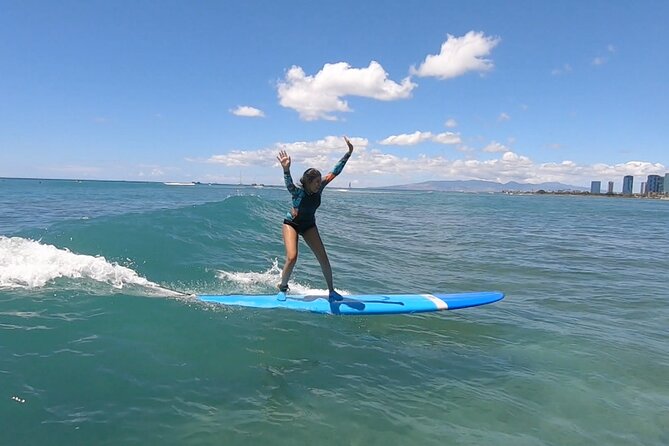
- Grays Beach in Honolulu: a classic Waikiki-area spot for first serious waves
- A short land lesson first: basic technique plus a safety briefing before you hit the water
- Included surf gear: surfboard and rash guard mean less hassle and better value
- Instructor focus: private-style attention that helps you correct fast
- Optional photo/video add-ons: you can buy memories, but you need to plan ahead
- Storage at the shop: a safe place for personal belongings while you surf
Why Grays Beach Works So Well for Beginners
If you’re learning, you want a beach setup that’s familiar to the local surf rhythm and practical for coaching. This lesson is centered at Grays Beach in Honolulu, which gives your instructor a consistent place to guide you through the basics: how to balance, how to get into position, and how to handle the ocean safely.
I also like that the experience is framed as more than a stunt lesson. Surfing is a meaningful part of Hawaiian culture, and the way this experience is run signals respect for that. Even when you’re just trying to stand, it’s still tied to the bigger idea: learning the ocean with humility, not bravado.
One more beginner-friendly angle: timing can make a difference. An early session can feel extra comfortable because the water is warm and the sun isn’t yet blasting, which helps you stay relaxed as you learn. If you’re sensitive to heat, pick your start time with that in mind.
You can also read our reviews of more private tours in Oahu

From 205 Lewers St to Your First Waves in About Two Hours
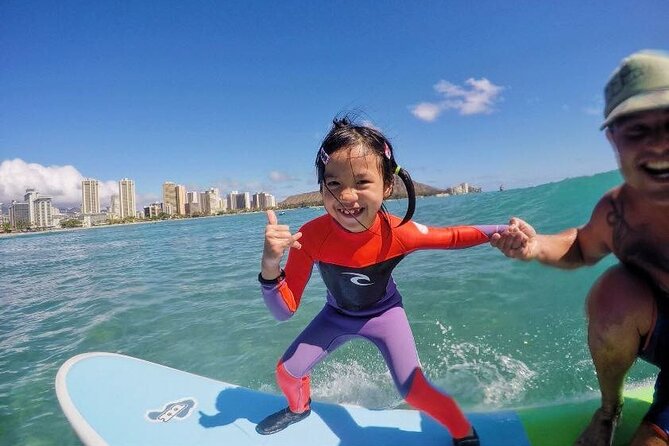
Everything starts at 205 Lewers St, Honolulu. You meet the team, then you’ll gear up and store your personal belongings at the shop. This part matters more than it sounds. If your phone, keys, and bag aren’t handled correctly, your focus gets scattered right before you get in the water.
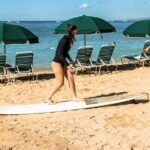
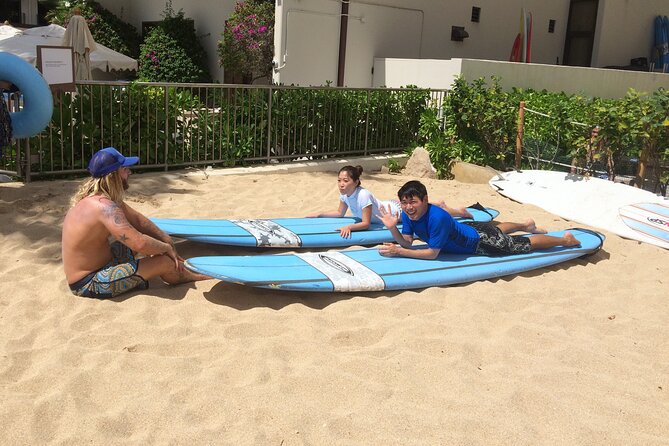
Once you’re ready, you head to the sand for a short land lesson and safety briefing. This is where the coach helps you understand what to do before you’re in the chaos of waves. Think stance, what to watch, and how to follow instructions quickly. The goal is simple: you should get your bearings fast.
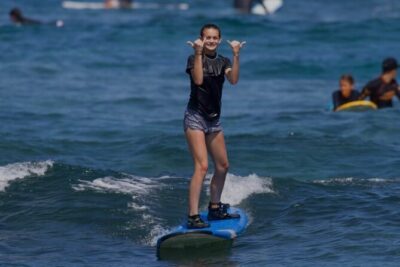
Then it’s time to go into the water and catch waves. The timing is built for momentum, not waiting. Even the beginner stories include real success during the session, with some people getting up after about an hour.
The whole experience loops back to the meeting point at the end, so you’re not stuck figuring out logistics after your lesson. That’s especially helpful if you’re juggling beach plans, lunch reservations, or shopping afterward.
What’s Included: Board, Rash Guard, Coaching, and Storage
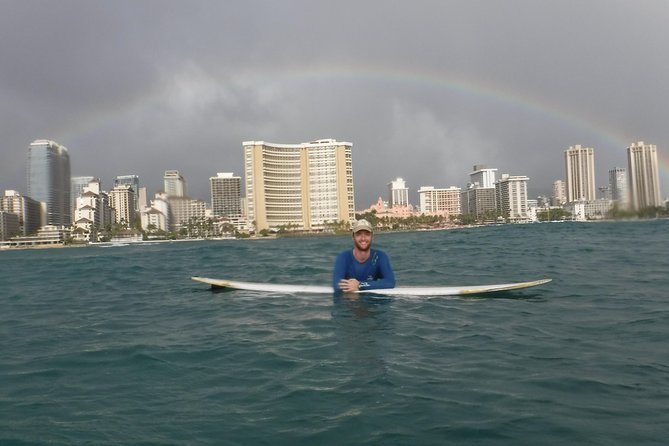
At $102.80 per person for roughly two hours, the value comes from what’s already covered. You get the surfboard and a rash guard shirt, so you’re not paying extra for basic gear or worrying about fit and suitability. That can turn what feels like a pricey activity into a straightforward one.
You also get the introductory land lesson, which is key for beginners. Surf schools that skip technique foundations often leave you stuck guessing. Here, you’re set up to learn the basics in a way that transfers to the moment you paddle out.
Another underrated include: a safe place to store your belongings. It’s hard to enjoy a lesson when you’re anxious about your stuff. Having a clear storage setup lets you focus on breathing, listening, and learning.
And yes, you should expect lots of waves. The model is built around keeping you active, which is how you improve faster and have more fun instead of simply trying to survive your first wave attempt.
Coaching That Targets Standing Up, Not Just Surviving
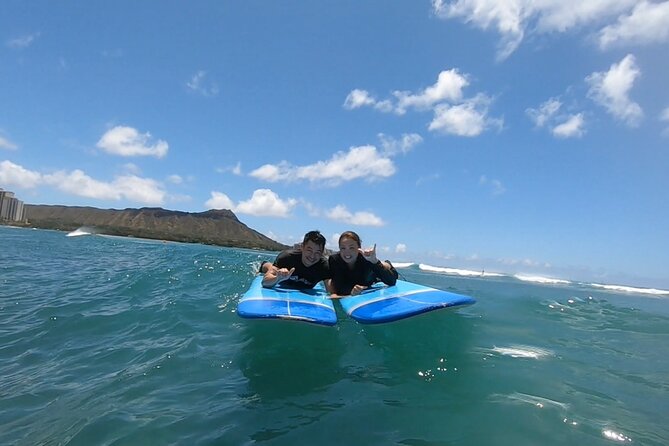
This lesson is built around one thing: helping you stand. The best part isn’t just that you’re getting coaching. It’s that the instruction is tuned to your level so you can adjust quickly when it matters.
In the real-world feedback, instructors named Kevin, Harry, Elliott, and the kids-coach team of Ty, Dakota, and James come up again and again. What connects these stories is the same theme: encouragement paired with technique. The coach keeps momentum going, reminds you what to do, then watches for the small fixes that change outcomes.
A lot of beginners worry they’ll feel awkward the whole session. Instead, the teaching approach often leads to standing earlier than people expect. One review notes that after about an hour, they could stand up, which tells you this isn’t a slow drip of practice. It’s structured coaching with wave time that lets you apply corrections right away.
If you’re bringing kids, pay attention to how the coaching team handles comfort. In the family-focused feedback, instructors were described as funny, encouraging, and in-sync with kids learning their first time. That kind of tone helps because surfing isn’t just physical. It’s emotional too. You need someone who can keep you calm when you wipe out.
The Real Safety Piece: Briefing First, Then Into the Water
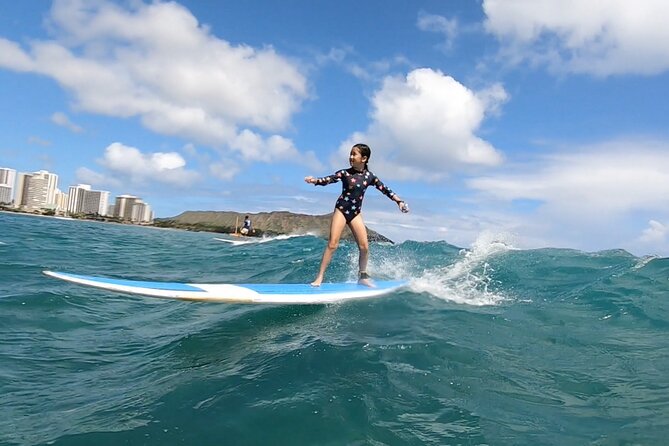
The ocean is not a classroom, so a safety briefing has to come before the fun. Here, you start with a land lesson that includes water safety basics. That sets expectations and helps you avoid the two biggest beginner mistakes: ignoring instructions because you’re excited, or getting too tense because you don’t understand what’s coming.
Once you’re in the water, your instructor becomes your filter. You don’t need to memorize everything. You just need to listen, follow, and try again. That’s how you improve safely—one correct movement at a time.
The best way to get the most out of this safety portion is to treat it like part of the lesson, not a formality. If the coach says to position your body a certain way, do that before you paddle. It can save energy and reduce frustration.
Also, remember what the package supports. This lesson is offered in English, and the setup is designed so most people can participate. If you have questions about how the coaching will work for your specific comfort level, ask before you head into the water.
You can also read our reviews of more tours and experiences in Oahu




Culture on the Beach: Surfing as More Than a Checklist
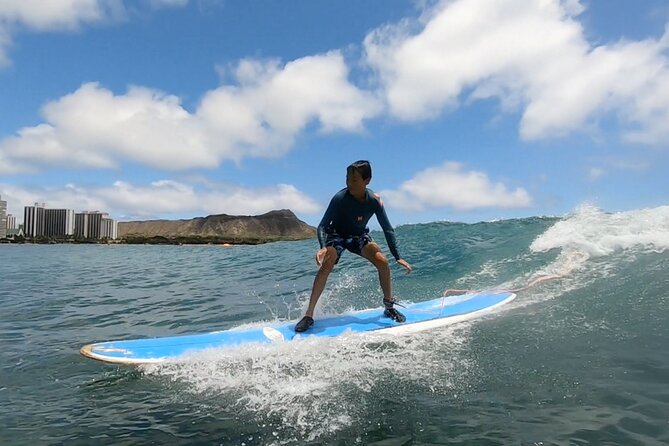
The highlight calls out that surfing is an important part of Hawaiian culture. You’ll feel that in the way the lesson is presented and taught: surf isn’t treated like a generic amusement.
In practical terms, that means you’re encouraged to approach the activity with respect—respect for the ocean, respect for local traditions, and respect for the instruction you’re given. You don’t need a lecture in order to show that. You just need to stay attentive, follow guidance, and take the coaching seriously while you’re still learning.
If you want to make your lesson feel more meaningful, one easy move is to listen for the cultural context during the briefing and don’t rush through it. The technique is the main goal, but the cultural frame helps you learn with the right mindset.
That mindset also makes you a better student. When you’re not treating wipeouts like a problem to hide, you’re more likely to try again immediately—exactly what you want in your first session.
Gear and Comfort: Rash Guard Helps You Learn Faster
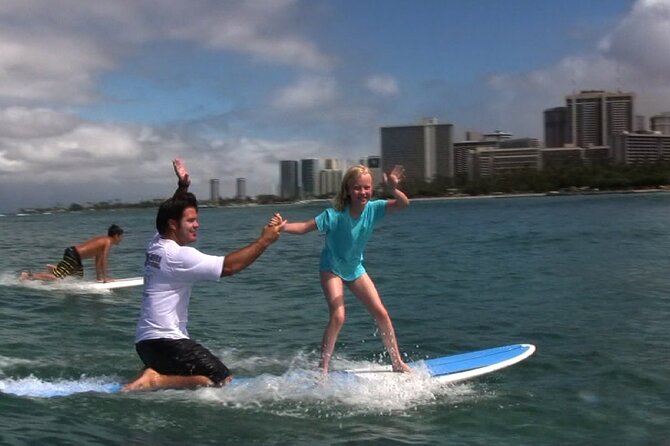
Included rash guard matters more than it sounds. It can reduce friction, help you feel more comfortable in the water, and keep your focus on balance and timing instead of fussing with an outfit.
You’re also dealing with saltwater and sun exposure, even on cooler mornings. The lesson length is short enough that you can handle it, but you still want to think about comfort. Wear what you’re comfortable moving in, and show up ready to get wet.
One review points out that the water is warm around an early start time, and the sun may not be fully out yet. That’s a good recipe for learning because you stay relaxed and your body doesn’t overheat while you’re practicing.
If you’re prone to feeling cold easily, plan your session timing with that in mind. Warmer water can mean you’ll last longer on the board and listen better to coaching cues.
Video and Photos: Worth It If You Want Proof You Improved
This experience doesn’t automatically include photos and videos. You can add them, but you have to book in advance. One review specifically mentions a video package priced at $35 and notes you need to ask about it before the lesson.
For many beginners, the hardest part isn’t learning. It’s believing you learned. Wipeouts happen fast, and success can feel blurry while you’re trying to balance. Video gives you a second look with calm eyes later, which helps you understand what worked.
If you’re celebrating a birthday or bringing someone young, video also becomes a memory you can rewatch. The family feedback included a paid video package that captured both smiles and wipeouts, which is exactly what you want from a first surf session: real, not staged.
If you’re watching your budget, skip the add-on and just focus on surfing. But if you want a tangible record, plan ahead so you’re not making decisions mid-lesson.
Price and Value: What You Get for $102.80
Let’s talk about the cost with clear eyes. At $102.80 per person for around two hours, you’re paying for several things that other lessons often charge separately: a board, rash guard, a land-based intro, safety guidance, and guided wave time. You’re also paying for instructor attention, which affects how quickly you can fix technique.
The value gets stronger if you’re a true beginner. Gear included means you don’t have to rent or buy essentials. And since your time on the water is coached, your learning curve tends to be faster than if you were figuring it out on your own.
The optional add-ons are separate. Photos and videos cost extra if you want them, and gratuity is optional. That’s normal for tours like this. The key is you can still get a complete lesson experience without any extras.
If you’re comparing options, think in terms of outcomes: do you want a guided attempt with lots of waves, or do you want a generic rental and hope for the best? This lesson is priced for the first one.
Who Should Book This Surf Lesson in Waikiki?
This is a strong fit if you want structure and coaching. If your goal is to stand on the board, learn basics quickly, and leave with a true skill start, you’ll like how the lesson flows: land lesson first, then the water while the learning is fresh.
It’s also a good choice for families. Several reviews mention kids having a blast with positive instructors and catching waves, which is exactly what parents want from a birthday or special outing.
If you’re traveling solo and want focused instruction, private-style attention is a big plus. You’re not sharing attention with strangers in a way that delays corrections.
And if you’re worried about physical difficulty, plan for effort but keep expectations realistic. Some people get up quickly. Others take more time. Either way, soreness can happen after the session, so build in a relaxed afternoon afterward.
Finally, if you need practical logistics, the meeting point is set at 205 Lewers St and the location is near public transportation. That makes it easier to plug into your day without a complicated ride plan.
Should You Book It?
If you’re set on learning to surf in Waikiki and you want the lesson to be guided from first steps to actual waves, I’d book this. The included board and rash guard lower your friction, the land lesson helps you learn the right way, and the coaching approach is aimed at standing up with real wave time.
Skip it only if you want a low-effort beach activity with minimal physical impact. Surf is work, and even a great lesson leaves you sore.
FAQ
Where do I meet for the surf lesson?
You’ll meet at 205 Lewers St, Honolulu, HI 96815, USA. The activity ends back at the meeting point.
How long is the lesson?
The surf lesson runs about 2 hours.
What’s included with the lesson?
The package includes a surfboard, a rash guard shirt, an introductory land lesson covering basic skills and water safety, lots of waves with surf instructors, and a safe place to store your belongings.
Is a video or photo package included?
No. Photos and videos are optional and must be booked in advance.
Do I need to bring my own surfboard?
No. A surfboard is provided as part of the lesson.
Is gratuity included in the price?
No. Gratuity is optional.
Can I cancel and get a full refund?
Yes. You can cancel for a full refund up to 24 hours before the experience starts. If you cancel less than 24 hours before, the amount paid is not refunded.