REVIEW · HELICOPTER TOURS
Royal Crown of Oahu – 60 Min Helicopter Tour – Doors Off or On
Book on Viator →Operated by Rainbow Helicopters · Bookable on Viator
One hour, and Oahu looks brand new. You can choose doors-off thrill or doors-on comfort, then fly a tight circuit that strings together the big-name hits like Diamond Head, Sacred Falls, Dole Plantation, and Pearl Harbor. I like that the route stays focused on the places that actually define Oahu from above, especially the close pass near Sacred Falls.
A possible drawback: weather can force last-minute changes or cancellations, and on doors-off flights you’ll want to plan for wind-chill and seat-position differences.
In This Review
- Key things you’ll notice on this Royal Crown flight
- Getting airborne from Honolulu: the Rainbow routine
- Doors on vs doors off: comfort and photo reality
- Waikiki up first: a skyline you can feel
- Diamond Head and the Leeward Coast: volcano edges and coastlines
- Windward Coast power: Ko‘olau mountains, Lanikai, and Kāneʻohe Bay
- Ka‘a‘awa Valley and Sacred Falls: the close-up you came for
- North Shore surf zones: Banzai Pipeline and Waimea Bay
- Dole Plantation and the Pineapple Sea: patterns you can’t see from roads
- Pearl Harbor and the USS Arizona Memorial: quiet meaning from above
- Price and value: what $540 buys in one hour
- Who this tour fits best (and who should plan around limits)
- Weather, rebooking, and choosing the right time
- Should you book Royal Crown of Oahu doors-on or doors-off?
- FAQ
- How long is the Royal Crown of Oahu helicopter tour?
- Where does the tour start, and does it end there too?
- Is the tour offered with doors on or doors off?
- How does the doors-off option work with passenger weight?
- What should I wear for a doors-off flight?
- What are some of the landmarks you fly over?
- How many people are on the tour?
- Can I pick my departure time?
- What happens if the weather is poor?
- What’s included in the price?
Key things you’ll notice on this Royal Crown flight
- Doors on or off with specific weight minimums depending on the helicopter type (Robinson R44 vs Airbus Astar)
- Sacred Falls close pass with a dramatic 1,000+ foot drop view
- Pearl Harbor + USS Arizona Memorial included in the flight path
- Small group format with a maximum of 15 travelers
- Doors-off comfort rules like closed-toe shoes, hair ties, and long pants recommended
- Seat views vary; if you sit behind the pilot, the first part may feel more ocean-focused
Getting airborne from Honolulu: the Rainbow routine

This tour starts at Rainbow Helicopters at 155 Kapalulu Pl #197, Honolulu. Flights run out of the Honolulu area, and the whole experience is built around a simple rhythm: check in, get strapped in, then head out for about an hour in the air and come back to the same meeting point. The total time matters here. At $540 per person, you want every minute to count, and this one is designed to do exactly that.
I also like the small-group feel. With a maximum of 15 travelers, you’re not stuck in a massive cattle line inside a terminal. The operator includes parking fees and a phone strap, which sounds small until you’re standing there wondering what to do with your phone in windy open-air conditions.
You can also read our reviews of more tours and experiences in Honolulu
Doors on vs doors off: comfort and photo reality
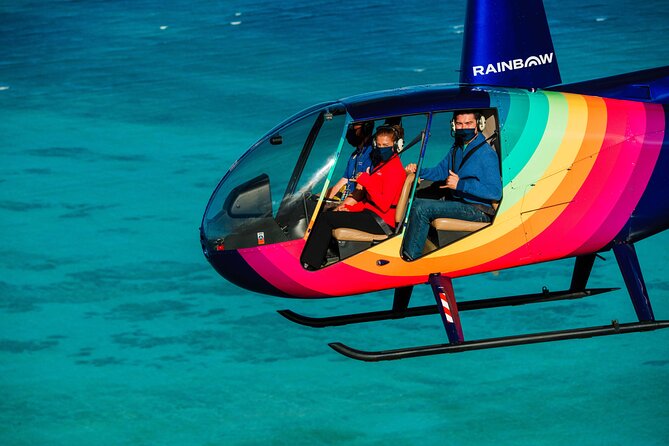
The headline choice is simple: doors on or doors off. But the practical trade-off is what you’ll feel and see.
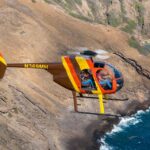
With doors-off, you get the kind of view you can’t fake from a window seat. You’ll also feel more wind, and you’ll want to follow the clothing rules: jackets and/or sweatshirts for warmth, closed-toe shoes, and hair ties if you’ve got long hair. Long pants are recommended too. If you’re sensitive to cold air, this is the biggest reason to consider doors-on even if your heart says go for the open-air look.
Also, be ready for the helicopter’s effects. One “go doors-off” tip came with a clear warning about prop wash. In plain terms: keep your hair and loose items secured, and don’t count on a “gentle breeze” vibe. Doors-off is exhilarating, but it’s still a working aircraft.
Seat position can also make a difference. For doors-off, your seat may or may not be directly adjacent to an open door. And if you’re seated behind the pilot, your view can be different for part of the flight, with some seats getting more ocean early and others spending more time over land visuals.
Waikiki up first: a skyline you can feel

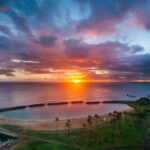
The flight begins with Waikiki’s skyline, then tracks along Oahu’s shoreline. It’s a good opening. From the air, Waikiki doesn’t look like a postcard, it looks like a system: beaches, shoreline bends, and the way development sits right up to the coast. If you’ve been walking streets all day, it’s an instant reset for your brain.
From there you head toward Diamond Head, and the view starts doing that thing helicopter rides do best: it gives you orientation fast. You can quickly see how the island is shaped and where all the roads and neighborhoods sit relative to the sea.
Diamond Head and the Leeward Coast: volcano edges and coastlines
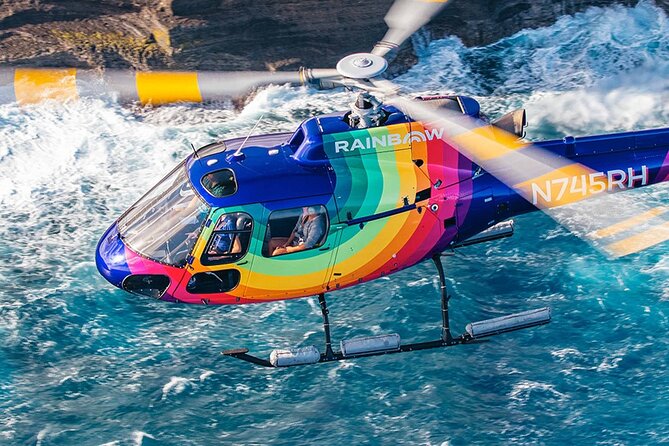
Diamond Head pops into view presiding over the island. That’s not just a nice landmark. It’s a strong visual anchor, and it helps you understand the “crown” theme of the whole ride. You’re not just passing over the island—you’re reading it.
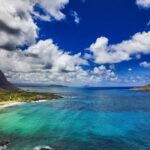
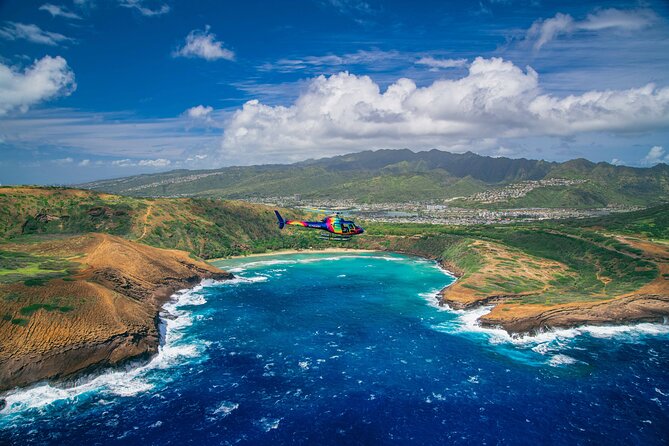
Next comes the Leeward side, with Hanauma Bay showing below and the coastline shifting from smoother beach areas into more rugged volcanic cliff forms. You also fly by Makapu‘u Lighthouse, which adds a different feel to the mix. Lighthouses are great from the air because they show you how the sea currents and cliffs line up.
If you care about the “why” behind the scenery, this is where the island’s geology starts to look obvious. The coastline changes aren’t random. They follow the story written in rock and erosion over millennia.
Windward Coast power: Ko‘olau mountains, Lanikai, and Kāneʻohe Bay
As you transition to the Windward Coast, the Ko‘olau Range comes into view, standing watch above Lanikai Beach. Lanikai is often described with big words on the ground, but from the air it’s easier to see why it gets attention: you can see the water shape, the shoreline curve, and how the sandbars and nearshore reefs create those lighter bands.
Then you’ll fly over Kāneʻohe Bay, including the offshore sandbars and coral formations that make this side of Oahu feel like a natural aquarium. This portion is also where a good pilot narration helps you connect what you see with what you’re looking at. You might get pilots known for upbeat, funny guiding, like Sarah or JoJo, or other captains such as Kiana, Gavin, Ben, Julian, Lucien, or Michael. (You can’t request a specific pilot from this information, but those names show up enough to tell you the level of enthusiasm you should expect.)



Ka‘a‘awa Valley and Sacred Falls: the close-up you came for
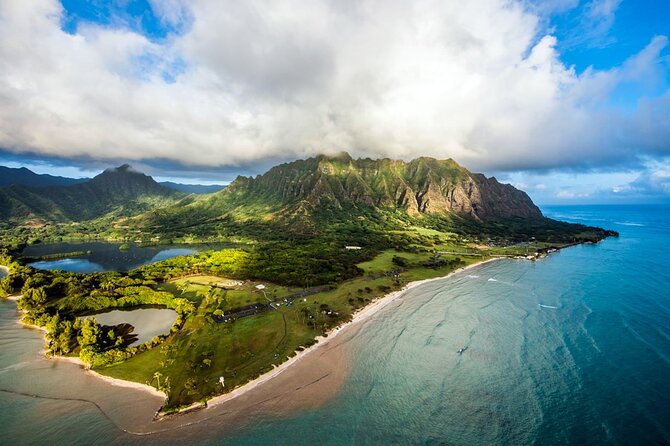
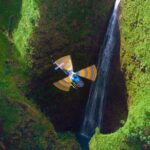
This is the part that people remember after the tour. You fly in closer toward Ka‘a‘awa Valley and the jagged cliffs, then you get the view of Sacred Falls dropping more than 1,000 feet into the rainforest below. In plain terms: you get to see a waterfall the way most people only get to imagine. The height and the suddenness of the drop do the work.
You’re also flying above forest and cliff edges, which makes the “how did that form?” questions pretty automatic. Volcanic activity plus rain plus time equals dramatic falls and steep walls. From the air, you can spot the shape of the terrain that directs water straight down.
Doors-off fans often call this the moment that makes the ticket feel worth it, because the sightlines are more open and the angle feels more direct.
North Shore surf zones: Banzai Pipeline and Waimea Bay
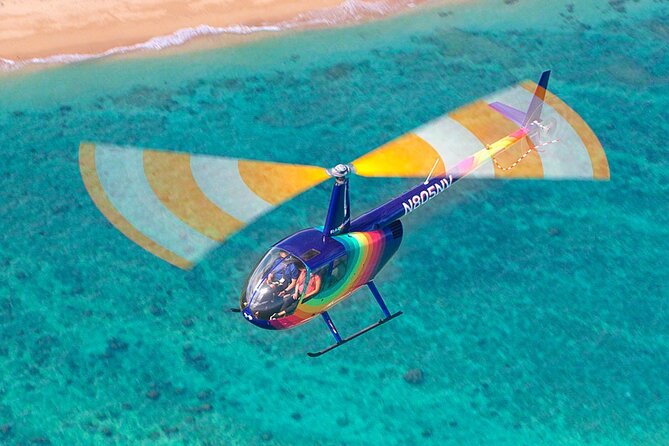
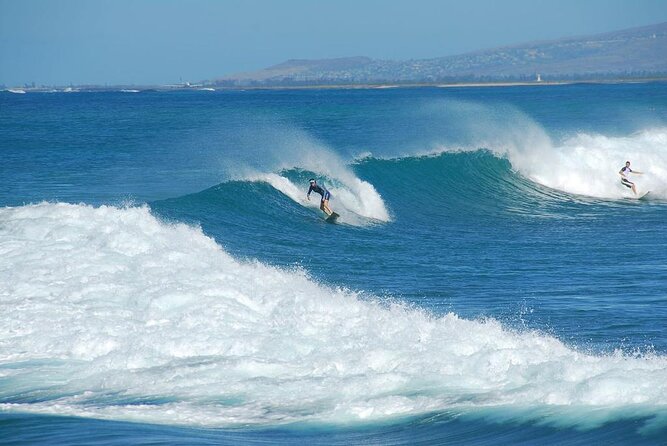
After the rainforest and cliffs, you move on toward Oahu’s North Shore. You can see surfers challenging the waves at Banzai Pipeline and Waimea Bay. Even if you’re not a surf person, this is one of those “you know it instantly” areas because the lineup of beaches and wave breaks stands out clearly from above.
This part of the flight also gives your eyes a change of pace. After the dramatic vertical drop of Sacred Falls, the shoreline energy at the North Shore feels horizontal and fast. It’s a nice contrast.
Dole Plantation and the Pineapple Sea: patterns you can’t see from roads
Then you head inland toward the Dole Plantation area. The flight path includes a view described as Dole Plantation’s Pineapple Sea—meaning those planted patterns become a visual grid from the air. From a road or footpath, you experience pineapple fields as rows. From the helicopter, you get scale, geometry, and the way the island’s land parcels sit next to each other.
If you like aerial “map reading,” this segment helps. It’s the moment when Oahu stops looking like beaches and starts looking like an island with a working footprint.
Pearl Harbor and the USS Arizona Memorial: quiet meaning from above
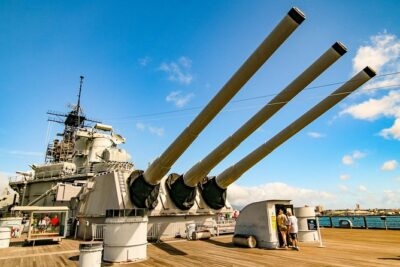
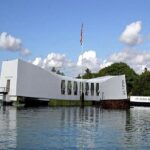
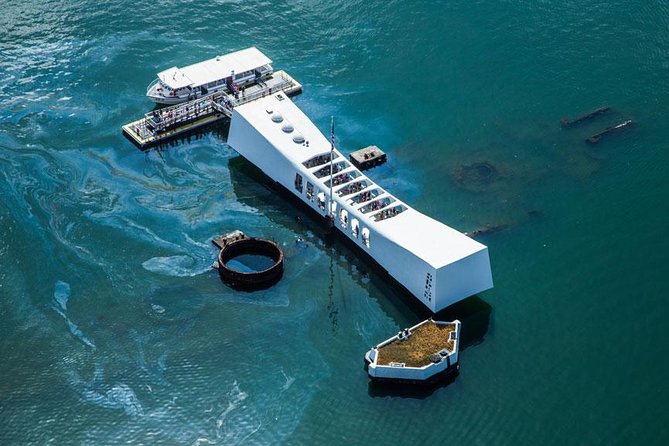
The tour completes its circuit with a pass over Pearl Harbor and the USS Arizona Memorial. From the air, it’s not a long stop, but it’s a powerful one. You get the sense of place—water, harbor layout, and the site’s position in the larger bay.
Because this area carries heavy historical weight, I recommend a respectful mindset even if the ride is still thrilling. The helicopter doesn’t give you time on the ground here, but it does place you above the story.
Price and value: what $540 buys in one hour
$540 per person is not cheap. The value comes from three things that add up fast.
First, it’s time-efficient. You’re getting views of multiple major landmarks—Diamond Head, Hanauma Bay, Makapu‘u Lighthouse, Ko‘olau Range, Sacred Falls, North Shore surf spots, Dole Plantation, and Pearl Harbor—during a single one-hour flight. If you tried to cover those by driving, the distances and traffic would chew up most of a day.
Second, the doors-off option changes what you can actually see and photograph. People often mention how the airflow and open sightlines make the experience feel more direct, like you’re sitting on the edge of the island’s action.
Third, the route is tight and designed for variety. Some aerial rides feel repetitive, but this one has clear visual chapters: coastlines, cliffs, rainforest, surf beaches, fields, then harbor history.
Is it worth it? If you want the kind of once-in-a-trip view that makes you stop scrolling and just stare out the window, this is one of the best bets in Oahu for that specific job.
Who this tour fits best (and who should plan around limits)
This tour is for most travelers, and it runs in a small-capacity format. If you’re going as a couple, it’s a classic “do this once” moment. If you’re traveling with family, it’s a practical choice because it compresses a lot of the island into one hour—though check the rules carefully for door-off flights.
Door-off has weight minimums based on the helicopter model: passengers must be at least 80 lbs for a Robinson R44 door-off flight, and at least 100 lbs for an Airbus Astar door-off flight. There’s also a weight and balance policy for heavier passengers, including potential additional seat requirements for those at higher weight ranges. The tour also lists a total weight per passenger limit of 500 lbs.
If someone in your group is sensitive to cold, long pants plus a warm layer helps. And if you really want stable, comfy viewing, doors-on is the safer bet.
One more small “fit” note: you’ll be in the air for about an hour, so it’s best for people who can handle aircraft noise and wind for that period. It’s not a calm spa session. It’s a real flight.
Weather, rebooking, and choosing the right time
This is a weather-dependent activity. Even when you pick a departure time, conditions can still change quickly enough to cause delays, cancellations, or tour modifications. The upside is that flights are offered multiple departure times, which increases your odds of catching one that works.
My practical advice is to schedule this earlier in your trip when you have flexibility to rebook if a flight gets canceled. If you’re only in Oahu for a short time or you’ve got a tight itinerary, you’ll feel that risk more.
The operator also emphasizes safety first, including refusing service to passengers who appear intoxicated.
Should you book Royal Crown of Oahu doors-on or doors-off?
Book it if you want a fast, high-impact way to see Oahu’s main visual chapters from above: volcano headlands, rainforest cliffs, North Shore surf zones, pineapple fields, and Pearl Harbor.
Choose doors-off if you’re chasing maximum sightlines, open-air excitement, and photo-friendly angles. Just pack for wind-chill, secure your hair, and respect that prop wash.
Choose doors-on if you want more comfort and a calmer ride vibe, or if cold and wind are a concern for you or anyone in your group. Even doors-on still give you a fresh perspective—just with fewer open-air thrills.
If you’re the type who likes one standout experience that changes how you see the island, this is a strong contender.
FAQ
How long is the Royal Crown of Oahu helicopter tour?
It runs about 1 hour, with the tour described as approximately 60 minutes.
Where does the tour start, and does it end there too?
You start at Rainbow Helicopters, 155 Kapalulu Pl #197, Honolulu, HI 96819, and the tour ends back at the meeting point.
Is the tour offered with doors on or doors off?
Yes. You can choose doors on or doors off when booking.
How does the doors-off option work with passenger weight?
For doors-off flights, only passengers weighing 80 lbs or more may fly with the door off in a Robinson R44 helicopter, and only passengers weighing 100 lbs or more may fly with the door off in an Airbus Astar helicopter.
What should I wear for a doors-off flight?
For doors-off, jackets and/or sweatshirts, closed-toe shoes, and hair ties are required. Long pants are recommended.
What are some of the landmarks you fly over?
You pass or fly near places including Diamond Head, Hanauma Bay, Makapu‘u Lighthouse, Sacred Falls, Banzai Pipeline, Waimea Bay, the Dole Plantation area, and Pearl Harbor with the USS Arizona Memorial.
How many people are on the tour?
The maximum group size is 15 travelers.
Can I pick my departure time?
Yes. You choose your departure time when booking.
What happens if the weather is poor?
This experience requires good weather. If it’s canceled due to poor weather, you’ll be offered a different date or a full refund.
What’s included in the price?
Included items listed are parking fees and a phone strap. The tour also offers a mobile ticket and is offered in English.