REVIEW · SCUBA DIVING
Oahu Open Water Shark Diving Experience
Book on Viator →Operated by Deep Blue Eco Tours · Bookable on Viator
Sharks feel less scary when you’re actually there. I love the cage-free setup, and I love the small-group pace with hands-on guidance plus a shark education focus.
I also like that there’s an onboard underwater photographer option if you want photos after your swim. One thing to plan around: weather can change everything, and the crew may cancel or reschedule if it gets very rainy, windy, or murky.
In This Review
- Key highlights to know before you go
- Start in Haleiwa: Getting Set for an Oahu Open-Water Shark Swim
- Cage-Free Setup: Safety, Calm Guidance, and a Max-6 Crew
- Route Stops Along the North Shore: Haleiwa, Waimea Bay, and Pua’ena Point
- Haleiwa: your start point and the first conditions check
- North Shore: where timing can make the wildlife feel close
- Waimea Bay: one of the key stops for the open-water moment
- Pua’ena Point Beach Park: the final push before the trip wraps
- What You’ll Do in the Water: Snorkeling Gear and the Real Ocean Pace
- Underwater Photos: How the Nika Tip Helps (and What You Can Buy)
- The Education Side: Conservation Talk That Doesn’t Kill the Fun
- Price and Value: Is $150 Worth Almost Two Hours on Oahu?
- Who Should Book This Shark Encounter (and Who Should Skip It)
- Should You Book This Oahu Open-Water Shark Swim?
- FAQ
- How much does the Oahu open-water shark experience cost?
- How long is the experience?
- What group size should I expect?
- Is there a minimum number of people needed for the shark encounter?
- What language is the tour offered in, and do I get a mobile ticket?
- What snorkeling gear is provided?
- Do I need to know how to swim?
- Are underwater photos available during the tour?
- Where do I meet the tour?
- What happens if weather is bad, and what is the cancellation policy?
Key highlights to know before you go
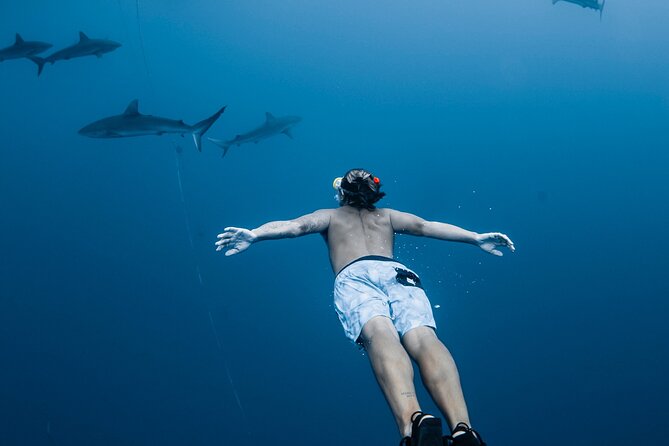
- Cage-free, educational shark encounter: you’re in the water with sharks while learning how to respect them
- Max 6 people: a smaller group means more personal attention than big boat operations
- Snorkeling gear provided: you don’t need to bring your own equipment
- Onboard underwater photography: professional photos are available for purchase during the tour
- Early morning improves odds: calmer, better conditions often mean more wildlife
- Weather-sensitive run: the operator may reschedule if conditions aren’t right
Start in Haleiwa: Getting Set for an Oahu Open-Water Shark Swim
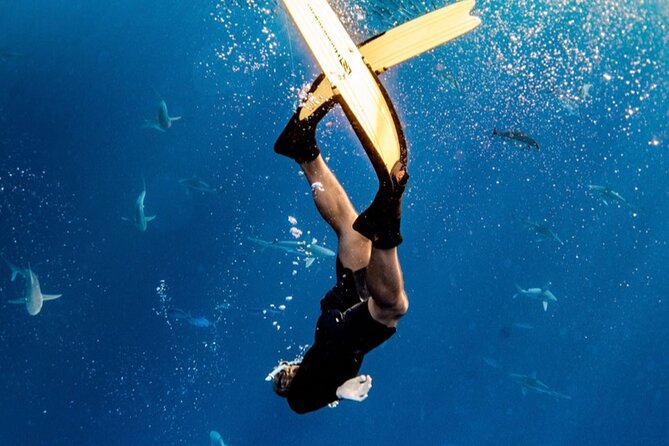
Most people will be driving to the meeting point at 66-105 Haleiwa Rd, Haleiwa, HI 96712, and the trip ends back where it starts. From there, you’re set up for an open-water swim that stays under two hours, with a route that hits Haleiwa, then along the North Shore, with stops including Waimea Bay and Pua’ena Point Beach Park.
If you’re coming to Oahu for a mix of nature and wow moments, this one lands fast. You’re not signing up for a long day. You’re getting a focused marine-life experience designed to keep the group small (up to 6) and the water time efficient.
One practical note from the experience itself: you may get splashed on the boat, especially if the water is choppy. That’s not a reason not to go. It’s just the real ocean factor on a small vessel.
And yes, this is bucket-list territory. The main draw is the cage-free part—seeing sharks up close, while the crew keeps safety and behavior steady from start to finish.
You can also read our reviews of more scuba diving tours in Oahu
Cage-Free Setup: Safety, Calm Guidance, and a Max-6 Crew
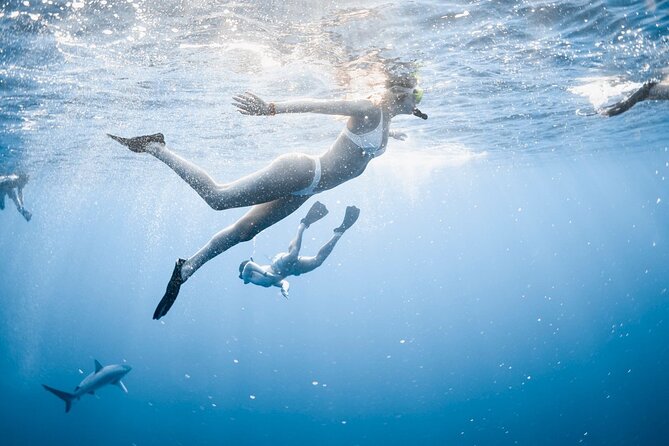
This tour keeps the group size limited to a maximum of 6 travelers, and that’s a big deal. With fewer people in the water, you’re more likely to get calmer handling and clearer instructions. In the feedback, several folks specifically praised how safe they felt and how the crew stayed relaxed while explaining what to do.
You’ll also benefit from the tour’s emphasis on safety before you enter the water. The team guides you step by step, and there’s a safety diver on hand during the experience. That combination matters if you’re nervous. Some guests described being afraid of sharks at first, then feeling “protected” and comfortable once they knew the plan.
For swim ability: the tour is not recommended if you cannot swim. They also ask for a strong physical fitness level, since open water can be tiring even when conditions look fine from the dock.
Also, be ready for education to be part of the moment, not a separate lecture. The experience is built around marine-life awareness and ocean conservation, so you leave knowing more than just what you saw.
Route Stops Along the North Shore: Haleiwa, Waimea Bay, and Pua’ena Point
You’ll follow a route with four stops: Haleiwa, then North Shore, then Waimea Bay, and finally Pua’ena Point Beach Park. You can think of these as “best-fit” locations along the coast, where wildlife sightings and water conditions can shape what happens next.
Here’s how to interpret the stop order in real-life terms:
Haleiwa: your start point and the first conditions check
You begin at Haleiwa and get oriented before the boat starts moving toward the North Shore area. This is where the crew’s rhythm matters. If you’re the type who needs a minute to settle, this early phase helps you get comfortable with the safety talk and the plan.
North Shore: where timing can make the wildlife feel close
The North Shore stretch is part of why early bookings often pay off. The operator notes that the earlier in the morning you book, the better the conditions and chances of seeing marine life. In practice, that means your “who might show up” odds can improve when the ocean is steadier.


Waimea Bay: one of the key stops for the open-water moment
Waimea Bay is a named stop on the route, and it’s one of the places where open-water encounters become more likely, depending on conditions. If you’re watching for specific shark moments, this is the stop that feels most central to that goal.
Pua’ena Point Beach Park: the final push before the trip wraps
Pua’ena Point Beach Park is the last stop listed. This matters because it can shape the final swim window and timing. If you’re chasing a “one more try” feeling, this is where the trip finishes in hopes of strong marine life activity.
One more realism note: the operator can cancel or reschedule if it turns rainy, windy, or murky, since ocean visibility and safety are tied together. So treat this as an experience you want to build around, not one you wedge into a tight schedule with zero flexibility.
What You’ll Do in the Water: Snorkeling Gear and the Real Ocean Pace
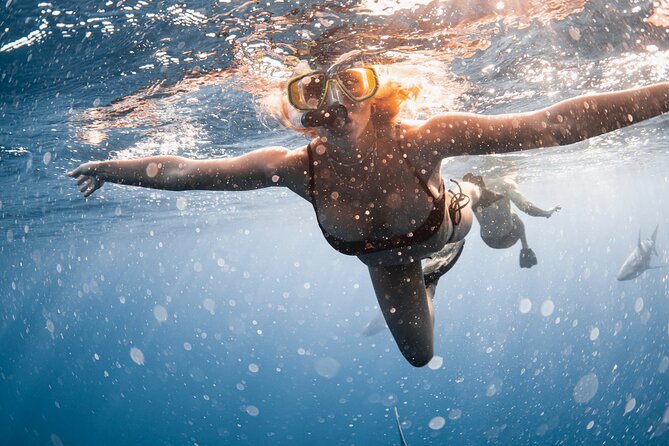
You’ll snorkel, and the tour provides snorkeling equipment. That takes away a whole shopping headache and lets you focus on the encounter.
From the feedback, the experience is structured so you’re not flailing around on your own. People repeatedly mention feeling safe from the moment they got on the boat, and the crew explanations helped nervous swimmers relax. One of the most common themes is that the staff stays calm, gives clear directions, and keeps you aware of what’s happening underwater.
In terms of what you might see: shark sightings vary by day, but you’ll find plenty of strong reports. Some guests describe being surrounded by 6–8 sharks at once, others mention 10+ sharks, and there are notes of seeing multiple species, plus occasional extras like dolphins. One review even mentioned a tiger shark for a few minutes.
Depth-wise, not every detail is consistent across guests, but at least one person reported swimming in around 450-foot deep water. That’s a reminder that even when you’re snorkeling close to the surface, you’re still in true open water.
If you get seasick easily, think about that before booking. This is a boat-and-ocean experience, and some guests did call out getting splashed because the water can be choppy.
Underwater Photos: How the Nika Tip Helps (and What You Can Buy)
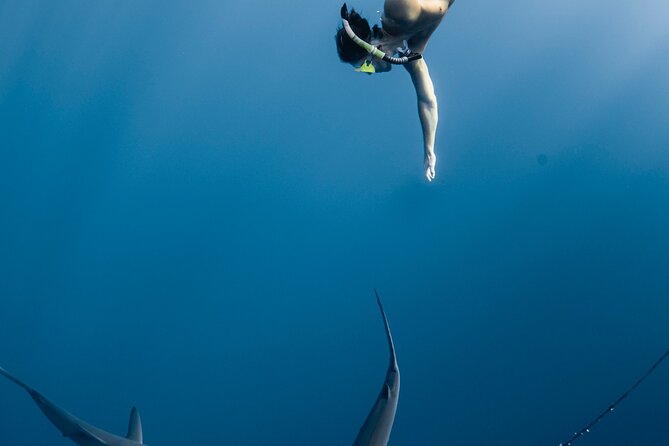
If you want photos that actually capture the moment, this tour is built for that. There are professional underwater photographers on the boat, and you can purchase a photography package from them while on the boat.
One guest specifically recommended requesting Nika as a photographer, saying the results were great. Even if you don’t name a photographer ahead of time, it’s still worth asking at check-in whether there are options or how packages work.
Why this is good value: your best shark moments are short. If you’re busy worrying about your camera (or trying to get shots through water haze), you miss the experience. Having someone focused on capturing the swim means you can put your attention where it belongs: your surroundings and the crew’s guidance.
Also, since the group is small, it’s easier to coordinate photo moments without turning the tour into a crowded circus. That’s part of what helps the encounter feel personal.
The Education Side: Conservation Talk That Doesn’t Kill the Fun
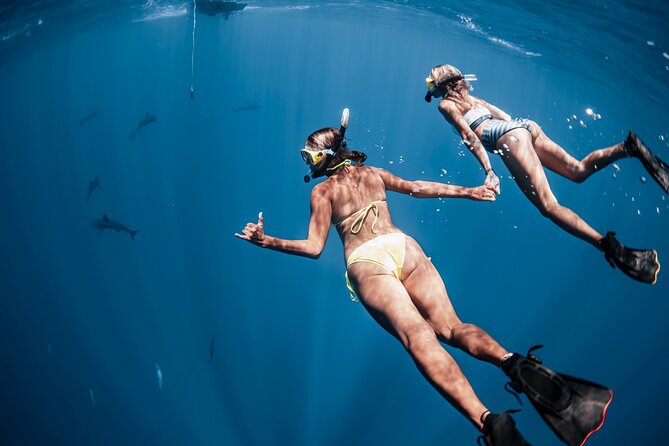
Deep Blue Eco Tours frames this experience as educational and fun, focused on marine life and the importance of ocean conservation. In plain terms, you’ll hear about sharks and what to do in the water so you’re not just a passive spectator.
The best kind of education is the kind that changes how you behave right then. In reviews, people talk about getting a new appreciation for sharks after seeing them up close and hearing conservation-focused context before and during the experience. Some guests also mentioned walking away with a better sense that sharks are not the villains Hollywood makes them out to be.
If you’re coming for a first-time shark encounter, the education piece helps you handle the moment without panic. If you’re coming as a repeat marine-life fan, it adds clarity to what you’re seeing and why it matters.
And because the group stays small, you’re more likely to get the kind of interaction where questions can get answered quickly instead of getting swallowed by the noise of a big crowd.
Price and Value: Is $150 Worth Almost Two Hours on Oahu?
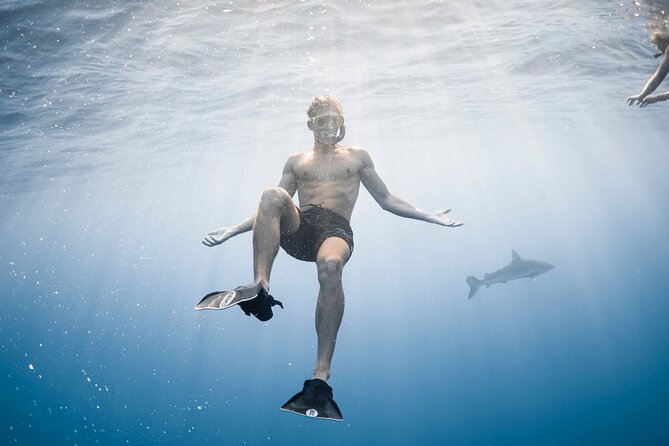
At $150 per person for about 1 hour 45 minutes, the question is value: what are you paying for besides the main headline?
You’re paying for four things that matter:
- Cage-free, in-water access to sharks (no cage barrier)
- Small-group attention (max 6) so you’re not one face in a crowd
- Provided snorkeling equipment so you don’t spend time or money on gear
- An underwater photo option via a photographer on the boat
Compared to typical “big boat + limited guidance” marine tours, the small-group angle is where the cost feels easier to justify. You’re also not stuck for half a day; you get in, do the encounter, and get back with time left for the rest of Oahu.
One real caution: because the trip can be affected by water conditions (rain/wind/murky) and because there’s a three-person minimum for open shark encounters, your plans should stay flexible. When it runs, people rate it extremely high—4.8 out of 5 with 96% recommending the experience. That’s strong consistency for a niche activity like this.
Who Should Book This Shark Encounter (and Who Should Skip It)
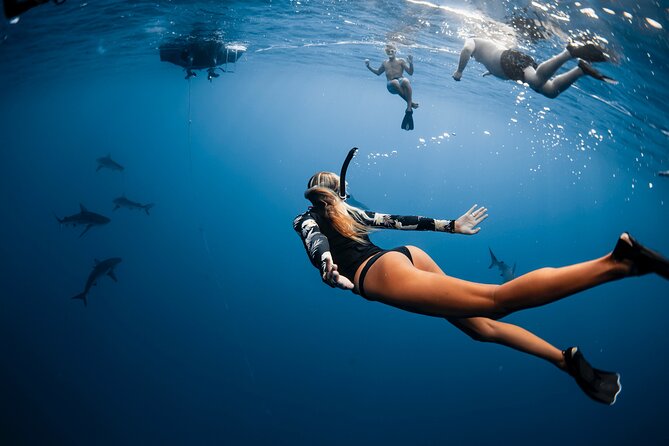
This is a great fit if you:
- Want a bucket-list, cage-free shark experience in less than two hours
- Like small-group tours with close guidance
- Are comfortable snorkeling and have decent stamina
- Want optional professional underwater photos
You should think twice or choose another option if you:
- Cannot swim (the tour is not recommended for that)
- Don’t meet the strong physical fitness expectation
- Have zero flexibility if weather turns rough and the operator needs to cancel or reschedule
It can also help if you’re someone who gets nervous at first. Multiple guests described being afraid, then feeling calm once the crew explained the plan and kept safety front and center. The vibe people mention is “relaxed and protected,” not chaotic or gimmicky.
Should You Book This Oahu Open-Water Shark Swim?
If you want a genuine shark experience without a cage barrier, I’d book it—especially if you can do an earlier morning slot. The small group (max 6), the safety structure, and the onboard photo option make it feel like a real activity, not a quick photo stop.
Skip it only if you can’t swim, aren’t up for open-water conditions, or you can’t handle a chance of cancellation or rescheduling due to rain, wind, or murky water. And if you’re debating between this and a cage-only alternative, choose based on what you want emotionally: a close encounter is the point here, with education built in so it feels respectful, not reckless.
If your schedule has a little wiggle room and you’re ready to follow directions in the ocean, this is the kind of Oahu experience that tends to stick with you for a long time.
FAQ
How much does the Oahu open-water shark experience cost?
It costs $150.00 per person.
How long is the experience?
The tour runs for about 1 hour 45 minutes (approximately), and it stays under two hours.
What group size should I expect?
The experience has a maximum of 6 travelers.
Is there a minimum number of people needed for the shark encounter?
Yes. There is a three-person minimum on open shark dive tours. If you have fewer than three people, you’ll need to book with another group to make a full trip.
What language is the tour offered in, and do I get a mobile ticket?
The tour is offered in English and you’ll receive a mobile ticket.
What snorkeling gear is provided?
The tour provides snorkeling equipment.
Do I need to know how to swim?
Yes. The experience is not recommended for travelers who cannot swim, and travelers should have a strong physical fitness level.
Are underwater photos available during the tour?
Yes. There are professional underwater photographers on the boat, and you can purchase a photography package while on the boat.
Where do I meet the tour?
Meet at Deep Blue Eco Tours, 66-105 Haleiwa Rd, Haleiwa, HI 96712, USA.
What happens if weather is bad, and what is the cancellation policy?
The operator may cancel or reschedule if it is very rainy, windy, or murky. For refunds, you can cancel up to 24 hours in advance for a full refund.