REVIEW · AUDIO TOURS
Honolulu Historic District a Smartphone Audio Walking Tour
Book on Viator →Operated by Tripvia Tours · Bookable on Viator
Downtown Honolulu gets personal when you walk. This Honolulu Historic District smartphone audio route starts at Aliʻiolani Hale and carries you past major landmarks, with guided stories triggered as you move.
What I like most is how offline listening works once you download, so you’re not stuck hunting for signal. I also like that the live GPS map keeps you on track while the audio automatically plays at each point of interest.
One thing to consider: this is an outdoor walking tour, and attraction entry isn’t included, so don’t count on going inside the sites you pass.
In This Review
- Key highlights
- Why Aliʻiolani Hale Sets the Tone
- Value Check: $10.99 and a 1–2 Hour Downtown Loop
- The Smartphone Setup: Offline Audio, Live GPS, and Auto Stories
- Walking the Landmark Trail: Palaces, Victorian Buildings, and a 1879 Reading Room
- Aliʻiolani Hale and King Kalākaua’s 1879 era
- King Kamehameha I statue and the stories behind the leader
- The Kanaina Building and Victorian Honolulu
- Patsy’s statue and accomplishment-led storytelling
- A 1879 reading room built to keep sailors out of trouble
- Hawaii’s oldest church and King Lunalilo’s unusual burial choice
- City hall, engraved dates, and a “built later than expected” puzzle
- A weird-looking sculpture with a natural phenomenon behind it
- Frank F. Fasi Building: modern municipal design with a story
- Seagull Schools and the “stone folks”
- State Capitol to Theatre: Peace Bells, Police Details, and Kumu Kahua
- Honolulu’s police connection
- The Bell of Nagasaki and US–Japan friendship
- Queen Emma’s conference center and the state capitol moment
- A regal manor tied to a clipper ship captain
- Art and culture stop for when you want more than monuments
- Queen Emma’s perspective and another dream made real
- Emma’s area name change and the Campbell connection
- The pedestrian street mall and classic performance history
- When to Walk and Who This Tour Fits Best
- Should You Book This Honolulu Audio Walk?
- FAQ
- How long is the Honolulu Historic District smartphone audio walking tour?
- How much does the tour cost?
- Do I need internet or cell service during the tour?
- What does the ticket include?
- Where does the tour start and where does it end?
- What language is the audio available in?
- Are attraction tickets included for the stops?
- Do I need headphones?
- Is the tour private and are service animals allowed?
Key highlights
- Offline audio that’s ready before you go: download on Wi‑Fi, then the tour runs without using mobile data.
- Live GPS map: you can see where you are and follow the route without constant checking.
- Auto-playing stories at each stop: you don’t have to press play every time you reach a landmark.
- A strong downtown “starter circuit”: you get a big slice of Honolulu’s political and cultural landmarks in about 1–2 hours.
- Mostly exterior sights: you’ll learn a lot from the sidewalk, not through paid interior tickets.
- Good value at $10.99: for the time and the number of stops, it’s one of the more budget-friendly ways to explore.
Why Aliʻiolani Hale Sets the Tone
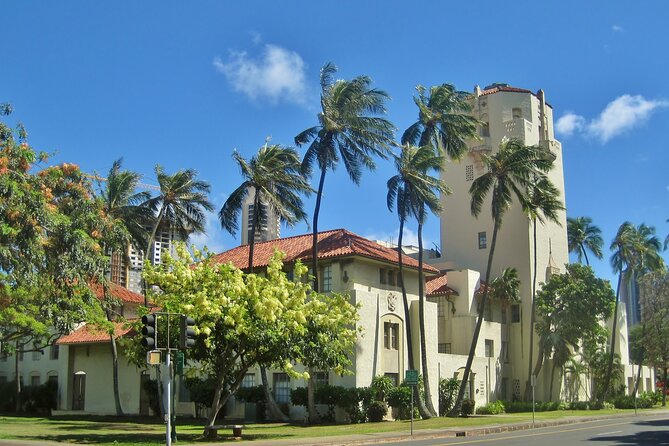
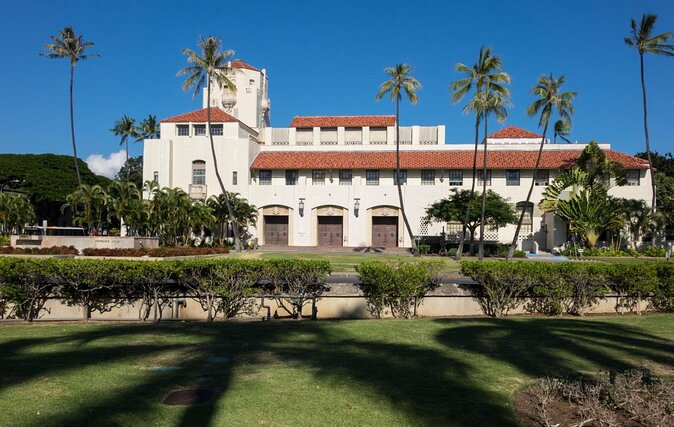
Your tour begins in front of Aliʻiolani Hale at 417 S King St. It’s a smart choice because this building acts like a front door to the whole downtown story. Before you cover much ground, you get oriented to the idea that this part of Honolulu was shaped by monarchy, government, and public life—often all in the same block.
Aliʻiolani Hale is also called the House of the Heavenly Kings. That nickname helps frame what you’ll be seeing next: you’re not just passing old-looking structures. You’re walking through places tied to Hawaiian rulers, formal state power, and the institutions that grew alongside them.
If you’re the type who likes context, you’ll enjoy how early the tour explains the significance of what you’re looking at. The audio gives you names and details so the city doesn’t feel like a set of random landmarks.
You can also read our reviews of more walking tours in Oahu



Value Check: $10.99 and a 1–2 Hour Downtown Loop
At $10.99 per person, this tour is built for “walk a little, learn a lot.” You’re buying time-saving guidance, not museum tickets. And that matters, because Honolulu’s downtown can be easy to over-plan. This format keeps it simple: follow the route at your pace, and let the phone do the storytelling.
Duration is listed as about 1 to 2 hours. In practice, you should plan for a bit of extra time if you pause for photos or if you’re the type to linger at statues and building details. One of the practical benefits is that there are no time constraints—the tour is yours to take whenever you want (and flexible dates are included).
Also, because the tour is self-guided and private to your group, you don’t need to line up, wait on others, or rush to keep up. That makes the price feel reasonable even if you stop often to read plaques, take photos, or step out of the sun.
The Smartphone Setup: Offline Audio, Live GPS, and Auto Stories
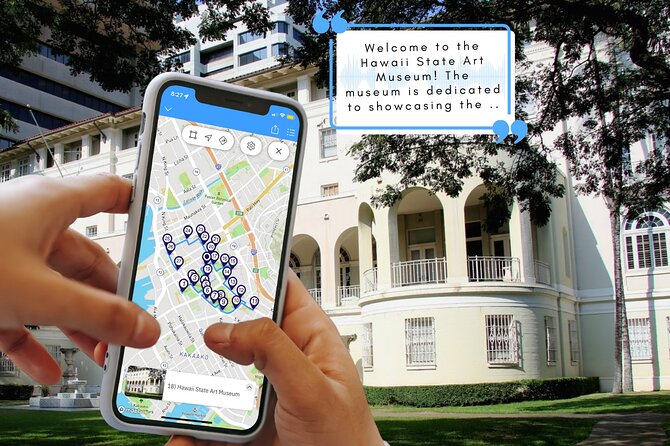
This tour is designed to be phone-friendly. After you book, you use a mobile ticket, and you’ll download the audio before you start on Wi‑Fi. Once downloaded, the tour works without needing a data connection or a signal—so you’re less stressed about coverage downtown.
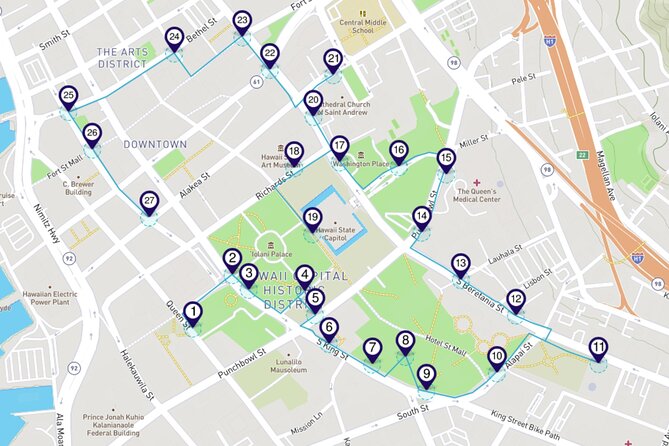
On the ground, you get a live GPS map that shows the route and your location. This is the difference between a “walk with a vague idea” and a walk that stays anchored. You can confirm you’re still on track without constantly opening maps.
The audio is supposed to be hands-free in the best way: commentary automatically plays at each point of interest. That’s great when you’re moving and don’t want to keep tapping your screen. If you’re on the fence about headphones, they’re optional. Audio will also play from your device speaker, though in real street noise you may find earbuds help you hear details more clearly.
One more practical note: you’ll need a smartphone or tablet. The tour doesn’t include devices or attraction tickets, so treat it like a guide that enhances your walk—then add paid entries only if you decide you want them.
Walking the Landmark Trail: Palaces, Victorian Buildings, and a 1879 Reading Room
This route is packed, but it doesn’t feel like one long blur. It’s built around “listen, look, then connect the dots.” Here’s the experience you can expect as you move through the historic core.
Aliʻiolani Hale and King Kalākaua’s 1879 era
You start at Aliʻiolani Hale, then the tour zooms in on what’s in front of you—explaining the structure and its origin in 1879, built for King Kalākaua, who ruled the Hawaiian Kingdom. This is the kind of stop that gives meaning to your photos: instead of just capturing a façade, you’re learning what era and purpose shaped it.
You can also read our reviews of more historical tours in Oahu





King Kamehameha I statue and the stories behind the leader
Next comes a stop centered on King Kamehameha I and the folklore surrounding him while you’re at his statue. This is where the audio does one of its best jobs: it makes historical figures feel less like names in a book and more like people who left visible marks across the city.
The Kanaina Building and Victorian Honolulu
Then you’ll reach the Kanaina Building, noted as an important example of Victorian architecture in Hawaii and listed on the National Register of Historic Places in 1978. If you like noticing architectural language, this is a good stop. It helps you see how Honolulu wasn’t frozen in time—it absorbed outside architectural styles and remade them locally.
Patsy’s statue and accomplishment-led storytelling
You’ll also encounter the Patsy statue, where the audio explains why a statue was created and points to her accomplishments. Stops like this are valuable because statues can look decorative until someone tells you what they represent. Here, you’ll get the “why” before the “what.”
A 1879 reading room built to keep sailors out of trouble
One of the most charmingly specific parts of the route is the reading room established in 1879. The audio frames it as a way to keep unruly sailors from getting into mischief. That’s a reminder that institutions weren’t just built for “culture.” They were also built for social order and practical city life.
Hawaii’s oldest church and King Lunalilo’s unusual burial choice
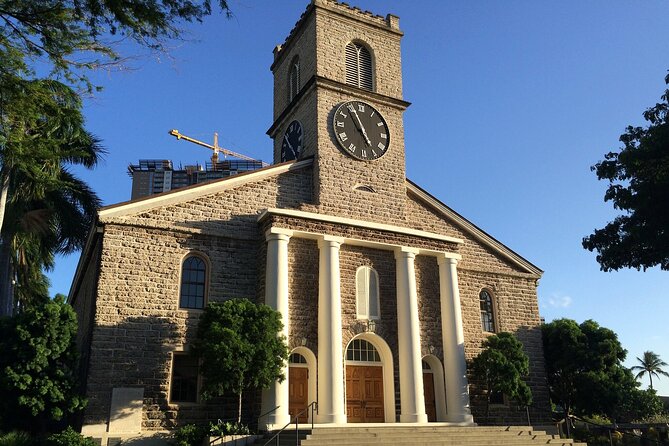
As you continue, you’ll hear about Hawaii’s oldest church. Then the route turns to King Lunalilo, including the story of why he refused to be interred in the Royal Mausoleum and is buried here instead. This is the kind of detail that makes a self-guided walk feel personal—because the city isn’t just showing you buildings, it’s showing you decisions.
City hall, engraved dates, and a “built later than expected” puzzle
You’ll pass a city hall building where the tour explains construction details and why you’ll see the years 1820 and 1915 engraved on the front, even though the building was built in 1921. That’s a great example of what an audio guide can do: it trains your eye to look for clues and asks you to notice why they matter.
A weird-looking sculpture with a natural phenomenon behind it
Another stop features a strange-looking sculpture with a story tied to a natural phenomenon. If you’re the type who likes myths and science mixing in unexpected ways, this will feel like a payoff. Even if you don’t instantly understand the form, you’ll know what question the city wants you to ask.
Frank F. Fasi Building: modern municipal design with a story
As of 2006, the tour highlights Honolulu’s newer municipal building: the Frank F Fasi Building. The design is described as unique, and the audio gives you the reasoning behind it. This matters because a lot of downtown walks focus only on older sites. Here, you get the sense that the city’s identity keeps evolving.
Seagull Schools and the “stone folks”
You’ll also see relaxed-looking stone figures located on the grounds for Seagull Schools, an early childhood education center. The tour ties this stop to the character of the neighborhood—small, local, and rooted in everyday life. It’s a nice balance to the grander royal and government stops.
State Capitol to Theatre: Peace Bells, Police Details, and Kumu Kahua

The second half of the walk keeps building meaning. You’ll move from monarchy and governance into symbols of peace, public services, and the arts.
Honolulu’s police connection
There’s a stop where the tour notes something unique about the Honolulu Police Department. Even though you’re mostly just standing outside, it’s still a useful reminder that public institutions have their own histories, not just the royal ones.
The Bell of Nagasaki and US–Japan friendship
Next comes the Bell of Nagasaki, described as a symbol of peace and friendship between the United States and Japan. This is the kind of monument that rewards you for slowing down. If you’re visiting Hawaii with an interest in international connections—not just local history—this stop gives a clear, memorable link.
Queen Emma’s conference center and the state capitol moment
Then you arrive at the Queen’s Conference Center, a historic and cultural landmark. The route credits the vision of Queen Emma and King Kamehameha IV, and explains that in 1969 the building officially became Hawaii State Capitol. This is where the walk starts to feel like a timeline. You’ll be connecting personal monarchy stories to formal state government.
A regal manor tied to a clipper ship captain
The tour moves to a regal manor built in 1842 by a clipper ship captain for his wife and young son. This is a different angle on Honolulu’s story: the influence of trade and sea traffic on who had the resources to shape the city.
Art and culture stop for when you want more than monuments
You’ll also reach a museum dedicated to showing Hawaiian art and culture. Even if you don’t step inside, the stop gives the theme of the route a final layer: not only power and politics, but creativity and identity.
Queen Emma’s perspective and another dream made real
The audio includes a moment framed as what the Queen herself could have said about being the last surviving member of the Kamehameha dynasty. After that, you’ll visit another place of worship connected to dreams of King Kamehameha and Queen Emma for Hawaii. These stops are quieter than the stately capitol moment, but they help explain how belief and leadership were often intertwined in Honolulu.
Emma’s area name change and the Campbell connection
You’ll end up in an area that was originally named for Queen Emma, and by 2016 it shares that honor with James and Abigail Campbell. This is one of those “small change, big meaning” facts. It shows you how the city’s public naming keeps evolving as generations add perspective.
The pedestrian street mall and classic performance history
From there, the route leads to a pedestrian-only street mall established in the 1960s to revitalize downtown. It’s framed as a continuing place for shopping, dining, and entertainment—useful if you want to turn the tour into an actual afternoon plan instead of a standalone walk.
Finally, you’ll reach the Hawaii Theatre Center, opened in 1922 to vaudeville and silent film. The story doesn’t stop at old movies. The building was donated to the Kumu Kahua Theatre Company, created to produce new works by Hawaiian playwrights and works reflecting Hawaii’s diverse cultures and experiences.
That ending point makes sense: you’ve spent the walk learning how Honolulu preserves and tells stories—then you finish where contemporary Hawaiian theatre carries some of that same mission forward.
When to Walk and Who This Tour Fits Best

If you want the smoothest experience, pick timing that avoids the harshest sun. One traveler tip I’d follow: start early in the day. Downtown Honolulu can be bright and warm, and even a 1–2 hour walk feels longer when you’re sweating.
This tour is especially good for:
- First-time visitors who want a self-paced downtown introduction without committing to a long guided tour.
- Couples or solo travelers who like to keep their hands free and let auto-play audio guide them.
- Anyone who enjoys “story first” sightseeing—monuments, statues, and architecture explained in plain language.
If you’re hoping for full access to ticketed interiors, plan differently. The tour doesn’t include attraction tickets, so you should expect mostly exterior viewing. You can still learn a lot from the sidewalk, but you may want to add paid entries separately based on your interests.
Should You Book This Honolulu Audio Walk?

Book it if you want a low-cost way to turn a downtown stroll into a guided story walk, especially if you like the idea of downloading once and then walking without worrying about signal. At $10.99, it’s a strong value for the number of stops and the way the audio connects monarchs, architecture, and symbols.
Skip or think twice if you’re specifically looking to enter major attractions during the tour. This experience is about what you can see and learn outdoors, not about bundled admissions. If you match those expectations, this is an easy afternoon win.
FAQ

How long is the Honolulu Historic District smartphone audio walking tour?
The tour lasts about 1 to 2 hours, depending on how much time you take at each stop.
How much does the tour cost?
It costs $10.99 per person.
Do I need internet or cell service during the tour?
No. You download before you start on Wi‑Fi, and during the tour there is no signal required and no data used.
What does the ticket include?
You get a mobile ticket, a live GPS map, and tour guide commentary that automatically plays at each point of interest.
Where does the tour start and where does it end?
The tour starts at Aliʻiolani Hale, 417 S King St, Honolulu, HI 96813, and it ends back at the meeting point.
What language is the audio available in?
The tour is offered in English.
Are attraction tickets included for the stops?
No. Attraction tickets are not included.
Do I need headphones?
Headphones are optional. Audio will also play from your device speaker.
Is the tour private and are service animals allowed?
Yes, it’s a private activity for your group only, and service animals are allowed.